The apology came several months after Sam's wedding.
David asked whether he could visit.
“Of course.”
He arrived in the afternoon.
There was no envelope.
No legal document.
No request.
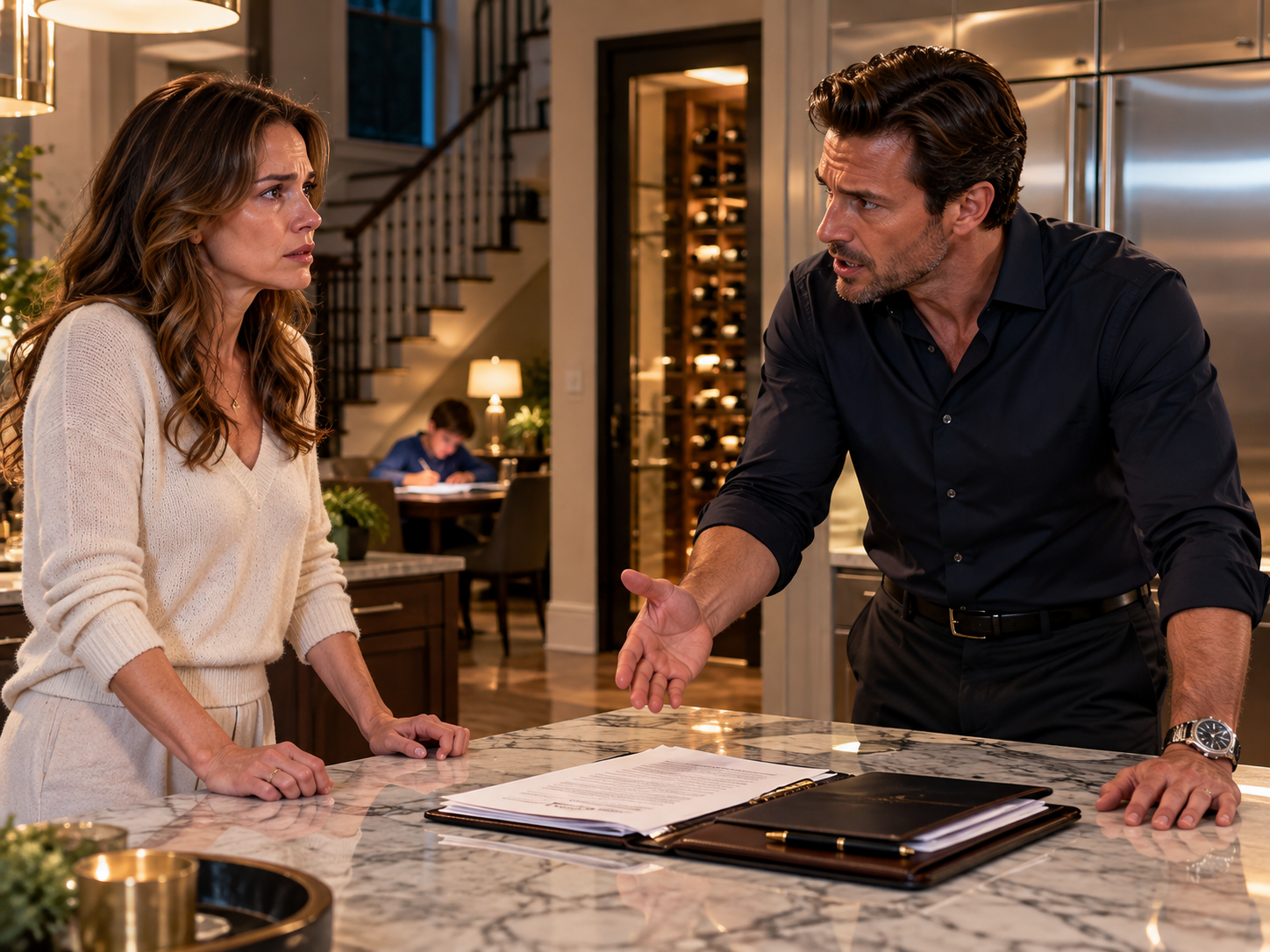
He simply sat across from me.
“I need to say something.”
“All right.”
“I've apologized before.”
“Yes.”
“But I don't think I ever said it properly.”
I waited.
He looked nervous.
“I am sorry for making you feel like your years with me could be reduced to property.”
I said nothing.
“I am sorry for asking for the house, the cars, the accounts, everything.”
He swallowed.
“And I'm sorry for saying you could keep Sam.”
The room became quiet.
“I've hated that sentence for years,” he said.
“So have I.”
“I know.”
He looked down.
“I said it because I wanted to make the divorce simple.”
“It wasn't.”
“No.”
He shook his head.
“I treated a family like a balance sheet.”
I breathed slowly.
“That is what it felt like.”
“I know.”
He continued.
“I thought if I took the things I could measure, I would know I had won.”
“And did you?”
“No.”
His answer came immediately.
“I was miserable.”
I watched him.
“Why are you telling me this now?”
“Because Sam is married.”
I frowned slightly.
“What does that have to do with it?”
“Everything.”
He smiled sadly.
“I watched him make promises to another person.”
“And?”
“I realized how much trust those promises require.”
He looked toward the window.
“I had spent years teaching him to trust me after I had given him reasons not to.”
That was difficult to hear.
Not because it was false.
Because it was true.
“He knows you love him,” I said.
“I hope so.”
“He does.”
David nodded.
“That matters.”
“It does.”
He sat quietly for a moment.
“Do you forgive me?”
The question was gentle.
I did not answer immediately.
“I forgave you a long time ago.”
His eyes lifted.
“But forgiveness didn't mean I approved of what happened.”
“I know.”
“It meant I stopped needing you to suffer for me to be okay.”
He nodded slowly.
“That may be the kindest thing anyone has ever said to me.”
“It wasn't kindness.”
“What was it?”
“Freedom.”
He smiled.
“For you?”
“For both of us.”
He leaned back.
“I spent years thinking you had outsmarted me.”
I laughed softly.
“You did make it difficult.”
“No.”
He shook his head.
“You simply understood what I didn't.”
“What?”
“That losing property isn't losing a life.”
I looked at him.
“And keeping property isn't necessarily having one.”
He nodded.
“That too.”
We sat together for a while.
The conversation did not feel romantic.
It did not feel like reconciliation.
It felt like two people finally putting accurate labels on old wounds.
Before he left, David said, “I want to be clear about something.”
“What?”
“If you had fought for everything, I would have respected you.”
I raised an eyebrow.
“Would you?”
“Yes.”
“But I didn't.”
“No.”
“You thought I was weak.”
“I did.”
“And now?”
“I think you were stronger than I understood.”
I smiled.
“Strength doesn't always look like fighting.”
“I know that now.”
After he left, I thought about that sentence.
Strength doesn't always look like fighting.
Sometimes it looked like signing.
Sometimes it looked like walking away.
Sometimes it looked like refusing to explain yourself to people who had already decided what your silence meant.
Sometimes it looked like allowing another adult to experience the consequences of his own choices.
And sometimes it looked like forgiving someone without inviting them back into the place where they had hurt you.
That evening, Sam called.
“Dad came to see you?”
I smiled.
“How did you know?”
“He told me.”
“Of course he did.”
“What did you talk about?”
“Things.”
“Good things?”
“Yes.”
He paused.
“I'm glad.”
“Why?”
“Because I don't want you two to hate each other.”
“We don't.”
“Really?”
“No.”
He sighed.
“That's good.”
“Your father and I are not going to become best friends.”
“I wasn't asking.”
“But we don't need to hate each other.”
“I know.”
There was a pause.
“Mom?”
“Yes?”
“Thank you.”
“For what?”
“For never making me choose.”
I closed my eyes.
“That was never your job.”
“I know.”
“But you did it.”
“I tried.”
“You succeeded.”
That meant more than he knew.
The next year brought ordinary changes.
Sam and his wife moved into a larger home.
They had careers.
Bills.
Repairs.
Arguments about furniture.
They called both of us when they needed advice.
Sometimes they called David.
Sometimes me.
Sometimes both.
It became normal.
David became the person who checked the car before a road trip.
I became the person who remembered birthdays and medical appointments.
Neither role belonged exclusively to either parent.
We simply filled the spaces where we were useful.
One Sunday, Sam asked us both to dinner.
His wife had cooked.
We sat around their table.
David brought dessert.
I brought flowers.
After dinner, Sam raised his glass.
“To family.”
David smiled.
I lifted mine.
“To family.”
We drank.
There was no awkwardness.
That surprised me.
For years, I had thought divorce permanently divided people into categories.
Mine.
His.
Before.
After.
Instead, time had created something more complicated.
A family that no longer looked like the family we had once imagined.
But it was still a family.
And perhaps that was enough.
On the drive home, I realized something else.
I had spent years believing closure would arrive as a moment.
A final conversation.
A final document.
A final apology.
It hadn't.
Closure had arrived in pieces.
A quiet dinner.
A phone call.
A wedding.
A house.
A grown son who no longer needed protection from our history.
There was no single door closing.
There were hundreds of small doors.
Each one led forward.
I slept peacefully that night.
For once, I did not dream about the kitchen.
Click here to continue reading: PART 23: When Sam asked what I would tell my younger self on the night everything changed, I finally understood which part of that frightened woman I had carried with me
David Asked for the House, the Cars, and Every Dollar We Owned, But the One Thing He Refused to Take Was the Detail That Made His Demand Dangerous
Part 22 of 28