After that conversation, my memories of the final year changed.
Not completely.
The events remained the same.
He stayed out.
He saw other women.
He became distant.
He rarely argued.
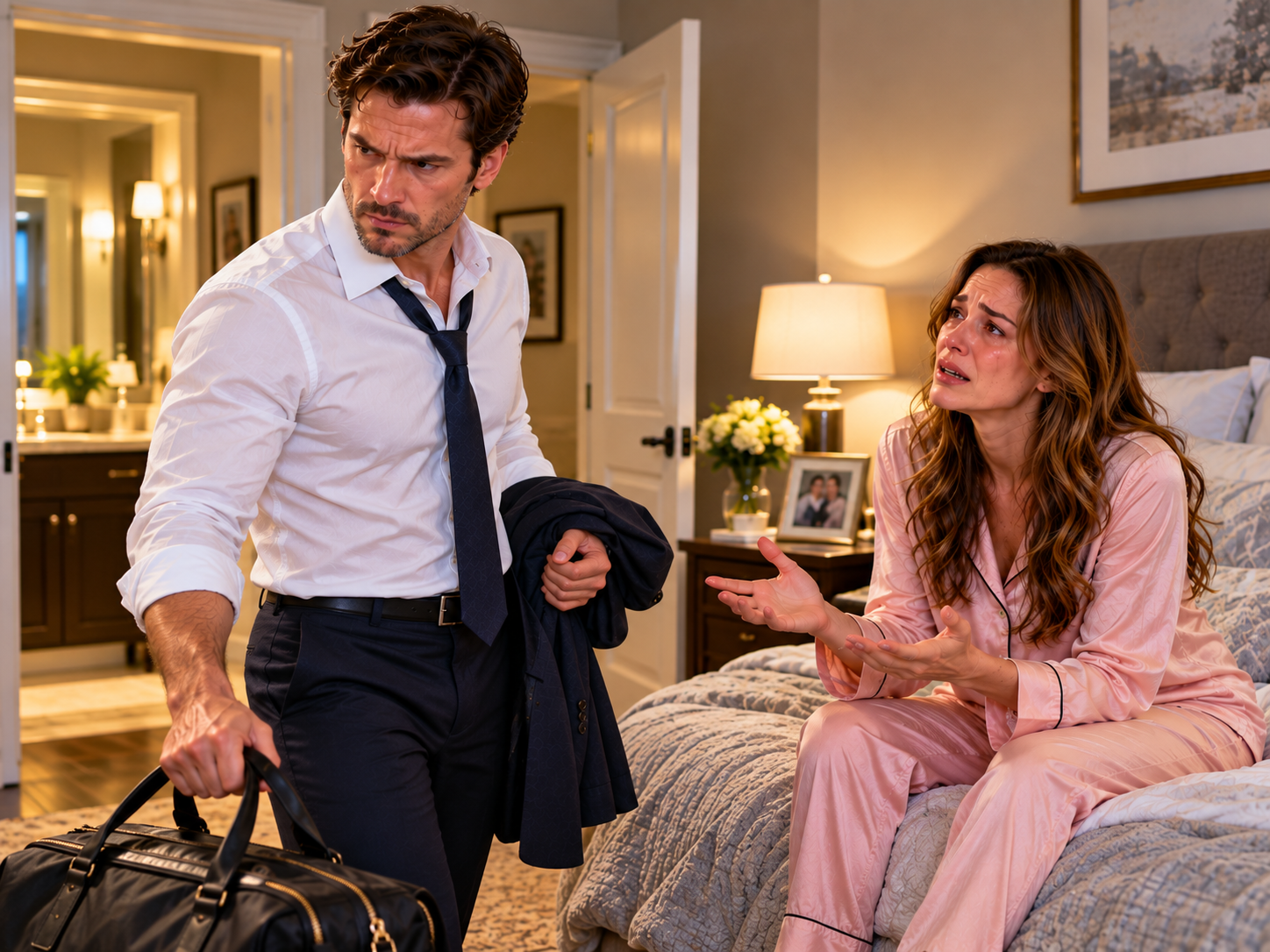
He left his ring on the counter.
We eventually separated.
None of that changed.
What changed was the meaning I had attached to those events.
For years, I had remembered his coldness as rejection.
Now I understood that rejection had been mixed with fear, grief, and exhaustion.
That didn't make everything he did acceptable.
It simply made the story more complete.
I began thinking about how often people reduce complicated relationships to a single sentence.
She cheated.
He became cold.
They divorced.
The sentence may be accurate.
It is rarely complete.
There are thousands of moments inside those words.
Some cruel.
Some tender.
Some ordinary.
Some impossible to explain.
Our marriage had been built from those moments.
It had also been damaged by them.
One evening, I received a message from an old friend.
"Are you still in touch with your ex-husband?"
"Sometimes."
"That's surprising."
"Why?"
"I assumed you'd never speak again."
I smiled.
"So did I."
The friend asked whether it was difficult.
I thought before answering.
"It was difficult when I needed something from him."
"What did you need?"
"Forgiveness. Reassurance. Proof that I hadn't destroyed everything."
"And now?"
"Now I don't need him to give me anything."
The friend didn't reply for a while.
Then came one sentence.
"That sounds like peace."
I looked at it.
Maybe it was.
But peace wasn't the absence of sadness.
I still had moments when I remembered the marriage and felt a dull ache.
Sometimes I remembered a joke he had made years ago and wanted to tell him something related.
Sometimes I saw a restaurant we used to visit.
Sometimes a song brought back an old evening.
The difference was that I didn't follow the memory.
I let it pass.
That became my new definition of peace.
One Sunday afternoon, I opened the old photograph from our first apartment.
We were sitting on the floor.
The picture had been taken before the table arrived.
We looked tired and happy.
I noticed my former husband was holding a takeout container.
I remembered the meal.
Cheap noodles.
Too much sauce.
A terrible movie playing on a borrowed television.
We had laughed for nearly an hour.
I smiled.
That happiness had been real.
I didn't need to diminish it because the marriage ended.
That realization freed something inside me.
For years, I had thought acknowledging the good parts might mean excusing the bad.
It didn't.
Both could exist.
We had loved each other.
I betrayed him.
He was deeply hurt.
We tried to continue.
We failed.
Our good years were still good.
Our painful years were still painful.
The whole story belonged together.
I returned the photograph to the box.
Later that evening, my former husband called.
"I've been thinking about our conversation."
"So have I."
"I wonder if we should talk again."
"About what?"
"Everything."
I hesitated.
"Why?"
"Because I think we spent years talking around things."
I understood.
"Okay."
We arranged to meet the following weekend.
The café was quiet.
He arrived first.
When I sat down, he smiled.
"You look nervous."
"I am."
"Me too."
We laughed.
It helped.
He began.
"I've wondered whether I should have done something differently."
I waited.
"I should have told you how angry I was."
"I wish you had."
"I thought anger would make you leave again."
I looked at him.
"I wouldn't have."
"You can't know that."
"Maybe not."
He nodded.
"That's what I was afraid of."
Then he told me something I had never known.
After I returned home, he had once written a letter to me.
He had never given it to me.
"What did it say?"
"I don't remember everything."
"Do you still have it?"
He nodded.
"Why?"
"I don't know."
He took out his phone and showed me a photograph of the first page.
The handwriting was unmistakably his.
The first line read:
"I don't know how to trust you without becoming someone I don't want to be."
I looked away.
My eyes filled.
"That's what you were feeling?"
"Yes."
"I wish you'd shown me."
"I was afraid you'd see how much power you had over me."
I looked back at him.
"I never wanted that."
"I know now."
We sat quietly.
The letter explained so much.
Not everything.
But enough.
His silence had been partly an attempt to protect himself from vulnerability.
My insistence on getting an emotional reaction had misunderstood the entire problem.
I wanted proof that he cared.
He was terrified of showing me how much he cared.
We had been trapped inside opposite fears.
No one had known how to cross the distance.
"Do you regret not giving me the letter?" I asked.
"Sometimes."
"Would it have changed anything?"
He shook his head.
"I don't know."
"Neither do I."
That was the only honest answer.
He put the phone away.
"I don't want to live inside that question."
"Neither do I."
We continued talking.
Not about reconciliation.
Not about what might have been.
About what we had learned.
He told me he had learned to communicate earlier.
I told him I had learned not to make decisions based solely on longing.
He told me he had learned that forgiveness didn't require forgetting.
I told him I had learned that remorse didn't require lifelong punishment.
When we left the café, the sun was already low.
He hugged me.
"I think that was the conversation we needed."
"I think so too."
We stood outside.
Then he said, "This really is goodbye, isn't it?"
I felt the words.
Not as rejection.
As completion.
"Yes."
He nodded.
"Okay."
We hugged again.
Then we walked in different directions.
I didn't turn around.
Neither did he.
On the way home, I cried.
Not because I wanted to change the ending.
Because I finally understood it.
There had been a point where our marriage might have been saved.
Maybe.
There had been conversations we should have had.
Truths we should have told.
Fears we should have admitted.
But understanding those things now could not transport us backward.
The past was not a room we could re-enter with better words.
It was a place we could only remember.
That night, I opened my journal.
I wrote:
"We didn't lose each other because we lacked love. We lost each other because love was not enough to repair what dishonesty had damaged."
I stared at the sentence.
Then I added another.
"Knowing that does not make the ending less sad. It makes it honest."
I closed the journal.
For once, I didn't cry afterward.
I slept.
Deeply.
Without dreaming about the old house.
Without waking to check the time.
Without imagining footsteps in the hallway.
The next morning, sunlight came through the curtains.
I opened the window.
The air smelled like rain.
I made coffee.
I drank it slowly.
There was no revelation.
No dramatic transformation.
Just a quiet sense that something had finally settled.
The story had stopped changing in my mind.
That mattered more than I could explain.
Click here to continue reading: PART 19: The Older I Became, the Less I Wanted to Rewrite My Mistakes and the More I Wanted to Understand What They Had Asked Me to Become
I Came Home Believing Regret Could Repair What I Had Broken, But My Husband Had Already Begun Leaving Me Behind
Part 18 of 28