
We met again two weeks later.
This time, neither of us brought old photographs.
Neither of us brought messages.
Neither of us brought accusations.
We simply sat across from each other and spoke.
He told me what my affair had done to him.
Not dramatically.
Not cruelly.
He described the small things.
The mornings when he had woken expecting me to be beside him and remembered I had chosen someone else.
The meals he had stopped cooking because there was no reason to make enough for two.
The nights he had sat in the dark because turning on the light made the empty house feel worse.
He told me he had spent months wondering what was wrong with him.
That was the part I had never understood.
I had thought my leaving was about my feelings.
He had experienced it as a judgment.
As proof that everything he believed about our marriage could disappear without warning.
"I didn't know how to forgive you," he said.
"I understand."
"I don't think I did forgive you."
I looked at him.
"Then why did you let me come back?"
He took a long breath.
"Because I loved you."
The answer hurt more than anything else.
Not because it was cruel.
Because it explained everything.
His silence.
His confusion.
His attempts to continue.
His inability to become affectionate again.
His other relationships.
His distance.
He had loved me and still been unable to trust me.
"I thought you were punishing me," I said.
"Sometimes I was angry enough that I wanted you to understand what it felt like."
He looked down.
"But after a while, I wasn't thinking about punishment."
"What were you thinking about?"
"Whether I could live without needing you."
I closed my eyes.
He continued.
"And I learned that I could."
I nodded.
That was the truth I had been afraid to hear.
I had spent more than a year trying to convince him that I deserved another chance.
But the question was no longer whether I deserved one.
It was whether he wanted one.
"What about the women?" I asked.
He didn't avoid the question.
"I was trying to prove something to myself."
"What?"
"That I could be wanted."
My eyes filled with tears.
"Did it work?"
"No."
He gave a tired smile.
"Being wanted isn't the same as being loved."
I looked down at my hands.
"I hurt you."
"Yes."
"I don't want you to forgive me because you feel obligated."
"I know."
"And I don't want to keep living in a marriage where you punish yourself by staying with me."
He nodded.
"I don't either."
We sat quietly.
There was no dramatic reconciliation.
No sudden embrace.
No promise that everything would be different tomorrow.
Instead, there was honesty.
For the first time since I had returned home, honesty was enough.
We decided to separate.
Not because either of us suddenly hated the other.
Not because my husband had found someone better.
Not because my affair had made our entire marriage meaningless.
We separated because the marriage we had before my betrayal was gone, and neither of us could honestly rebuild it by pretending it still existed.
He moved out.
I stayed.
The first night alone, I expected to collapse.
Instead, I cleaned the kitchen.
I washed two plates even though there was only one of me.
Then I stood by the sink and cried.
Not because I wanted him to come back immediately.
Because I finally understood the cost of what I had done.
Months passed.
We remained in contact.
At first, our conversations were awkward.
Then they became easier.
We began talking without trying to recover the past.
He told me about his work.
I told him about mine.
Sometimes we remembered old things and laughed.
Sometimes a memory hurt too much to discuss.
Neither of us pretended otherwise.
One afternoon, he came by to collect the last of his belongings.
He found the wedding photograph on a shelf.
He picked it up.
"We were so young."
"We were."
He looked at the photograph for a long time.
"I loved you very much."
"I know."
"I still do, in some way."
I looked at him.
"I love you too."
Neither of us reached for the other.
That was important.
Love remained, but love was no longer being used as an excuse to ignore what had happened.
He put the photograph down.
"Take care of yourself."
"You too."
He left.
This time, I didn't run after him.
That was the final lesson.
When I had left him for my high school ex, I believed love meant following whatever feeling seemed strongest.
When I returned, I believed regret could restore what I had broken.
Then, when my husband became distant, I believed his coldness was a punishment I could somehow earn my way out of.
I was wrong about all three.
Love did not erase betrayal.
Regret did not restore trust.
And another person's pain was not something I could demand they express in a way that made me feel forgiven.
My husband had once been furious.
I had simply arrived too late to witness most of it.
By the time I came home, his anger had already changed into something quieter.
He had learned how to live without depending on me.
The women he saw were never the real story.
They were part of his confusion, part of his attempt to reclaim something he believed he had lost.
But eventually, he stopped looking for answers in other people.
So did I.
I stopped asking whether he would come back.
I stopped measuring every silence.
I stopped imagining that one perfect conversation could repair years of damage.
We had loved each other.
We had built a family.
I had betrayed him.
He had allowed me back before he was ready.
We had both tried, badly and imperfectly, to survive what followed.
In the end, surviving did not mean staying married.
It meant telling the truth.
Our marriage ended without screaming.
There was no final betrayal.
No revenge.
No dramatic victory for either of us.
There was simply a quiet recognition that some choices cannot be undone, only understood.
And understanding came too late to save our marriage.
But it came early enough to stop us from destroying each other further.
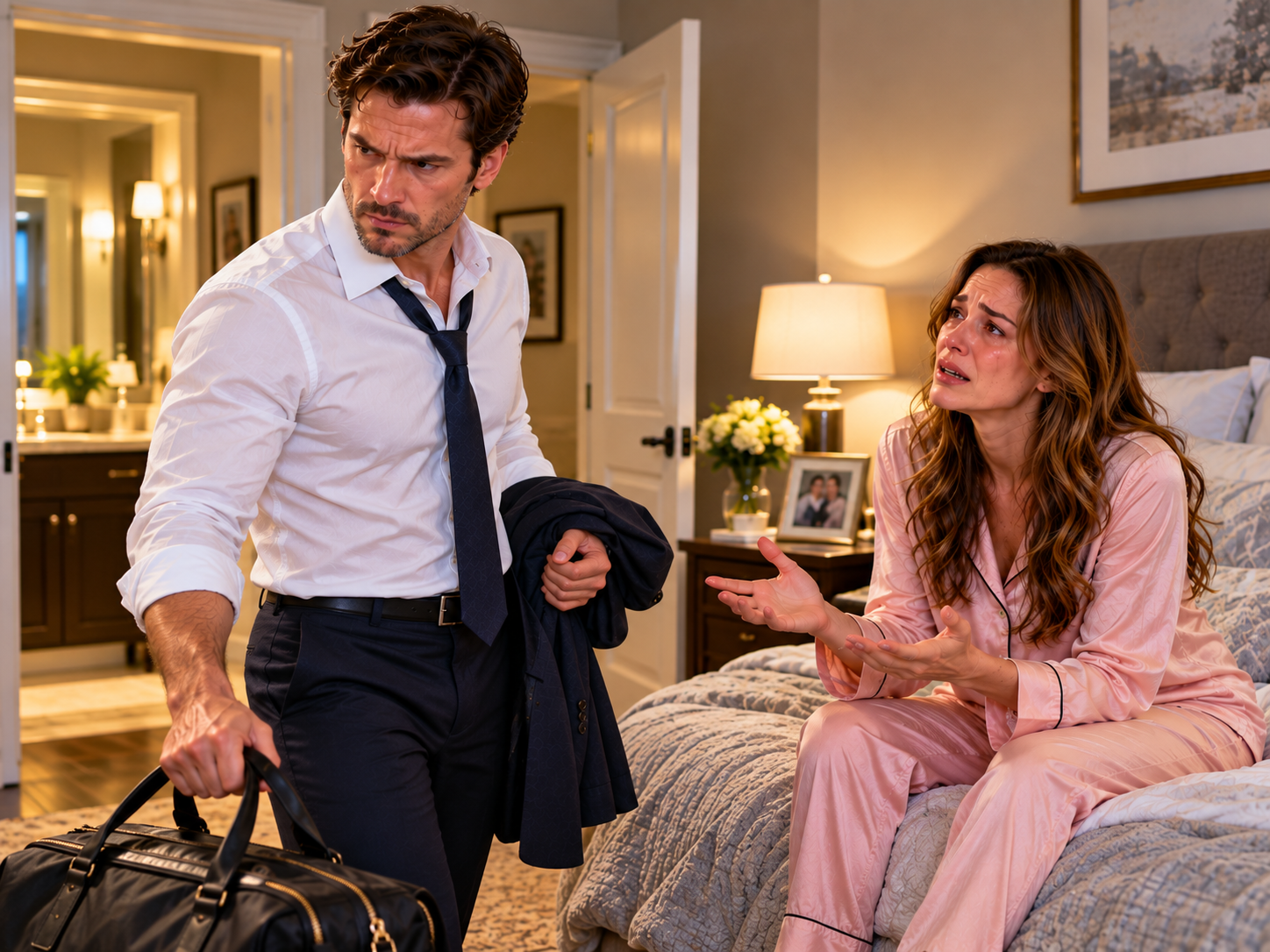
Sometimes I still remember the night he first came home after staying out.
I remember sitting in the bedroom, waiting for him to explain.
I remember asking where he had been.
I remember his tired face.
And that small shrug.
For a long time, I thought that shrug meant he didn't care.
Now I understand it differently.
He cared so much that he had reached the point where he no longer knew what words could change.
He had already cried.
Already raged.
Already questioned himself.
Already imagined a life without me.
By the time I came back, he had begun accepting that life.
That was the truth I had spent more than a year trying not to see.
I wanted him to tell me how badly I had hurt him.
Eventually, he did.
But the answer wasn't what I expected.
He didn't want revenge.
He didn't want me to suffer forever.
He wanted the freedom to decide whether he could love me again without being afraid that love would cost him his dignity.
He never found that freedom inside our marriage.
So he chose it outside.
And this time, I let him go.
Click here to continue reading: PART 5: After We Let Each Other Go, I Discovered That Ending a Marriage Did Not End the Questions I Carried Into Every Quiet Morning
I Came Home Believing Regret Could Repair What I Had Broken, But My Husband Had Already Begun Leaving Me Behind
Part 4 of 28

