Years had passed since the night I first lay awake waiting for my husband to come home.
Sometimes it felt like another lifetime.
Sometimes it felt like yesterday.
The details had changed.
The emotional weight had changed.
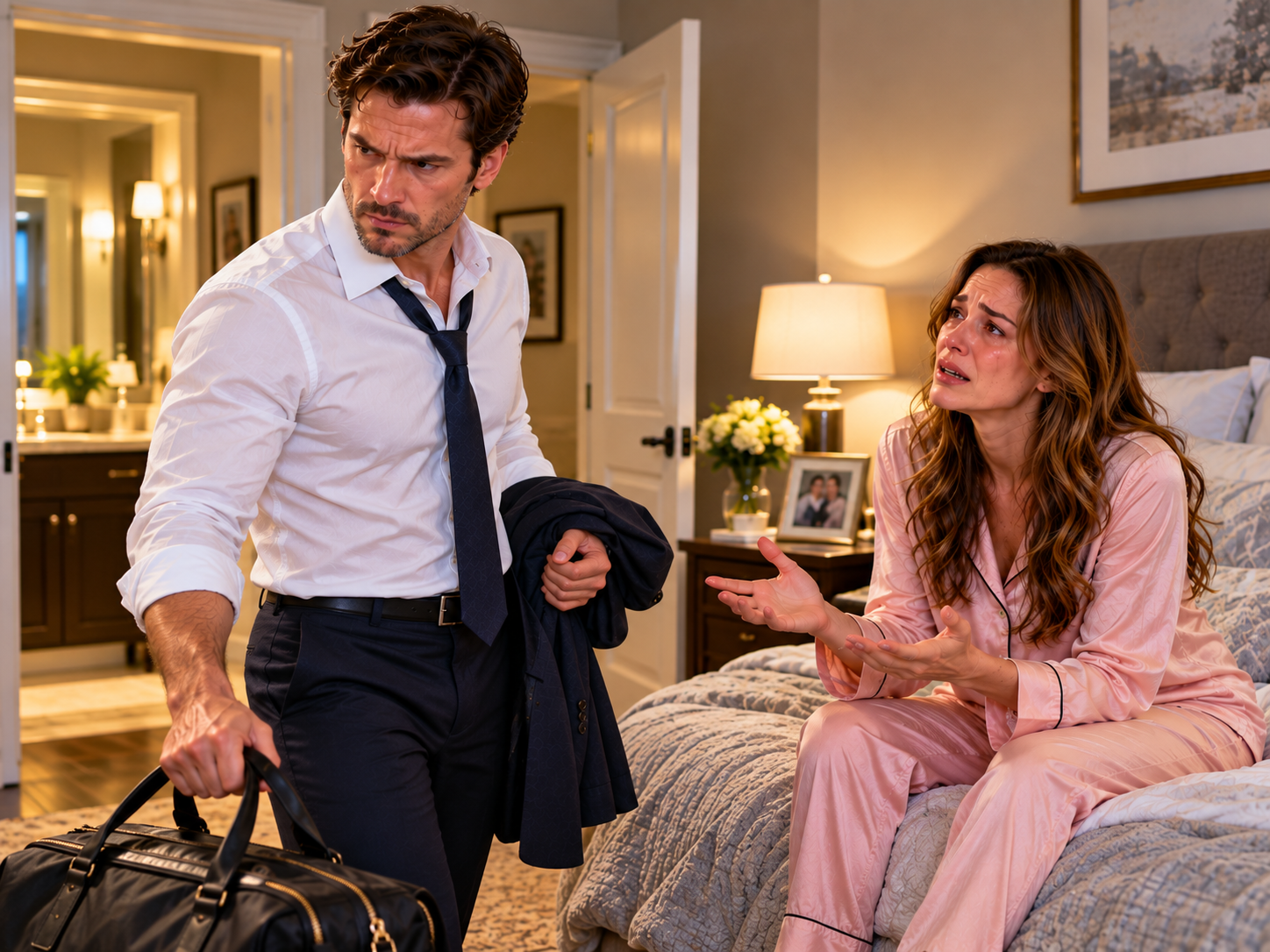
But I still remembered the exact sound of the front door opening that morning.
I still remembered sitting upright in bed.
I still remembered asking where he had been.
I still remembered his shrug.
For years, I had treated that moment as a mystery.
Now it felt like the clearest answer he had ever given me.
He had already begun letting go.
I simply hadn't been ready to see it.
The woman I was then wanted an explanation that would make everything easier.
She wanted him to rage.
She wanted him to say that he hated her.
She wanted a dramatic confrontation because anger would have proved that love remained.
But love had remained.
That was never the question.
The question was whether love could survive without trust.
For us, it couldn't.
Not in the form we needed.
That truth took years to accept.
But once I did, the story became simpler.
I cheated.
I left.
I lived with the man I thought I still loved.
I discovered that our first love belonged to memory more than reality.
I ended the affair.
I returned home.
My husband allowed me back, but he could not return to who he had been.
He stayed out.
He saw other women.
He became distant.
We tried.
We failed.
We separated.
We divorced.
Then, slowly, we forgave.
That was the whole story.
There was no secret ending waiting behind it.
No hidden reunion.
No final revelation that changed the meaning of everything.
The meaning had changed gradually.
The marriage ended.
The hatred ended.
The need for revenge ended.
The need for punishment ended.
The need to rewrite the past ended.
What remained was truth.
One morning, I received a message from my former husband.
"Hope you're well."
I smiled.
"I'm good. Hope you are too."
He replied.
"I am."
That was all.
I looked at the screen.
Once, I would have stared at those two words searching for hidden meaning.
Now I didn't.
I put the phone away.
There was nothing else to solve.
That afternoon, I took a walk through the neighborhood.
The same streets.
Different life.
Children played near a small park.
Someone was walking a dog.
A couple carried groceries toward their apartment.
An older man sat outside reading a newspaper.
Everything looked ordinary.
I liked that.
Ordinary had become precious to me.
I no longer needed my life to feel extraordinary.
I needed it to feel honest.
That was enough.
At home, I opened the old box one final time.
Inside were the wedding photograph, the folded paper, a few memories, and the note I had written years earlier.
I read the note.
"You did something terrible to someone you loved. That does not mean you must remain the worst version of yourself forever."
I had written those words when I was still learning to forgive myself.
Now they felt complete.
I put the note back.
Then I took the box to the closet.
I placed it on the highest shelf.
I didn't lock it.
I didn't hide it.
I simply put it somewhere I didn't need to visit every day.
That was where the past belonged.
Accessible.
Real.
But no longer in charge.
I closed the closet.
Then I made dinner.
I thought about calling my former husband.
I didn't.
Not because I was afraid.
Because there was nothing I needed to say.
That was freedom too.
The ability to leave a conversation unfinished because it didn't need finishing.
The ability to care without reaching.
The ability to remember without returning.
The ability to let someone else's life belong entirely to them.
I had learned those things slowly.
Too slowly, perhaps.
But I had learned them.
Later that evening, I sat in the reading room.
The room had once been where my husband slept after we returned to the house.
Back then, I had stood outside the door wanting him to come back to our bedroom.
Now the room held books.
A lamp.
A chair.
A small plant near the window.
Nothing about it looked like grief.
I smiled at the thought.
Spaces changed.
People changed.
Feelings changed.
Nothing stayed exactly as it had been.
I used to think change was the enemy of love.
Now I understood that refusing to accept change could be the enemy of peace.
My husband changed.
I changed.
Our marriage changed.
Eventually, it ended.
That didn't mean the love had been false.
It meant the people carrying that love were no longer able to live inside the same relationship.
There was sadness in that.
But there was also honesty.
I opened my journal.
I wrote about the years that had passed.
I wrote about the woman I used to be.
I didn't call her foolish.
I didn't call her evil.
I called her responsible.
That was enough.
She made choices.
Those choices had consequences.
She faced them.
She learned.
She changed.
That was the story.
Not redemption in some dramatic sense.
Growth in the ordinary sense.
Learning not to lie.
Learning not to romanticize the past.
Learning not to use guilt as proof of love.
Learning that another person's forgiveness did not erase their right to leave.
Learning that my husband could love me and still choose a life without me.
Learning that I could love him and respect that choice.
Those were the lessons I would carry.
Nothing more was required.
The next day, I received an unexpected letter.
It was from my former husband's new wife.
For a moment, I didn't know whether to open it.
Then I did.
She thanked me for a wedding gift I had sent.
There was no bitterness in the letter.
No comparison.
No curiosity about the marriage.
Just kindness.
I wrote back.
"You're welcome. I wish you both a peaceful life."
I meant it.
When I sealed the envelope, I felt something I hadn't expected.
Relief.
Not because the past had disappeared.
Because it had found its proper place.
I was no longer competing with his future.
There was nothing to compete with.
His life was his.
Mine was mine.
The next morning, I walked outside before sunrise.
The sky was beginning to lighten.
The streets were nearly empty.
I thought about the question I had once asked again and again.
What could I do?
At the time, I wanted an answer that would bring my husband back.
I wanted a strategy.
A conversation.
A gesture.
A perfect apology.
Now I knew the answer had never been about getting him back.
It was about telling the truth.
Accepting consequences.
Respecting his choices.
And changing myself regardless of whether he returned.
That was the only part of the situation I could control.
I stopped walking.
The sky had turned pale gold.
I stood there quietly.
There was no anger.
No longing.
No need for another ending.
I finally understood something I had missed for years.
My husband had not needed to scream for me to understand that I had hurt him.
His silence had already told me.
His distance had already told me.
His decision to leave had told me.
And his life afterward had told me the rest.
He chose not to spend the rest of his life being defined by what I had done.
I chose not to spend the rest of mine being defined by the person who had done it.
That was the point where our stories truly separated.
Not at the divorce.
Not when he moved away.
Not when he remarried.
Earlier.
The moment we each accepted responsibility for our own future.
I turned toward home.
The city was waking.
A shop opened its shutters.
A bus moved down the road.
Someone laughed from a nearby balcony.
Ordinary life.
My favorite kind now.
I went inside.
Made coffee.
Opened the curtains.
And started my day.
There would always be things I regretted.
There would always be memories that hurt if I touched them too often.
There would always be a version of my life I could imagine if I allowed myself to wonder.
I no longer needed to.
What happened happened.
What ended ended.
What remained was mine to live.
And perhaps that was the quietest, hardest lesson of all.
Sometimes the ending you never wanted becomes the ending you eventually understand.
Not because it becomes painless.
Because you finally stop asking it to be different.
I had once walked away from my family believing I was choosing love.
Years later, I understood that love without honesty had not been enough.
When I came home, I believed regret could repair everything.
It couldn't.
When my husband became cold, I believed his indifference meant he no longer cared.
It didn't.
He cared.
Then he learned to let go.
Eventually, so did I.
And that was where the story ended.
Not with us returning to each other.
Not with revenge.
Not with one person winning.
With two people accepting the truth.
He built a new life.
I built mine.
We carried the memories.
We released the marriage.
We stopped punishing each other.
And we moved forward.
For the first time, there was nothing left to fix.
I closed the door behind me.
I didn't look back.
Click here to continue reading: PART 17: After I Thought the Past Was Finally Quiet, One Unexpected Conversation Made Me Reconsider What I Believed About the Way Our Marriage Had Ended
I Came Home Believing Regret Could Repair What I Had Broken, But My Husband Had Already Begun Leaving Me Behind
Part 16 of 28