
The last time I visited the old neighborhood, I almost didn't recognize the street.
A café had replaced the little store where my husband used to buy coffee.
The trees were taller.
Several houses had been renovated.
A different family lived in the house where we had once shared our ordinary life.
I parked across the street.
For several minutes, I stayed inside the car.
I didn't know what I expected to feel.
Perhaps sadness.
Perhaps nostalgia.
Perhaps nothing.
Eventually, I got out.
I walked slowly along the sidewalk.
The house looked smaller than I remembered.
That surprised me.
In my memory, the rooms had been enormous.
The kitchen had been the center of everything.
The hallway had held every difficult conversation.
The bedroom had held the silence.
But memory had enlarged the place because so much of my life had happened there.
Now it was simply a house.
I stood outside the gate.
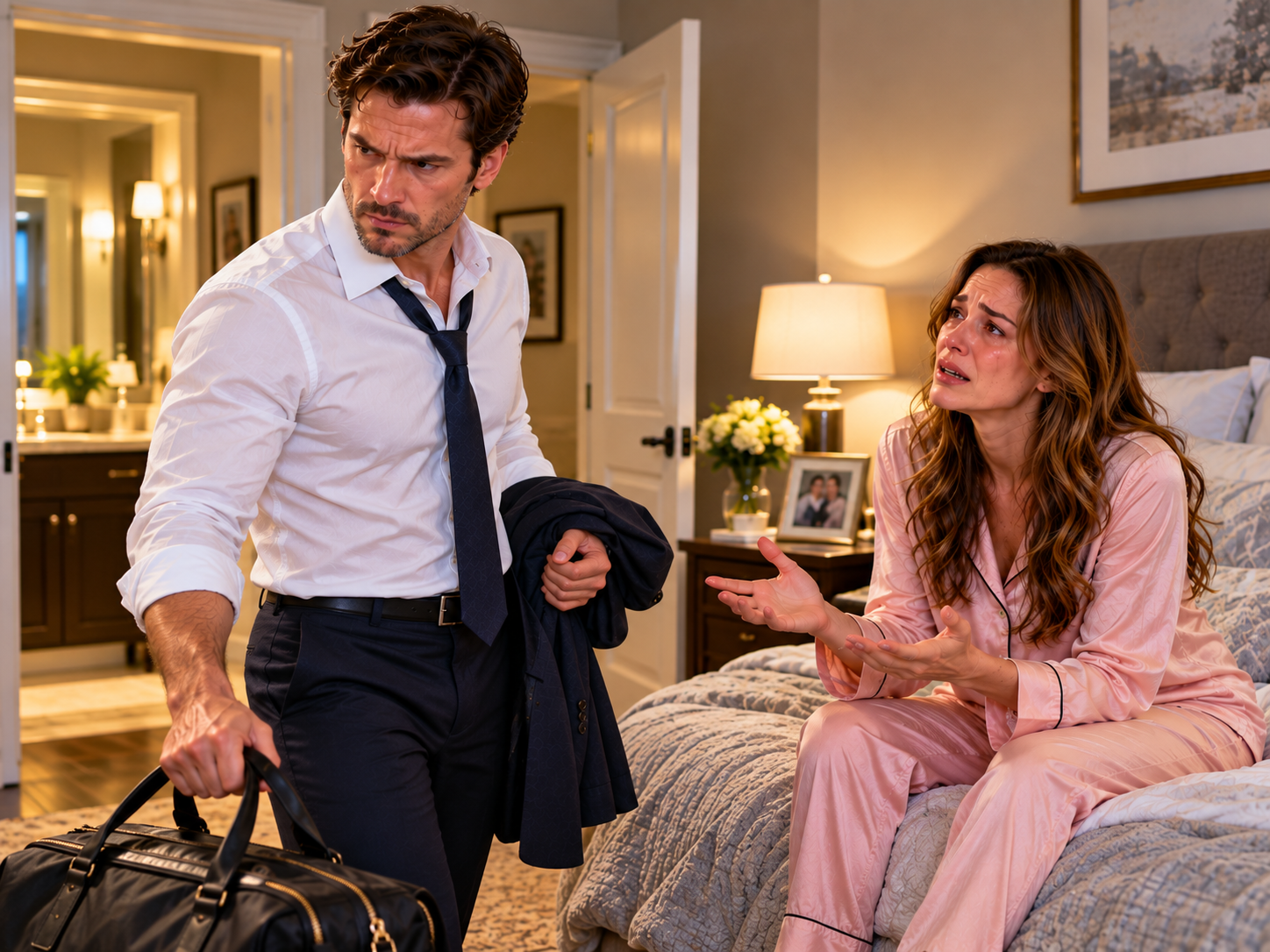
I remembered the morning I had left.
I remembered the suitcase.
My husband's face.
The way he had asked whether I was sure.
I remembered saying yes.
I had been sure.
That was the truth.
I couldn't rewrite it by becoming wiser afterward.
I walked away from the house.
I didn't knock.
There was nothing inside that belonged to me anymore.
That realization felt peaceful.
I continued toward the corner.
The café was still open.
I went inside.
I ordered coffee.
The woman behind the counter asked whether I wanted anything else.
"No, thank you."
I sat near the window.
Outside, people passed without noticing me.
I wondered how many of them were carrying old stories.
How many were regretting something.
How many were pretending not to.
I smiled at the thought.
For years, I had believed my story was unusually complicated.
It wasn't.
Human beings hurt each other in ordinary ways.
We make decisions because they feel right in the moment.
We discover later what those decisions cost.
Then we either learn or repeat them.
That was the real choice.
I had no control over the past.
I had control over what I did with it.
My former husband had chosen his path.
I had chosen mine.
Neither path needed to be a punishment.
A few days later, he called from his new city.
"How are you?"
"Good."
"Still?"
"Still."
He laughed.
"I've been thinking about something."
"What?"
"I don't regret leaving."
I felt a small ache.
"I don't regret letting you."
He was quiet.
Then he said, "I think that's probably the closest thing to peace we've ever had."
I smiled.
"Maybe."
We talked for another twenty minutes.
Before we ended the call, he said something I didn't expect.
"I'm glad I knew you."
My eyes filled with tears.
"I'm glad I knew you too."
He hung up.
I sat in silence.
There was no need to say more.
The marriage had ended.
The love had changed.
The resentment had faded.
The lesson remained.
I had once believed that losing my husband meant losing the person who knew me best.
In some ways, that was true.
But I had also learned something important.
Being known by someone else was not the same as knowing myself.
For years, I had depended on other people's love to tell me who I was.
My husband loved me, so I believed I was worthy.
My ex wanted me, so I believed I was desirable.
When my husband withdrew, I felt invisible.
When my ex disappointed me, I felt lost.
I had allowed other people's reactions to become mirrors.
Now I had a steadier one.
My choices.
My values.
My behavior when no one was watching.
That was how I knew I had changed.
Not because I never thought about the past.
Because I no longer needed the past to tell me who I was.
I kept the wedding photograph.
I kept the plates.
I kept the old book.
I kept the memory.
But I no longer kept the fantasy.
That was the difference.
I didn't imagine another version of our marriage.
I didn't imagine that my husband would suddenly return.
I didn't imagine that my high school ex had secretly been the person I was meant to be with.
Those stories had ended.
I let them remain ended.
One evening, I took the old folded paper from my drawer.
The one my husband had written before our separation.
Honesty.
Space.
No more punishment.
No pretending.
I had carried those words for years.
Now I understood every one.
Honesty had forced me to admit what I had done.
Space had allowed both of us to become separate people.
No more punishment had freed us from the cycle of hurting each other.
No pretending had prevented us from staying inside a marriage that no longer existed.
I folded the paper again.
Then I placed it in the same box as the wedding photograph.
Not because I wanted to preserve the marriage.
Because I wanted to preserve the lesson.
I closed the box.
This time, I didn't feel sad.
I felt finished.
Not empty.
Finished.
There was a difference.
The next morning, I woke early.
Sunlight came through the curtains.
I made coffee.
I opened the window.
The air was cool.
For a moment, I remembered another morning years earlier when I had sat awake waiting for my husband to come home.
I remembered checking the time.
12:14.
2:03.
5:27.
I remembered his footsteps.
His tired face.
My question.
Where were you?
His answer.
With friends.
At the time, I thought his indifference was the mystery I needed to solve.
Now I knew.
He had already spent months grieving the marriage.
He had already experienced the anger.
He had already confronted the humiliation.
By the time I returned, his emotions had moved somewhere I could no longer reach.
His shrug had not meant that he felt nothing.
It meant he had stopped asking me to understand.
Eventually, he learned to speak again.
Eventually, I learned to listen.
And eventually, we learned that listening did not require staying married.
That was the final truth.
I once wanted him to scream at me.
I wanted him to tell me how badly I had hurt him.
He did, eventually, in quieter words.
But the most important thing he told me was never spoken in anger.
It was shown in the life he chose afterward.
He chose himself.
And because I loved him, eventually, I chose to respect that.
That was not the ending I had wanted when I came home.
It was not the ending I had imagined when I first left.
It was not even the ending I believed possible when I sat awake waiting for him to return.
But it was the ending that belonged to the truth.
Our marriage could not be restored by regret.
The affair could not become meaningful simply because it ended badly.
My husband's later relationships could not undo my betrayal.
My remorse could not obligate him to trust me again.
His forgiveness could not obligate him to return.
And our love, however real it had once been, could not force two changed people back into a life that no longer fit.
We had to let the marriage end.
Then we had to let the past end too.
That took longer.
But eventually, it happened.
I don't know whether my former husband ever thinks about our marriage as often as I once did.
Maybe he doesn't.
Maybe he rarely remembers.
Maybe there are still moments when something brings it all back.
I don't need to know.
His memories belong to him.
Mine belong to me.
That is another boundary I finally understand.
Not everything needs to be shared.
Not every question needs an answer.
Not every ending needs another conversation.
Some endings are complete because both people stop trying to change them.
I used to believe the worst consequence of my affair was losing my husband.
Now I think it was discovering how easily I had abandoned my own judgment.
I had trusted a feeling more than I trusted the life I had built.
I had mistaken longing for truth.
I had confused returning with repairing.
And I had spent too long believing that someone else's anger would somehow tell me I was forgiven.
It didn't.
Forgiveness came differently.
It came when my former husband stopped needing revenge.
It came when I stopped needing punishment.
It came when we could remember without trying to return.
And it came when I finally understood that the person I hurt most was not the only person whose life had changed.
Mine had too.
I cannot undo what I did.
I cannot give my former husband back the year he spent trying to understand me.
I cannot erase the nights he spent alone.
I cannot change the decision to leave.
But I can live differently.
That is what remains.
Years later, if someone asks whether I regret leaving my husband for my high school ex, I don't need to hesitate.
Yes.
I regret the choice.
I regret the lies.
I regret believing that an old memory was more valuable than the person who stood beside me.
But I don't spend my life wishing the clock would turn backward.
Because the woman who made those decisions is not the woman I am now.
She wanted to escape discomfort.
I have learned to face it.
She wanted certainty.
I have learned to accept uncertainty.
She wanted someone else to make her feel complete.
I have learned to stand alone.
And she believed love meant never letting go.
I know better now.
Sometimes love means admitting what you broke.
Sometimes forgiveness means refusing to make another person carry your guilt.
Sometimes the most honest ending is the one where two people stop trying to become who they were.
My husband and I didn't get our old life back.
We didn't need to.
It belonged to the people we used to be.
We built separate lives instead.
And somewhere along the way, without realizing it, we both became okay.
That was the true ending.
Not reconciliation.
Not revenge.
Not forgetting.
Acceptance.
I closed the window.
Finished my coffee.
And went on with my day.
There was no dramatic music.
No final message waiting on my phone.
No one standing at the door asking me to come home.
There was only sunlight across the floor and the quiet knowledge that the life ahead belonged entirely to me.
For once, I didn't look backward.
I didn't need to.
Click here to continue reading: PART 13: After I Finally Stopped Looking Back, Ordinary Days Began Revealing How Much of My Old Life I Had Been Carrying Without Realizing It
I Came Home Believing Regret Could Repair What I Had Broken, But My Husband Had Already Begun Leaving Me Behind
Part 12 of 28

