The Monday after Clara's last visit began like any other.
She woke before sunrise, opened the curtains, and let pale morning light spill across the apartment floor. There was rain in the forecast, though the sky outside was still clear.
For years, Mondays had carried a particular weight.
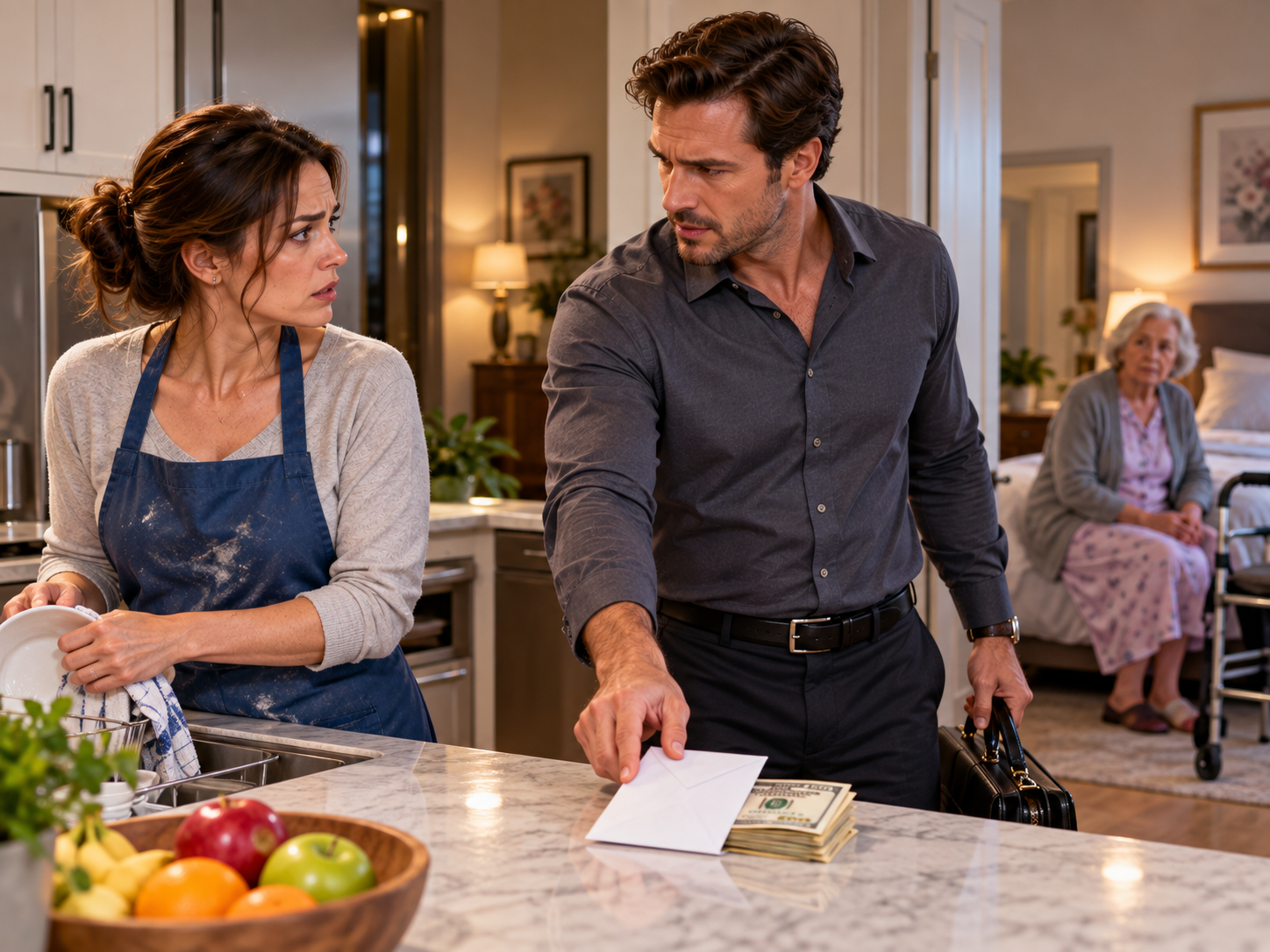
They had once meant cash on a kitchen island, an apron tied around Clara's waist, and the knowledge that someone expected her to solve problems without asking whether she had the strength.
Now Monday simply meant breakfast with Beatrice.
Clara smiled at the thought.
She made coffee, packed the bread Beatrice liked, and checked her phone.
There were no messages from Julian.
There hadn't been for a long time.
That fact no longer felt like a victory.
It was simply part of her life.
She drove to Beatrice's house later that morning.
The old property looked almost unchanged from the street. The garden had matured, the trees were taller, and a new wooden sign near the side entrance explained the small community care program connected to the property.
Clara parked and walked toward the front door.
Before she could knock, Beatrice opened it.
“You're early.”
“By twelve minutes.”
“I knew it.”
“You were waiting?”
“Of course.”
Clara stepped inside.
The house smelled of toast and jasmine tea.
She removed her coat.
“I brought bread.”
“You always bring bread.”
“You always eat it.”
“That is different.”
Clara laughed.
They went into the kitchen together.
There was no cash on the counter.
There had not been for years.
Still, Clara sometimes caught herself looking at that empty space.
It was strange how memory could remain attached to ordinary objects.
An island.
A tin.
An apron.
A mattress.
A folder.
None of those things had been important by themselves.
They had become important because of what people had tried to hide around them.
Beatrice poured tea.
“I have something to show you.”
Clara looked at her.
“That sounds suspicious.”
“It isn't.”
“You said that last time.”
“And I was right.”
Beatrice reached into a drawer and pulled out a small envelope.
Clara's stomach tightened.
Beatrice noticed immediately.
“Don't look frightened.”
“I'm trying not to.”
“This isn't from Julian.”
Clara relaxed.
“Good.”
“It is from Arthur.”
Clara stared at the envelope.
“I thought we had found everything.”
“So did I.”
Beatrice placed it on the table.
The handwriting was unmistakable.
Arthur had written Clara's name.
Not “Julian's wife.”
Not “my daughter-in-law.”
Just Clara.
She touched the paper.
“Why didn't Margaret mention this?”
“Because I only found it yesterday.”
“Where?”
“In an old desk drawer.”
Clara smiled.
“Of course.”
Beatrice opened the envelope.
Inside was a photograph.
Arthur stood on the porch beside Beatrice.
They looked younger.
Behind them was the same house.
Clara recognized the tree.
The second item was a handwritten note.
Beatrice read it first.
Her expression softened.
“What does it say?”
She handed it to Clara.
Arthur had written about the house.
He said he never wanted it to become a source of conflict between his children.
He had seen too many families become strangers over property.
He wanted Beatrice to remain secure.
But there was another line.
He wrote that if the house ever became a place where people felt they had to earn their right to belong, then the family had already forgotten what a home was supposed to mean.
Clara read the sentence twice.
Beatrice watched her.
“He was thinking about the future.”
“He always did.”
Clara folded the note carefully.
Then she noticed something written at the bottom.
Arthur had mentioned a small wooden box.
“What box?”
Beatrice frowned.
“I don't know.”
“He says, ‘If Clara ever needs to understand why I made these arrangements, the box will explain the rest.’”
They looked at each other.
Neither spoke.
The mystery was not frightening.
But it was unfinished.
And Clara had learned enough about unfinished things to know that they deserved attention.
They searched the desk.
Nothing.
They checked the study shelves.
Nothing.
Beatrice remembered an old storage room.
They went there together.
Dust covered the shelves.
Boxes were stacked against the wall.
Clara pulled one forward.
Old Christmas decorations.
Another.
Tax documents.
Another.
Photographs.
Beatrice pointed toward a wooden cabinet.
“Arthur kept tools there.”
Clara opened it.
Inside were gardening supplies, old gloves, and a small metal box.
“That's not wooden.”
“No.”
She looked behind it.
Nothing.
They searched for another hour.
Finally, Clara noticed a loose panel beneath the lowest shelf.
She knelt.
The panel moved.
Behind it was a narrow wooden box.
Beatrice stared.
“That wasn't there when I was young.”
“Maybe Arthur installed it.”
Clara lifted it carefully.
There was no lock.
Inside were letters.
Not legal documents.
Personal letters.
Arthur had written several over the years.
Some were addressed to Beatrice.
Some to Julian.
Some to Valerie.
One had Clara's name.
Clara hesitated.
“Should I read it?”
Beatrice nodded.
“You should.”
Clara unfolded the paper.
Arthur wrote that he had watched Clara care for Beatrice.
He had noticed that she apologized whenever she asked for anything for herself.
He had noticed that she made herself smaller whenever Julian became impatient.
He had not known whether it was temporary.
But he had remembered it.
Arthur wrote that he had wanted to speak to Clara but feared interfering in his son's marriage.
Then he wrote something that made Clara stop.
He said he had once asked Julian whether he understood how much Clara did.
Julian had apparently answered, “That's just what she likes doing.”
Clara closed her eyes.
Beatrice whispered, “I didn't know that.”
“Neither did I.”
The words hurt.
Not because Julian had said them.
Because Clara remembered all the times she had wondered whether her work mattered.
Arthur had known.
Someone had seen it.
The letter continued.
Arthur wrote that people often confuse generosity with weakness.
He believed Clara was generous.
He did not believe she was weak.
Clara lowered the letter.
For a moment, she couldn't speak.
Beatrice touched her shoulder.
“You should keep it.”
“I can't.”
“Why not?”
“It belongs to you.”
“No.”
Beatrice shook her head.
“Arthur wrote your name.”
Clara looked at the paper.
The handwriting seemed almost alive.
She folded it carefully.
“I'll keep it.”
They returned to the kitchen.
Neither spoke for several minutes.
Then Beatrice said, “Do you know what I regret?”
Clara looked up.
“That I didn't tell you sooner that Arthur saw what you were doing.”
Clara shook her head.
“You were afraid.”
“Yes.”
“So was I.”
Beatrice sighed.
“Fear makes people quiet.”
“Sometimes too quiet.”
They sat together.
Outside, the garden moved in the breeze.
Clara realized the discovery had not reopened the past.
It had completed something.
For years, she had believed she had been alone inside her marriage.
But there had been witnesses.
Arthur.
Beatrice.
Even, eventually, Margaret.
They had not always known what to do.
But they had seen.
That mattered.
Before Clara left that afternoon, Beatrice asked her to make a promise.
“What?”
“If you ever notice someone making themselves smaller to keep peace, don't assume they're fine.”
Clara smiled.
“I won't.”
“Ask them.”
“I will.”
“Even if they say they're fine.”
Clara laughed.
“You're giving me instructions.”
“I'm old. I'm allowed.”
Clara hugged her.
“Then I'll follow this one.”
She drove home with Arthur's letter in her bag.
That night, she placed it beside the photograph of Beatrice and Arthur.
She read it again.
Then she folded it.
The past could not be changed.
But sometimes the truth arrived late.
And sometimes late truth was still worth receiving.
Click here to continue reading: PART 14: “Clara thought Arthur’s final letter had closed the past, until one conversation with Beatrice revealed the quiet sacrifice hidden behind his protection”
My husband thought the cash on the kitchen counter was buying someone else’s labor, but I was already learning why he wanted his mother kept quiet
Part 13 of 20