The first night in our new house, I woke at 2:43 a.m.
For a moment, I didn't know where I was.
The room was dark, unfamiliar, and completely silent. Then I heard a small sound through the hallway.
A baby coughing.
I was out of bed before I was fully awake.
I opened Matthew's door.
He was standing in his crib, one hand gripping the rail, his hair sticking up in every direction.
“Mommy,” he whispered.
“I’m here.”
I lifted him.
His cheek rested against my shoulder.
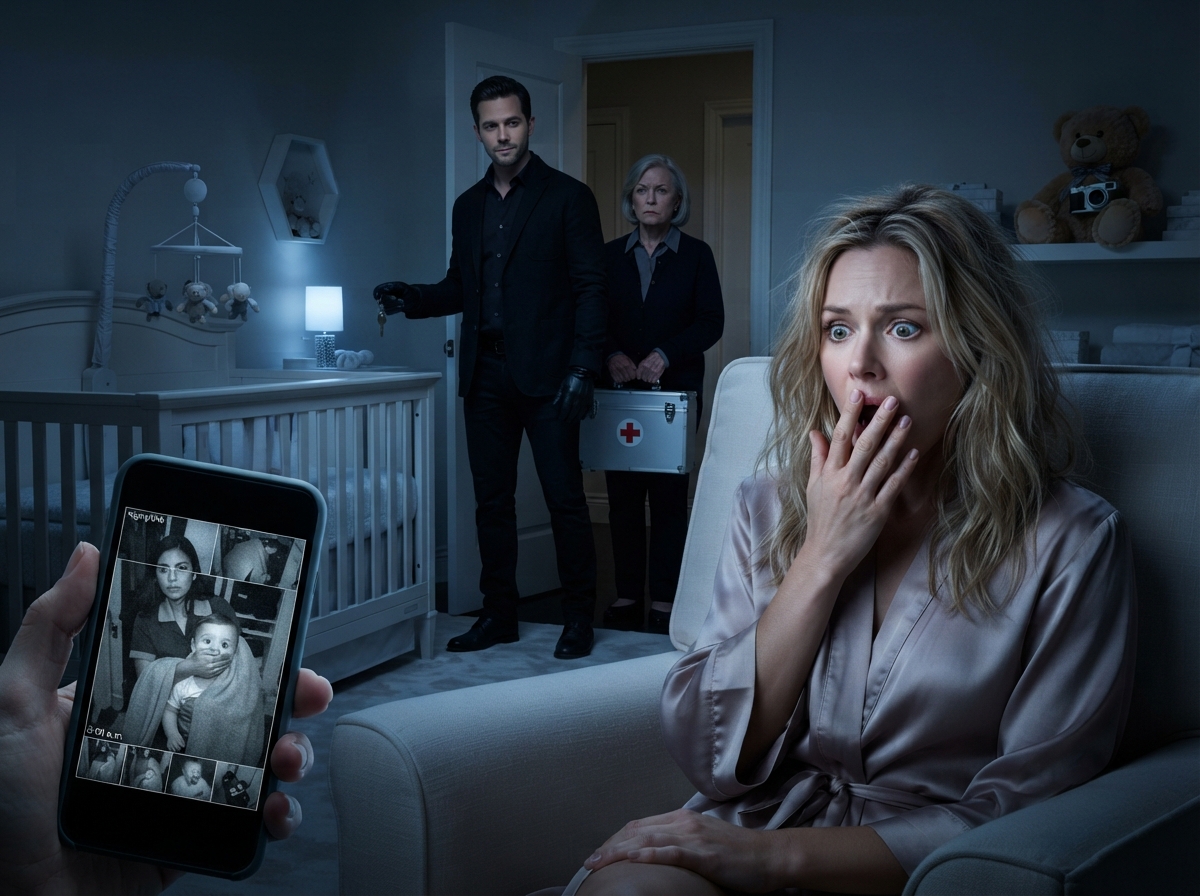
The relief that moved through me was immediate and physical. I stood there holding him while the old house flashed through my mind—the nursery camera, the silver medical case, Rosa inside the closet, and the basement where I had found Noah.
Then I looked toward the hallway.
No cameras.
No monitors.
No hidden feeds.
Just me.
For the first time, I understood that removing the cameras had not made me less careful. It had forced me to become present instead of constantly watching from a distance.
I carried Matthew into my room.
Noah was already awake.
He sat against the headboard with his blanket around his shoulders.
“Matthew woke up?”
“Yes.”
“Bad dream?”
“I think so.”
Noah looked at his brother.
“Can he sleep here?”
I smiled.
“For tonight.”
Matthew settled between us.
Noah carefully moved closer.
He was still learning how to be a big brother.
Sometimes he hovered over Matthew as if the baby might disappear if he looked away.
I understood why.
Noah had spent five years losing people without understanding why.
He had learned to hold tightly to anyone who remained.
I touched his hair.
“You don't have to watch him all night.”
“I know.”
“You can sleep.”
“I know.”
He said it again, but he didn't move.
So I let him stay.
The three of us eventually fell asleep together.
In the morning, I found myself thinking about something Rosa had said before leaving the hospital.
“You were a mother trying to protect your child.”
At the time, I had thought she was describing me.
Now I realized she had also been describing herself.
Rosa had known something was wrong and had stayed despite being frightened.
She had watched Matthew.
She had watched the basement.
She had collected evidence.
She had hidden him because she believed the adults around him were dangerous.
She had taken risks I had never understood because I had been looking at her through the wrong story.
I called her that morning.
She answered after the second ring.
“Ms. Valerie?”
“You don't have to call me that anymore.”
There was a pause.
“Valerie?”
“That sounds better.”
She laughed softly.
“How are the boys?”
“Sleeping.”
“Both?”
“Both.”
“That is good.”
I sat at the kitchen table.
“I want you to come back.”
Silence.
“As a nanny?”
“If you want.”
“I don't know.”
“You don't have to decide now.”
“I don't want to work in a house where I have to be afraid.”
“You won't.”
“I know you say that.”
“I mean it.”
She was quiet.
“I need time.”
“You can have it.”
That was the first time I understood that trust had to be mutual.
I couldn't demand that Rosa trust me simply because I had finally discovered the truth.
She had her own wounds.
I had mine.
No one owed the other instant healing.
The investigation into Eleanor continued.
Authorities had taken the medical records from the basement and the documentation Rosa had collected. The evidence showed a pattern of concealment that went far beyond one night.
Noah's care had been arranged privately.
His identity had been hidden from me.
His treatment had been controlled by people who had no legal right to make those decisions.
And Matthew had been subjected to repeated blood draws without my informed consent.
The medical specialists told me the procedures had not caused the severe harm I had feared, but that did not make them acceptable.
I sat in the hospital office listening to the explanation.
“So he is going to be okay?”
The specialist nodded.
“Matthew appears healthy. We want to monitor him, but we have no indication of permanent injury from the documented procedures.”
I closed my eyes.
That was the sentence I had needed.
“What about Noah?”
“He needs continued specialist care.”
“Can he live normally?”
“With appropriate treatment, we expect him to have a meaningful life.”
Meaningful life.
I held onto those words.
After five years of believing I had buried one child, I was learning to imagine a future for him.
Not a perfect future.
A real one.
When I returned home, Noah was sitting at the kitchen table drawing.
“What are you drawing?”
He pushed the paper toward me.
It showed four people.
Me.
Him.
Matthew.
And Rosa.
“Who is that?”
“Rosa.”
I smiled.
“Why?”
“She saved us.”
I looked at him.
“You remember?”
He nodded.
“She was nice.”
“Yes.”
He went back to coloring.
I watched him for a moment.
“Do you want her to come back?”
He looked up immediately.
“Yes.”
“Then maybe she will.”
That evening, Rosa came to the house.
She stood at the front door for several seconds before entering.
No uniform.
No work bag.
Just a woman who had spent months protecting a child while nobody protected her.
Noah ran toward her.
She crouched.
He wrapped his arms around her.
Rosa closed her eyes.
I looked away.
Some reunions were too private to watch directly.
When she finally stood, she looked at me.
“I was afraid.”
“I know.”
“I didn't know whether you would believe me.”
“I didn't at first.”
“I know.”
“But you kept protecting him.”
She nodded.
“I couldn't stop.”
“Thank you.”
Her eyes filled.
She looked toward Matthew, who was sitting on the floor with a toy.
“Can I stay for dinner?”
I smiled.
“Yes.”
She stayed.
It was the first meal in the new house that felt like the beginning of something rather than the continuation of something broken.
We talked about ordinary things.
Food.
Weather.
Matthew's sleeping schedule.
Noah's favorite cartoon.
Nobody mentioned Eleanor.
Nobody mentioned the basement.
Nobody mentioned the cameras.
For one evening, we allowed the boys to simply be children.
Later, after Rosa left, I found Spencer standing outside the gate.
Security had called me.
I almost told them not to let him through.
Then I changed my mind.
I went outside alone.
“What do you want?”
He looked tired.
“I wanted to see the boys.”
“You can see them through the proper arrangements.”
He nodded.
“I understand.”
I studied him.
He looked nothing like the man who had walked into the nursery wearing black gloves.
“I need to ask you something.”
“What?”
“Did you ever love me?”
He closed his eyes.
“Yes.”
The answer came immediately.
That made it harder.
“Then how did you let this happen?”
“I thought I was protecting Noah.”
“You were protecting your mother.”
He looked away.
“I know.”
“And Matthew?”
“I thought the procedures were temporary.”
“You never asked me.”
“No.”
“You didn't even want to know what I would say.”
“I was afraid.”
I nodded.
“I understand fear.”
He looked at me.
“I don't think you do.”
“I do.”
I touched the gate.
“I was afraid every day after Noah disappeared. I just didn't know what I was afraid of.”
Spencer lowered his head.
“I am sorry.”
“I believe you.”
He looked surprised.
“But I'm not taking you back.”
“I know.”
“And I'm not going to let your apology become another way for you to avoid responsibility.”
“I know.”
He nodded.
“Can I see them?”
“Not tonight.”
He accepted it.
That mattered.
He left without arguing.
I watched him disappear down the road.
For the first time, I felt no need to chase him with questions.
The answers would come through records, testimony, and time.
My job was elsewhere.
Inside the house, my sons were waiting.
I opened the door.
Noah looked up.
“Is Dad coming?”
“Not tonight.”
He nodded.
Then he returned to his drawing.
I sat beside him.
“What are you drawing now?”
He turned the page.
It showed two little boys holding hands.
Above them, in uneven letters, he had written:
BROTHERS.
I touched the paper.
“Yes,” I whispered.
“Brothers.”
Click here to continue reading: PART 6: Noah had survived five hidden years, but the hardest part was teaching him that his mother had never abandoned him and that Matthew had never been his enemy
I thought the cameras would expose a careless nanny, but the first recording showed her protecting my baby from people I had trusted without question
Part 5 of 20