
Michael chose a small café near the park for our next Saturday meeting. I arrived with a book in my bag and no particular plan for the afternoon. We had agreed to have lunch and perhaps walk afterward if the weather held. A few months earlier, I might have spent the morning wondering whether he intended to discuss our marriage, whether he would ask me to return, or whether I needed to prepare myself for another difficult conversation. This time, I simply got dressed and left my apartment.
He was already seated when I arrived, looking through the menu. He stood to greet me, then waited for me to decide whether I wanted a hug. I gave him one, brief and comfortable, and sat opposite him.
“You look rested,” he said.
“I slept well.”
“I’m glad.”
We ordered sandwiches and coffee. Michael told me about a problem at work that had taken two meetings and several uncomfortable emails to resolve. I told him about the woman in my building who had finally convinced the landlord to repair the hallway light after months of making polite requests that went unanswered. We laughed at the fact that she had brought a handwritten list of dates to the office and placed it on the desk without saying a word.
“She sounds determined,” Michael said.
“She got tired of asking nicely and hoping someone would notice.”
He smiled, but I saw him think about the remark. I had not meant it as a comment on our marriage, yet it carried an obvious resemblance to what had happened between us. For once, I did not feel responsible for making sure he understood the connection or for assuring him I had not intended to criticize him. If he heard something useful in it, that was his work to do.
After lunch, we walked through the park. The trees were beginning to change color, and dry leaves gathered along the edges of the path. Michael told me that his counseling sessions had started to focus less on the immediate conflict with Eleanor and more on the habits he had developed long before I met him.
“I always thought I was a peaceful person,” he said. “I don't like arguments. I don't like people being angry with me. I assumed that made me considerate.”
“Sometimes it did.”
“And sometimes it meant I let someone else take the hit so I could avoid the argument.”
I glanced at him. “That’s what happened to us.”
“Yes.”
He did not try to turn the statement into a confession that would require me to comfort him. We kept walking.
“I've been thinking about what you said before,” he continued. “About needing to know that our home would actually be ours to build together.”
I felt my shoulders tighten slightly. I had known this subject would return, but I had hoped we might have more time before discussing it again.
“I remember,” I said.
“I’m not asking you to move back. I know that isn't an option right now. But I want you to know I understand why the question matters.”
“Tell me what you understand.”
He looked toward the path ahead, considering his words.
“I used to think that because my mother owned the house, her preferences had to come first. Even when you and I were married, I treated our life there as something she allowed us to have, rather than a life we were entitled to shape together within the agreement. I kept telling myself that it was easier to compromise because it was her house.”
“And when the compromise always came from me?”
“I told myself you were better at handling it. Or that you didn't mind as much as I did. I used those explanations because they made it possible to avoid confronting her.”
His answer hurt, but not in the same way his silence had hurt before. Back then, I had been left alone with the knowledge that something was wrong, while he acted as though the problem was my reaction. Now he was naming the choice he had made.
“You cannot promise that Eleanor will never be difficult again,” I said. “And you cannot promise that you'll never feel afraid of disappointing her.”
“I know.”
“What you can do is decide what you'll do when those feelings come back.”
He nodded. “That's what I'm trying to learn.”
We reached a bench near the pond and sat down. A child was tossing small pieces of bread toward the water while his father explained that feeding the birds was not the same as feeding every creature in the pond. The child looked unconvinced.
Michael watched them for a moment.
“I've also been thinking about the house itself,” he said. “Not about who owns it. I know that isn't in question. I mean what I thought it represented.”
“What did it represent to you?”
“Stability. Family history. A place my father helped build. I thought keeping everything the same meant I was protecting those things.”
“And now?”
“Now I think I was protecting the appearance of stability, even when the way we lived there wasn't stable for you.”
I folded my hands in my lap. “A house can hold a lot of memories and still be an unhappy place to live.”
“I know.”
“Your father understood that. That's why he put safeguards in the agreement. He wasn't trying to take the house away from your mother. He was trying to make sure preserving it didn't become an excuse to control everyone inside it.”
Michael looked at me. “I think I understand that better now than I did when Charles first showed us the documents.”
“I hope so.”
He drew a breath, then asked the question that had been waiting beneath the conversation.
“Do you think you'll ever trust me with a home again?”
The question was quiet, and I could hear the vulnerability beneath it. For a moment, I felt the familiar urge to protect him from uncertainty. I wanted to say yes, because I still cared about him. I wanted to make the answer gentle enough that he would not leave the bench feeling defeated.
But a comforting answer would have been another kind of promise I was not ready to make.
“I don't know yet,” I said. “Trust isn't something I can decide to feel because I understand why you did what you did.”
He nodded slowly.
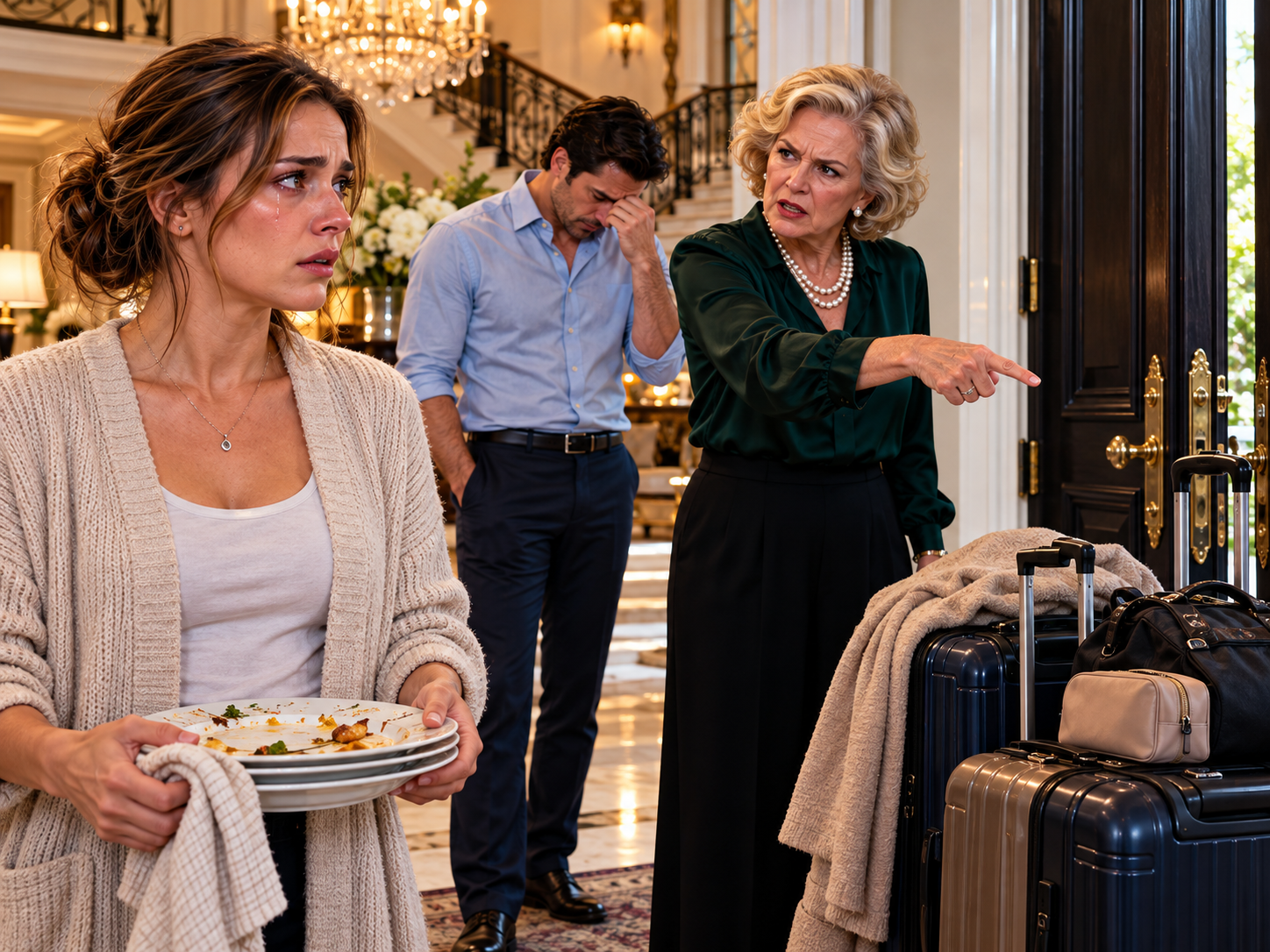
“I know you were afraid of your mother,” I continued. “I know you regret what happened. But when I think about living with you again, I remember standing at that front door and realizing you'd already packed my things. I remember that you didn't even meet my eyes. I need time to understand whether I could feel safe with you in a shared home, especially if the person you're afraid of is unhappy with me.”
“I understand.”
“And I need to see that you can make decisions when I'm not there to watch you make them. I can't spend the rest of my life wondering whether you'll defend me only when I can hear you.”
He looked down at his hands. “That's fair.”
“I don't want you to spend your life trying to earn a specific answer from me, either. Keep doing the work because you want to live differently, not because you think there's a prize at the end.”
“I am trying to do that.”
“I believe you are trying.”
He seemed to recognize the distinction and accepted it without asking me to say more.
We sat for another few minutes before continuing around the pond. The conversation had not given either of us certainty, but it had made something clearer. Michael was beginning to understand that the home he had imagined preserving had not felt like home to me. He could regret that. He could work to become a better partner. But he could not ask me to trust him simply because he now understood the damage.
When we parted, he thanked me for the afternoon and said he was glad we had talked.
“So am I,” I answered.
At home, I took the book from my bag and placed it on the shelf. I made tea, opened the window, and watched the light shift across the floor. I thought about the question he had asked and realized that I did not need to answer it tonight, or next week, or even by the end of the year.
If we ever shared a home again, I wanted it to be because we had built enough trust to make that choice honestly. I did not want to move back because I missed the familiar rooms, because Michael was lonely, or because Eleanor had finally learned to write a careful letter.
I wanted a home where I could disagree without fearing that my place would disappear.
Until I knew whether that was possible with Michael, I could continue living the life I had made for myself.
That evening, I turned off the lamp beside the couch and went to bed without sending him a reassuring message. I did not need to prove that I still cared by promising what I could not yet know.
For the first time, I trusted myself to let the question remain unanswered.
Click here to continue reading: PART 18: When Eleanor Asked Me to Help Sort Jonathan’s Belongings, I Had to Decide Whether Revisiting the Past Would Take Me Backward or Allow Me to Leave It in Its Proper Place
My Mother-in-Law Had Packed My Life Into Two Suitcases, but the Question My Husband Refused to Answer Was Only the Beginning
Part 17 of 20

