
Hugh called on a Tuesday morning while I was preparing Dad's breakfast. I had just cut a piece of toast into manageable squares when my phone vibrated against the counter. His name appeared on the screen, and I nearly let it ring out.
Instead, I dried my hands and answered.
“I want to see Dad this weekend,” he said.
No greeting, no question about how our father was doing. Hugh spoke as though he were booking an appointment at a business where the staff had been unnecessarily difficult.
“Saturday afternoon would work,” I replied. “I'll arrange for you to visit here.”
“I don't want you standing over me the whole time.”
“Dad can become confused or distressed. I'll be nearby, and Lupita will be here to help if he needs anything.”
“So you don't trust me.”
I placed the knife in the sink. “Trust is something you rebuild through your actions. I'm not going to argue about that on the phone.”
He made a frustrated noise. “Fine. Saturday.”
I confirmed the time and ended the call before the conversation could drift into another accusation.
For the next few days, I prepared Dad for the visit without making it sound like a test. I told him Hugh might come by, then repeated the information later when he had forgotten. Sometimes he responded with a smile. Sometimes he asked whether Hugh was a train conductor. I answered gently and let the question pass.
I also spoke with Lupita about keeping the visit calm. Dad did not need to hear us arguing, and he did not need to be asked to remember things he could no longer retrieve. If Hugh wanted to speak about the bank, we would do it away from Dad. If he became upset, the visit could end.
Lupita agreed.
“You don't have to make the visit comfortable for Hugh,” she reminded me. “You only need to make it safe for your father.”
Saturday arrived under a low gray sky. I had baked a small loaf of bread before breakfast and prepared Dad's favorite soft pudding for later. I wanted the afternoon to feel familiar, not like an official meeting. Dad sat in his chair wearing a clean shirt and his brown sweater, his hair combed carefully to one side.
At two o'clock, Hugh's car pulled into the driveway.
He came to the door carrying a paper bag from a bakery. For a moment, I thought he had brought something for Dad. Then he held it out toward me.
“Here,” he said. “I didn't know what else to bring.”
Inside were two pastries and a packet of biscuits. I thanked him and placed the bag on the counter. The gesture was small, but I did not dismiss it. It was the first time in a long while that Hugh had arrived with something for our father rather than leaving me to find everything he needed.
Dad looked up when Hugh entered the living room.
“Arthur,” Hugh said, moving toward him. “It's me.”
Dad studied his face. “Hugh?”
My brother's expression softened.
“Yeah, Dad. It's Hugh.”
Dad smiled. “You're late for work.”
Hugh laughed awkwardly. “Not today.”
He sat in the chair beside Dad and began telling him about the weather. I stayed in the kitchen doorway, close enough to help but far enough away to give them room. For several minutes, the conversation went well. Dad asked about the railroad, and Hugh told him that trains still ran through the county. He did not correct Dad when the questions repeated. He even smiled when Dad described an old supervisor whose name Hugh could not remember.
I watched my brother speak to our father and felt a painful mixture of relief and resentment. This was the kind of visit I had wanted for years. It was not complicated. Dad did not need Hugh to solve every problem in his life. He needed him to sit down, listen, and be present.
Why had it taken so much for this small thing to happen?
After half an hour, Dad became tired. I helped him settle back against his pillow and brought him a cup of water. Hugh waited until I had finished, then followed me into the kitchen.
“Can we talk?” he asked.
“About what?”
“About the investigation.”
I dried my hands on a towel. “What about it?”
“I've been trying to get things back to normal.”
“Normal for whom?”
He frowned. “You know what I mean. I want us to stop fighting.”
“We weren't fighting when Dad's pension was being taken. I was trying to find out why his care expenses weren't being paid.”
“I told you I was going to explain.”
“You had months to provide an explanation. You finally sent records through the investigator, and the matter was handled through the proper process.”
Hugh leaned against the counter. “I made mistakes.”
I looked at him, waiting for the rest.
“I was under pressure. Things were bad. I thought I could sort it out before anyone noticed.”
“Did you think about what would happen if Dad needed medicine and the account was empty?”
He looked away.
“I wasn't thinking clearly.”
“Neither is Dad, much of the time. That's why he's vulnerable. You knew that.”
Hugh rubbed his forehead. “I know.”
The admission was quieter than his usual protests, but it was not yet an apology. I wanted to believe it meant he was beginning to understand. I also knew that a person could acknowledge a fact without accepting responsibility for its consequences.
“What are you asking me to do?” I said.
“Stop treating me like I can't be trusted with anything.”
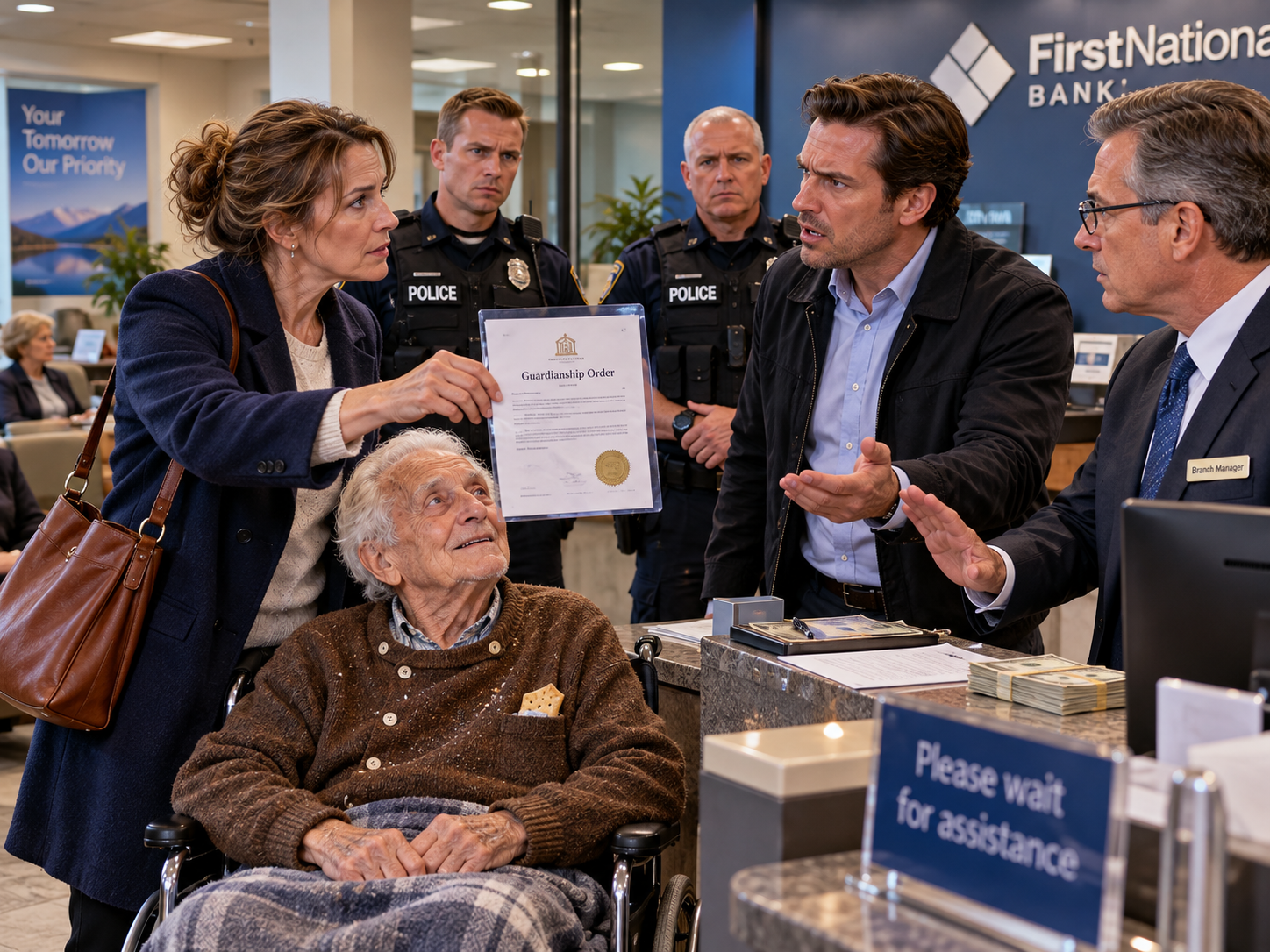
“I'm not going to give you access to Dad's pension. The guardianship order is there to protect him, and the bank will continue to follow it.”
“I don't want his money.”
“Then we agree on that.”
He stared at me, frustrated by the answer.
“I want to be able to help.”
“Then help in ways that don't involve controlling the money. Visit him. Bring groceries. Take him for a walk when it's appropriate. Ask Lupita what supplies are running low. Offer to cover a bill directly if you want to contribute. There are plenty of ways to be involved.”
Hugh looked toward the living room.
“It's not that simple.”
“It can be simple if you choose to make it simple.”
He did not answer.
I knew that part of the problem was pride. Hugh had spent years believing that being the oldest son entitled him to a particular place in the family. Accepting help from me, or following safeguards I had put in place, felt to him like losing status. But Dad's illness had changed what responsibility required. The question was no longer who had the authority to make decisions. It was whether the person making them could be trusted to act in Dad's interests.
I was not going to gamble with his care to protect Hugh's pride.
After a while, Hugh returned to the living room. Dad was awake again and looking at the photograph on the side table. Hugh sat beside him and asked who was in the picture.
Dad pointed to himself, then to me.
“That's Claudia,” he said.
“That's right,” I replied from the doorway.
He touched Hugh's face in the photograph.
“And that's my boy.”
Hugh swallowed. He reached for Dad's hand and held it for a moment. I looked away to give him privacy, though the sight brought tears to my eyes.
The visit ended quietly. Hugh helped me put Dad's blanket back over his knees, then stood near the door with his hands in his pockets.
“Can I come again?” he asked.
“Yes,” I said. “We can arrange another visit.”
He nodded, apparently expecting more. I did not offer reassurance that everything was forgiven, and I did not tell him the family would return to how it had been. We had spent too long using ordinary words to cover extraordinary harm.
At the door, he paused.
“You know I never wanted Dad to go without anything.”
I looked at him. “Then make sure he doesn't.”
He left without answering.
Afterward, I sat beside Dad while he watched a train documentary. He was content, his eyes following the slow movement of the locomotive across the screen. I wondered whether he would remember Hugh's visit the next day. Perhaps not. The details might fade before the week was over.
But the visit had happened. Dad had heard his son's voice and held his hand. That was worth something, even if it did not repair the damage between Hugh and me.
That evening, Hugh sent a message saying he wanted to help with Dad's expenses. I replied with a list of current needs and explained that any contribution could be made directly toward a documented bill or through the care arrangement, without giving him access to the pension account.
He did not answer that night.
The next afternoon, he sent a small payment toward Dad's medical supplies. It was not enough to erase what he had taken, and it did not settle the matter of the missing funds. But it was a contribution that could be recorded, verified, and used for Dad's care.
I thanked him.
I did not add anything about forgiveness.
Over the following weeks, Hugh visited twice more. He was sometimes impatient when Dad repeated a story, and once he checked his phone so often that Dad stopped talking and stared at the television instead. I intervened when necessary, reminding Hugh that Dad needed calm company, not someone waiting for the visit to be over.
Hugh bristled at first, but he stayed.
During the third visit, Dad asked him whether he had brought the lunchbox for work. Hugh looked confused, then realized Dad was remembering him as a boy.
“No lunchbox today, Dad,” he said gently. “I'm here to see you.”
Dad smiled and settled back into his chair.
When Hugh left, he said the visits were harder than he had expected.
“I know,” I replied.
“He doesn't always know who I am.”
“Sometimes he does. Sometimes he doesn't. That doesn't mean the visit is pointless.”
Hugh looked down at the floor.
“I used to think you were exaggerating how much help he needed.”
“I know.”
“I didn't understand.”
I wanted to ask why he had never tried harder to understand before taking the money. I wanted to tell him how many nights I had spent awake listening for Dad to get out of bed, how many shifts I had worked while worrying about his health, and how frightened I had been when the pension account was empty.
Instead, I said, “You can understand more now, if you keep showing up.”
He nodded and left.
I watched his car disappear down the road, then returned to the house. Dad was asking Lupita whether the train had arrived. I went to his chair, knelt beside him, and told him we would check the schedule together.
My relationship with Hugh was not healed. The bank records still existed, the legal safeguards remained necessary, and I was not going to pretend that a few visits made the past harmless. But he had begun doing something that did not revolve around himself. He was showing up, imperfectly, for the father who had once given him everything he could.
I could not decide whether that would become a lasting change.
I could decide to leave room for it without putting Dad at risk.
Click here to continue reading: PART 7: Dad’s Memory Began Fading Faster, and the New Care Decisions Forced Hugh and Me to Choose Between Old Resentments and Our Father’s Dignity
My Brother Thought Our Father’s Memory Loss Had Made Him Easy to Rob, Until the Bank Manager Read the Papers I Had Brought
Part 6 of 20

