David asked me the question while we were walking.
We had attended one of Sam's family events.
Everyone else had already left.
The evening was cool.
The street was quiet.
David said, “Do you still think about the settlement?”
“Sometimes.”
“Do you think signing it was the bravest thing you ever did?”
I considered it.
“No.”
He looked surprised.
“What was?”
“Building a life afterward.”
He smiled.
“Why?”
“Because signing took one day.”
“And rebuilding?”
“Years.”
He nodded.
“That makes sense.”
We continued walking.
“People think surviving something is the hardest part,” I said.
“Isn't it?”
“Sometimes.”
“But?”
“Sometimes the harder part is learning not to organize your entire identity around surviving it.”
He looked at me.
“That sounds difficult.”
“It was.”
“How did you do it?”
“I stopped telling myself that I was the woman whose husband wanted a divorce.”
He nodded.
“And who were you?”
“A mother.”
“A professional.”
“A friend.”
“A daughter.”
“A person.”
He smiled.
“That's a long list.”
“It took me a long time to remember.”
He was quiet.
Then he said, “I think I spent years defining myself by the divorce too.”
“How?”
“As the man who had walked away.”
I looked at him.
“Were you?”
“Yes.”
“But you're also a father.”
“Yes.”
“A grandfather.”
“Yes.”
“A person who changed.”
He smiled.
“I like that better.”
“So do I.”
We reached our cars.
Before getting in, David said, “I have one more question.”
“What?”
“If you had known what life would become, would you have been less afraid?”
“Yes.”
He laughed.
“That's unfortunate.”
“Why?”
“Because we never get that information.”
“No.”
He nodded.
“Maybe that's the point.”
I smiled.
“Maybe.”
The next morning, I received a message from Sam.
“Can you come over?”
“Everything okay?”
“Yes.”
When I arrived, he was sitting at the kitchen table.
His wife was beside him.
“We have news.”
I smiled.
“What kind?”
They exchanged a glance.
“We're expecting another baby.”
I stood.
“Oh.”
Then I hugged them both.
“That is wonderful.”
Sam laughed.
“We thought you'd be excited.”
“I am.”
His wife smiled.
“Dad already knows.”
“Of course he does.”
“He cried.”
I laughed.
“He'll deny it.”
“He already did.”
We talked for hours.
Names.
Plans.
Work.
Space.
Everything new parents worry about.
At one point, Sam asked, “Do you think I can do this?”
I looked at him.
“You already are.”
“What if I make mistakes?”
“You will.”
He laughed.
“Thanks.”
“You'll make mistakes.”
“What if they're big ones?”
“Then you repair what you can.”
“What if I can't?”
“Then you learn to live responsibly with what you cannot repair.”
He became quiet.
That was perhaps the most important lesson I could give him.
No one gets through life without regret.
The goal is not perfection.
The goal is responsibility.
That evening, David called.
“Congratulations.”
“Thank you.”
“Sam told me.”
“He did.”
“I was thinking.”
“You've been doing that a lot.”
He laughed.
“I know.”
Then he said, “I want to help them, but I don't want to interfere.”
“Then ask what they need.”
“That's it?”
“Yes.”
“I can do that.”
“You're improving.”
“Slowly.”
“Very.”
He laughed.
The years had softened us.
Not into strangers.
Not into friends in the ordinary sense.
Something else.
We were people who had once shared a marriage and now shared a family history.
There was no need to name it.
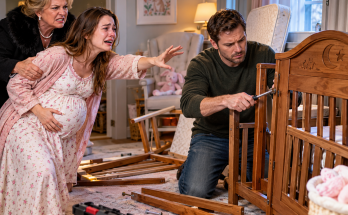
One weekend, David helped Sam assemble a crib.
I watched from the doorway.
The instructions were spread across the floor.
David looked frustrated.
“This makes no sense.”
Sam laughed.
“You said you read everything.”
“I read the important parts.”
“Dad.”
“Fine.”
He went back to the instructions.
I smiled.
Years earlier, he had signed financial documents without reading them carefully.
Now he was struggling through a crib manual because his grandchild would sleep in it.
There was something almost poetic about that.
Responsibility had become practical.
Not theoretical.
Not financial.
Physical.
Immediate.
He needed to know which piece went where.
Sam eventually helped him.
The crib stood properly.
David stepped back.
“Good.”
Sam smiled.
“You did it.”
“We did it.”
That sentence stayed with me.
We did it.
Not I.
Not you.
We.
The word David had once used carelessly at Christmas dinner when he had announced a bonus as though my achievement belonged to both of us.
Years later, the same word had acquired a different meaning.
Now it meant cooperation.
Shared responsibility.
Family.
Not ownership.
That distinction was enormous.
I never mentioned it.
I didn't need to.
The next morning, David brought me coffee.
“Thank you.”
He sat down.
“I've been thinking about the word ‘we.’”
I laughed.
“Apparently so have I.”
He looked surprised.
“How did you know?”
“I remember everything.”
He smiled.
“I used to think ‘we’ meant whatever belonged to both of us.”
“And now?”
“Now I think it means whatever we choose to carry together.”
I looked at him.
“That is better.”
“It took me years.”
“Some lessons do.”
We drank our coffee.
There was no resentment attached to the old memory.
It had become another lesson.
That was the strange thing about time.
It did not erase history.
It changed the weight of it.
A painful sentence could become a reminder.
A photograph could become evidence of happiness rather than loss.
A legal document could become a record rather than a wound.
A person could become a different version of themselves.
And a family could become something no one had planned.
When the baby arrived months later, the whole family gathered.
David held the child first after the parents.
He was careful.
Almost nervous.
I watched his hands.
They were not the hands of the man who had once said he had no time.
They were the hands of a grandfather who wanted to remember every detail.
He whispered something.
“What did you say?” I asked.
“Nothing.”
“You said something.”
He smiled.
“I told the baby to take care of the parents.”
I laughed.
“That is not how it works.”
“I know.”
Sam smiled.
“Dad's emotional.”
“I am not.”
“You are.”
David looked at me.
“Don't encourage them.”
I laughed.
The room filled with warmth.
I realized then that the settlement had never been the final proof of anything.
It had simply been one decision in a long chain of decisions.
The real measure of a person's life was what they did afterward.
David had learned.
I had learned.
Sam had grown.
The family had expanded.
And the old story had become one chapter among many.
Not the whole book.
Click here to continue reading: PART 28: When I finally looked at the woman I had become, I understood that the greatest thing I kept was not Sam or my future alone, but the right to decide who I would be after everything changed
David Asked for the House, the Cars, and Every Dollar We Owned, But the One Thing He Refused to Take Was the Detail That Made His Demand Dangerous
Part 27 of 28