Years passed quietly.
The house became quieter.
The children grew.
Toby's daughter became a young woman.
Her brother grew taller than me.
David's hair became gray.
Chloe laughed more easily than she had when I first knew her.
Lucas continued flying.
He still called me from airports.
Sometimes he called simply to say hello.
That mattered.
One morning, my phone rang.
It was Lucas.
“Mom.”
“Yes?”
“Guess where I am.”
“An airport.”
“Very funny.”
“Which one?”
“O'Hare.”
I smiled.
“That never gets old.”
“Neither do you.”
“I'll remember that.”
He laughed.
We talked for a few minutes.
Then he said, “I was thinking about the old story.”
I sighed playfully.
“Again?”
“It's not really old to me.”
“I know.”
“I've been thinking about what it taught me.”
“What?”
“That paying attention isn't the same as being afraid.”
I smiled.
“That is a good lesson.”
“And I think that's what I want my kids to learn.”
“Then teach them.”
“I will.”
After we hung up, I walked into the kitchen.
The house was quiet.
Morning light crossed the floor.
For a moment, I thought about the first morning.
The dishes.
The phone.
Chloe's voice.
The water upstairs.
The passport.
The impossible contradiction.
The fear.
I remembered all of it.
But none of it had the power it once held.
That surprised me.
I had expected healing to feel like forgetting.
Instead, it felt like remembering without being pulled backward.
The family record was still in the drawer.
I took it out.
The pages were slightly worn.
Some photographs had faded.
Some handwriting had become harder to read.
But the story remained.
I opened to the final page.
The sentence Chloe had written was still there.
We did not become stronger because nothing frightened us anymore; we became stronger because fear stopped being the only voice we listened to.
I read it twice.
Then I closed the record.
David arrived later that afternoon.
He carried groceries.
“You're still buying too much.”
“I know.”
“You live alone.”
“I have grandchildren.”
“They don't live here.”
“They eat.”
He laughed.
We put the groceries away together.
Then he asked, “How are you?”
“Good.”
“Really?”
“Yes.”
He nodded.
“Me too.”
We stood in the kitchen.
There was no reason to talk about the past.
Yet David looked toward the drawer.
“You still have it?”
“Yes.”
“Do you ever want to throw it away?”
“No.”
“Why?”
“Because forgetting isn't necessary.”
He nodded.
“I agree.”
Then he smiled.
“But I don't think I'll ever open it again.”
“You might.”
“Maybe.”
That was the point.
The record was available.
It simply wasn't required.
A few days later, Chloe came.
She brought flowers.
“You're getting too many flowers.”
“Then enjoy them.”
We put them in a vase.
She looked around the kitchen.
“Do you remember when this room felt frightening?”
“Yes.”
“Does it now?”
I looked around.
“No.”
She smiled.
“Me neither.”
That was enough.
We didn't need to discuss why.
The room had changed.
We had changed.
The memory remained.
But it had become smaller than the room.
Smaller than the family.
Smaller than the life.
That evening, Toby brought his children.
His daughter had become an adult.
She carried the family record.
I looked at her.
“You took it?”
“I wanted to return it.”
“You can keep it.”
She shook her head.
“No.”
“Why?”
“Because I think it belongs here.”
She placed it on the table.
Then she sat down.
“I read it.”
“All of it?”
“Yes.”
“How did you feel?”
She thought.
“Sad.”
I nodded.
“Angry.”
I nodded again.
“Grateful.”
That surprised me.
“For what?”
“For everyone who told the truth.”
She paused.
“And for the people who admitted when they didn't.”
I smiled.
She had understood.
Then she said, “I also realized something.”
“What?”
“I don't think my children need to know every frightening detail.”
I smiled.
“No.”
“But I want them to know that if something doesn't make sense, they can talk to me.”
“Yes.”
“And if someone scares them, they can tell me.”
“Yes.”
“And if they make a mistake, they can tell me.”
“Yes.”
She smiled.
“That's what I want them to inherit.”
I reached for her hand.
“Then you understand.”
She squeezed mine.
Toby watched from across the room.
His eyes were wet.
He looked away.
I pretended not to notice.
Later, everyone gathered for dinner.
The table was crowded.
There were too many plates.
Too many glasses.
Too many conversations happening at once.
Someone laughed.
Someone interrupted.
Someone spilled water.
Someone complained about the food.
David defended his cooking.
Chloe disagreed.
Lucas called from the airport and was put on speaker.
Everyone talked over him.
He laughed.
“This family is impossible.”
“No,” I said.
He heard me.
“What?”
I smiled.
“This family is alive.”
The room became quiet for half a second.
Then everyone laughed again.
Dinner continued.
I looked around the table.
The people who had been there on the frightening morning were older now.
Some had become parents.
Some had become grandparents.
Some had become quieter.
Some had become more outspoken.
Some had changed completely.
But they were here.
Together.
That was enough.
After dinner, I stepped outside.
The night was clear.
A plane moved across the sky.
I thought about Lucas.
Then I thought about the passenger who had carried Chloe's passport.
Evelyn.
I thought about Martin.
The company.
The warehouse.
The investigation.
The school.
The old suitcase.
The phone call.
All the pieces.
All the choices.
All the consequences.
For a moment, I wondered whether any family ever truly finishes a story.
Probably not.
There is always another generation.
Another question.
Another memory.
Another interpretation.
Another ordinary day.
I looked back through the window.
Everyone was still at the table.
Toby was talking.
David was laughing.
Chloe was listening.
The children were arguing over dessert.
Lucas's voice could still be heard from the phone.
I smiled.
The family had continued.
That was the final truth.
Not that we had escaped fear forever.
Not that nobody ever made another mistake.
Not that life became perfectly safe.
It didn't.
Life remained uncertain.
But we had learned how to face uncertainty together.
That mattered more.
I went back inside.
Toby's daughter looked at me.
“Grandma?”
“Yes?”
“Can you tell me something?”
“Of course.”
“What do you think the most important part of the story is?”
I looked around the table.
Then I answered.
“The part that came after.”
She smiled.
“Why?”
“Because anyone can remember what happened.”
I paused.
“But what we chose to become afterward—that is what belongs to us.”
Nobody spoke.
I continued.
“We asked questions.”
David nodded.
“We listened.”
Chloe nodded.
“We told the truth.”
Lucas's voice came through the phone.
“We helped each other.”
Toby smiled.
“And we kept living.”
I looked at everyone.
“Yes.”
The children began talking again.
Someone reached for dessert.
Someone asked for coffee.
Someone complained that the cake was too small.
The moment passed.
And that was exactly how I wanted it.
No grand ending.
No dramatic final speech.
Just life continuing.
The old passport was still part of our history.
The suitcase was still part of our history.
The fear was still part of our history.
But none of them owned us.
We had carried the story long enough to understand what belonged in our hands and what belonged behind us.
The next morning, I woke early.
I walked downstairs.
I made coffee.
I opened the curtains.
Sunlight filled the kitchen.
For a moment, I stood beside the sink.
I remembered another morning.
Then I smiled.
Not because I had forgotten.
Because I had remembered everything that came afterward.
I heard laughter from another room.
A child calling for someone.
A cupboard opening.
A door closing.
Ordinary sounds.
The sounds of a family beginning another day.
I picked up my coffee.
And I walked toward them.
The story had never truly been about a passport.
It had been about what happens when reality becomes uncertain and people must decide whether to hide, question, listen, speak, forgive, take responsibility, and keep loving one another.
We had made mistakes.
We had been frightened.
We had misunderstood.
We had learned.
We had changed.
And then we had lived.
That was the part I wanted remembered.
Not the fear.
Not the deception.
Not the impossible morning.
The life that followed.
The table.
The laughter.
The children.
The airplanes.
The ordinary days.
The people who stayed.
I looked once more toward the window.
The sky was clear.
Somewhere above the house, a plane was carrying people toward another destination.
I smiled.
Then I turned back to my family.
And this time, I did not look behind me.
The End
Read more original stories on Feel Every Story.
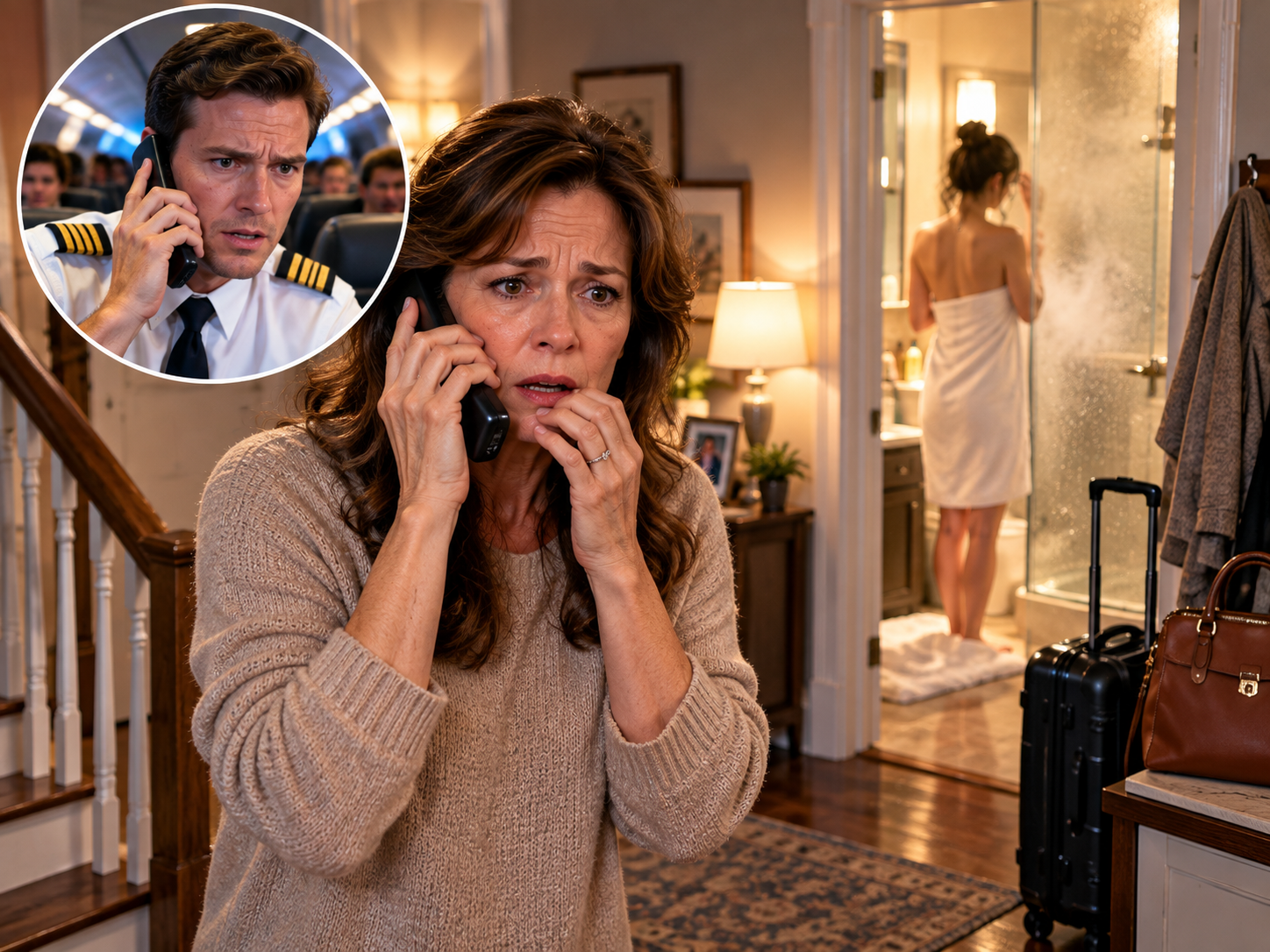
My son said Chloe was sitting on his flight to Rome while I could hear the shower upstairs, and then the house suddenly became impossibly quiet
Part 28 of 28