Time passed without asking permission.
The jasmine plant grew.
So did the family.
Meera moved to another city for work for a while. Rohan became busier as his children entered school. Birthdays, examinations, holidays, weddings, and ordinary Sunday lunches began filling the calendar.
Arvind's health remained stable.
There were appointments.
There were blood tests.
There were occasional days when his energy disappeared earlier than expected.
But there were also mornings when he walked farther than Naina did and afternoons when he complained that everyone treated him like an old man.
“You are an old man,” Naina reminded him.
“I am a young man with paperwork.”
She laughed.
He had learned to enjoy being teased.
The family gathered one summer afternoon for a birthday.
The children had grown enough to become noisy in a different way.
They asked complicated questions.
They argued about games.
They disappeared into rooms and returned carrying objects nobody knew they had touched.
Naina watched them with amusement.
One of the younger grandchildren climbed onto the sofa beside Arvind.
“Grandpa?”
“Yes?”
“Were you always married to Grandma?”
Arvind looked at Naina.
She smiled.
“Not always.”
The child frowned.
“But you're married now.”
“Yes.”
“Did you fight?”
Arvind laughed softly.
“Sometimes.”
“Who won?”
Naina nearly choked on her tea.
The adults laughed.
Arvind shook his head.
“Marriage isn't supposed to be about winning.”
The child considered this.
“Then what is it about?”
Arvind looked at Naina.
She understood what he was asking without words.
Should they answer simply?
Should they tell the child that marriage could survive a terrible wound?
Should they explain that surviving was not the same as remaining unchanged?
Naina put down her cup.
“It is about learning how to live honestly with another person,” she said.
The child looked confused.
Arvind added, “And learning how to say sorry when you are wrong.”
“Both people?”
“Both people.”
“Even Grandma?”
Naina laughed.
“Especially Grandma.”
Arvind smiled.
“And Grandpa too.”
The child seemed satisfied.
Then another question came.
“Did you ever stop loving each other?”
Silence settled over the room.
Meera looked up.
Rohan stopped talking.
Naina felt Arvind's hand find hers.
She answered slowly.
“There were times when we forgot how to love each other properly.”
The child frowned.
“But you still loved each other?”
Arvind spoke.
“Yes.”
“Even when you were angry?”
“Yes.”
“Then why be angry?”
Everyone laughed softly.
Arvind looked thoughtful.
“Because being angry is easy.”
Naina added, “Forgiving is harder.”
The child nodded as though this explained everything.
Then he jumped off the sofa and ran toward the other children.
The room gradually returned to noise.
Naina looked at Arvind.
“That was dangerous.”
“What?”
“Answering children honestly.”
He smiled.
“I think children understand more than adults expect.”
Later, when the house became quieter, Meera sat beside her mother.
“You handled that well.”
Naina smiled.
“I wasn't sure what to say.”
“You said enough.”
Meera hesitated.
“Do you ever regret telling us?”
Naina thought about it.
“No.”
“Even knowing it changed how we saw you?”
“Yes.”
“Why?”
“Because I didn't want you to worship a false version of us.”
Meera looked toward the dining room.
“Baba once told me something similar.”
“What?”
“He said he doesn't want you to think suffering makes someone noble.”
Naina closed her eyes briefly.
“That sounds like him.”
Meera smiled.
“He's changed.”
“Yes.”
“So have you.”
Naina looked at her daughter.
“I hope so.”
That evening, Arvind found an old photograph.
It showed Naina and him during their early marriage.
They were standing outside a cinema.
They looked young.
Almost impossibly young.
Naina took the photograph.
“I barely recognize us.”
“I do.”
“How?”
“You still make that face when you're annoyed.”
She stared at him.
“I do not.”
“You do.”
She laughed.
They sat together at the dining table.
The photograph remained between them.
“Do you wish we had been different?” Naina asked.
Arvind took his time.
“I wish I had been wiser.”
“Before?”
“Before everything.”
“And after?”
He looked at her.
“Especially after.”
She nodded.
“I wish I had understood that guilt doesn't repair anything by itself.”
Arvind touched the photograph.
“I thought if I suffered enough, it would somehow balance what happened.”
“It didn't.”
“No.”
“It only created another wound.”
He nodded.
“I know.”
Naina studied his face.
“Do you still blame me?”
Arvind looked surprised.
“No.”
“Never?”
“I remember what happened.”
“That isn't what I asked.”
He took her hand.
“I don't carry blame anymore.”
She looked away.
Tears gathered in her eyes.
“I still carry some.”
“I know.”
“Sometimes I think I always will.”
“Maybe.”
She looked back at him.
“But you don't have to punish yourself with it.”
She breathed out slowly.
That was something she was still learning.
Forgiveness did not mean rewriting the past.
It meant refusing to let the past make every future decision.
That night, they walked together to the balcony.
The jasmine had begun flowering.
Tiny white blossoms opened among the leaves.
Naina leaned closer.
“It smells beautiful.”
Arvind stood beside her.
“I almost killed it.”
“You forgot to water it.”
“Only once.”
“Three times.”
“Details.”
She laughed.
He smiled.
They stood beneath the evening sky.
There was no dramatic declaration.
No promise that nothing bad would ever happen again.
They had both lived long enough to know better.
Instead, Arvind said, “We should keep learning.”
Naina looked at him.
“Yes.”
“Even now.”
“Especially now.”
He nodded.
Inside, the grandchildren began shouting again.
Naina smiled.
“They're awake.”
“They never sleep.”
“They get that from you.”
“I sleep perfectly.”
“You snore.”
“I do not.”
She laughed as they walked inside.
The family gathered for a photograph before everyone left.
Someone adjusted the chairs.
Someone complained about the lighting.
One child refused to smile.
Another wanted to stand in front.
Finally, everyone settled.
Arvind stood beside Naina.
For a moment, he hesitated.
Then he placed his hand gently on her shoulder.
Naina leaned toward him.
The camera flashed.
The photograph captured something that none of their old photographs had.
Not perfection.
Not innocence.
Something better.
A marriage that had survived the truth without pretending the truth had never happened.
Later, when the house emptied, Naina looked at the photograph on the screen.
Arvind stood behind her.
“Do you like it?”
“Yes.”
“You look happy.”
“So do you.”
He smiled.
“I am.”
She looked up at him.
“So am I.”
They turned off the lights together.
The old apartment became quiet.
But the quiet was no longer punishment.
It was simply night.
Click here to continue reading: PART 16: On the Anniversary of the Night That Nearly Destroyed Them, Naina Finally Learned She Could Remember Her Worst Mistake Without Living Inside It
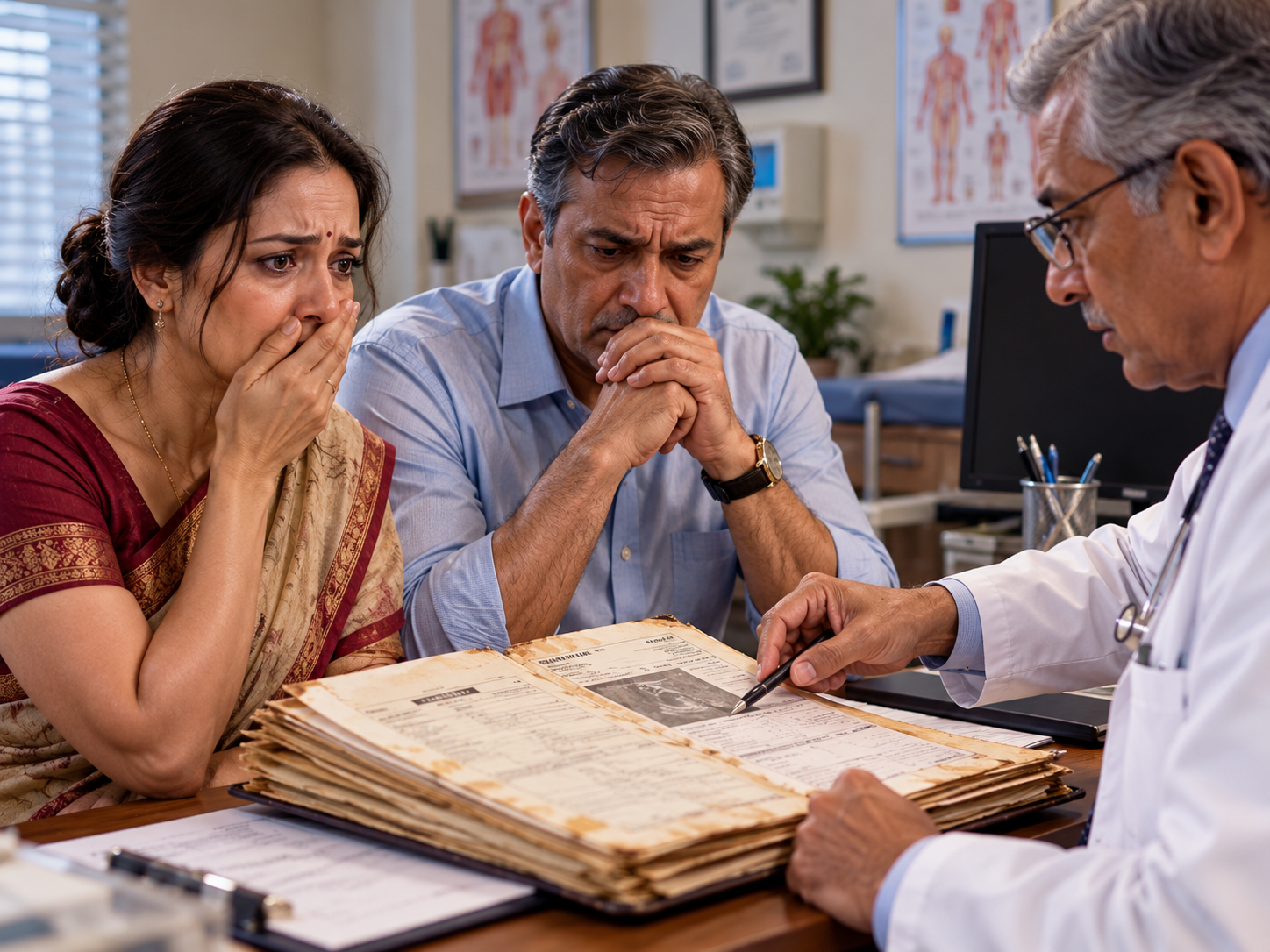
The old medical file on the doctor’s desk carried a date I recognized, and suddenly the eighteen years of silence in our bedroom felt different
Part 15 of 20