
The decision to return to my childhood village near Limoges came on an ordinary morning, while I was reviewing the accounts for the Lyon apartment. I had been comparing maintenance estimates when I realized I could not remember the last time I had visited the little house where I grew up. Gérard and I had always found reasons to postpone the journey. First, Mathieu was too young to travel comfortably. Then the company was expanding. Later, Gérard's health became uncertain, and every plan seemed to depend on the next medical appointment. I had accepted each postponement without complaint until the years had accumulated into something I could no longer ignore.
I closed the accounts and called the woman who had been looking after my childhood home. She told me the house was still standing, though the garden needed attention and the shutters would require fresh paint before winter. I asked whether I could come for a few days. She sounded pleased, and we arranged a date. I did not tell Brigitte or Mathieu. The trip was not a family announcement, and I did not need permission to return to the place I had left at twenty-three.
Before leaving Lyon, I informed Daniel that I would be away for several days and confirmed that he had the information needed for the company's routine decisions. The independent review had been completed to the extent the available evidence allowed, the updated financial controls were functioning, and no new issue required my immediate attention. I left my laptop at home. If something urgent arose, Daniel could reach me by phone, but I was no longer going to spend every quiet hour checking whether another problem had appeared.
The journey took longer than I remembered. From the train window, I watched the landscape change from the crowded outskirts of Lyon to fields, low hills, and villages with pale stone houses. I thought about the girl I had been when Gérard first arrived in my life. I had worked in a small shop, helped my mother with household expenses, and imagined that marriage would mean building a home with someone who considered my opinions as important as his own. Gérard had seemed confident and generous. He had a young son who needed stability, and I had believed that caring for Mathieu would be a natural part of loving his father.
When I reached the village, the air smelled of damp earth and wood smoke. The woman caring for the house met me at the gate and handed me the keys. She had kept the rooms clean, but the place felt smaller than it did in my memory. The kitchen table had been replaced, and the old curtains were gone. Yet the narrow staircase and the uneven floorboards were familiar enough to make me stop in the hallway for a moment. I could almost hear my mother calling from the garden, asking whether I had remembered to buy bread.
I spent the first afternoon opening windows and walking through the rooms. There was no need to make the house perfect. I had come to rest, not to begin another project. I bought bread from the village bakery, prepared a simple dinner, and ate at the small table beside the window. Nobody asked me whether the meal was suitable for a guest, whether I had remembered someone else's preference, or whether I should prepare something different. I could eat what I wanted and leave the dishes until morning.
The following day, I visited the cemetery where my parents were buried. I carried a small bunch of flowers and stood beside their graves longer than I had planned. My mother had worried about my decision to move to Lyon with a widower and his young son. She had not opposed the marriage, but she had asked whether I truly understood what I was taking on. At the time, I had considered her cautious. I had been twenty-three, eager to prove that I could build a life beyond the village, and convinced that love would make the difficult parts manageable.
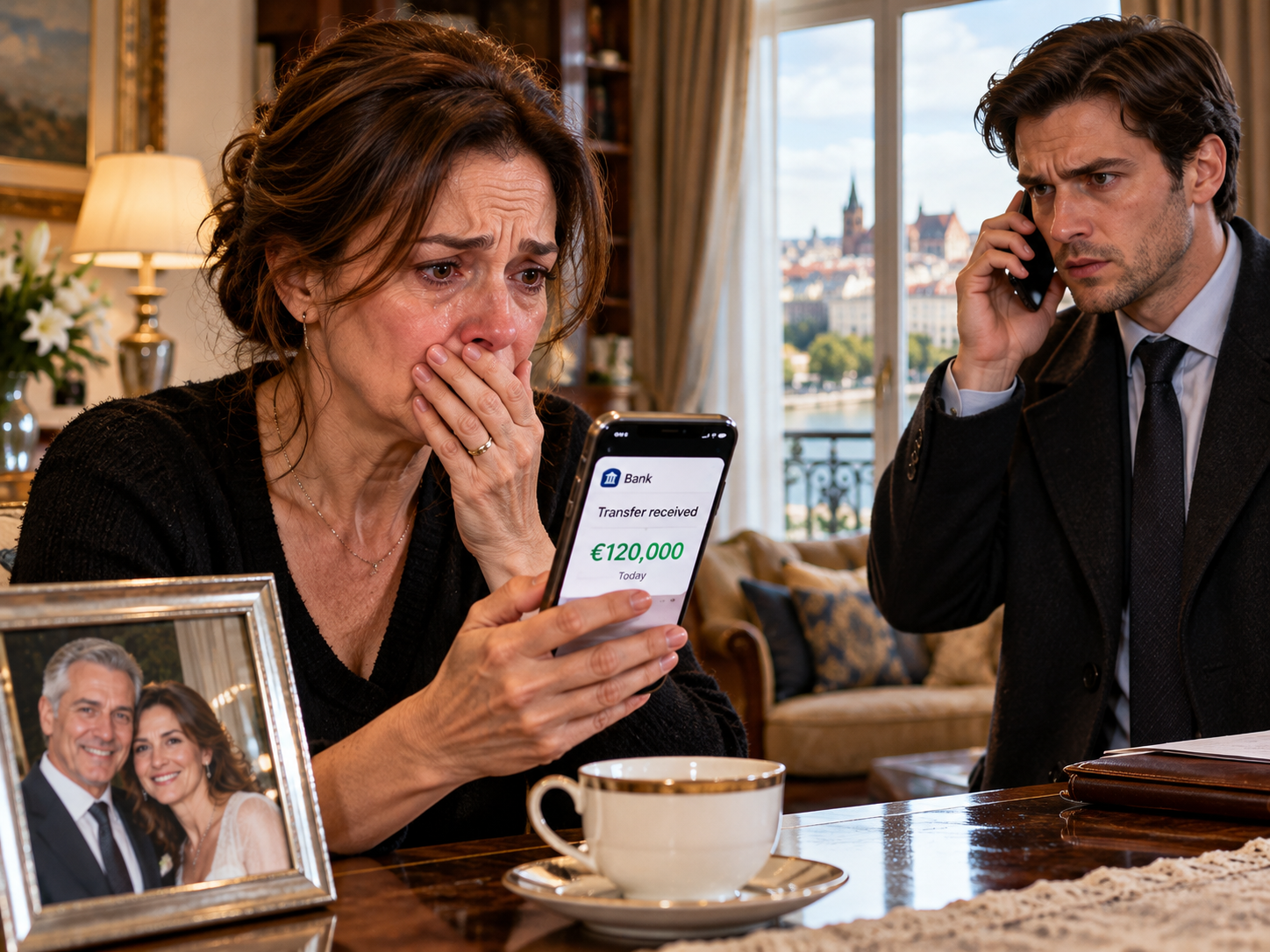
I wished I could tell her what had happened. I wanted to explain that I had loved Gérard, that I had cared deeply for Mathieu, and that the marriage had also contained years of silence and unequal expectations. I wanted to tell her about the €120,000, the will, and the disputed acknowledgment that had made me question what I had understood about my own life. But I knew that even if she had been alive, she could not have given me a simple answer. She might have listened, asked a few practical questions, and reminded me that I had always been stronger than I believed.
That evening, I found an old photograph tucked into a drawer in the bedroom. It showed me standing outside the house with my parents, my hair tied back and my face bright with the confidence of someone who thought adulthood would be a series of clear decisions. I placed the photograph on the bedside table. I did not look at it as a picture of a foolish young woman who had made the wrong choice. I saw someone who had acted with the knowledge and hope she possessed at the time. She deserved understanding, not punishment.
I stayed in the village for three days, walking through the market, speaking to familiar faces, and allowing my days to unfold without a fixed schedule. A former neighbor invited me for coffee and asked after Gérard. I told her he had died the previous year. She expressed her condolences and spoke kindly of him, remembering a visit when he had helped carry a heavy cupboard into the house. I thanked her. I did not feel compelled to correct her impression of him or recount the painful parts of our marriage. Her memory was hers, just as mine was mine.
On the fourth morning, I returned to the house and began sorting the papers I had brought from Lyon. I wanted to make sure the estate documents were safely stored, but I also wanted to separate them from the ordinary materials of my life. The will, the bank correspondence, and the final review report went into a secure folder. My parents' photograph and a notebook of personal memories remained on the bedside table. I no longer needed to keep every piece of paper within reach simply because it had once frightened me.
A message from Mathieu arrived while I was preparing lunch. He asked whether I was away from Lyon and said he hoped I was well. The message was simple, without a question about the estate or a request for help. I replied that I was visiting my childhood village and that I would return the following week. He wished me a peaceful stay. I read the exchange twice, surprised by how ordinary it felt. We were not suddenly close again, but neither of us had turned a simple message into a negotiation.
Later that afternoon, I walked along the road beyond the village, where the fields stretched toward a line of trees. I remembered the first time Gérard had visited my home. He had brought a box of pastries for my parents and listened attentively while my father asked him about work. At the time, I had admired how comfortably he moved between people of different backgrounds. I had mistaken that ease for an ability to understand others. Over the years, I learned that someone could be charming in a room and still avoid difficult conversations at home.
The memory did not erase my affection for him. I could still recall the way he laughed when Mathieu mispronounced a word, how carefully he chose a birthday gift in the early years, and how he once drove through a storm to collect me after a train cancellation. Those moments had been real. So had the occasions when he dismissed my concerns or treated my help as an obligation. I did not need to choose one version of him and discard the other. The marriage had contained both tenderness and harm, and accepting that complexity was more honest than turning him into either a hero or a villain.
On my last evening, I sat outside the house with a cup of tea and watched the sky darken. I had come expecting to revisit the past, but the village had also shown me how much of my present life had been built around the consequences of leaving. I had spent years proving that I could make the marriage work, then months trying to understand the financial questions left behind. Somewhere along the way, I had stopped asking what kind of life I wanted when nobody else was making demands.
I began writing a list in my notebook. It contained no dramatic promises. I wanted to travel more often, maintain friendships that had faded during the marriage, and make decisions about the estate based on practical needs rather than guilt. I wanted to continue supporting the company responsibly without treating every difficulty as a personal emergency. I wanted to remain open to family relationships while refusing to become the person everyone called whenever they needed money, reassurance, or an excuse to avoid a difficult conversation.
When I returned to Lyon, the apartment welcomed me with familiar quiet. Daniel had sent a short update confirming that the company was operating normally and that no new issue required my attention. The property manager had also forwarded the latest maintenance estimates. I reviewed both messages, answered the necessary questions, and then put the phone away. I had spent several days without constant monitoring, and nothing had collapsed because I had allowed myself that space.
That evening, I invited a friend to dinner. We cooked together, opened a bottle of sparkling water, and spoke about work, books, and places we hoped to visit. I did not spend the meal explaining the inheritance or asking whether I had been right to insist on the review. My friend knew enough about the situation to understand why it had been difficult, but she did not treat it as the only interesting thing about my life. I was grateful for that ordinary companionship.
The following week, I made arrangements for another short trip later in the year. I chose the dates myself, checked the costs, and organized the practical details. It was not an escape from the past. It was simply a plan for the future. For the first time in a long while, I was looking forward to something without wondering whether the family would approve or whether my absence might inconvenience someone.
Mathieu called one evening to ask how the visit to my village had gone. I told him about the house, the cemetery, and the neighbor who remembered Gérard's kindness. He listened quietly. Then he said he had never understood how much I had given up when I moved to Lyon. I told him I had chosen that life, but choice did not mean that every expectation placed on me had been fair. He agreed, though he did not try to turn the conversation into an apology for everything that had happened.
Before we ended the call, he asked whether I would be willing to attend a family dinner at Brigitte's house in a few weeks. I said I would consider it when I knew the arrangements. I did not promise to attend simply to prevent disappointment. He accepted the answer without pressure, and we said goodbye politely.
After the call, I stood by the window and looked at the city lights. My life had not become perfect. There were still unanswered questions about the disputed signature, memories that hurt unexpectedly, and relationships that might never return to what they once were. But the questions no longer determined every choice. The estate was being managed, the company had stronger controls, and the relevant records were preserved. I could allow the professionals to handle the remaining issues while I built a life outside them.
I returned the old photograph to the bedside table, where I could see it each morning. I no longer saw it as a reminder of the life I had lost by marrying Gérard. It reminded me that I had been a person before the marriage, with hopes and interests that did not disappear simply because I had spent twenty-five years caring for others. Those parts of me had been neglected, not destroyed.
I would not recover every year I had spent putting myself last. But I could stop doing it now.
Click here to continue reading: PART 14: A Proposal From Mathieu Forced Me to Choose Between the Family’s Expectations and the Future I Had Finally Begun to Build
My Husband Left Me €120,000, but His Son’s Call Made Me Fear What That Money Was Really Meant to Hide
Part 13 of 20

