
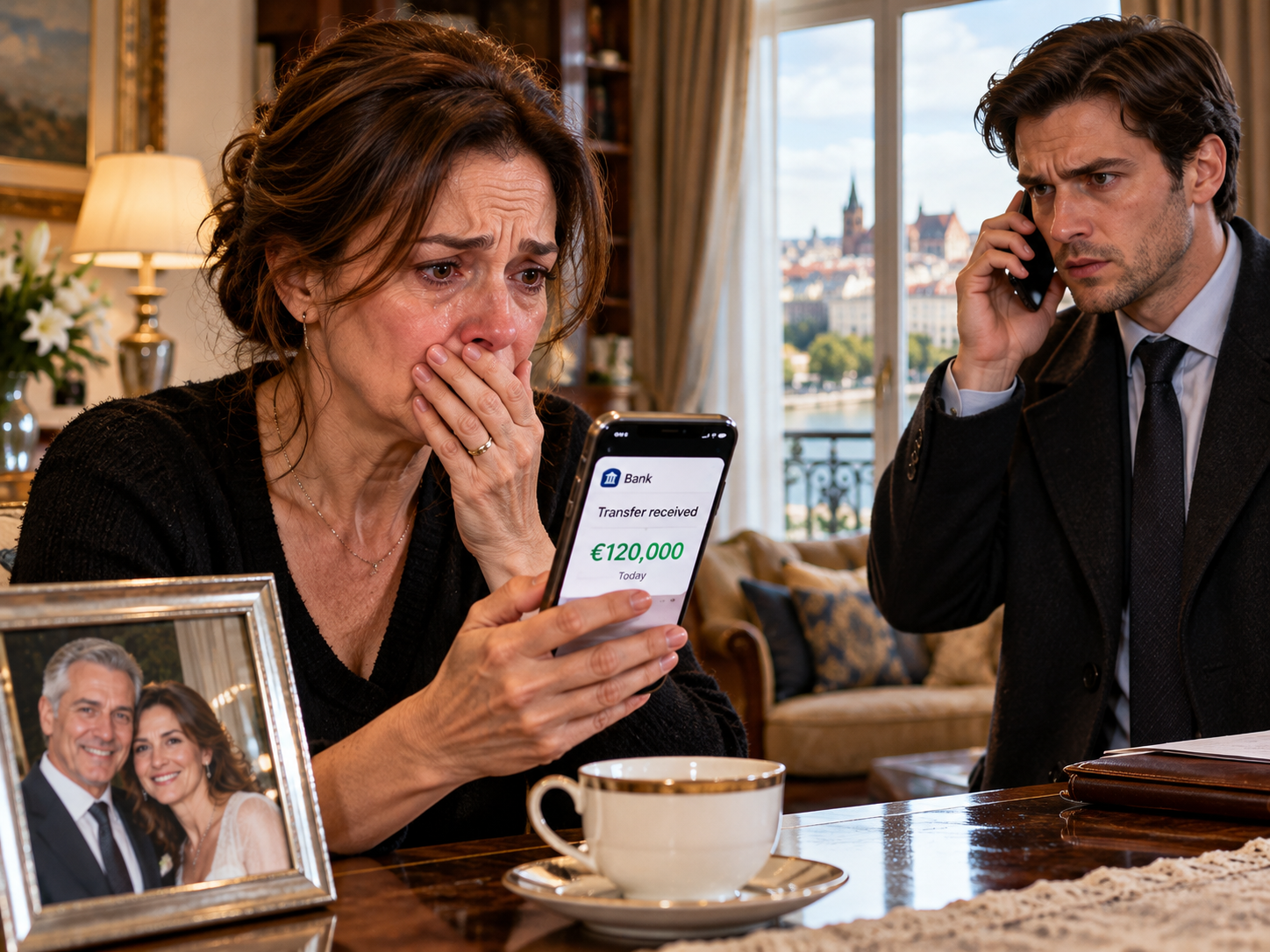
The review team's next update arrived on a Monday morning. Madame Laurent had completed the comparison of the additional records and wanted to discuss the findings with Daniel, Claire, and me. Her message did not reveal the conclusion, but she emphasized that the new material had helped clarify the chronology of one of the transactions. I arranged to attend the meeting and asked Claire to bring the earlier reports so that we could compare the findings rather than rely on memory.
When we gathered in the conference room, Madame Laurent began by explaining what the new documents had established. The transaction that had initially appeared unusual was connected to an external financial arrangement Gérard had been reviewing during his final year. The additional records clarified its timing and purpose, although some supporting information was still missing. The transaction could now be reconciled with part of the company's financial history, but it did not resolve the disputed acknowledgment bearing my name.
I felt a small release of tension. One question had become clearer, even if the larger issue remained open. Madame Laurent was careful not to suggest that the new records proved every related transaction was correct. She explained that the review team had examined the entries individually and documented the basis for each conclusion. Where the records were sufficient, the team recorded that. Where they were not, the uncertainty remained visible in the report.
Daniel asked whether the transaction had created any obligation for me personally. Madame Laurent said that the documents reviewed did not establish that I had knowingly accepted a personal financial undertaking. The bank's position remained that the disputed acknowledgment could not be relied upon as proof of such an obligation without further verification. The new records did not change that conclusion. I thanked her and asked whether there was anything else I needed to provide.
At that point, she mentioned an email Gérard had sent to his adviser shortly before the transfer was authorized. The email referred to a need to preserve enough money for my personal security while the financial records were being reviewed. It also asked that the transfer not be treated as a settlement of any disputed obligation unless a valid agreement could be produced. The wording matched the explanation in Gérard's letter more closely than the earlier banking note had.
I read the email carefully. It did not prove that Gérard had understood every detail of the financial problem, but it showed that he had intended the transfer to remain separate from the disputed acknowledgment. He had wanted me to have money under my own control while the records were examined. He had not intended the payment to purchase my silence or to settle a debt I had never knowingly accepted.
The knowledge brought relief, but it also sharpened my anger. Gérard had understood enough to recognize the risk, yet he had not told me what was happening. He had placed money in my account and left a note directing me to the lawyer, but he had allowed me to spend months wondering whether the transfer was an insult, a loan, or a trap. He had protected me financially while withholding the information that would have allowed me to understand the situation sooner.
After the meeting, Claire and I walked outside to discuss the email. She said the new record strengthened the evidence that the transfer was intended as a protective provision, but it did not answer every question about the disputed acknowledgment. The review team would update its report accordingly. I asked whether I should write to Mathieu and tell him what had been established. Claire advised me to let the formal process communicate the findings first. There was no need to create another private exchange that might blur the distinction between the evidence and our personal relationship.
I followed her advice. The updated report was circulated to the appropriate parties, and the company retained the revised documentation. It stated that the transfer was authorized by Gérard and intended to remain separate from the disputed financial undertaking. It also repeated that the available evidence did not establish who created the disputed signature or whether Mathieu knew it was invalid when he submitted the copy. The report did not make a criminal finding. It simply clarified what the records now supported.
Mathieu called me that evening. He had read the report and wanted to know whether I believed his explanation now. I told him the new records supported the view that his father had intended to keep the transfer separate from the disputed acknowledgment. They also showed that Gérard had been concerned about how the records were handled. Neither finding established who created the signature.
“I told you I wasn't trying to put the debt on you,” Mathieu said.
“I understand that is what you have said. The report has clarified some things, but it has not answered every question.”
He sighed. “Will you ever believe me?”
“I can believe that you may have acted without intending to hurt me and still insist that the documents be examined. Those are not opposites.”
He did not answer immediately. When he finally spoke, his voice sounded tired rather than angry. He said he had been afraid that the review would permanently define him as someone who had tried to exploit his father's death. I told him that no one should make that judgment without evidence. But he also needed to understand that his fear of being judged could not become a reason for me to abandon the questions.
We ended the call calmly. I was relieved that neither of us had tried to force an immediate reconciliation. The conversation had been difficult, but it had remained within the limits of what we could honestly say.
The following week, I decided to spend several days away from Lyon. I chose a small hotel near the coast, where I could walk in the mornings and read in the afternoons. Before leaving, I arranged for Daniel to handle routine company matters and made sure the property manager had the necessary instructions for the villa. I did not ask anyone to accompany me. The trip was not a statement about the family or the inheritance. I simply wanted time in a place where I was not surrounded by documents associated with Gérard's final months.
The first morning, I walked along the waterfront before breakfast. The air was cool, and the tide moved gently against the stone edge of the promenade. I carried no folder, no laptop, and no list of questions. For a while, I watched fishing boats move across the water and listened to people greeting one another as they began their day. The simplicity was almost unfamiliar. I had spent so many years believing that every quiet moment should be used to anticipate the next problem that doing nothing required conscious effort.
Over lunch, I received a message from Brigitte. She had heard that the review had clarified the purpose of the transfer and wanted to know whether I would now consider the family matter resolved. I replied that the transfer's purpose was clearer, but the review of the disputed acknowledgment remained separate. I also said that I was not interested in prolonging the matter unnecessarily; I wanted the remaining questions addressed accurately and fairly.
Her answer was brief. She said Gérard would have been pleased that the money had served its purpose. I did not respond. I could appreciate that the transfer had provided security without agreeing that every part of the family's conduct had been justified. Brigitte was still looking for a single sentence that would allow everyone to move on. I was learning that closure could not be declared simply because someone wanted the discomfort to end.
On the second evening, I opened Gérard's letter again. I had brought a copy rather than the original, and I read it slowly in the quiet of my room. His apology for keeping the financial concerns from me seemed more sincere now that the email had clarified his intentions. He had wanted to protect me, but he had also been afraid of confronting his son and exposing the company's weaknesses. He had chosen secrecy because it seemed easier in the moment. The choice had left me carrying the uncertainty after he was gone.
I thought about how often I had made a similar choice in our marriage. When Brigitte insulted me, I said nothing to avoid a family argument. When Mathieu treated my help as automatic, I told myself he would understand when he grew older. When Gérard dismissed my concerns, I accepted his explanation because I believed questioning him would damage the relationship. My silence had not created the financial problems, but it had helped maintain the pattern in which other people made decisions and I absorbed the consequences.
I did not blame myself for Gérard's choices. I had not created the disputed acknowledgment, and I had not knowingly accepted the obligation it described. But I could recognize the habits that had made it difficult for me to insist on being included in decisions that affected my life. That recognition was painful, yet useful. I could not change the marriage I had lived, but I could stop repeating its patterns.
When I returned to Lyon, Daniel confirmed that the company had completed another stage of the control improvements. The new approval procedures were working, and the remaining historical questions had been documented. The business was operating normally. I reviewed the quarterly figures with him and asked about the cost of maintaining the villa while the property decision remained open. We discussed the options and agreed that I would make a decision after the next maintenance assessment.
The conversation was ordinary, and I was grateful for it. Not every discussion needed to lead back to the will or the transfer. My life had begun to include practical decisions that belonged to the future rather than the past. I could spend time considering property costs, business plans, and personal travel without interpreting every choice as part of the dispute.
A few days later, Mathieu sent a short email acknowledging that his father's instructions had been clearer than he had understood at the time. He said he would cooperate with the remaining review and avoid contacting me about the disputed acknowledgment unless there was a necessary update. I replied that I appreciated the message. I did not offer forgiveness as a reward or ask him to explain himself again. I allowed the exchange to stand.
The remaining review continued, but it no longer felt like the only important thing happening in my life. The professionals had clarified the transfer's purpose, the bank had not established a basis for demanding repayment, and the company had strengthened its procedures. The disputed signature still required careful handling, but there was no reason to treat uncertainty as proof of guilt. I could wait for the evidence without allowing the waiting to consume every day.
One evening, I returned to the study and placed the copy of Gérard's email beside the other estate documents. I did not hide it in a drawer or keep it beside my bed. It belonged in the record, where it could be consulted if necessary. Then I closed the cabinet and went downstairs to prepare dinner.
I had wanted Gérard's final decisions to provide a complete explanation for our life together. They could not. They could show that he intended to protect me financially, that he had been concerned about the records, and that he regretted keeping certain matters from me. They could not undo the years in which I had felt obliged to stay quiet. They could not tell me whether he would have found the courage to speak openly if he had lived longer.
I would never know the answer to that last question.
What I did know was that I no longer had to wait for him to explain my place in the family. The will had named me as his sole beneficiary, but my worth had never depended on the size of the estate. The transfer had provided security, but it had not purchased my silence. And the review had shown that I could insist on the truth without making accusations the evidence could not support.
That was enough to move forward.
Click here to continue reading: PART 11: Brigitte Offered Me a Chance to Restore the Family’s Peace, but Her Conditions Revealed What She Still Expected Me to Sacrifice
My Husband Left Me €120,000, but His Son’s Call Made Me Fear What That Money Was Really Meant to Hide
Part 10 of 20

