
The proposal arrived on Mike's desk in a glossy folder.
I noticed it during our quarterly review meeting, placed beside the familiar reports from the accounting office. The folder carried the logo of a regional business association and a title about community partnerships.
Mr. Harris opened the meeting by explaining that the association had heard about the grocery assistance fund and wanted to discuss a possible collaboration.
At first, I was pleased.
The program had been operating steadily, and outside support might allow it to help more customers without placing additional pressure on the store's budget.
But as Mike summarized the proposal, I began to feel uneasy.
The association wanted to organize a public campaign featuring stories from people who had received assistance. It suggested photographs, short interviews, and promotional materials showing how small donations could change lives.
The proposal was professionally written.
It emphasized community involvement, transparency, and the importance of encouraging others to contribute.
Yet one sentence caught my attention.
The campaign would highlight "compelling personal experiences" to increase public engagement.
I looked up.
"Would customers have to share their stories?"
Mike shook his head.
"The proposal says participation would be voluntary."
I read the page again.
Voluntary sounded reassuring.
But I wondered how voluntary it would feel to someone who had recently needed help buying groceries.
Mr. Harris noticed my expression.
"What concerns you, Rachel?"
I chose my words carefully.
"I understand why the association wants people to see the program's impact. But I'm worried about asking customers to describe difficult moments publicly."
The accounting supervisor nodded slightly.
Mr. Harris leaned forward.
"Explain."
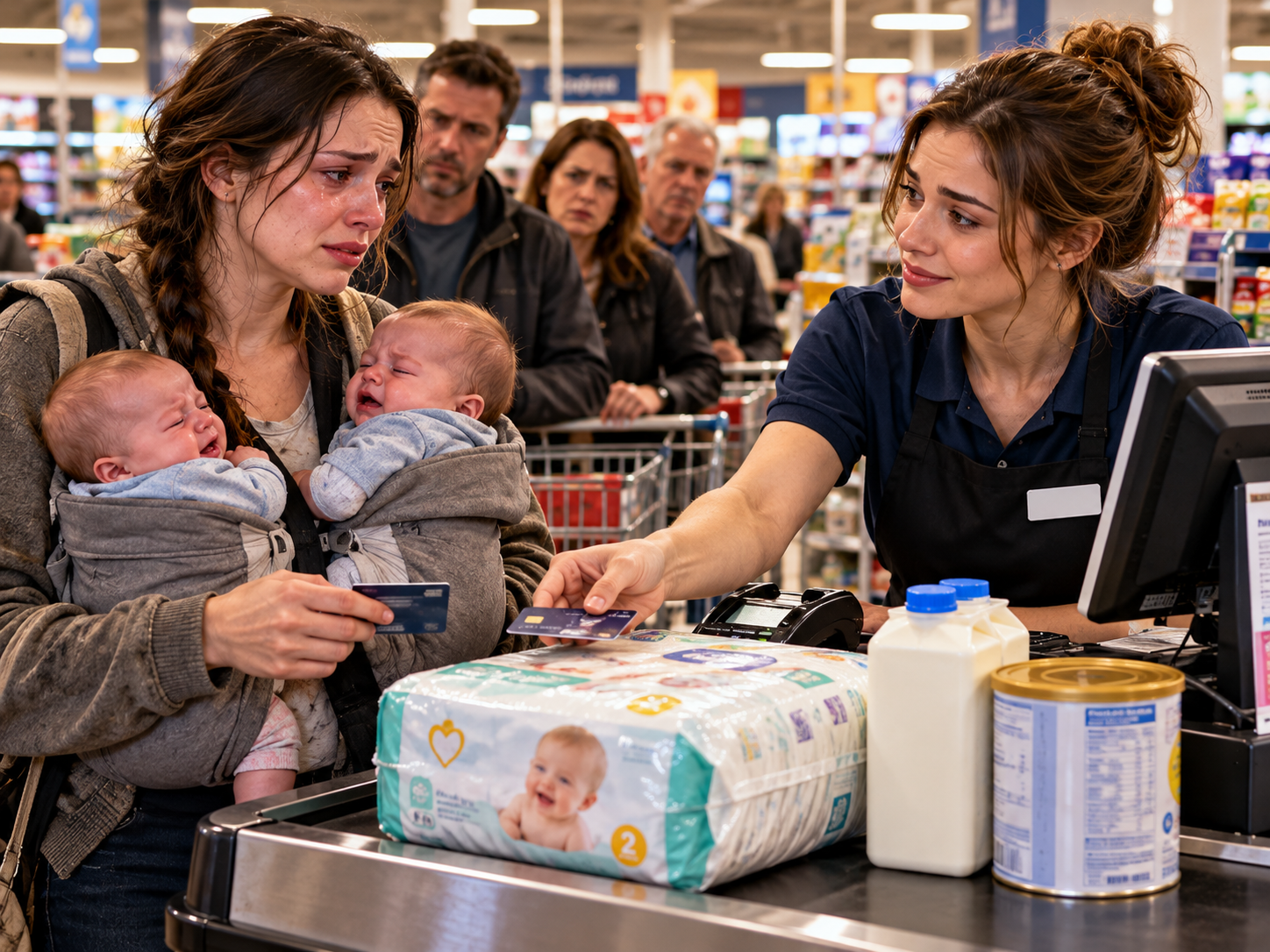
I thought about Emily standing at my register.
She had been frightened and embarrassed when her card was declined. The last thing she'd wanted was an audience.
Later, she'd chosen to write me a letter and make a donation.
Those decisions belonged to her.
But if someone had approached her during that first evening and asked whether she'd share her story to help promote the store, I doubted she would have felt comfortable refusing.
"People who need assistance may already feel vulnerable," I said. "Even if we tell them they can say no, they might worry that refusing will affect how they're treated."
Mike looked at the proposal.
"That's a fair concern."
I continued.
"The program works because customers don't have to explain their lives to us. We help with immediate essentials when the criteria are met. I don't want us to create a situation where the people receiving help become part of the fundraising process."
Mr. Harris sat quietly.
Then he asked whether I thought the store should reject the entire partnership.
"Not necessarily," I said. "There may be ways to work together without using personal stories."
The accounting supervisor suggested sharing anonymous program statistics instead.
Mike proposed describing the fund's procedures and explaining how donations were managed.
Mr. Harris asked whether the association might support a community food drive or provide matching contributions without requiring customer interviews.
We discussed the possibilities.
The meeting became more productive once we separated the goal of raising support from the method proposed.
The association wanted a compelling campaign.
The store wanted to protect the fund's purpose.
Those interests didn't have to conflict, but they couldn't be treated as identical.
Mr. Harris agreed to request revisions.
He asked Mike and the accounting supervisor to prepare a response explaining the store's privacy standards and suggesting alternative ways to communicate the program's impact.
Then he looked toward me.
"Rachel, would you review the wording before we send it?"
I nodded.
"Of course."
After the meeting, I returned to the registers.
The afternoon was busy, and I barely had time to think about the proposal until my break.
I sat beside Denise with a cup of coffee.
She asked what had happened.
I explained the partnership idea and my concerns about customer interviews.
Denise listened, then frowned.
"Can you imagine someone asking Emily to stand in front of a camera and explain why she couldn't afford diapers?"
"That's exactly what I was thinking."
She shook her head.
"She'd hate it."
"Maybe. But I don't want to assume how she'd feel now."
Denise considered that.
"Fair enough."
I looked at my coffee.
"The point is that nobody should feel they have to share something painful to prove the program deserves support."
Denise nodded.
"Then tell them that."
I smiled.
"I did."
The revised response went out two days later.
It thanked the association for its interest and proposed a campaign based on anonymous figures, clear financial reporting, and general information about the fund's purpose.
The store would not recruit assistance recipients for promotional interviews.
If customers independently chose to share their experiences, that would remain their decision, but the program itself would not depend on testimonials.
I felt relieved when Mr. Harris approved the wording.
A week later, the association replied.
Its representatives were willing to discuss the alternative approach.
They acknowledged the privacy concerns and suggested a small matching-donation initiative instead of the original publicity campaign.
The proposal was more practical.
The association would contribute a limited matching amount for donations received during a designated period, while the store maintained its existing procedures and accounting controls.
No customer stories would be required.
The fund's name would appear in the association's community newsletter, accompanied by a general description of its purpose.
Mr. Harris brought the revised plan to our next meeting.
I read it carefully.
The new version respected the boundaries we'd established.
I supported moving forward, provided the accounting office confirmed the terms and the store retained full responsibility for assistance decisions.
The others agreed.
The partnership was approved on a limited trial basis.
That evening, I called Emily.
I told her that a regional association had expressed interest in supporting the fund and that the store had chosen not to use personal stories in its campaign.
She was quiet for a moment.
"Thank you," she said.
I frowned slightly.
"For what?"
"For thinking about that."
I sat down.
"Emily, I didn't want anyone to feel pressured."
"I know."
She paused.
"When I first came back with the envelope, I wanted you to understand what happened. But I don't think I would've wanted the whole town to know."
I nodded, though she couldn't see me.
"That's what I worried about."
She sighed softly.
"People can be kind, but they can also be curious in ways that make you feel exposed."
Her words confirmed my concern.
We talked for a few more minutes about the twins, who had begun climbing onto furniture with alarming determination.
Emily laughed as she described moving a lamp out of reach.
The conversation ended on an ordinary note.
I was glad.
Our friendship didn't need to revolve around the assistance fund.
The matching-donation initiative began several weeks later.
The store placed a modest notice near customer service explaining that eligible donations would be matched up to the agreed limit.
The notice included no photographs of recipients.
It didn't describe anyone's personal difficulties.
Instead, it explained that the fund provided limited assistance with essential groceries and that contributions were recorded and reviewed through the store's established procedures.
Customers responded steadily.
Some donated small amounts.
Others asked questions about how the program worked.
A few said they appreciated that the fund operated quietly.
The accounting office tracked the contributions, and Mike reviewed the totals each week.
There were no dramatic fundraising events.
No public ceremonies.
The support simply accumulated.
At the end of the trial period, the association fulfilled its matching commitment.
The additional money strengthened the fund's reserve without changing its purpose.
Mr. Harris thanked the staff during a meeting.
He also thanked the association for adapting its proposal.
I appreciated that he didn't present the decision as a victory over anyone.
The original campaign had been well intentioned.
The revised version was better suited to the people the program served.
That distinction mattered.
Later, Mike asked whether I thought we'd been too cautious.
I considered the question.
"No," I said. "I think we were careful about what we were asking people to give."
He nodded.
"Money wasn't the only thing involved."
"Exactly."
He smiled faintly.
"You're getting good at these meetings."
I laughed.
"I'm still happier behind a register."
"Good. We need you there too."
As the weeks passed, the fund continued operating normally.
The additional reserve gave the store more flexibility during busy periods, but the assistance limits remained unchanged.
Supervisors followed the same approval procedures.
Customers received help discreetly.
The program's success was measured through responsible use of resources, not the number of people willing to tell their stories.
One evening, after closing, I walked past the small notice near customer service.
I stopped to read it.
The wording was plain.
It explained what the fund did, how people could contribute, and where questions could be directed.
There was nothing dramatic about it.
I liked that.
The program had begun with a private moment between two strangers.
It had grown because people chose to support it.
Protecting its purpose sometimes required saying no to ideas that looked attractive on paper.
I had learned that kindness could be generous without becoming public.
And that sometimes the most respectful thing we could offer someone was the freedom to receive help without having to explain why they needed it.
Click here to continue reading: PART 15: As Emily’s Twins Grew More Independent, Rachel Faced an Unexpected Reminder That Helping Someone Did Not Mean Owning Their Story
The Young Mother Had Already Been Refused Twice When I Made a Decision That Could Have Cost Me My Job
Part 14 of 20

