
The first time Mike asked me to help review the grocery assistance fund's records, I thought he'd called me into his office because something had gone wrong.
It was a Tuesday afternoon, nearly four months after the program began. The lunch rush had ended, and I was straightening the candy display beside my register when Denise appeared at the end of the aisle. She carried a clipboard and wore the expression she usually reserved for inventory problems.
"Mike wants to see you when you finish that," she said.
I looked toward the office hallway.
"Did he say why?"
"Something about the assistance program."
I set the last box of mints in place. Although the fund had been operating successfully, I still felt a small tightening in my stomach whenever Mike wanted to discuss it. The program had grown from a private act of kindness into a store responsibility, and I was determined not to let my enthusiasm create problems for the people it was supposed to help.
Mike was sitting behind his desk with several reports arranged in front of him. He greeted me, offered a chair, and pushed one page across the desk.
"Before you worry," he said, noticing my expression, "nothing's wrong."
I laughed nervously.
"You could have told Denise that."
"Then I wouldn't have had the pleasure of watching you prepare your defense."
He smiled, but his attention returned quickly to the paperwork.
The report covered the fund's first completed quarter. It showed the number of approved assistance transactions, the categories of groceries purchased, and the remaining balance. No customers were identified by name. That was deliberate. From the beginning, Mr. Harris had insisted that the program's records should contain only the information necessary for accounting and oversight.
I studied the figures.
The fund had helped more people than I realized.
Most transactions were small. A few involved formula or diapers. Others covered bread, eggs, milk, and basic pantry items. There were no extraordinary purchases, no dramatic rescues, and no evidence that the program had become a substitute for regular charitable services.
It was doing exactly what we'd hoped.
Mike pointed toward a column near the bottom.
"Donations have been steady, but the requests aren't evenly distributed. Some weeks we barely use anything. Other weeks several customers need help within a day or two."
"Does that create a problem?"
"Not yet. But we need to understand it before we decide whether to expand."
He handed me another sheet.
It contained a proposed adjustment to the supervisor approval process. The store wanted to ensure that a customer wasn't kept waiting unnecessarily while an authorized employee became available. At the same time, Mike didn't want cashiers making independent promises or creating expectations that the fund couldn't fulfill.
I understood both concerns.
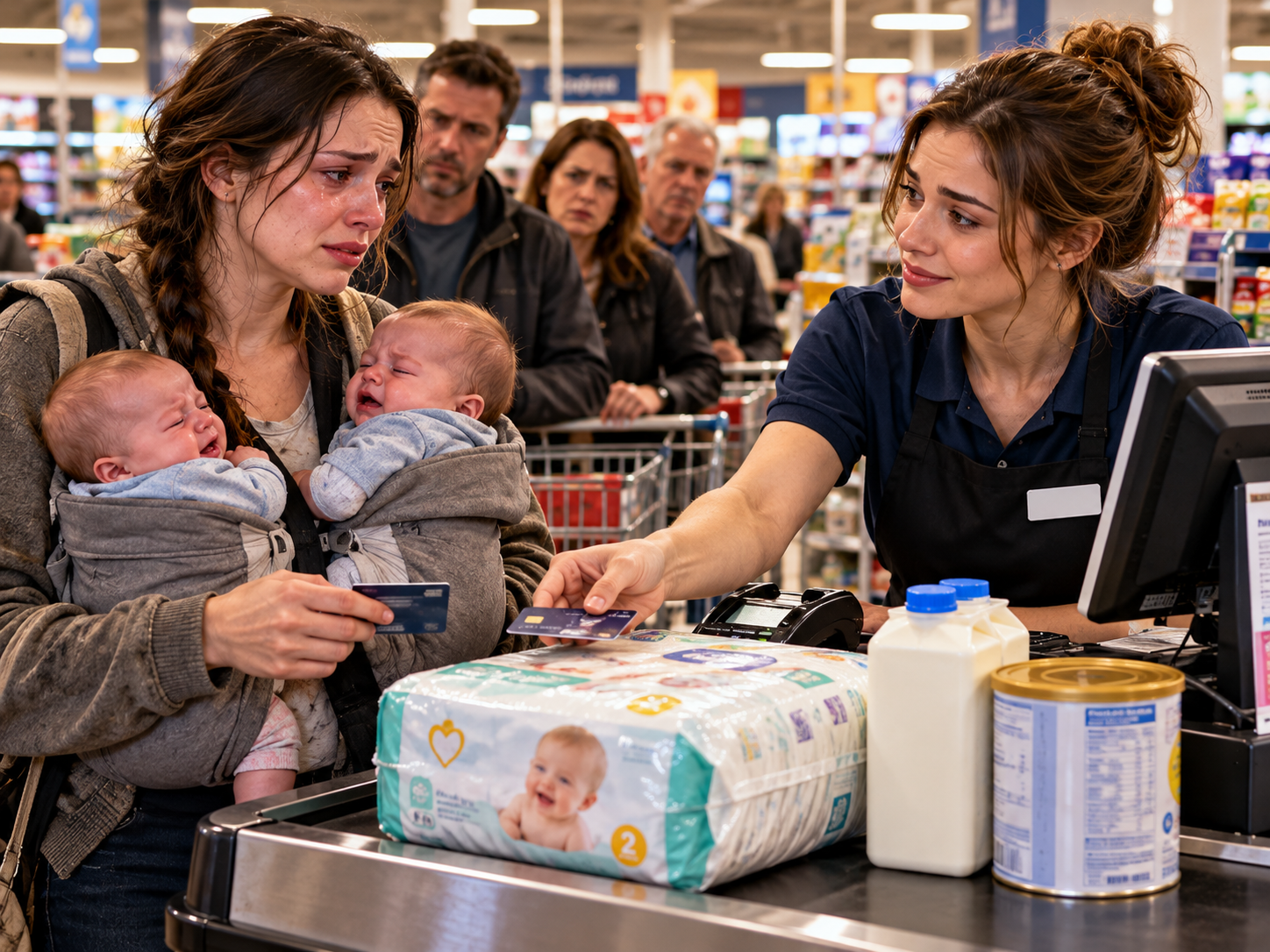
The memory of Emily standing at my register was still clear. Her card had been declined twice, and the people behind her were becoming impatient. Every additional minute had made the situation more painful.
But the answer wasn't to remove every safeguard.
"I think we need a way to call for assistance without announcing why," I said.
Mike leaned forward.
"Go on."
"Right now, if someone has a problem, we call a supervisor the same way we would for a price dispute. Everyone nearby can hear the conversation. Maybe we could use a simple signal on the register so the supervisor knows to come over and speak privately."
Mike considered the suggestion.
"We'd need to check whether the system supports that."
"Even a neutral request would help. Something that doesn't make the customer feel like the whole store knows what's happening."
He wrote a note.
We discussed several possibilities, including directing customers to the service desk when that was more comfortable and training employees to avoid unnecessary questions.
I was careful not to speak as though I knew everything.
I had six years of experience at the register, but I wasn't an accountant, a social worker, or a store manager. I understood what customers experienced during checkout. Mike understood the operational responsibilities. The accounting office understood the financial controls.
The program needed all those perspectives.
Near the end of the meeting, Mike closed the folder.
"Mr. Harris wants you to join our quarterly review discussions," he said.
I stared at him.
"I thought I already was."
"You've been giving us feedback. He wants to make it a regular part of the process."
I hesitated.
"Would that mean leaving the register?"
"Only for scheduled meetings. Your regular position wouldn't change unless you wanted to discuss something different."
The offer surprised me more than it should have.
For years, I had measured my work in completed shifts, balanced cash drawers, and customers served. I took pride in doing those things well. But I had never imagined that paying a small amount for a customer's diapers would lead to conversations about store procedures and community support.
"I'd be happy to help," I said.
Mike nodded.
"Good. But don't start thinking you're responsible for every person who walks through those doors."
I smiled.
"I know."
He raised an eyebrow.
"Do you?"
The question stayed with me.
Later that afternoon, a woman came through my line carrying groceries for what looked like a large household. She had several children with her, and the youngest was tired enough to cry whenever the cart stopped moving.
Her total was higher than she expected.
I saw her pause before reaching for her card.
For a second, I felt the familiar urge to intervene.
But she wasn't asking for help, and there was no reason to assume she needed it. She checked the receipt, realized a sale price hadn't applied correctly, and asked me to review the item.
I called Denise, who corrected the pricing issue.
The woman paid and left.
Nothing else happened.
As I watched her go, I understood what Mike had been trying to tell me. Caring about customers didn't give me permission to decide what their circumstances were. The young woman had needed an accurate transaction, not charity.
That distinction mattered.
A few days later, Emily visited with the twins.
They had grown noticeably since the first evening. Their cheeks were rounder, their movements stronger, and the quieter baby had developed a habit of staring intensely at anyone who spoke to him.
Emily placed her groceries on the conveyor belt while I admired them.
"They're getting so big," I said.
"They're getting heavy," she replied, shifting the carrier.
The more vocal twin began making impatient noises.
Emily sighed affectionately.
"And he still believes every inconvenience deserves an announcement."
I laughed.
She asked how the assistance fund was doing.
I told her the first quarterly review had gone well and that the store was considering ways to make the process more discreet.
Her expression softened.
"I'm glad."
"You helped make it possible."
She shook her head.
"So did you. And Mike. And Mr. Harris."
I appreciated that she understood the difference between beginning something and sustaining it.
As I packed her groceries, Emily mentioned that she had recently returned to part-time work. A relative was helping with childcare, and the arrangement seemed manageable.
She didn't pretend everything was easy.
The twins still woke at inconvenient hours, and she was learning how to balance employment with their needs.
But she sounded hopeful.
Before leaving, she looked toward the small notice near customer service.
"I still think about that Friday," she said.
"So do I."
She smiled.
"Not because of the money anymore."
I understood.
After my shift, I walked home from the bus stop beneath a sky that threatened rain. I thought about the quarterly report, Mike's offer, and Emily's visit.
The program was becoming part of the store's ordinary operations.
That was good.
It also meant that the work couldn't depend on the feelings of one cashier or the generosity of one mother.
It needed clear procedures, careful records, and people willing to maintain it long after the original story stopped being new.
That evening, I opened the folder where I kept Emily's letter and the photograph of the twins.
I read the note again, then placed it back.
The words hadn't changed.
But I had begun to understand them differently.
Helping someone at the right moment mattered.
Learning how to keep helping responsibly mattered too.
Click here to continue reading: PART 6: When a Customer Questioned the Grocery Assistance Program, Rachel Learned That Protecting Its Purpose Required More Than Good Intentions
The Young Mother Had Already Been Refused Twice When I Made a Decision That Could Have Cost Me My Job
Part 5 of 20

