
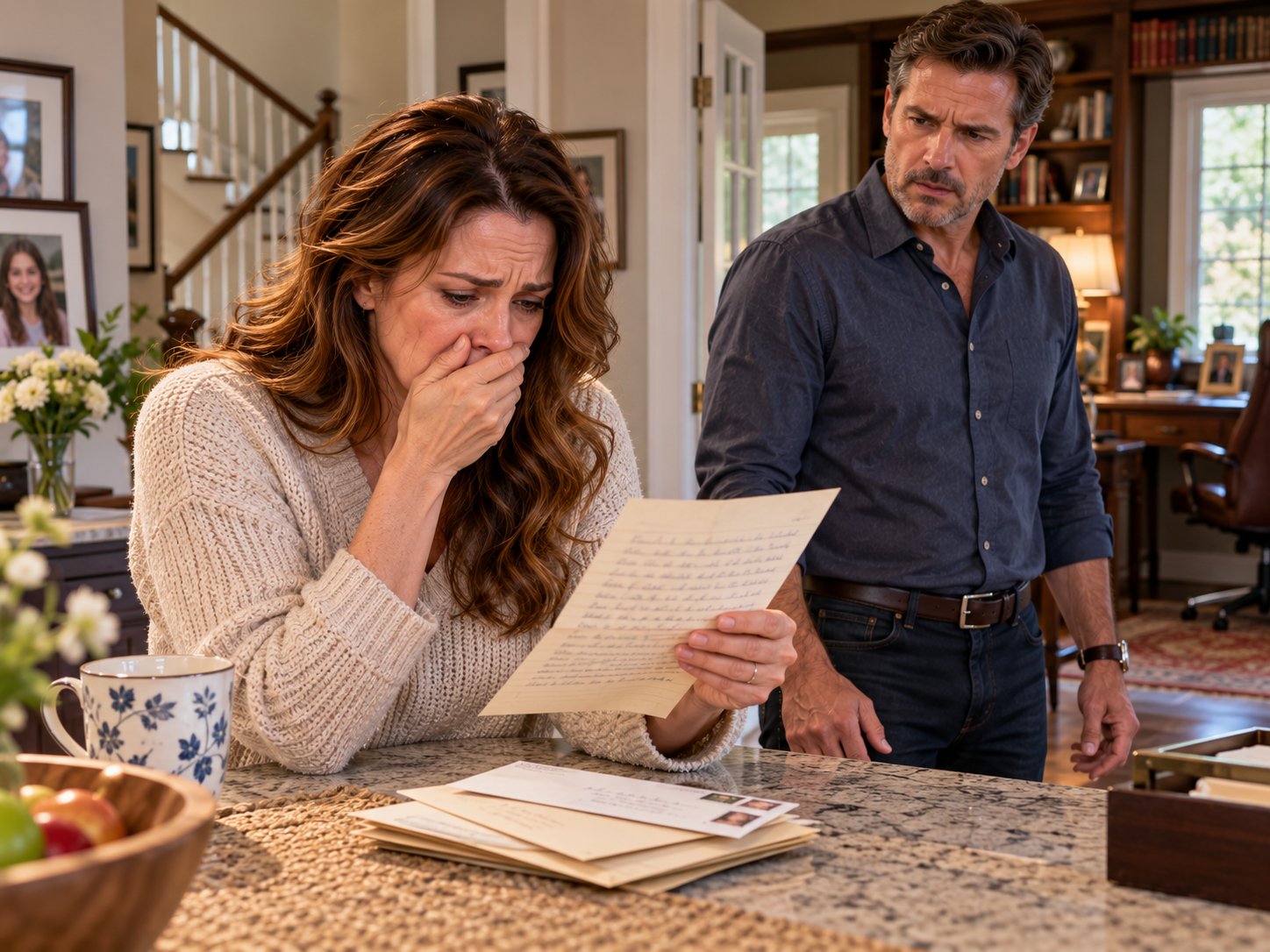
The phone rang just after seven on a Tuesday morning.
Ellen was still standing in the kitchen, waiting for the kettle to boil, when she saw Claire's name on the screen.
“Good morning.”
“Mom?”
Claire's voice sounded different.
Not frightened.
Not upset.
Just unusually serious.
Ellen immediately lowered the heat beneath the kettle.
“What happened?”
“Nothing bad.”
“You said that too quickly.”
Claire laughed softly.
“I know.”
“Then tell me.”
“I got an offer.”
“What kind?”
“A big one.”
Ellen smiled.
“You're going to make me guess?”
“I'm trying to build suspense.”
“You've never been good at suspense.”
“True.”
Claire paused.
“They want me to lead the new regional team.”
Ellen's smile widened.
“That sounds wonderful.”
“It is.”
“But?”
Claire sighed.
“But it's in another country.”
Ellen sat down.
For a few seconds, neither spoke.
“How long?”
“At least two years.”
“That is a long time.”
“I know.”
“Do you want to go?”
“I think so.”
Ellen waited.
She knew there was a question underneath the question.
Claire wasn't asking whether the position was good.
She was wondering whether leaving again would somehow reopen an old wound.
“Mom?”
“Yes?”
“Say something.”
Ellen smiled.
“I think you should go.”
Claire was quiet.
“You didn't even ask how far away it is.”
“I don't need to.”
“You don't?”
“No.”
“Why?”
“Because this isn't the same as before.”
Claire exhaled.
“I was hoping you'd say that.”
Ellen leaned back in her chair.
“You're not disappearing. You're taking a job.”
“I know.”
“And you're not leaving because you don't want us.”
“I know.”
“And you don't need my permission.”
“I know.”
“Then why are you asking me?”
Claire laughed.
“Because you're my mother.”
“That is acceptable.”
The conversation became easier after that.
They discussed practical things.
The apartment Claire would need.
Travel arrangements.
How often she could return.
What would happen to her current job.
Whether Tom knew.
“He doesn't,” Claire said.
“Why not?”
“I wanted to tell you first.”
Ellen smiled.
“He'll be proud.”
“I think so.”
When Claire came over that weekend, she brought the blue notebook.
Tom was waiting in the kitchen.
“So,” he said, “apparently we're losing you again.”
Claire stopped.
Ellen looked at him.
Tom immediately raised both hands.
“Wrong wording.”
Claire laughed.
“Very wrong.”
“I meant you're moving.”
“I know.”
He smiled.
“I'm proud of you.”
Claire's expression softened.
“Thank you.”
Tom sat down.
“When do you leave?”
“Six weeks.”
“That soon?”
“Yes.”
He nodded.
“Then we have work to do.”
“What kind of work?”
“Making sure your mother doesn't try to pack enough food to feed a small country.”
Ellen pointed at him.
“I heard that.”
Claire laughed.
The weekend became a planning session.
They looked at flights.
They discussed luggage.
They argued over what Claire actually needed.
Tom insisted she take the heavy coat.
Claire said she wouldn't need it.
Ellen insisted she take medicine.
Claire said she wasn't going to war.
By Sunday afternoon, the dining table was covered with lists.
Claire looked at them.
“This feels strangely normal.”
Ellen smiled.
“That was the goal.”
The following weeks moved quickly.
Claire prepared for the move.
She gave away furniture she no longer needed.
She packed photographs.
She scanned important documents.
She kept the blue notebook in her carry-on.
The green notebook remained on the shelf at Ellen's house.
One evening, Claire sat beside Ellen on the porch.
“I'm nervous.”
“Of the job?”
“Yes.”
“And?”
Claire looked down.
“Of leaving.”
Ellen nodded.
“That makes sense.”
“I don't want to wake up one day and feel like I'm far away from everything again.”
“You won't.”
“How can you know?”
“Because now you know how to come home.”
Claire looked at her.
“That sounds simple.”
“It is.”
“Was it always that simple?”
“No.”
Ellen looked toward the house.
“We made it complicated.”
Claire leaned against her shoulder.
“We don't have to anymore.”
Inside, Tom was cooking dinner.
The smell of garlic drifted through the open window.
Claire smiled.
“I'll miss that.”
“His cooking?”
“No. The smell.”
“You can have both.”
Claire laughed.
On her final week, she asked Tom to drive her to the airport.
He looked surprised.
“Me?”
“Yes.”
“Are you sure?”
“I'm sure.”
He nodded.
“I'd like that.”
The drive was mostly quiet.
Traffic moved slowly.
They talked about ordinary things.
A road closure.
A restaurant.
The weather.
Then, halfway there, Claire said, “Tom?”
“Yes?”
“I remember being afraid of asking you questions.”
He tightened his hands on the steering wheel.
“I know.”
“I don't feel that way anymore.”
He swallowed.
“Thank you.”
“Don't thank me.”
“Why?”
“Because you had to earn that.”
He nodded.
“I know.”
At the airport, he helped with her suitcase.
Then they stood facing each other.
“I'll call when I land,” Claire said.
“Okay.”
“Don't wait up.”
“I probably will.”
She smiled.
“You don't have to.”
“I know.”
Claire hugged him.
Tom closed his eyes.
When they separated, he said, “Go.”
She smiled.
“I am.”
He watched until she disappeared through security.
Then he called Ellen.
“She went through.”
“I know.”
“You knew?”
“She texted me.”
Tom laughed.
“Of course she did.”
When Claire landed, she sent them both a photograph.
A city skyline.
Underneath it, she wrote:
New chapter.
Ellen saved the picture.
Tom printed it.
Months passed.
Claire adapted.
The job was difficult.
The hours were long.
The language around her was unfamiliar.
There were evenings when she felt lonely.
But she called.
Sometimes she called Ellen.
Sometimes Tom.
Sometimes both.
Nobody demanded that she call.
Nobody measured the time between calls.
Nobody interpreted quiet as rejection.
That was how they knew they had changed.
One night, Claire called from her apartment overseas.
“I had a terrible day.”
Ellen listened.
She did not immediately offer solutions.
She let Claire speak.
When Claire finished, Ellen asked, “Do you want advice?”
“No.”
“Okay.”
“I just needed my mother.”
Ellen closed her eyes.
“I’m here.”
That was enough.
After the call, Ellen sat quietly in the kitchen.
Tom came in.
“She okay?”
“She will be.”
He nodded.
Then he sat beside her.
Neither spoke.
The silence was peaceful.
Ellen thought about the old days when silence had been terrifying.
Now she understood.
Trust was not the absence of uncertainty.
It was knowing you could survive uncertainty without inventing answers.
Two years later, Claire returned permanently.
She came home with more luggage than she had left with.
She also brought stories.
Hundreds of them.
She had learned things about herself.
She had learned that she liked living abroad.
She had learned that she preferred smaller apartments.
She had learned that she could make friends in unfamiliar places.
She had learned that leaving did not mean abandoning.
And she had learned that home was not one location.
It was a collection of people with whom she could be honest.
The first night she returned, the three of them ate dinner together.
Claire looked around.
“Nothing changed.”
Ellen laughed.
“Everything changed.”
Claire smiled.
“Both are true.”
Tom raised his glass.
“To both.”
Claire raised hers.
“To coming home without having to be asked.”
Ellen lifted her glass.
“To always having somewhere to come home to.”
They drank.
Later that night, Claire placed her blue notebook on the shelf beside the green one.
The two notebooks touched.
One held the memory of what had been lost.
The other held everything they had built afterward.
Claire looked at them.
Then she turned off the light.
Click here to continue reading: PART 18: Claire’s return brought an unexpected question about the future of the family home, and Ellen discovered that letting go could be another form of trust
I thought my daughter had chosen nine years of silence, until three unopened letters appeared beneath an old notebook in my husband’s desk
Part 17 of 20