The black watch was collected before sunrise.
Ramirez refused to tell me what they found on it until the evidence had been examined.
I understood.
Still, waiting was difficult.
Ruby woke at seven.
She walked downstairs wearing mismatched socks.
“Why are there police outside?”
“Just extra security.”
“Because of Sergio?”
I paused.
“Because we're making sure everyone stays safe.”
She nodded.
Then she looked at the window.
“Is Daniel outside?”
The question caught me off guard.
“Why do you ask?”
“Because he wears a black watch.”
I stared at her.
“Did you see him last night?”
She shook her head.
“I just remember.”
That distinction mattered.
Children remember strange details.
Colors.
Shoes.
Watches.
Voices.
Things adults forget because they don't seem important.
For Ruby, the black watch had become associated with danger.
I made breakfast.
She ate pancakes with strawberries.
She asked for extra syrup.
I gave it to her.
No permission required.
By now, she didn't seem surprised.
That was one of the small victories we had begun collecting.
Later that morning, Ramirez called.
The watch belonged to Daniel.
He had confirmed it through the serial number and purchase records.
“How did it get there?”
“We don't know.”
“Could he have dropped it?”
“Possible.”
“But you don't think that's likely.”
Ramirez was quiet.
“I think we need to speak with him.”
Daniel was located that afternoon.
He agreed to come to the station.
Paula came too.
She sat in the interview room while Ramirez questioned him.
I wasn't allowed inside.
I waited with Ruby in the hallway.
She colored.
I watched the clock.
After nearly an hour, Ramirez came out.
His expression was unreadable.
“What did he say?”
“He admits visiting the house.”
“About the camera?”
“He says he never knew about it.”
“Ruby says he did.”
“I know.”
“What happens now?”
“We need evidence.”
That was the frustrating part.
Memory was important.
But investigations needed more than suspicion.
A few minutes later, Daniel walked out.
He looked ordinary.
That bothered me.
He was in his forties, neatly dressed, carrying a leather folder.
He saw Ruby.
His expression changed.
Only for a second.
But I saw it.
Ruby saw it too.
She moved behind me.
Daniel stopped.
“Ruby.”
She didn't answer.
He smiled.
“It's been a while.”
Ruby grabbed my hand.
I didn't say anything.
Daniel looked at me.
“You must be Robert.”
“Yes.”
“I've heard a lot about you.”
I felt my jaw tighten.
“From whom?”
He smiled.
“Sergio.”
That answer made my skin crawl.
He walked toward the exit.
Ruby watched him leave.
Then whispered:
“He knows.”
“What?”
“He knows about the room.”
I crouched.
“What room?”
“The room with the boxes.”
“What boxes?”
She looked frightened.
“I don't want to talk.”
“Okay.”
I didn't push.
That evening, Ramirez called again.
“We found something.”
I listened.
“The black watch has traces of adhesive on the back.”
“What does that mean?”
“We're not certain.”
“Could it be from a camera?”
“Possibly.”
My stomach tightened.
“Then Daniel may have handled one.”
“That's one possibility.”
I understood why Ramirez refused to make conclusions before the evidence was complete.
But the pieces were beginning to fit.
The hidden devices.
The photograph.
The watch.
Daniel's visits.
Ruby's memory.
Then Ramirez said:
“We also found a photograph in Daniel's car.”
“What kind?”
“Your house.”
I stood up.
“Taken when?”
“We're checking.”
“Is Ruby in it?”
“No.”
That was some relief.
But not enough.
The photograph showed my house from the street.
Someone had photographed it recently.
“Why would he have it?”
“We don't know.”
The next morning, prosecutors requested additional records from Daniel's phone.
The investigation expanded.
For Ruby, life continued in smaller circles.
Breakfast.
Therapy.
Drawing.
Sleep.
She began asking questions about the future.
“When can I go back to school?”
“Soon.”
“Can Mommy come?”
“Maybe.”
“Can you pick me up?”
“If you want.”
She nodded.
“I want.”
I smiled.
“Then I'll pick you up.”
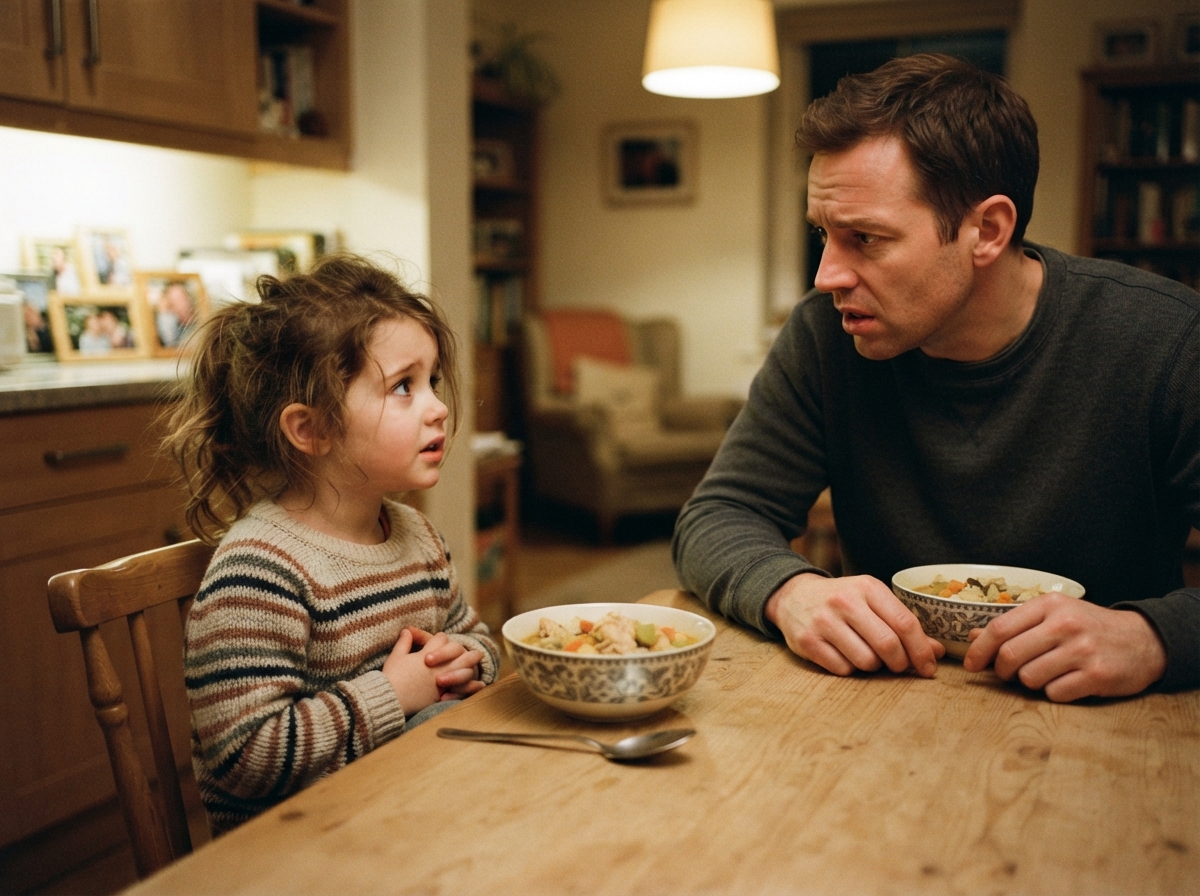
One afternoon, she asked me something unexpected.
“Uncle, can bad people look normal?”
I sat beside her.
“Sometimes.”
“How do you know they're bad?”
“You don't always know right away.”
She frowned.
“Then how do you know who to trust?”
I thought carefully.
“You learn by watching how people treat others.”
“What if they are nice sometimes?”
“That can make things complicated.”
She considered this.
“Like Sergio?”
“Yes.”
“Was he nice?”
“Sometimes.”
“Then I thought he was good.”
I nodded.
“That wasn't your fault.”
She looked down.
“I believed him.”
“You were a child.”
She didn't answer.
Then she leaned against my shoulder.
“I like you.”
I smiled.
“I like you too.”
“Do you have a black watch?”
I laughed.
“No.”
“Good.”
The case continued.
Daniel denied everything.
Sergio refused to cooperate.
Paula provided more information.
The prosecutor's office began preparing for court.
Then another piece of evidence arrived.
A technician had recovered a deleted file from one of the devices.
It was an audio recording.
The recording contained voices.
Sergio.
Daniel.
And Paula.
They were discussing Ruby.
The conversation was not clear enough to understand every word, but several phrases were unmistakable.
“She's getting suspicious.”
“Keep the door locked.”
“Don't let her talk to anyone.”
And then Daniel's voice:
“She needs to learn that nobody will believe her.”
I listened to the detective explain it.
My hands clenched.
“Is that enough?”
“It helps.”
“What about Paula?”
“She will have to answer for her part.”
I looked toward Ruby's room.
She was asleep.
“What happens to her?”
“That's for the court to determine.”
I nodded.
I knew then that the case had crossed a line.
This was no longer about what might have happened.
There was evidence.
Real evidence.
Recorded evidence.
The adults had discussed controlling a five-year-old.
They had known she was afraid.
And they had continued.
A few days later, Paula sat beside Ruby during dinner.
Ruby ate slowly.
Paula watched her.
“Would you like more?”
Ruby looked at her.
Then at me.
I didn't intervene.
Ruby said, “Yes.”
Paula served her more.
No punishment.
No conditions.
Just food.
Ruby took a bite.
Then another.
Paula began crying quietly.
Ruby noticed.
“Why are you crying?”
Paula wiped her face.
“Because I'm happy you're eating.”
Ruby thought about that.
Then she pushed a piece of bread toward her mother.
“You can eat too.”
Paula laughed through her tears.
“Thank you.”
For a few minutes, they ate together.
It wasn't forgiveness.
But it was a beginning.
That night, I received a call from Ramirez.
“Robert, I need you to listen carefully.”
I sat down.
“What happened?”
“We found the person who printed the photograph.”
My heart began pounding.
“Who?”
“An employee at a local print shop.”
“And?”
“He remembers the customer.”
“Who was it?”
There was a pause.
Then Ramirez said a name.
“Daniel.”
I closed my eyes.
Finally, we had something solid.
But Ramirez wasn't finished.
“He printed more than one copy.”
“How many?”
“Three.”
“Where are the others?”
“We don't know.”
Click Here to continue read next: PART8: Three Photographs Were Printed, but Only One Reached My Porch, Leaving Us to Wonder Where the Other Two Had Gone
I Thought Three Quiet Days With My Niece Would Mean Cartoons, Simple Meals, and Bedtime Stories Until One Question Made Everything Feel Wrong
Part 7 of 16