
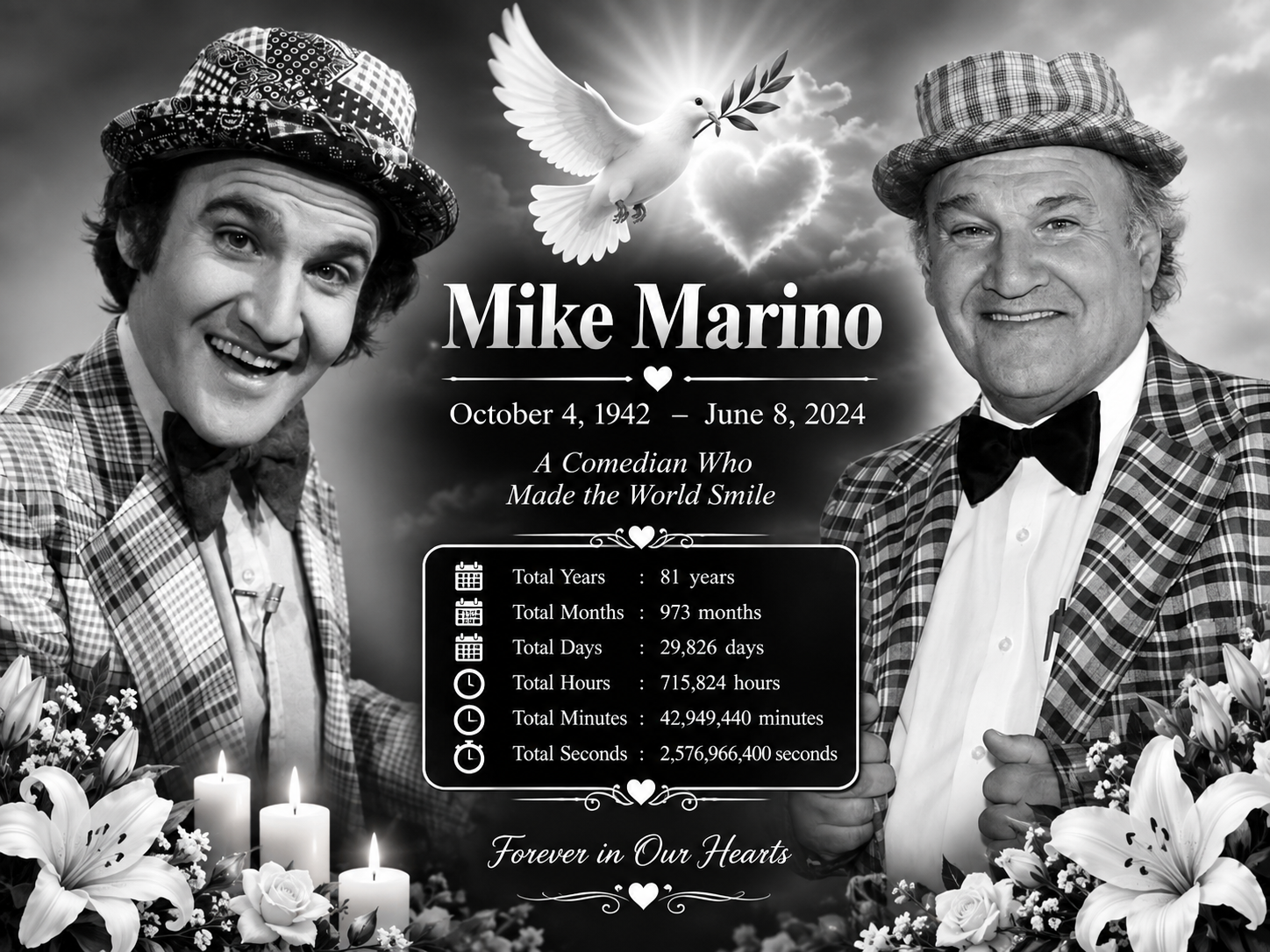
The farther Mike Marino traveled, the more obvious one fact became: leaving New Jersey did not mean leaving New Jersey behind.
His home state had become part of his professional vocabulary.
The accent, family stories, Italian-American traditions, local frustrations, neighborhood personalities, and particular sense of pride all traveled with him. Marino did not have to explain every reference before making it funny. He had spent years learning how much of a shared experience could be contained inside a single observation.
That approach helped him build an audience beyond New Jersey.
His comedy was rooted in a specific place, but the underlying subjects were familiar almost anywhere.
Family embarrassment travels.
Arguments travel.
Food travels.
Parents travel.
The tension between what a family says in public and what happens behind the front door travels.
Marino's skill was turning those ordinary situations into stories with a strong local accent.
His acting background continued to influence the work. Rather than standing behind a microphone and simply delivering one-liners, he could shift into characters and voices, allowing stories to become small scenes.
That ability helped distinguish his performances from a purely observational routine.
His recurring characters became recognizable parts of his comic universe. Cousin Mooney, Uncle Tommy, Cousin Michelle, and G.I. Giovanni were among the figures associated with his act. Each gave Marino another way to approach family, identity, and exaggerated personality. ([AOL.com][4])
The characters also allowed him to remain connected to theater.
A comedian performing as himself controls the room through personality.
An actor performing a character controls the room through transformation.
Marino could do both.
That versatility had practical value.
He had already learned to perform for cameras through more than 200 national television commercials, according to his professional biographies. His Clio Award nomination was an early recognition of that work. ([The Blue Magazine][5])
He then carried the same discipline into television acting.
Shows such as Becker, Nikki, Frasier, As the World Turns, One Life to Live, and Party of Five gave him opportunities to work within established productions rather than only his own stand-up act. ([The Blue Magazine][5])
But the stage remained the place where Marino had the greatest freedom.
There he could adjust to the room.
If an audience responded strongly to one subject, he could stay with it.
If a story needed more time, he could stretch it.
If a character was working particularly well, he could bring that character back.
Stand-up was immediate in a way television could not be.
The audience was physically present.
Laughter changed the timing.
Silence changed it too.
A performer could feel the difference without anyone having to explain it.
Marino built his career in that environment for decades.
He performed at clubs, theaters, casinos, and event centers throughout the United States and abroad. He also appeared at major comedy venues and festivals, including the Just for Laughs Comedy Festival in Montreal. ([Visani Entertainment Inc][6])
The road became part of the profession.
Traveling comedians spend enormous amounts of time between performances: airports, hotel rooms, cars, backstage spaces, sound checks, meals, and long stretches of waiting.
For Marino, the material he carried with him remained connected to home.
That was important because his comedy was fundamentally about recognition.
He wanted people to recognize something.
A relative.
A neighbor.
A parent.
A childhood memory.
A strange family habit.
A familiar New Jersey attitude.
The joke worked because the audience saw itself somewhere inside it.
His public identity increasingly emphasized that connection.
He became known as “New Jersey's Bad Boy of Comedy,” a title that was not simply a marketing phrase. It became a shorthand for the way he incorporated his hometown identity into his work. ([Legacy.com][7])
The nickname followed him across the country.
It also became part of how his home community remembered him.
Scotch Plains-Fanwood High School later recognized Marino as one of its distinguished alumni. In May 2024, he was inducted into the school's Hall of Fame alongside other graduates whose careers had taken them into different fields. The school described him as an actor and comedian who had performed internationally, worked in commercials and soap operas, entered the New Jersey Comedy Hall of Fame, and received the USO Bob Hope Comedy Award. ([Renna Media][8])
The recognition mattered because Marino had never treated Scotch Plains as merely a place he had once lived.
He continued returning.
He maintained connections there.
He later turned those memories into a new project.
The idea began after Marino encountered fellow Scotch Plains-Fanwood alumnus Daniel Catullo at the Hall of Fame ceremony. Catullo had become an Emmy-winning director and producer, while Marino had built his own career as a performer. Their meeting led to the idea of making a comedy special at their former high school. ([SPF K12][2])
The project was called “Mike Marino Back 2 School.”
The title was more than a joke.
It represented a return to the place where Marino had first performed, played music, and developed an interest in theater.
The school auditorium had once been part of his beginning.
Now it could become part of the record of his later career.
The production was designed around nostalgia and Marino's teenage experiences. The school was transformed for filming, and the performance included stories about his youth, his Italian-American family, and the experiences that had shaped his comic identity. ([SPF K12][2])
For Marino, the project had a clear personal meaning.
He described it as a “full circle moment” and said he wanted to give something back to the place that had shaped him. ([SPF K12][2])
That statement revealed something important about the comedian's relationship with his past.
He had spent decades traveling away from New Jersey.
But he had never needed to abandon the place that gave him his material.
Instead, the longer he worked, the more valuable those early memories became.
The teenager who once stood on that school stage had become a professional who could return decades later with cameras, a crew, and an established audience.
The transformation was visible.
The location was the same.
The performer was not.
That contrast gave the special an emotional layer without requiring Marino to abandon comedy.
The jokes could still be jokes.
The nostalgia could remain underneath them.
This ability to combine humor with personal history became increasingly important as Marino entered the later phase of his career.
He was no longer trying simply to establish himself.
He had already done that.
He was now preserving and expanding the world he had created.
That included podcasting.
His show “Live from My Mother's Basement” became another extension of his personality and connection to home. The title itself turned an ordinary family location into part of the brand.
The basement was not glamorous.
That was precisely the point.
Marino's public persona was built around the idea that his material came from ordinary life.
The podcast allowed him to continue that approach outside a traditional comedy stage.
He could talk at length.
He could bring in guests.
He could connect with listeners directly.
The format also reflected the changing media environment.
A comedian no longer needed to wait for a television network to approve a show.
A performer could build an audience through digital platforms and maintain a relationship with viewers between live performances.
Marino embraced that change.
He also developed a web series called “Make America Italian Again,” using the title as a comic framework for his Italian-American identity and political-style parody. ([The Blue Magazine][5])
The project demonstrated another characteristic of his career.
He was willing to turn his own public persona into the subject.
The joke could be about the comedian.
The character could become the premise.
The New Jersey identity could become an entire fictional campaign.
The Italian-American identity could become a source of exaggerated political humor.
The format changed, but the underlying method remained the same: take something personal and familiar, enlarge it, and make the audience recognize itself inside the exaggeration.
That method had carried him from local theater to national television.
Now it was carrying him into digital media.
But another part of Marino's life had been developing alongside the comedy.
He had become increasingly involved with performances supporting American service members and veterans.
Those performances would eventually lead to one of the honors he appeared most proud to receive.
And the road from comedy clubs to military audiences would reveal that his stage identity was larger than the jokes he told.
Click Here to continue read next: PART3: The Same Comedian Who Turned Family Arguments Into Punchlines Began Taking His Act to Service Members, Discovering a Different Meaning Behind the Applause
The Laughs Had Always Been Easy to Hear, but Behind the Jersey Jokes Was a Performer Quietly Building a Career From the Ground Up
Part 2 of 16

