
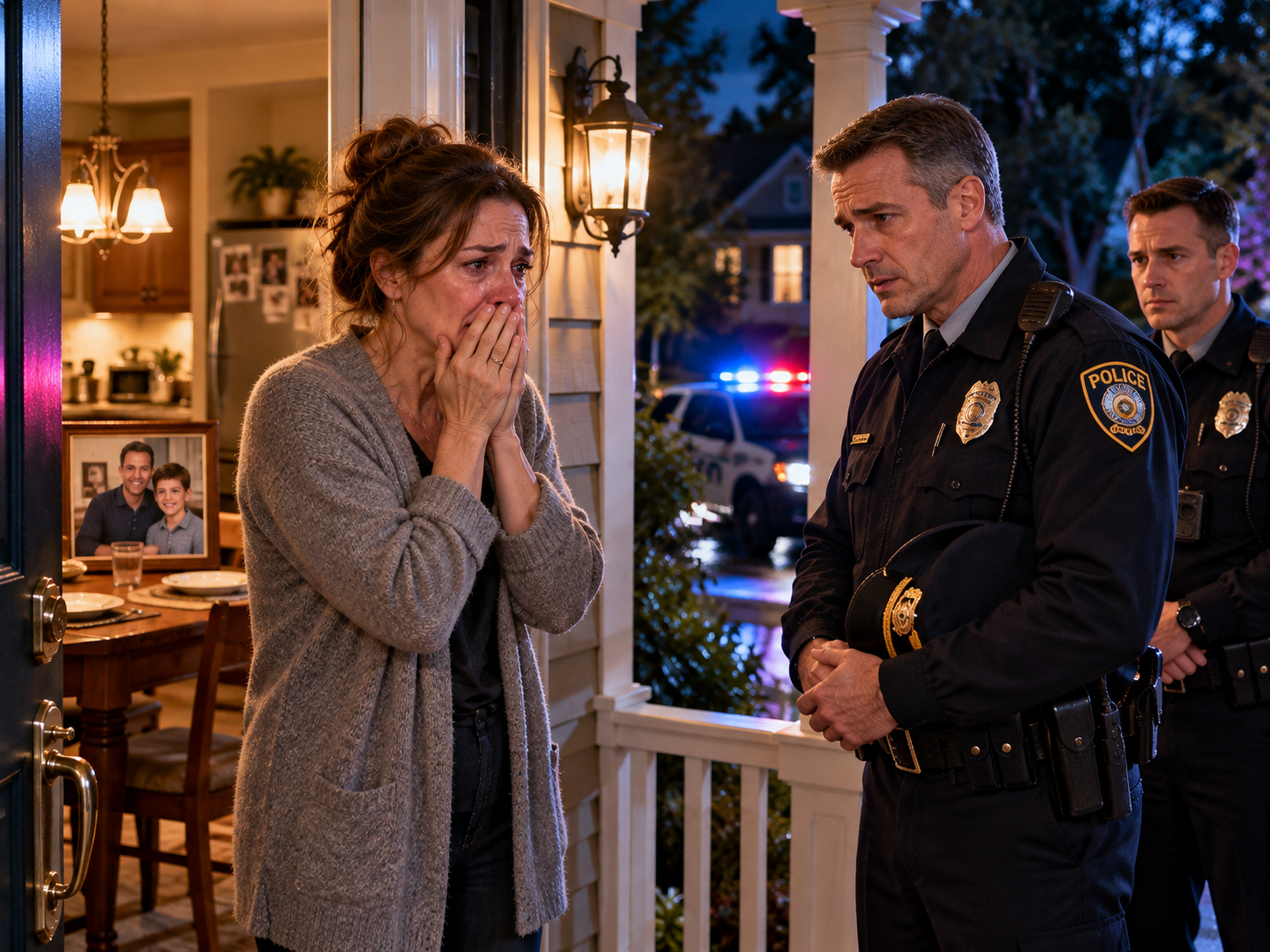
The invitation arrived from my father on a Monday evening. He said he wanted everyone to meet at my parents' house to discuss the apartment, the financial changes, and the future of the family. He insisted that the conversation needed to happen in person because messages and phone calls had only made the situation worse.
I considered declining. The last time I had gone to my parents' house, my belongings were not involved, but I had left feeling as though my grief had been treated as a problem to manage rather than a loss to share. I was tired of explaining why I had ended the housing arrangement. Yet I also knew that if I wanted the family to understand my boundaries, I needed to state them clearly and allow them to respond.
I agreed to attend, but I told my father that I would not discuss restoring the apartment or restarting the canceled payments. I was willing to talk about our relationships and the practical arrangements going forward. I was not willing to negotiate away decisions I had already made.
He replied that I was being difficult before the meeting had even begun.
I did not answer.
On the evening of the gathering, I drove to my parents' house with a notebook in my bag. I had written down a few points I wanted to keep clear: the apartment belonged to me; Veronica and Ruben's belongings had been delivered safely; the recurring payments had been canceled; and the reason I had changed the arrangements was not a desire to punish anyone. I wanted to stop providing support that had become expected regardless of how I was treated.
When I arrived, Veronica and Ruben were already there. They had moved into their new apartment, but some boxes remained stacked along the wall of my parents' living room. My mother had prepared coffee, and my father sat at the head of the dining table with a folder of papers in front of him.
Nobody asked how I was feeling.
My father began by saying that the family had experienced a difficult period and that everyone had made mistakes. He said he wanted us to move forward without allowing anger to destroy our relationships. Then he turned to the apartment and explained that Veronica and Ruben had faced considerable stress while finding a new place. He suggested that I consider helping them with some of their moving expenses as a gesture of reconciliation.
I let him finish.
“You asked me here to discuss the future of the family,” I said. “But you have begun by asking me to pay for Veronica's move. I need to understand whether this meeting is about repairing our relationships or returning to the arrangements that existed before Matthew died.”
My father frowned. He said the apartment and the money were practical matters that needed to be addressed, not reasons to keep fighting.
“They are practical matters,” I agreed. “That is why I have handled them carefully. I ended the housing arrangement, arranged for their belongings to be delivered, changed the locks, and reviewed the property with an attorney. I canceled the payments I had been making from my own accounts. Those decisions are not open for negotiation.”
Ruben leaned forward. He said they had never expected the apartment to become a permanent gift, but they had believed they could remain there until they were ready to buy a home. I told him I had allowed the arrangement to continue for years because I trusted that they were working toward independence. The fact that they had come to rely on the arrangement did not mean I had agreed to provide it indefinitely.
Veronica said she had been planning her future around the apartment and that losing it had created stress during her pregnancy. I acknowledged that the change had been difficult. I also pointed out that they had received years of free housing and had not developed a reliable plan for leaving. I was sorry the transition had been stressful, but I was not going to reverse the decision.
My mother interrupted to say that everyone had been under pressure. She mentioned the accident, the medical bills, the funeral, and the vacation. She said the family had been overwhelmed and that no one had known how to handle everything properly.
I looked at her.
“You knew what I asked for,” I said. “I asked you to come to Matthew's funeral. I didn't ask you to pay for it or take responsibility for my life. I asked you to stand beside me while I buried my son.”
She looked down at her hands.
My father said we had already discussed the vacation and that repeating the details would not change anything. I told him I was not repeating them to change the past. I was explaining why the old arrangements could not simply resume. Their decision had changed my understanding of the relationship, and I needed the family to acknowledge that before asking me for further support.
Veronica said she had apologized. I told her I appreciated the apology, but an apology did not erase the consequences of the choice she had made. It did not mean I had to restore free housing or pay her bills. I could accept her regret and still maintain my boundaries.
She looked frustrated. “What do you want from us, then?”
I thought about the question. I did not want them to suffer. I did not want them to lose their homes or struggle unnecessarily. I did not want a public argument or a permanent family feud. What I wanted was much simpler: honesty, respect, and the freedom to make decisions without being told that I was cruel whenever those decisions did not benefit someone else.
“I want you to stop treating my help as something you are entitled to,” I said. “I want you to recognize that I have my own life, my own grief, and my own limits. If we are going to remain close, it cannot depend on me paying for everything.”
Ruben said he understood the principle, but he thought I had acted too quickly by changing the locks. I explained that I had taken advice about the property and had arranged for their belongings to be packed and delivered safely. I had not damaged anything or tried to prevent them from collecting their possessions. I had ended the arrangement and secured the property. If they believed there was a legal issue, they could obtain independent advice, but I would not restore access simply because they were unhappy.
My father opened the folder in front of him and produced a handwritten list of expenses. He said the family had calculated what it would cost to help Veronica and Ruben settle into their new apartment and asked whether I would contribute a portion.
I looked at the list, then pushed it gently back toward him.
“I am not paying those expenses.”
He stared at me as if I had refused a basic family duty. “You can afford to help.”
“That has never been the question.”
The room went quiet.
I explained that I had spent years covering costs because I could afford them, but the ability to pay did not mean the responsibility belonged to me. I had supported my parents, paid for Veronica's wedding, provided the apartment, and helped with their recurring bills. I had done those things because I cared about them. I had not agreed to become their permanent source of financial security.
My mother said she was ashamed that I believed the family had used me. I told her I was not asking her to accept a label. I was describing a pattern: I gave, they expected more, and when I needed help, they told me I was strong enough to manage alone. I could not change how they saw the past, but I would no longer participate in the same arrangement.
Veronica began to cry. She said she had never thought of me as a source of money and that she loved me. I told her I believed she loved me in her own way, but love did not erase the fact that she had spoken cruelly when I needed her most. I was willing to work toward a better relationship, but it would require more than words.
She asked what she could do.
“Start by respecting the decisions I have made,” I replied. “Don't ask me to reverse them every time they become inconvenient.”
For several seconds, nobody spoke. I could see that my answer disappointed them because it offered no quick solution. There was no payment I could make, no promise I could sign, and no dramatic declaration that would return everyone to the familiar roles. They would have to adjust to a relationship in which I was no longer automatically responsible for their comfort.
My father finally said that the meeting had not gone the way he hoped. I told him I understood. I had not expected everyone to agree with me, but I had needed to say the truth clearly. I was not going to argue until they accepted it.
I stood and picked up my bag.
My mother asked whether I was leaving before the family had finished talking. I said we could continue another time if there were practical matters to discuss, but I would not stay to negotiate the apartment or my financial decisions. I thanked her for the coffee and walked toward the door.
Veronica followed me into the hallway. She looked upset, but she did not raise her voice. She said she was worried that we would never be close again.
“I don't know what our relationship will become,” I told her. “But it cannot be built on me pretending the funeral didn't happen.”
She nodded, though she did not say anything else. I left the house and drove home.
I expected to feel guilty. Instead, I felt exhausted and sad, but also relieved. I had spoken honestly without insulting anyone or trying to force an apology. I had not threatened to expose them, and I had not made new demands. I had simply refused to return to a financial arrangement that no longer worked for me.
Sarah called later that evening. I told her what had happened, and she listened while I described the meeting. When I finished, she asked whether I wished I had said anything differently.
I thought for a moment.
“I wish we didn't have to have this conversation,” I said. “I wish they had come to the funeral. I wish I could call my mother when I miss Matthew and know she would listen without turning the conversation into a request for money. But I don't regret telling them the truth.”
Sarah said that sounded like an important distinction.
The following week, I received a short message from my father. He said he had been thinking about what I told them and that he understood I was not going to pay for Veronica's expenses. He did not apologize for the vacation or acknowledge the funeral directly, but he said he wanted to avoid further arguments.
I replied that I wanted the same. I told him I was willing to speak respectfully and maintain contact, but my financial decisions would remain mine. He answered that he understood.
It was not reconciliation, but it was a start.
Veronica sent a separate message saying she and Ruben had settled into the new apartment. They had bought some used furniture and were still working through the expenses. She thanked me for helping her review the budget earlier. I congratulated them on the move and wished them well. She did not ask for money.
Over the next month, our conversations became less frequent but more manageable. My mother sometimes called simply to ask how I was doing. I did not always feel ready to talk, but I began answering when I wanted to. I stopped assuming that every call required me to solve a problem.
My father and I spoke about practical matters, including the apartment's future. He still believed I had been harsh, but he no longer asked me to give it back to Veronica and Ruben. I did not need him to approve of the decision. I needed him to understand that the matter was closed.
The apartment was prepared for a new tenant after the necessary repairs were completed. I reviewed the rental terms carefully and chose a tenant through the appropriate process. The rent would help cover maintenance and property expenses, and the arrangement would be documented clearly. I did not want another informal agreement that continued for years because nobody was willing to discuss its limits.
I also began returning to work on a reduced schedule. Some days were manageable, while others were difficult. I kept my calendar flexible and asked for help when I needed it. I did not pretend that I was fully recovered, and I did not apologize for needing time.
The family had not become what I once hoped it would be. My parents were still uncomfortable discussing their choice to go to Cancun, and Veronica was still learning to manage her expectations. But I had stopped trying to force the relationships back into their old shape. If we were going to build something better, it would have to begin with honesty rather than a return to the familiar arrangement.
One evening, I sat in Matthew's room and read the notes from his classmates again. I thought about how many people had shown up for him, even when they were not related to him. Mrs. Moore had driven over an hour. Sarah had stood beside me at the funeral. Jack's coworkers had come to offer condolences and share stories. Those people had not been required to help me, but they had chosen to do so.
Their kindness did not erase my family's absence. It reminded me that care was shown through actions, not titles.
I put the letters away and closed the box. I was still grieving, and I knew the loss would remain with me. But I no longer needed to spend every day proving that my pain was real. I could honor Matthew, care for myself, and decide how much space the family would have in my future.
The meeting had not resolved everything. It had clarified what I would no longer do. I would not pay for peace, restore the apartment out of guilt, or let anyone turn my son's funeral into a minor disagreement that I was expected to forget.
For the first time, my family had heard me say no without watching me take it back.
I intended to keep it that way.
Click here to continue reading: PART 9: The First Sunday I Spent Alone Without Solving Anyone Else’s Problems, I Discovered How Much of My Life Had Been Built Around Keeping My Family Comfortable
The Night I Learned My Family Had Chosen a Vacation Over My Son’s Funeral, Something Inside Me Went Quiet, and Nothing Would Ever Be the Same
Part 8 of 20

