
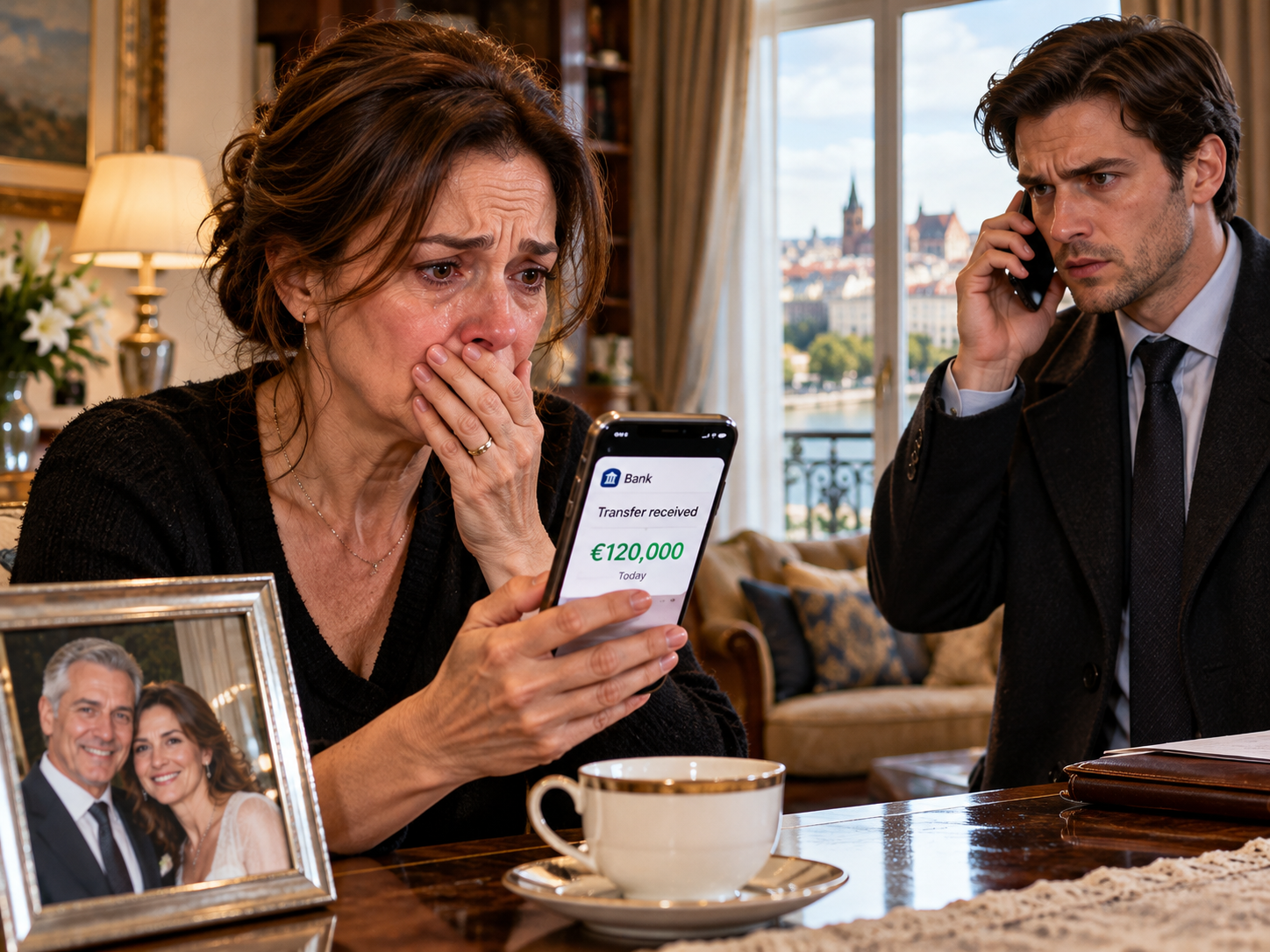
The message came from Claire on a Wednesday afternoon. She had received a request from the bank asking whether I would consent to a final administrative review of the disputed acknowledgment, not because new evidence had emerged, but because the institution was updating its records after the earlier review. The request was limited. They wanted confirmation that I had received the final findings and that the document should remain marked as disputed rather than treated as proof of a personal obligation.
For a moment, I felt the old fear return. I had come to believe that the matter was settled, and the thought of revisiting it brought back the months of uncertainty that followed Gérard’s death. I imagined another set of meetings, another request for statements, and another round of questions about who had signed what. Then I read Claire’s message again. The request did not reopen the investigation or accuse anyone of wrongdoing. It was an administrative step designed to preserve the record accurately.
Claire advised me to respond through the established channel and to avoid adding speculation about the signature’s origin. The final review had already determined what the available evidence supported: I had not knowingly accepted the obligation described in the acknowledgment, the transfer had been authorized by Gérard as a separate provision, and the bank had no basis to demand repayment from me solely because the disputed document existed. The identity of the person who created the signature remained unestablished. Nothing in the new request changed those findings.
I asked Claire to prepare a short response confirming that I had received the findings and that I continued to dispute the acknowledgment as evidence of my consent. I also asked her to state that I was not making any new allegation about who had created it. The response was factual and limited. I read it carefully before authorizing it, then returned to the work I had planned for the afternoon.
That evening, I wondered why even a routine letter could still unsettle me. The answer was not that I doubted the findings. It was that the earlier months had taught me to expect a new demand whenever I thought I could rest. My mind had learned to connect official correspondence with danger. I had to remind myself that caution was useful, but permanent alarm was not. The proper response to a document was to read it, understand it, seek advice when needed, and then decide whether any action was required.
The bank acknowledged the response several days later. It confirmed that the record would continue to identify the acknowledgment as disputed and that no repayment demand was being made on the basis of the document alone. There was no dramatic announcement and no new conclusion about the signature. The matter remained where the evidence had left it. I filed the confirmation with Claire’s correspondence and closed the folder.
I did not feel the intense relief I had once expected. Instead, I felt something quieter: confidence that I could handle an unresolved question without allowing it to consume my life. The absence of a definitive answer was frustrating, but it was not an emergency. I had done what could reasonably be done, and there was no value in searching the same records repeatedly in the hope that they would suddenly reveal something new.
A week later, Mathieu called to ask whether the bank had contacted me. Claire had informed him that the administrative review was limited, and he wanted to know whether it had changed anything. I explained the request and the response. He listened and said he was glad that the record would remain accurate. He did not ask me to soften the wording or declare that the signature had been created by someone else. He understood that I was not accusing him, but I was also not willing to describe an uncertain document as proof of an agreement.
He told me that he had thought about the acknowledgment often. He still believed he had received it as part of the financial arrangements his father had been managing, but he understood that believing a document was valid did not establish that I had agreed to it. He said he wished he had questioned it more carefully before submitting the copy. I told him that was a fair lesson to draw, provided he did not turn it into a conclusion about facts we could not prove.
“I don't want you to feel you have to keep defending yourself because of me,” he said.
“I don't want either of us to make promises about facts we don't know,” I replied. “That is why the review mattered.”
He agreed. We ended the call without discussing the estate further. I noticed that I had not spent the rest of the evening replaying the conversation. It had been a practical exchange between two adults, each responsible for his or her own understanding. That was a kind of progress I could recognize without overstating it.
The company also reached a point of greater stability. Daniel sent the annual financial summary, including the updated authorization procedures and the status of the remaining historical documentation gaps. The newer transactions were properly supported, approvals were recorded, and the finance team had adopted a routine for flagging incomplete records before they became larger problems. Some older items remained insufficiently documented, but they were clearly identified and were not being presented as resolved.
I reviewed the summary and asked Daniel to include a short explanation of the remaining limitations in the next shareholder report. I wanted the information to be clear enough that nobody would confuse the absence of a finding with proof that every historical decision had been correct. Daniel agreed. The company had benefited from confronting the weaknesses in its processes, and it needed to keep that discipline even after the family’s attention moved elsewhere.
At the next shareholder meeting, I spoke briefly about the importance of maintaining independent oversight. I did not name Mathieu or refer to the disputed signature. The point was not to punish anyone or keep the old conflict alive. It was to ensure that the company’s procedures did not depend on the memory, confidence, or personal authority of a single individual. Financial decisions needed records that could be understood by someone who had not been present when they were made.
The other shareholders supported the recommendation. Daniel presented a schedule for periodic checks, and the company adopted it. The decision was practical and forward-looking. It did not rewrite the past, but it reduced the likelihood that future employees or family members would face the same uncertainty. I left the meeting feeling that Gérard’s legacy could include improvements as well as unanswered questions.
That weekend, I visited Jamie and helped her prepare for a presentation at work. She had organized her material carefully and wanted someone to listen while she practiced. I offered feedback about the structure and suggested that she simplify two slides so the main points would be easier to follow. She made the changes and delivered the presentation successfully the following week. She later told me that her manager had praised her clarity and preparation.
I was pleased for her, but I also noticed how different our relationship had become. She no longer treated me as someone whose approval she needed before making a decision. She asked for advice when she wanted it, considered what I said, and then chose her own course. I had wanted her to become confident and independent, and she was doing exactly that. My role was to encourage her, not to direct her life.
Brigitte invited me to a family lunch after the shareholder meeting. I accepted because I wanted to see everyone, not because I felt responsible for maintaining peace. The meal was relaxed. Mathieu spoke about his new project, Jamie described her presentation, and Brigitte asked about the trip I was planning. When the conversation turned briefly to the company, Daniel’s report was mentioned as a routine update rather than an invitation to revisit the past.
At one point, Brigitte said she was glad the financial questions had finally become less central to family life. I agreed, but I added that the questions had mattered because they affected my name and financial security. It was important not to treat the review as an unnecessary inconvenience simply because it had ended. She nodded and said she understood. We did not argue, and neither of us needed to say more.
After lunch, I walked home through the city. I thought about how often I had once confused peace with the absence of disagreement. If everyone stopped talking about a problem, I assumed it had been resolved. I now understood that silence could hide resentment and uncertainty just as easily as it could preserve calm. Real peace required the freedom to state what was known, admit what remained unknown, and allow people to disagree without forcing one of them to surrender.
I had no intention of reopening the disputed acknowledgment without new evidence. But I also would not pretend it had been resolved in a way it had not. The record was clear about the limits of the findings. I could live with those limits because they were honest. I did not need to assign blame simply to create the feeling of a complete ending.
That evening, I looked through the folder containing the review documents. I confirmed that the bank’s latest letter had been stored with the previous correspondence and that Claire had copies of the relevant records. Then I placed the folder in the cabinet and turned the key. I did not feel compelled to inspect it again. If a legitimate new development occurred, I would address it. Until then, I could let the documents remain still.
A few days later, I received a message from Mathieu thanking me for keeping the response factual. He said he had come to understand that accuracy protected everyone better than a confident story that went beyond the evidence. I replied that I was glad he understood. I did not tell him that the message had repaired our relationship or that the past no longer mattered. It was one more respectful exchange, and that was enough.
I began planning a longer trip with a friend. We compared dates, transport options, and costs, and chose an itinerary that gave us time to explore without rushing between destinations. I paid for my share from my own account and arranged for the apartment to be checked while I was away. The preparations were ordinary, but they carried a significance I could feel. I was using my resources to create experiences I wanted, not to meet an obligation someone else had assigned to me.
Before leaving, I reviewed the company’s latest report and confirmed that Daniel had the authority needed to manage routine operations. I did not ask him to contact me for every minor decision. We agreed on the circumstances that would require my attention and the information that could wait until my return. I trusted the process because it was clear, not because I assumed nothing could go wrong.
During the trip, I spent several days without thinking about the disputed signature at all. I visited museums, walked through unfamiliar streets, and sat in cafés with my friend while we talked about books and family. There were moments when I remembered Gérard, but the memories came without the immediate urge to search for another explanation. I could let them pass through my mind and return to the conversation in front of me.
When I returned to Lyon, there were no emergencies waiting. Daniel’s update was routine, the apartment was in good order, and the family had managed its own plans. The world had continued while I was away. I had known this intellectually, but experiencing it strengthened my confidence that I did not need to hold every responsibility personally to ensure that things were done properly.
I understood then that the final lesson of the financial review was not about discovering the identity behind a signature. It was about learning to distinguish responsibility from control. I was responsible for responding to the evidence, protecting my rights, and making careful decisions. I was not responsible for inventing certainty where none existed, managing every family member’s emotions, or ensuring that everyone agreed with the outcome.
The disputed acknowledgment remained unresolved in one important respect. That fact would stay in the record, and perhaps it would always bother me. But it no longer prevented me from enjoying my life. I had learned that an unanswered question could remain unanswered without becoming the center of everything else.
Click here to continue reading: PART 20: When I Finally Closed the Last Estate File, I Realized Gérard’s Greatest Legacy Would Not Be the Fortune He Left but the Life I Chose After Him
My Husband Left Me €120,000, but His Son’s Call Made Me Fear What That Money Was Really Meant to Hide
Part 19 of 20


One Comment on “PART 19 – A Final Question About the Disputed Signature Returned to My Door, Testing Whether I Could Preserve the Truth Without Letting Uncertainty Take My Life Away Again”