
Spring returned to Lyon with pale sunlight, open café terraces, and the first green leaves appearing along the river. I noticed the change one morning while walking to meet Daniel for a quarterly review. A year earlier, I had been waking with the phone beside my pillow, afraid that another message would bring a new demand or reveal another hidden problem. Now I could leave the apartment without checking every notification. The estate was organized, the company was functioning with stronger controls, and the remaining historical questions were documented rather than allowed to spread through every corner of my life.
The quarterly meeting went well. Daniel reported that the new service line had continued to grow at a measured pace, with customer feedback supporting further development. The company had kept the rollout within the revised budget, and the updated approval procedures were being followed consistently. The finance team had also completed a review of the documentation requirements introduced after Gérard's death. A few minor corrections had been made, but no new issue required a separate investigation. I thanked Daniel and told him to maintain the same careful approach.
I had learned to appreciate reports that were clear rather than flattering. Daniel did not promise that every quarter would be better than the last. He explained the figures, identified the risks, and recommended sensible adjustments. I could make decisions based on what the company actually knew instead of what someone hoped would happen. That was the kind of business I wanted to help preserve: one that could acknowledge uncertainty without allowing it to become chaos.
After the meeting, I walked through the city rather than calling a taxi. The weather was mild, and the streets were busy with people leaving offices, carrying shopping bags, and meeting friends for lunch. I stopped at a small bakery and bought a pastry to eat on a bench near the river. Nobody needed me to organize anything. Nobody was waiting for me to explain the estate or defend the decisions I had made. For a few minutes, I was simply a woman enjoying the beginning of spring.
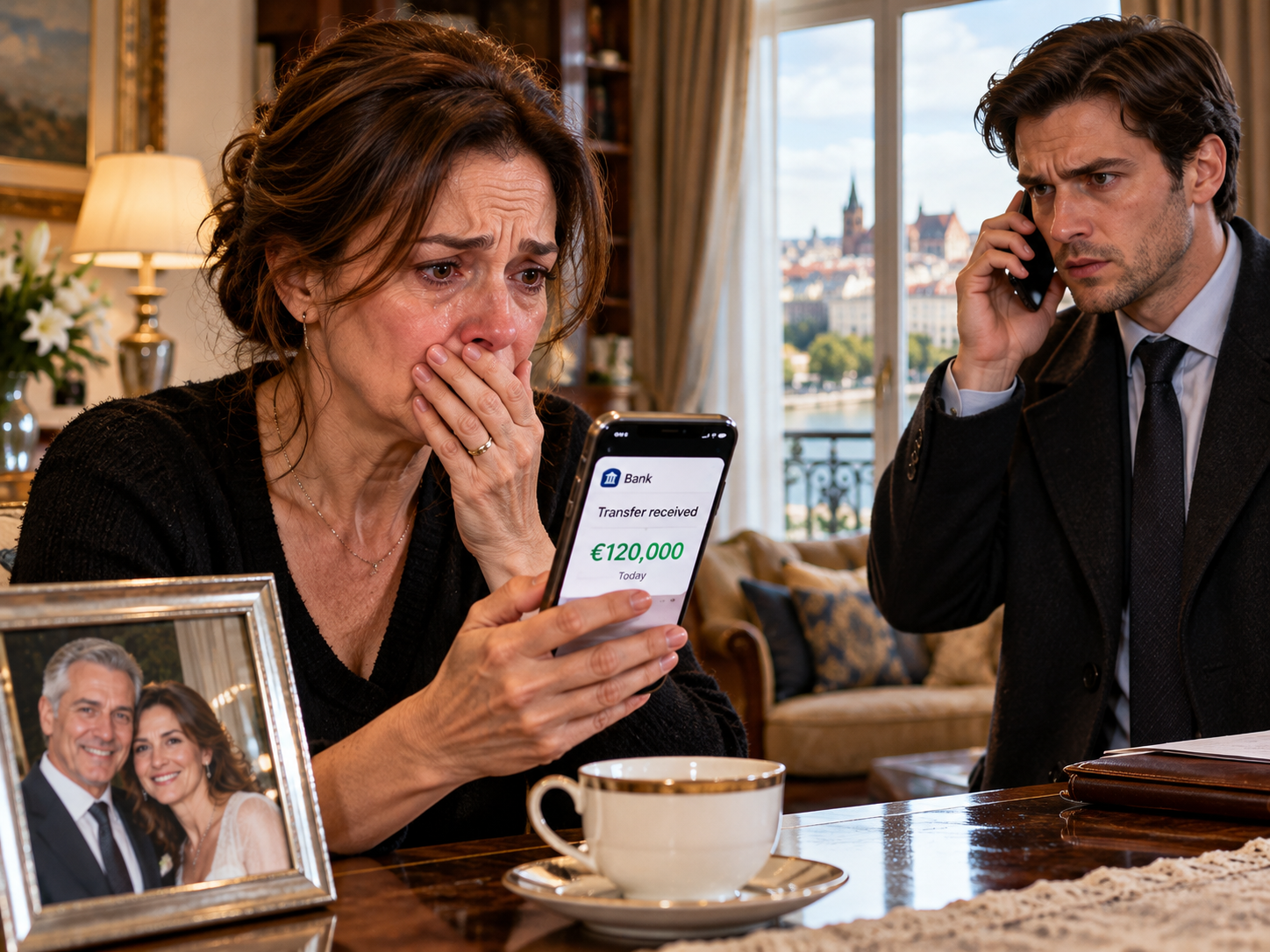
That afternoon, I reviewed the documents relating to Gérard's will and the €120,000 transfer. The will had been administered according to its terms, and the transfer had been confirmed as a provision he authorized for my security. The disputed acknowledgment could not be relied upon as proof that I had knowingly accepted the obligation it described. The final review had not established who created the signature, and no conclusion had been reached that Mathieu had forged it. The records remained preserved in case new evidence emerged, but there was no reason to reopen the matter without a legitimate basis.
I closed the folder and returned it to the locked cabinet. I no longer needed to reread the same pages whenever I felt uncertain. The documents had answered the questions they could answer. They had also shown me where the evidence ended. I could respect that boundary without treating it as a failure. Some parts of the past would remain unresolved, and I could still move forward.
The €120,000 remained in my account, managed as part of my financial plan. It gave me security and flexibility, but I no longer saw it as the price Gérard had assigned to twenty-five years of marriage. That interpretation had belonged to Mathieu's cruel words, not to the transfer's documented purpose. Gérard had wanted to ensure that I had money under my own control while the financial questions were being examined. His intentions had been imperfectly communicated, but the records supported that purpose.
I did not romanticize the decision. Gérard had protected me financially while failing to explain the situation fully. He had been concerned about the company's records but had kept me outside conversations that affected my name. His silence had made the months after his death more painful than they needed to be. I could acknowledge his attempt to provide security without pretending that it compensated for every way he had failed me during the marriage.
A few days later, I visited the villa near Annecy. The garden had begun to bloom, and the caretaker had opened the shutters to let the rooms air. I walked through the house and stopped in the study. The drawer where the documents had been found was empty, and the cabinet no longer felt like a place waiting to reveal another secret. The records had been inventoried and stored, and the professionals had examined what could reasonably be examined. I was free to decide what the villa meant to me now.
I sat by the window and remembered one of the last afternoons Gérard had spent there. He had been tired and had struggled to climb the stairs, but he had insisted on sitting in his favorite chair. I had brought him tea and asked whether he wanted to return to Lyon earlier than planned. He had said he wanted one more quiet afternoon. I had stayed beside him, reading while he rested. At the time, I had not understood how much he was worried about the financial matters he had kept private.
I could not know whether he had planned to tell me everything if his health had improved. The notes suggested that he had wanted to clarify the records and protect me from an unsupported obligation. They did not reveal every conversation he had withheld or every fear he had carried. I would never have the opportunity to ask him directly. That absence was painful, but I no longer tried to fill it with assumptions.
Before leaving the villa, I checked the maintenance plan and confirmed the next inspection. I had decided to keep the property for another year, then review the costs and my use of it. The decision was neither a declaration of loyalty nor a rejection of the past. I liked spending time there, and the finances were manageable. If that changed, I could sell it. The choice belonged to me.
Back in Lyon, I received an invitation from Brigitte to attend a small family gathering. She included the date, the time, and a note saying that she understood if I already had plans. I checked my calendar and accepted. I wanted to attend, and I was glad that the invitation did not carry an expectation that I would rearrange my life to accommodate everyone else.
The gathering was modest. Jamie spoke about her training, Brigitte's husband described a trip he was planning, and Mathieu talked about a project at his new job. He seemed more comfortable in his own role and less eager to compare his achievements with those of his father. When someone asked about the family company, he explained that it was operating steadily and that the review had led to clearer procedures. He did not claim that the earlier questions had all been resolved in his favor, and he did not blame me for insisting on the review.
Brigitte asked whether I had enjoyed my recent visit to the villa. I told her I had and described the garden. She listened without suggesting that the property should be preserved for Mathieu or used for family holidays. The conversation moved naturally to other subjects. I appreciated the change. We were not suddenly a close family, but we were learning to interact without treating every choice as a challenge to someone's authority.
After dinner, Mathieu walked with me toward the door. He asked whether I was comfortable with how things stood between us. I considered the question before answering. I told him that I was glad we could speak respectfully, but I did not want either of us to pretend that the relationship had returned to what it had been before the transfer and the will. We had learned things about one another that could not simply be forgotten. Trust would continue to depend on how we treated each other.
He nodded and said he agreed. He told me that he was grateful I had helped him with his application, even though I had refused to provide an endorsement I could not honestly give. He had learned that the advice was more useful than a recommendation he had not earned. I told him I was pleased that the opportunity was going well and wished him success in his work. We said goodbye without making promises about the future.
On the walk home, I thought about the woman I had been when I first arrived in Lyon at twenty-three. I had believed that being a good wife meant anticipating needs, preventing conflict, and proving my devotion through constant service. I had treated my own discomfort as a small price to pay for belonging. I had not understood how easily generosity could become an expectation when the people receiving it never had to consider what it cost.
I did not regret caring for Mathieu as a child or supporting Gérard through the difficult years of his life. Those choices had been genuine, and the love behind them had been real. What I regretted was believing that love required me to remain silent when my boundaries were crossed. I could have cared for the family without accepting every burden. I could have asked more questions. I could have insisted on understanding the financial arrangements that affected me. I could not change the past, but I could learn from it.
My life now had room for ordinary pleasures. I made plans with friends, traveled when I wanted, and spent time on interests I had neglected. I kept up with the company's reports without monitoring every transaction personally. I helped Jamie when she asked for advice and allowed Mathieu to build his career without treating his problems as my responsibility. I spoke to Brigitte politely, but I no longer measured my worth by whether she approved of me.
There were still difficult days. Sometimes a familiar song brought back a memory of Gérard, and I felt the loss sharply. Sometimes I wondered whether the disputed signature would ever be explained completely. Sometimes I wished the family could speak more openly about what had happened instead of allowing the subject to remain uncomfortable. But those feelings no longer controlled my decisions. I could miss my husband, tolerate uncertainty, and still enjoy the life I had.
One evening, I took the black dress from the wardrobe and wore it to a concert with a friend. I remembered the remark Gérard had made years earlier, telling me that the dress made me look as though I did not belong in his family. The memory still hurt, but it no longer determined how I saw myself. My friend complimented the dress, and we went inside. I listened to the music, enjoyed the performance, and forgot about the past for a while.
When I returned home, I placed the dress among my other clothes. It no longer needed to be a symbol of defiance. It was simply a dress I liked, one I could wear whenever I chose. I realized that freedom was often made up of small decisions that no longer required explanation. The estate had provided financial independence, but my daily life was where I learned to use it.
I sometimes wondered what Gérard would have thought of the woman I had become. He might have been relieved that the transfer had provided security. He might have regretted the secrecy that surrounded it. He might have struggled to understand why I no longer accepted his family's expectations as my own. I would never know. I did not need to invent an answer in order to move forward.
The will had given me the estate, but it had not given me permission to become myself. I had always possessed that right. The difficult months after Gérard's death had forced me to recognize it because so many people had behaved as though my life remained subject to their approval. The truth was simpler: I was responsible for my choices, and they were responsible for theirs.
I had not sought revenge. I had not demanded a public confession or insisted that every family member agree with my account of the past. I had protected my financial position through proper legal and professional channels, allowed the company to strengthen its controls, and refused to sign statements that exceeded the evidence. I had accepted apologies where they were offered and maintained boundaries where trust remained uncertain. None of those decisions required me to become cruel.
The money remained in my account. The company continued operating. The villa stood near the lake, available for another visit when I wanted one. The family relationships were imperfect but less hostile than before. Some questions remained unanswered, but they no longer held the power to suspend my life.
One spring morning, I woke before sunrise and opened the windows. The city was quiet, and the sky was beginning to lighten. I made coffee, carried it into the living room, and sat beneath the photograph of Gérard. I felt affection, grief, and a little sadness for the things we had never learned to say to each other. Then I felt gratitude for the life I could still shape.
I did not need to erase the photograph or keep it at the center of every decision. I could let it remain a record of a marriage that had contained love, disappointment, loyalty, and silence. I could remember the man I had married without allowing his final wishes, his family's expectations, or his mistakes to decide the person I would become.
When the sun rose over Lyon, I finished my coffee and began planning the day. There were accounts to review, a friend to meet, and a trip to arrange. These were ordinary things, but they belonged to me. I no longer had to wait for someone else's approval before living them.
Gérard had left me money, property, and a complicated set of documents. The review had clarified what could be established and preserved what remained uncertain. But the most important change had come from the decisions I made after the inheritance: to ask questions, to respect the evidence, to forgive without surrendering my boundaries, and to stop confusing love with obligation.
I kept the house I chose to keep, the business I helped protect, and the relationships that could grow honestly. More importantly, I kept the right to decide what happened next.
I had spent twenty-five years helping a family feel secure. The rest of my life would not be measured by how much I could sacrifice to make other people comfortable. It would be measured by the choices I made with the time I had left.
And at last, those choices were my own.
Click here to continue reading: PART 17: Just When I Believed Gérard’s Estate Had Become Part of My Past, an Unexpected Letter Forced Me to Reconsider What Closure Really Meant
My Husband Left Me €120,000, but His Son’s Call Made Me Fear What That Money Was Really Meant to Hide
Part 16 of 20

