
Grandpa's voice filled the study with a tenderness I had not been prepared to hear. The recording was clear enough that I could distinguish the slight rasp that had developed during his final illness. He began by saying that he had made the statement voluntarily, with Eleanor Whitcomb present, because he wanted no uncertainty about his decisions. He gave the date, identified himself, and said he understood that his death would leave unfinished questions. Then he paused, and I heard the soft movement of paper near the microphone. It sounded exactly like him settling his notes before telling a story.
He spoke first to me. He said he hoped I was sitting somewhere comfortable and that I had remembered to eat something that morning. The small instruction nearly undid me. Even at the end of his life, he had been worried that I would forget breakfast when I was upset. I pressed my fingers against the edge of his desk and listened as he told me he had never considered me an obligation imposed upon him. Raising me, he said, had been the most important work of his later years, and he would have chosen it again without hesitation.
My mother shifted behind me. I did not turn around. Grandpa continued, explaining that he had loved his daughter and had hoped for many years that she would find a way to repair her relationship with me. He had not wanted to make reconciliation impossible. He had kept my address and telephone number available whenever my parents asked for them, though those requests had become rare. He said he had never instructed me to hate them. He had simply refused to lie when I asked why they did not come.
Dad cleared his throat. “This is unnecessary,” he muttered. Eleanor looked at him without touching the recorder. Grandpa's voice continued, unaware of the interruption. He described the weekend I arrived with my pink suitcase and the promise that my parents would collect me two days later. When they failed to return, he had called repeatedly. At first, they gave excuses about work and housing. Then they stopped answering. Eventually, after he warned them that he needed a legal arrangement to care for me properly, they agreed to discuss guardianship.
I had imagined that conversation countless times, always from the perspective of the little girl waiting at the window. Now I heard Grandpa describe the adult decisions made beyond my understanding. He said my parents had wanted to focus on raising Brianna and rebuilding their finances. They believed that keeping me with Grandpa would make their lives easier. He had disagreed with their choice, but once they made it, his priority became ensuring I had a stable home. He pursued the necessary legal steps so that school enrollment, medical treatment, and ordinary decisions would not depend on parents who rarely responded.
Brianna made a small sound behind me. “They told me Emily wanted to stay,” she whispered. I turned. Her sunglasses were gone, and she looked younger without them. Mom reached toward her, but Brianna stepped away. Grandpa's recording continued. He said he had never asked me to choose between the household where I had been born and the home where I was being raised. I was five. I had not possessed the power to make that choice, and he wanted the record to reflect that plainly.
Then his tone changed. He said there had been later conversations about the house and his estate. My parents had contacted him periodically to ask about property values, the cost of maintaining the house, and whether he intended to sell. Some calls had been friendly at first, but the questions eventually became more direct. He had told them that his priority was ensuring I would have a secure place to live after he was gone. They had responded with disappointment and, on more than one occasion, anger.
My father moved toward the recorder. Eleanor raised a hand. “Please don't touch it.” He stopped, his face flushed. Grandpa went on to explain that he had reviewed his estate plan with independent legal advice and had chosen to leave his home and most of his property to me. He wanted me to have the stability I had known growing up, without the fear that someone else could take it away simply because he was no longer there to protect me.
He also said that he had made separate, modest provisions for his daughter, subject to the administration of the estate, but that he did not intend for those provisions to give her control over the house. He had not forgotten her. He had considered her circumstances and his own responsibilities before making the decision. “I cannot give my daughter seventeen years back,” he said. “I cannot make her choose differently. But I can refuse to reward a claim that treats Emily's home as though it has been waiting empty for its rightful owners.”
My mother turned away from the desk. I saw her shoulders rise as she drew a breath. Grandpa's voice softened again. He said he knew the house needed repairs and that I might someday decide to sell it. He did not want me to feel imprisoned by his memory. If I chose to leave, he hoped it would be because I had found something I wanted, not because someone had made me believe I did not belong. The distinction was important to him. He wanted the house to be a gift, not another duty.
The recording ended with a message addressed to my parents. Grandpa said he hoped they would find the courage to acknowledge what had happened when I was a child. He did not ask them to confess for his benefit. He asked them to stop presenting their absence as something I had caused or chosen. If they wished to have a relationship with me, they would have to approach me as an adult who was free to decide whether she wanted one. They could not purchase forgiveness with family language or demand it through property claims.
There was a pause before the final words. I heard Grandpa breathe, and for an instant I imagined him sitting in the chair beside me, his hands folded over his notes. “Emily,” he said, “you have never been a burden. I hope you know that by now.” The recorder clicked off. The silence that followed was so complete that I could hear the movers talking faintly outside the house. I stood with one hand resting on Grandpa's desk, unable to speak.
My father broke the silence first. He said the recording was emotional and irrelevant to the legal question. Eleanor answered that the legal documents were separate and would be administered according to law. The recording was simply Grandpa's own explanation, preserved because he anticipated that his intentions might be misrepresented. Dad demanded copies of everything. Eleanor said his attorney could request the appropriate records. She did not sound offended or triumphant. She sounded like someone who had expected this conversation and was determined to finish it properly.
Mom looked at me. “Emily, you know we had reasons.” I waited. She glanced toward Brianna, then back at me. “Things were complicated. We were struggling, and your grandfather offered to help. It wasn't as simple as he made it sound.” Her voice was quieter than before, but she still spoke as though the problem lay in how the story had been told rather than in what she had done. I asked whether she had ever intended to come back for me. She opened her mouth, closed it, and finally said that they had hoped to arrange something later.
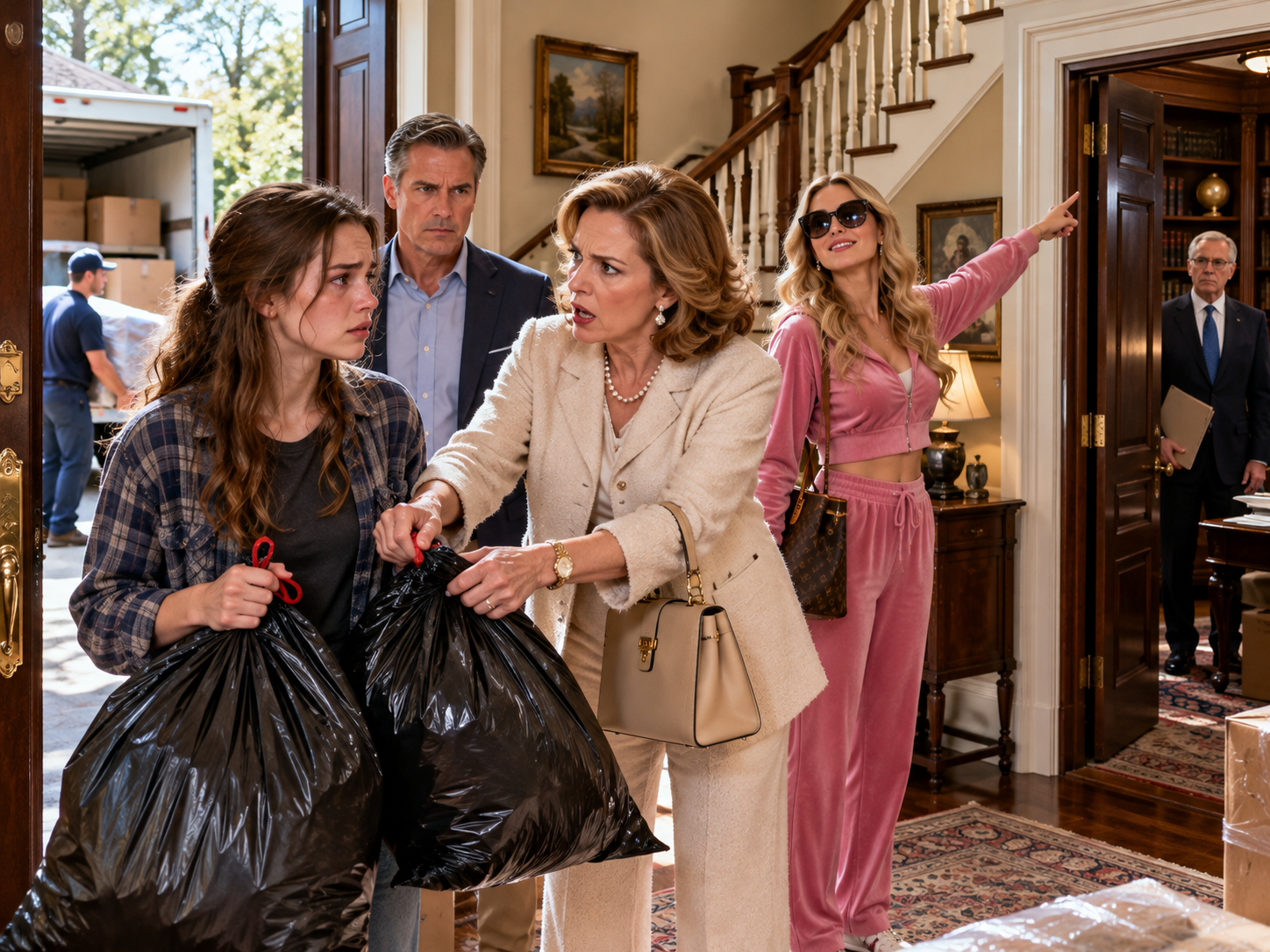
“Seventeen years?” I asked. My voice came out almost inaudibly. “Was there a single year when you planned to call?” Mom's eyes filled, but she did not answer. Dad stepped beside her and said we should not turn the conversation into an accusation. I looked at him. “You arrived the day after I buried Grandpa and told movers to take his furniture. You didn't ask whether I was all right. What did you expect me to think?” He stared at the floor.
Brianna had been silent since the recording began. Now she asked our parents whether they had really told Grandpa that I wanted to stay with him. Mom said Brianna had been young and that they had tried to protect her from adult problems. Brianna shook her head. “You told me Emily didn't want to come home. You said Grandpa spoiled her and she preferred living here.” Her voice cracked on the last word. I remembered waving goodbye through the car window, believing I would see her again on Sunday.
I did not know what to say to her. Brianna had walked into the house claiming a bedroom, and I had felt the old abandonment sharpen into anger. Now I could see that she had been given a story designed to make my absence seem voluntary. That did not excuse her behavior that morning, but it changed the shape of what I understood. She looked toward the hallway where Grandpa's photograph rested on the table. “I thought you didn't want us,” she said. I told her I had spent years waiting for someone to come.
Eleanor allowed us a moment before returning to the practical matter. She explained that Grandpa's will had been prepared well before his final illness and reviewed again while he was competent. She had kept notes of the meetings, and the execution of the documents had been properly witnessed. The house would remain under the estate's administration until the required process was complete, but my parents had no authority to occupy it or remove its contents. She advised them to leave and obtain legal counsel if they wished to challenge the will.
Dad's expression hardened again. He asked whether I intended to throw my own family out onto the street. I looked at him and felt the familiar pull of guilt, the old instinct to make myself smaller so other people would not be angry. Grandpa had spent years teaching me that kindness did not require surrendering what was rightfully mine. I told Dad that they had arrived without asking, had tried to remove me from my home, and had shown no concern for the man we had buried. I would not allow them to stay.
My mother began to cry. I could not tell whether she was grieving Grandpa, the house, or the collapse of the plan she had made before arriving. She said she had believed the property would remain available to her because she was his daughter. Eleanor reminded her that Grandpa had not left his intentions unclear. Mom wiped her face with a tissue and asked whether I would at least let them take some of his furniture. I said no. The answer was difficult, but once spoken, it felt necessary.
Dad left the study abruptly. We heard him speaking to the movers outside, his voice clipped and angry. A few minutes later, the sound of packing materials being gathered came through the open front door. Brianna remained beside the desk, looking at Grandpa's recorder. She asked whether she could hear the message again someday. Eleanor said copies would be handled through the estate process. Brianna nodded and looked at me, but neither of us knew how to begin a conversation that should have started seventeen years earlier.
Before leaving the study, Eleanor opened the final section of her folder. She told me there was another document Grandpa wanted me to receive privately. It was not intended to change the inheritance or create another dispute. It was a letter, written in his own hand, addressed to me. He had asked her to deliver it after the confrontation, when I could read it without being watched. She placed the envelope in my hands. Grandpa's handwriting crossed the front in blue ink, the letters slightly uneven but unmistakable.
I held the envelope against my chest while Eleanor went to speak with my parents. Through the doorway, I saw the moving truck's rear doors being closed. Dad stood beside it with his phone pressed to his ear. Mom waited near the porch, staring at the funeral wreath. Brianna lingered at the bottom of the stairs, no longer looking toward the master bedroom. The house had become quiet again, but the quiet was different from the silence that followed Grandpa's death. It was filled with things that had finally been said.
I sat in his chair and turned the envelope over. The flap had been sealed carefully, as though he had wanted to make certain the letter reached me untouched. I thought about the years he had spent protecting me from the details of my parents' decisions, and about the final effort he had made to protect my home. I had been so afraid that opening the study would reveal something I could not bear. Instead, it had given me his voice and the truth I had needed since childhood.
Still, the letter remained unopened in my hands. I knew Grandpa well enough to understand that he had saved something important for the moment when I would be alone. Outside, the truck engine started. I listened to it idle, then fade as the vehicle moved down the driveway. Only after the sound disappeared did I slide my finger beneath the envelope's edge.
Click here to continue reading: PART 4: After the Moving Truck Left, Grandpa’s Final Letter Taught Me What It Really Meant to Keep a Home
The Morning My Family Came to Claim a House Before They Had Even Asked Who Owned It
Part 3 of 20

