
A week later, I received a message from my mother asking whether she could see the house.
The words were simple enough. I would like to visit, if you’re comfortable with that. I understand if you aren’t.
I read the message twice, then set my phone facedown on the kitchen table. The house was quiet except for the refrigerator humming in the corner. Outside, a thin rain had begun to fall, tapping the window above the sink.
My first reaction was not anger. It was something more complicated: an old, familiar tension in my shoulders, the feeling of being five years old and waiting for an adult to tell me what would happen next. I had spent years learning not to expect my mother at the door. Now she was asking permission to walk through it, and I was surprised by how much that small difference mattered.
I took Grandpa’s blue mug from the cupboard and made tea. While the water heated, I considered what a visit would mean. Would she look at the study and see the place where her father had made decisions she resented? Would she stand in the kitchen and remember the daughter she had left behind? Would she ask to see the bedroom she had once tried to give away to Brianna?
Or would she simply walk through the house and feel the absence of the man who had held our family together long after everyone else had stopped trying?
I could not know.
I also did not need to decide immediately.
I sent a reply saying I would think about it and let her know. She answered with a single message: Thank you. Take your time.
There was no demand, no reminder that she was my mother, and no suggestion that I owed her a visit. I appreciated that. I was not ready to call it trust, but it was a beginning.
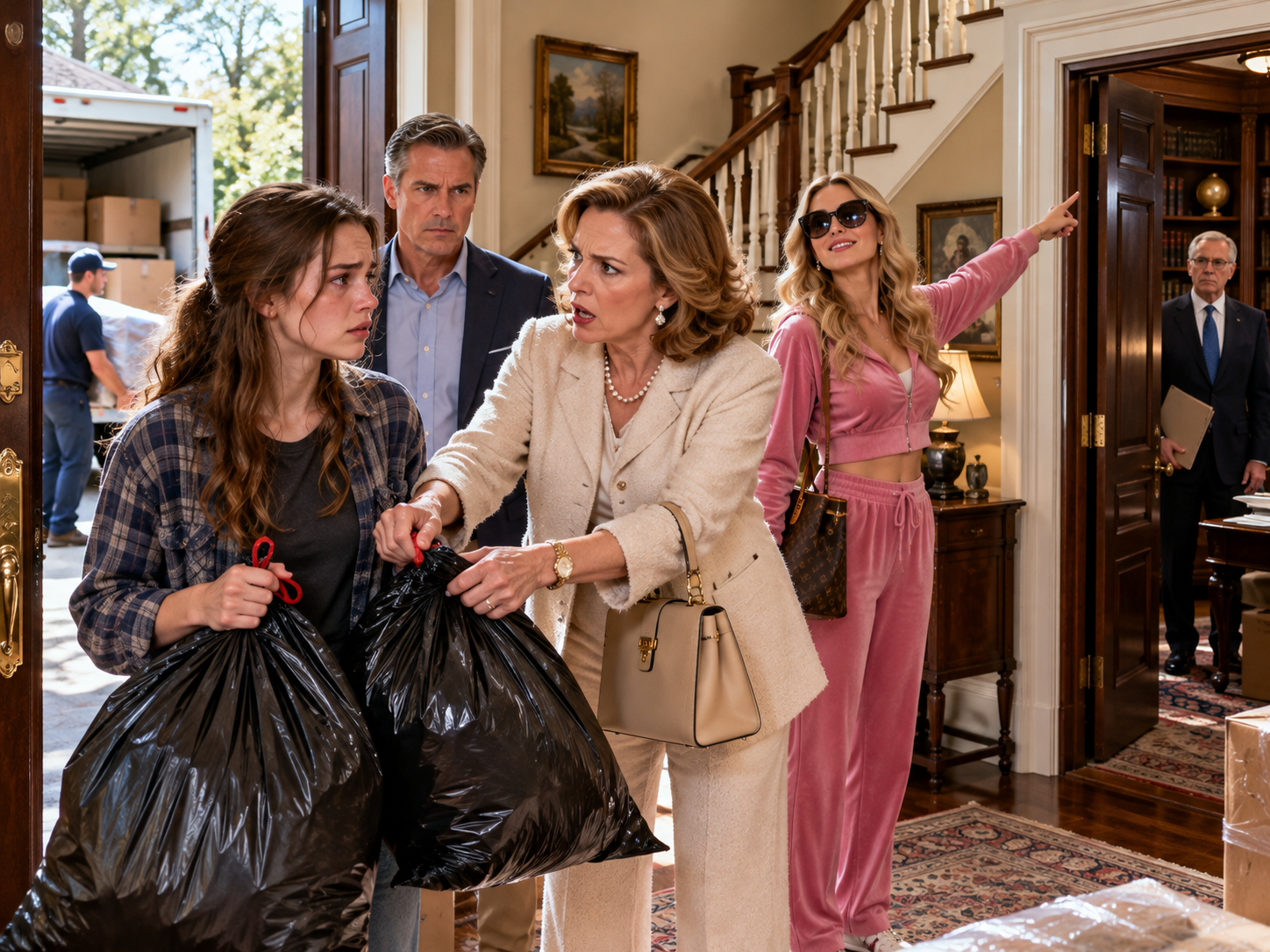
That evening, I spoke with Eleanor Whitcomb. I had kept her number because she had been both Grandpa’s attorney and the person who had stood between me and my parents when they arrived with the moving truck. I knew I could ask her practical questions without being told how I ought to feel.
“I’m not asking you whether I should forgive her,” I said. “I’m asking how to make sure I don’t get pulled into another conversation about the house.”
“Then make the purpose of the visit clear before she arrives,” Eleanor replied. “You can decide where you meet, how long she stays, and which rooms are open to her. You can also end the visit whenever you want. You don’t need a legal reason to set a personal boundary.”
“I know that in theory.”
“Knowing it and believing you are allowed to do it are different things.”
I leaned back in my chair. That sounded so much like something Grandpa would have said that I almost looked toward the study.
Eleanor continued. “Your mother has no authority over your property. If she asks to see something, you can say yes or no. If she raises the estate, you can remind her that the matter is settled. You are not obligated to make her comfortable at your own expense.”
I thanked her and hung up. Then I wrote a short list on a piece of paper: one hour, no discussion of the estate, no going through private papers, and no promises about future visits. I stared at the list for a while, feeling slightly ridiculous.
Then I put it beside my phone.
The following afternoon, I agreed to let my mother visit on Sunday. I told her the time and explained that I wanted to keep the visit to an hour. I also told her I would not discuss the estate or any plans for the property.
She replied, I understand.
On Sunday morning, I cleaned the kitchen and wiped the dust from the hallway table. I did not polish every surface or rearrange the furniture. I refused to turn the house into a performance designed to make my mother see that I had become someone worth returning to. I was not preparing an audition. I was deciding whether to let a person visit my home.
At two o’clock, a car pulled into the driveway.
My mother stepped out slowly. She wore a plain coat and carried a small paper bag. For a moment, she stood beside the car, looking at the front porch and the windows above it. Then she came up the steps and knocked.
The sound was so ordinary that it unsettled me.
I opened the door.
“Hi, Emily,” she said.
“Hi.”
She glanced at the wreath hook above the door. The black funeral wreath had been removed months earlier, and in its place hung a simple ring of dried leaves and small wooden ornaments. She looked at it, then back at me.
“You changed it.”
“It was time.”
She nodded as though she understood more than the wreath.
I stepped aside, and she entered.
For a few seconds, she stood in the foyer without moving. Her eyes traveled across the staircase, the old coat rack, and the framed photographs on the wall. I watched her face carefully, trying not to interpret every movement as evidence of regret or indifference.
“It looks the same,” she said at last.
“Some of it.”
She looked toward the kitchen. “Would it be all right if we sat there?”
“Yes.”
I had prepared tea and set out two plates of biscuits. My mother placed the paper bag on the table and took out a small tin of shortbread. She said she had bought it at a bakery near her home, then seemed uncertain whether she should offer it to me.
“You didn’t have to bring anything,” I said.
“I know. I just didn’t want to arrive empty-handed.”
I did not tell her that the problem had never been what she brought when she arrived. It was the years when she had not arrived at all.
We sat across from each other. For the first several minutes, we talked about ordinary things. She asked whether the garden had survived the rain. I told her about the birdhouse Brianna and I had repaired. She smiled faintly when I explained that it was crooked.
“Your grandfather never minded things being imperfect,” she said.
“He minded when I cut his tomato plants by accident.”
“He would have complained about that for a week.”
“He complained for two weeks.”
For a moment, we almost sounded like a family remembering someone they both loved. The ease of it made my chest tighten. It would have been tempting to let that moment erase everything around it, to imagine that sharing memories meant we had crossed some invisible distance.
But we had not.
After a while, my mother looked toward the hallway.
“Could I see his study?”
I paused.
“I don’t think so today.”
She lowered her eyes. “All right.”
I had expected her to ask why, or to insist that she had a right to see her father’s room. Instead, she folded her hands around the teacup and let the answer stand. I felt some of the tension in my shoulders ease.
“I’m still sorting things,” I explained. “And there are private papers in there. I’m not ready to share that room.”
“I understand.”
“Do you?”
She took a breath. “I’m trying to. I spent a long time acting as though I could decide what was best for you without asking you. I don’t want to do that now.”
The admission was not dramatic. She did not cry or reach across the table. She said it quietly, with a kind of discomfort that suggested she knew the words were overdue.
I watched her for a moment.
“Then you need to let me make decisions you don’t like.”
She nodded. “Yes.”
“And you need to accept that I may never have the relationship with you that you wish we had.”
Her eyes shone, but she did not look away. “I know.”
I wanted to believe her. I also knew that understanding a boundary during one quiet afternoon was easier than respecting it when disappointment arrived.
We continued talking. She asked about my work and whether I had considered taking a holiday now that the estate was settled. I told her I had thought about visiting the coast for a few days, though I had not made plans. She said that sounded nice. She did not suggest coming with me or ask why I had not invited her.
Near the end of the hour, she looked at the photograph of Grandpa on the kitchen shelf.
“I keep thinking about the last time I saw him,” she said. “I remember how tired he looked. I told myself there would be another chance to visit when things were less complicated.”
“Were things ever less complicated?”
“No.” She pressed her lips together. “I suppose I kept waiting for a time when I wouldn’t feel ashamed.”
I thought about the letters in the study, the promises she had written to Grandpa, and the years she had allowed to pass.
“Shame didn’t stop you from leaving,” I said. “It stopped you from coming back.”
She closed her eyes briefly. “You’re right.”
It was the first time she had accepted one of my hardest statements without trying to soften it.
When the hour was nearly over, I stood and walked her to the door. She paused on the threshold.
“Thank you for letting me come.”
“You’re welcome.”
“Could I ask to visit again sometime?”
“You can ask,” I said. “I’ll decide when I’m ready.”
She nodded. “That’s fair.”
She did not try to hug me. I was grateful for that, too.
After she left, I stood on the porch until her car disappeared down the road. I felt neither healed nor shattered. The visit had not transformed our history. It had not returned the years she had missed or made the old hurt disappear.
But I had opened the door because I wanted to, and I had closed it when the visit was over.
That evening, I walked through the house and checked the locks. The study remained private. The box of letters stayed on its shelf. The brass lamp still cast a warm circle of light across Grandpa’s desk.
I went to bed thinking about the difference between a door that had once been opened by someone who believed they owned everything inside and a door I had opened by choice.
For the first time, I understood that letting someone enter my life did not mean handing them the keys.
Click here to continue reading: PART 15: The Future Grandpa Left Me
The Morning My Family Came to Claim a House Before They Had Even Asked Who Owned It
Part 14 of 20

