My mother arrived at the hospital before midnight. I recognized her footsteps before I saw her, the measured pace I remembered from childhood whenever she had made a decision and expected the world to adjust around it. When she entered my room, she wore a dark jacket over a simple blouse, and her hair was pulled back from her face. She looked tired, but her eyes were alert.
For a moment, we simply stared at each other.
I had imagined our reunion dozens of times during the eleven months we had been apart. In some versions, I apologized first. In others, she admitted she had been too harsh about Mateo. Sometimes I pictured us crying and embracing as though the argument had never happened. I had never imagined meeting her under fluorescent hospital lights, with a fetal monitor beside my bed and bruises forming along my side.
She came to me without a speech. She took my hand carefully, avoiding the place where the nurse had inserted an intravenous line, and bent to kiss my forehead.
“I should have called you sooner,” I whispered.
“You can tell me that later.” She pulled a chair close to the bed. “Right now, tell me what the doctors have said.”
I explained the monitoring, the reassuring heartbeat, and the need to remain under observation. She asked the names of the doctors and whether the staff had documented the injury. When I told her that I had requested a record of the assault, she nodded once.
“Good.”
Mateo stood near the window, his hands clasped behind his back. He had been quiet since my mother entered, and I could see him struggling to decide how to approach her. At last, he cleared his throat.
“Mrs. Alvarez, I want you to know that I'm sorry this happened.”
My mother looked at him. “Are you sorry it happened, Mateo, or sorry that Elena has told me?”
He stiffened. “I'm sorry my mother hurt her.”
“Then why did you wait until she was on the ground to move?”
He opened his mouth, then closed it. I had asked him the same question without receiving an answer. Hearing my mother ask it made the silence feel different. There was no room for him to turn it into a debate about his intentions.
“I didn't think she would actually strike her,” he said at last.
My mother held his gaze. “Your wife told her to stop. Your wife moved away. You heard the warning in her voice, and you saw your mother following her with a bat. What did you think was going to happen?”
Mateo looked at me. I could see him hoping I would soften the question for him, the way I had done countless times before.
I didn't.
My mother turned back to me. “You don't have to decide anything about your marriage tonight. You need rest, medical care, and the freedom to tell the truth without someone bargaining with you.”
“I know,” I said, although I was only beginning to understand it.
She stayed while the nurses checked the monitor again. When a doctor explained the next steps, she listened closely and asked what signs would require immediate attention. She never tried to replace the medical staff or demand guarantees they could not provide. She simply made sure that I understood what they were telling me and that I had someone beside me who would remember the details when fear made it difficult to concentrate.
Later, when Mateo stepped into the corridor to answer a call, I asked her why she had never come to see me during the eleven months of silence.
Her expression softened, but she did not pretend the question was easy.
“I was angry,” she said. “You told me I had no right to question your marriage, and I thought if I kept pushing, you would shut me out completely. So I gave you space. Too much space, perhaps.”
“You could have called.”
“So could you.”
I looked down at our joined hands. Neither of us had been entirely innocent in the silence. I had treated her concern as an insult because I wanted to prove that I was capable of choosing my own life. She had stepped back because she feared that any attempt to reach me would be rejected. In the end, our pride had given Carmela and Mateo's family more room to shape my world than either of us had intended.
“I didn't want you to think you were right about him,” I admitted.
My mother exhaled slowly. “I didn't want to be right about him. I wanted you to be safe.”
There was no triumph in her voice. That hurt more than if she had scolded me.
By morning, the hospital team had continued to monitor my condition and the baby's heartbeat. The doctors remained cautious, explaining that the absence of immediate warning signs did not mean I should ignore new pain, bleeding, contractions, or changes in movement. I was frightened, but I followed their instructions and asked for help whenever the pain worsened. My mother stayed close, taking notes about the follow-up care and helping me keep track of what the staff told us.
Mateo came and went. He brought coffee that neither of us drank, asked the nurses questions they had already answered, and repeatedly offered to speak to his mother. Each time he did, I told him I wasn't ready to discuss her.
By late morning, he sat beside my bed and spoke in a low voice.
“Mom says she didn't mean to hurt the baby.”
I stared at him.
“She says she was trying to frighten you, not injure you,” he continued. “She knows she went too far.”
“Did she ask how the baby is?”
He hesitated. “She asked whether he's okay.”
“Did she ask how I am?”
Mateo looked away.
I didn't need him to answer. Carmela's concern, if it existed, had arrived wrapped in a defense of her own intentions. She was still trying to define what had happened for everyone else, hoping that if she called it a mistake, it would become one.
“I won't meet with her,” I said.
“Lena, she's my mother.”
“And I'm your wife.”
He flinched as if I had raised my voice, though I had barely spoken above a whisper.
“I know.”
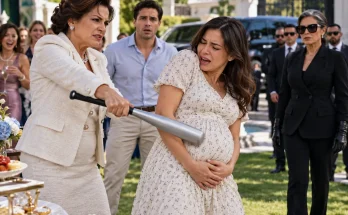
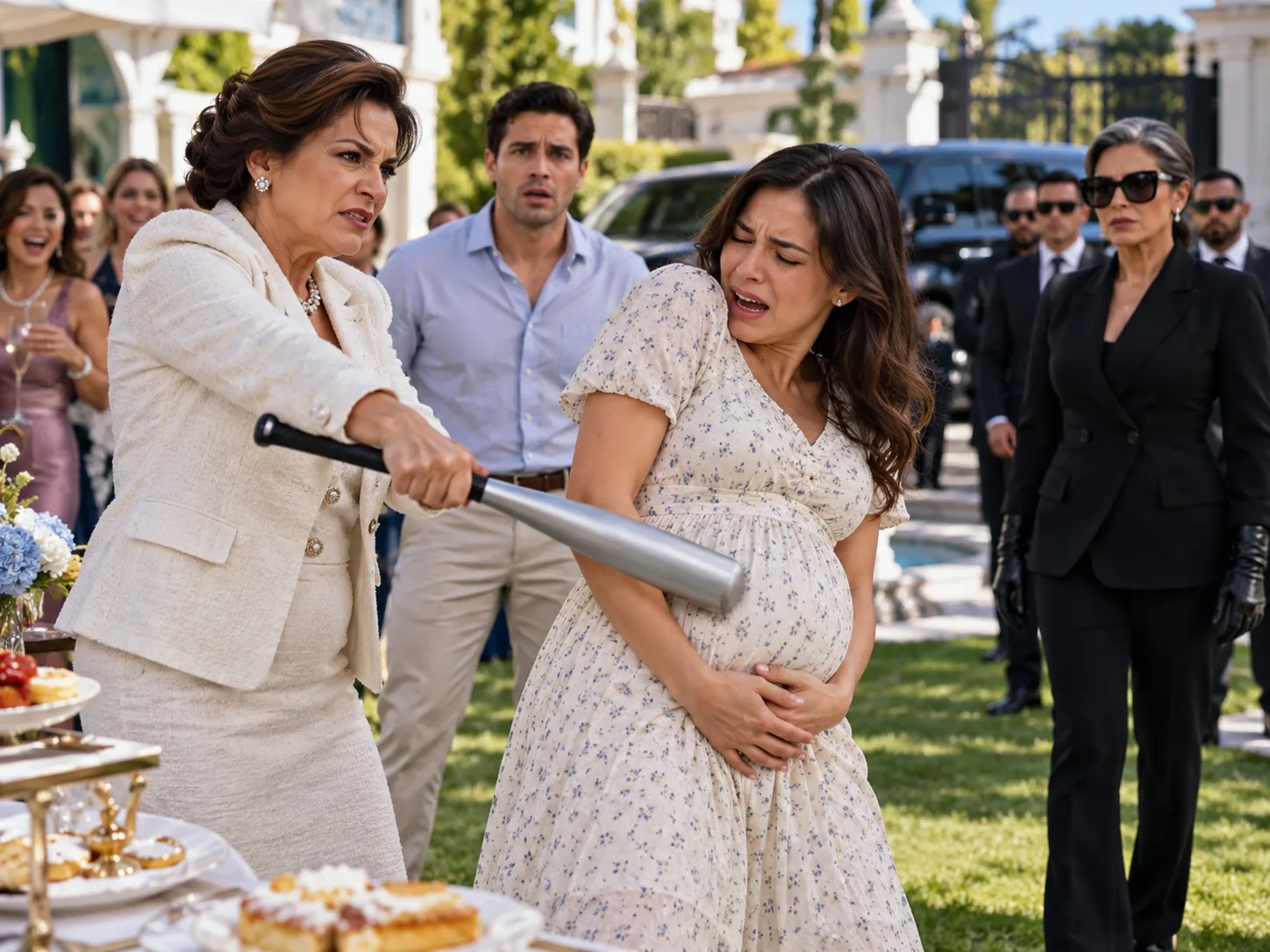
“Do you?” I asked. “Because when she was insulting me, you asked me to be patient. When she humiliated me, you told me not to make things worse. When she lifted that bat, you said one word. Then you watched her swing.”
His eyes filled, but I couldn't comfort him. I was too exhausted to carry his remorse as well as my own fear.
“I should have stopped her,” he said.
“Yes.”
“I can't change what happened.”
“No. But you can stop pretending you didn't see it coming.”
He bowed his head. For once, I didn't rush to rescue him from the discomfort of hearing the truth.
That afternoon, my mother told me that she had arranged for a driver to bring a few things from my home. I asked whether she had contacted anyone from the Villalobos family. She said she had spoken only to the hospital staff and to the person coordinating the arrangements for my care. She had not threatened Carmela, demanded money, or announced that she intended to destroy anyone. She had come because her daughter had been hurt.
I should have felt reassured. Instead, I found myself worrying about the confrontation I knew was coming. Carmela would not accept being challenged by someone she considered beneath her. She would search for a way to make my mother seem unreasonable, vulgar, or desperate. She would use the same tactics she had used on me, because those tactics had worked for so long.
My mother seemed to read my expression.
“You're thinking about how she will react,” she said.
“I don't want this to become a fight between families.”
“It already became a fight when she chose violence. You didn't create it by asking for help.”
I turned toward the window. The parking lot was bright under the afternoon sun, and cars moved in slow lines along the entrance. I thought about the mansion, the long driveway, the carefully polished floors, and the iron gates that Carmela treated as if they separated the worthy from the unworthy. She had made me feel like an intruder in my own marriage, even when I stood beside her son wearing his ring.
“What if she tells everyone I'm trying to take advantage of you?” I asked.
My mother gave my hand a gentle squeeze. “People who want to believe a lie will find one. You cannot build your life around preventing them from telling it.”
She did not explain the size of her business holdings or list the people she knew. She didn't need to. I knew she had built a successful group of companies over many years, but I had never understood the full reach of her work. She had deliberately kept that part of her life separate from my marriage, and I had been grateful for the privacy. I wanted Mateo to love me for myself. I didn't want his family measuring me by my mother's money or reputation.
That decision had helped conceal the very truth Carmela most needed to understand: she had been judging someone she knew almost nothing about.
When I was finally discharged, the doctors gave me clear instructions about rest, monitoring, and seeking urgent care if concerning symptoms appeared. My mother insisted that I stay with her while I recovered. Mateo objected, saying we should return to our home together and handle the matter as a couple.
I looked at him for a long time.
“You can come and speak to me when you're ready to tell your family the truth without excuses,” I said. “But I'm not going back to the mansion.”
“Lena, that's my family home.”
“And I'm not safe there.”
He had no answer to that.
My mother drove me away from the hospital. I sat in the passenger seat with one hand resting on my belly, watching the city slide past the window. I was relieved to be out of the hospital, but every sudden turn made me tense. I listened for my son's movements and tried not to panic when he remained quiet for a while. My mother never told me to calm down or insisted that everything would be fine. She simply drove carefully and stayed beside me.
Over the following days, I followed the medical advice I had been given and attended the recommended checks. I learned to ask questions instead of pretending I understood everything. I let my mother help with meals and appointments, though accepting her care felt unfamiliar after so many months of insisting I needed no one.
Mateo called every evening. Sometimes he apologized. Sometimes he asked me to speak to Carmela. Once, he said his mother had been crying and that Arturo feared the family would be torn apart.
“What do you want me to do with that information?” I asked.
“I'm telling you how bad things have become.”
“They became bad when she hit me.”
He went silent.
I had expected my mother's arrival to make everything simpler, as though a powerful person could step into the story and force the people who had hurt me to behave. Instead, the days that followed were full of decisions, documents, difficult conversations, and the painful recognition that no one could undo what had happened. My mother could stand beside me, but she could not make Mateo become the man I had needed him to be.
A week after the assault, Mateo asked whether I would meet him somewhere away from both families. I agreed to speak with him at a quiet café near my mother's office, with my mother waiting in a nearby room. I didn't want an audience, but I also didn't want to find myself alone with a man who might try to turn my fear into a negotiation.
Mateo arrived without his usual confidence. He sat across from me and rubbed his thumb over his wedding ring.
“I've been thinking about everything,” he said.
“So have I.”
“I know I failed you.”
I waited.
He told me he had confronted his mother, that she was furious about my leaving the mansion, and that she had insisted I had exaggerated the injury. He said he had finally told her that he would not defend what she had done. For a moment, I felt a cautious hope. Perhaps the shock had broken through the habit of obedience that had ruled him for so long.
Then he added, “But she wants you to come home. She says she deserves a chance to apologize in person.”
There it was again. The request that I return to the place where I had been hurt, so his mother could decide when the family was ready to move on.
“Did she say she was wrong to hit me?”
“She said she shouldn't have picked up the bat.”
“That isn't the same thing.”
“I know.”
“Did she say she was wrong to humiliate me for two years?”
He looked down. “No.”
“Did she ask whether I feel safe around her?”
He said nothing.
I folded my hands on the table. “Mateo, I don't need you to persuade her to love me. I need to know whether you understand that what she did was unacceptable, whether you will tell the truth about it, and whether you will protect our son from the same behavior.”
“I do understand.”
“Then what are you asking me to do?”
He looked up, and for a brief moment I saw the fear beneath his polished manners. He was frightened of losing his wife, but he was also frightened of what choosing me would cost him with his mother. He wanted me to return before he had made the choice that would make returning possible.
“I need time,” he said.
I thought of the two years I had already given him.
“You've had time,” I replied.
I stood and left him at the table. I didn't slam a door or threaten him with what my mother could do. I simply walked out, knowing that I had finally stopped treating his indecision as a problem I could solve by being more patient.
When I returned to my mother's office, she was standing by the window. She asked whether I wanted to go home. I told her yes, but not to the mansion. Not yet, perhaps not ever. She nodded and picked up her bag.
As we reached the elevator, my phone vibrated. A message from Mateo appeared on the screen.
Mom says she wants to apologize. She says she was wrong to hit you. Please give her one chance.
I read it twice. It was the first time he had written the words without immediately adding an excuse. But the message had arrived only after I refused to come back, after my mother had entered the picture, after he had realized that my silence could no longer be counted on.
I didn't answer.
That evening, my mother asked me to tell her everything I remembered about the afternoon at the mansion, including the people who had been standing nearby and what each of them had said. She explained that if I chose to report the assault formally, an accurate account would matter. I told her I wanted the incident documented, and I wanted to be able to speak to the authorities without pressure from Mateo's family.
She listened, then said she would help me find the right legal support. She would not decide what I should do. She would make sure I had the information and protection necessary to decide for myself.
Before bed, I checked my phone again. Mateo had sent another message, this time asking whether I had felt the baby move. I replied that I had felt movement earlier and would continue following the doctors' advice. He wrote back that he was relieved.
I put the phone face down.
I could not yet decide whether my marriage was over. I could not know what kind of father Mateo would become or whether he would ever learn to stand up to his mother before someone was hurt. But I knew what I would no longer do: I would not return to the mansion simply to restore the family's comfort.
Carmela had believed the iron gates made her untouchable. She had believed that the woman she mocked would always be too embarrassed, too isolated, or too frightened to challenge her.
She had made one mistake.
I was no longer keeping her secret.
Click here to continue reading: PART 4: The Gates Opened for the Mother Carmela Had Mocked, and Nothing About the Villalobos Mansion Would Ever Feel the Same
One Blow in the Garden Exposed the Cruelty I Had Spent Two Years Pretending Was Ordinary Family Trouble
Part 3 of 28