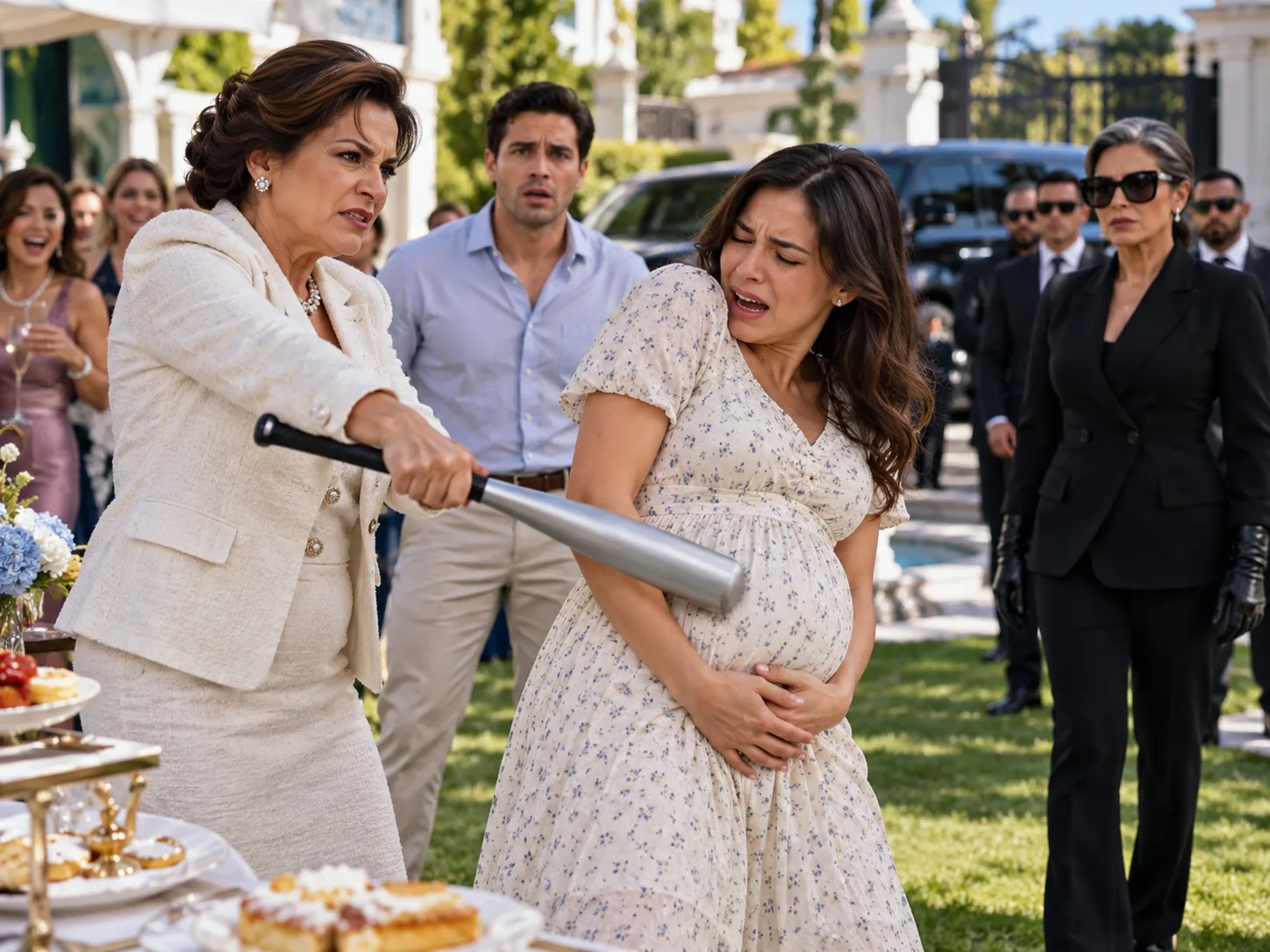
Mateo requested the conversation through a message, asking whether we could meet without lawyers or relatives present. He said he wanted to speak about our marriage, not about Carmela or the legal process, and promised he would accept my decision if I declined. I considered the request for several days before agreeing to a short meeting at the same café where we had spoken earlier.
I chose the time carefully, arranging for my mother to care for the baby and making sure I had no other obligations afterward. I wanted to listen without feeling rushed, but I also wanted the freedom to leave if the conversation became another attempt to persuade me to return to the mansion.
Mateo was waiting when I arrived. He looked thinner than he had before the assault, and the lines around his eyes seemed deeper. He stood when he saw me, then sat again after I took the chair across from him.
“I've been trying to work out what I actually want to say,” he began. “Every time I think about our marriage, I start listing the things I wish I had done differently. But I know saying them now doesn't change what happened.”
I waited for him to continue.
He told me that counseling had forced him to examine the way he handled conflict. He had always believed that a good son remained loyal to his mother, even when she was unreasonable. He had also believed that a good husband could keep his wife happy privately while maintaining peace with his family publicly. He now understood that those beliefs had allowed him to avoid taking responsibility.
“When you told me I let her hit you, I wanted to argue,” he said. “I wanted to tell you that I hadn't meant for it to happen, because I thought my intentions should count for something. I understand now that you needed me to act, not to explain why I didn't.”
I watched him carefully. He was not asking me to excuse him. He was finally describing the difference between what he had intended and what his choices had caused.
“I loved you,” he continued. “I still do. But I used that love as a reason to believe you would keep forgiving me. I thought if I apologized afterward, we could go back to normal. I didn't understand that every time I asked you to ignore Mom, I was telling you that your pain mattered less than my comfort.”
The words hurt because they were true. I had spent so long hoping Mateo would understand that I had sometimes forgotten how much I had already explained. Hearing him acknowledge it did not erase the loneliness I had felt, but it made the past less confusing. I had not imagined the pattern. I had not been too sensitive for noticing it.
“Why are you telling me this now?” I asked.
“Because I don't want to keep asking you to return to a marriage I haven't learned how to protect. And because I don't want our son to grow up thinking that a man can love his family while leaving them to face everything alone.”
I looked down at my hands. I had once imagined this conversation as the beginning of our reconciliation. I had pictured Mateo finally understanding me, apologizing sincerely, and giving us a reason to start again. Now that he was saying the words, I realized that understanding did not automatically restore the trust we had lost.
“I believe you are beginning to understand,” I said. “But I don't know whether I can be your wife again.”
His face tightened, though he did not interrupt.
“I still care about you. I remember the good years, and I don't want to pretend they meant nothing. But I spent two years asking you to protect me from a pattern you refused to confront. Then, when I was pregnant and frightened, you stood there until the damage was done. I can't make that memory disappear because you understand it now.”
“I know.”
“And I don't want to spend the rest of my life waiting to see whether you'll be brave the next time someone challenges your mother.”
He nodded slowly. “You shouldn't have to.”
For a while, neither of us spoke. The café was busy around us, but our table seemed separate from the noise. A waiter set down a glass of water, and Mateo thanked him before turning back to me.
“I won't ask you to promise anything,” he said. “I want us to raise our son well. If that's all we can do together, then I need to learn how to do it properly.”
I felt both relief and grief. I had wanted him to choose me when choosing me was difficult. He was finally learning to make choices that did not depend on my forgiveness, but the timing had changed what I could offer him.
“Then let's focus on being good parents,” I said. “We can keep working through the practical arrangements, and we can continue counseling if it helps us communicate. But I don't want you to treat that as a promise that we'll get back together.”
“I won't.”
He did not cry or reach across the table. He simply accepted the answer, and that restraint made the conversation feel more honest than any of our previous attempts at reconciliation.
When we left, he walked beside me to the pavement. He asked whether I needed a ride, and I told him my mother was nearby. We said goodbye without touching. I watched him head toward his car, then turned in the opposite direction.
My mother was waiting in a quiet corner of the café. She asked whether I wanted to talk about the conversation or go home. I chose to go home first. I needed time to understand what I felt before trying to explain it to anyone else.
That evening, after my son was asleep, I sat at the kitchen table and wrote down what I had learned from the meeting. I wrote that Mateo had taken responsibility without asking me to comfort him. I wrote that I believed his remorse was sincere, at least in that moment. I also wrote that I could not use his growth as a reason to ignore my own needs.
The page did not give me a final answer, but it helped me see that I no longer had to choose between condemning him forever and returning to the marriage. I could acknowledge his progress while maintaining my decision to live separately. I could want him to become a better father without promising to become his wife again.
Over the following weeks, we continued working through the practical arrangements for our son. Mateo remained consistent with visits and communication. He began to tell me when his mother attempted to involve him in arguments about me, rather than passing her demands along as though they were reasonable requests. He also stopped asking whether I would reconsider after every positive interaction.
The change gave me more room to breathe. Our conversations became less tense, and I no longer spent hours afterward wondering whether I had said something that would provoke another family dispute. We were learning to cooperate without pretending the marriage had been repaired.
Carmela remained resistant. She told relatives that Mateo had become distant and that I had taken advantage of his guilt. I heard the accusations through others, but I did not respond. Her opinion of me could not determine whether my decisions were right.
One day, Mateo told me he had moved some of his personal belongings out of the mansion and was considering a separate home. He explained that he wanted to create a stable environment for his son and establish boundaries that did not depend on his mother's permission. He did not ask me to move in with him or suggest that the new arrangement would solve our marriage.
I told him that finding his own place might help him learn to make decisions independently. I also reminded him that a different address would not automatically change old habits. He agreed and said he wanted to continue counseling.
I was glad to hear it. I wanted him to build a healthier life, whether or not I was part of it in the way we had once imagined.
The legal process continued at its own pace. My lawyer advised me that there was still no final outcome to report and that I should remain patient. I did not allow the waiting to consume every day. I kept appointments, cared for my son, and spent time with my mother. I learned to let the unresolved parts of the story remain unresolved without treating them as a reason to postpone my own life.
One evening, as I was rocking the baby, Mateo sent a message saying he had found an old note I had left in a drawer at the mansion. It was a short list of things we had planned to do together during our first year of marriage: visit a coastal town, learn to cook a dish we both loved, and spend a weekend without phones or family obligations.
He asked whether I wanted the note back.
I told him he could keep it if he wished. I had no desire to reclaim every object from our past, and I did not want the note to become another symbol we used to persuade each other that the marriage could be restored.
He replied that he would keep it as a reminder of the life he had wanted and the choices he needed to make differently.
I understood. I also knew that memories could be precious without serving as instructions for the future.
When I put the phone down, my son stirred and opened his eyes. I leaned over the cot and smiled at him. His world was still small, made up of familiar voices, warmth, and the rhythm of being cared for. I wanted him to grow up knowing that adults could make mistakes and learn from them, but that learning did not require the people they had hurt to surrender their boundaries.
Mateo was finally beginning to understand that truth. I was beginning to accept that his understanding might come too late for our marriage.
Both things could be true.
Click here to continue reading: PART 15: The First Time Elena Returned to El Pedregal, She Realized the Mansion No Longer Held the Power It Once Had Over Her
One Blow in the Garden Exposed the Cruelty I Had Spent Two Years Pretending Was Ordinary Family Trouble
Part 14 of 28