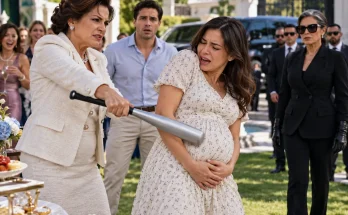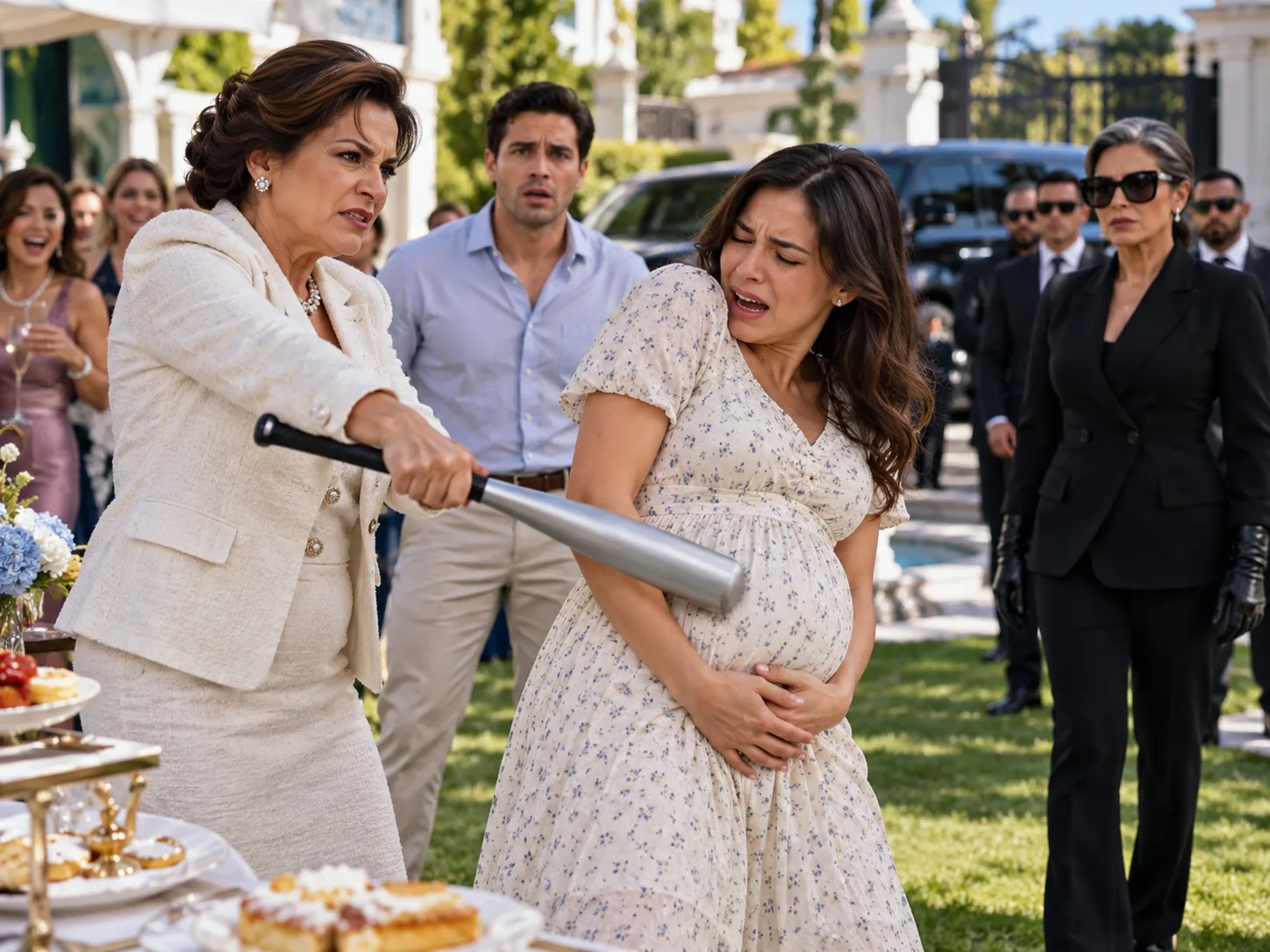
As the months passed, Elena stopped expecting a single conversation to make the past feel finished. Some mornings, the memory of the mansion arrived without warning. A sharp metallic sound, a raised voice in a crowded room, or an unexpected message from a relative could bring back the fear she had felt while protecting her unborn son.
She had learned that healing did not follow a neat schedule. There were days when she felt confident and days when she needed to sit quietly after putting her child to sleep. She no longer treated those difficult moments as evidence that she was failing to move forward.
Her life had become more predictable in ways she once took for granted. The house had its own rhythms: breakfast in the bright kitchen, toys gathering beneath the coffee table, laundry waiting in a basket, and small plants in the garden that required regular watering. None of it looked impressive beside the Villalobos mansion, but Elena had never needed the house to impress anyone.
Her mother continued to visit, though their relationship was not suddenly perfect. They still disagreed sometimes, and old hurt occasionally surfaced when one of them misunderstood the other's intentions. The difference was that they had begun speaking honestly before resentment had time to harden into silence.
One afternoon, Elena asked her mother why she had come to the hospital so quickly that day. She knew the answer in broad terms, but she wanted to hear it from her mother's own mouth.
“Because you were my daughter,” her mother replied. “And because you told me you needed me.”
Elena looked down at her hands. “I was afraid you wouldn't come.”
Her mother did not deny that their estrangement had been painful. She admitted that she had been angry when Elena married Mateo and that her warnings about the Villalobos family had become sharper than they needed to be. She had wanted to protect Elena, but she had sometimes confused protecting her with making decisions for her.
“I couldn't choose your life for you,” her mother said. “I could only tell you what I feared. You had to discover the truth yourself.”
Elena leaned across the table and took her mother's hand. Neither woman tried to repair the eleven months of silence with one dramatic declaration. They began from where they were, grateful that the door between them had opened again.
Mateo's progress was slower and less visible. He continued working on himself, learning to recognize how quickly he looked to his mother's reactions before deciding what he believed. He was also learning that remorse could not be measured by how miserable he felt about his failures. It had to be measured by the choices he made afterward.
He became more reliable with their son. He followed the agreed schedule, communicated when plans needed to change, and took responsibility for practical tasks without expecting Elena to supervise every detail. When she corrected something, he listened instead of treating the correction as a judgment on his character.
Their conversations gradually became easier. They could discuss childcare, medical appointments, and future arrangements without every sentence carrying the weight of their marriage. Sometimes they even laughed together, remembering a harmless moment from their younger years or watching their son discover something new.
But ease was not the same as reconciliation.
Elena had stopped asking herself whether she should return to Mateo simply because he was becoming a better father. His growth mattered, and she was glad to see it. Yet the question of their marriage involved more than whether he could behave differently now. She needed to understand whether the trust between them could ever become something solid again, and she refused to make that decision out of gratitude or guilt.
Mateo no longer pressed her for an answer. He had begun to understand that he could not earn a guaranteed future by doing the things he should have done from the beginning. He could become more honest, more courageous, and more dependable. What Elena chose to do with that change remained hers.
The legal process continued without a definitive resolution. There were periods when Elena heard nothing and wondered whether the matter had stalled. Her representative explained what was known, what remained uncertain, and which steps might still be necessary. Elena followed the advice she received and avoided making assumptions about an outcome that had not been reached.
Carmela, meanwhile, remained unwilling to offer the kind of full acknowledgment Elena had hoped to hear. She sometimes expressed sadness about the distance from her grandson, but she continued to describe the family rupture as though Elena's response had become the central problem. Her occasional messages carried affection in one sentence and accusation in the next.
Elena no longer tried to extract a different answer from those messages. She had once believed that if she explained the pain clearly enough, Carmela would finally understand. She now accepted that understanding could not be forced, and an apology could not be made genuine by the person waiting to receive it.
That did not mean Elena had stopped caring about what happened. It meant she had stopped organizing her life around Carmela's willingness to admit it.
On a quiet Sunday, Mateo came over to spend time with their son. The child had become steadier on his feet and was beginning to explore the house with an enthusiasm that left toys in every room. Mateo sat on the rug while the boy pushed a wooden car toward him, then clapped when his father rolled it back.
Elena watched from the kitchen doorway. The scene stirred complicated feelings. She was glad her son could know his father as a loving and attentive presence. She also felt the sadness of the family life she had once imagined and the knowledge that it had not unfolded as she hoped.
Mateo looked up and caught her watching. For a moment, neither spoke. Then he smiled faintly and returned his attention to their son, allowing the moment to pass without asking Elena what it meant.
After he left, Elena took her child into the garden. The evening air was warm, and the leaves of the small plants moved gently in the breeze. She held him on her hip while he pointed at a bird on the wall, making a sound that was somewhere between a word and a laugh.
She thought about the woman she had been before the assault: a woman who believed that patience could repair almost anything, that keeping the peace was a kind of love, and that standing up for herself might destroy the family she wanted so badly to belong to.
She no longer judged that woman for staying silent. Elena understood how hope could become a trap when it was mixed with affection, fear, and the desire to believe the best about someone. She could recognize her former choices without letting them dictate her future.
She had not won the Villalobos mansion. She had not received a perfect apology, and she had not secured a final legal outcome. She could not promise herself that her marriage would be restored or that every relative would eventually understand why she had left.
What she had gained was less dramatic and more enduring. She had a home where safety was not conditional on pleasing someone powerful. She had a son whose needs came before the comfort of adults. She had a mother with whom she was rebuilding a relationship, and a husband who was learning to take responsibility without demanding that she reward him with reconciliation.
When her son grew tired, Elena carried him inside and settled him into bed. He reached for her fingers, held them for a moment, and gradually drifted to sleep. She remained beside him until his breathing became slow and even.
There would be other conversations, other decisions, and perhaps more difficult memories. The future would not be free of uncertainty simply because Elena had chosen a different life. But uncertainty no longer frightened her into surrendering the boundaries she had worked so hard to establish.
She closed the bedroom door gently and returned to the kitchen. The house was quiet, the dishes were waiting, and tomorrow's responsibilities would arrive whether or not the past had been resolved.
Elena switched off the light and walked toward her own room, carrying no expectation that Carmela would change overnight and no promise that Mateo would become the husband she once needed. She had learned to leave those questions open without leaving herself unprotected.
Her story was not finished because everyone had finally agreed with her. It was moving forward because she no longer needed their agreement to know what had happened, what she deserved, or what kind of life she wanted for her son.
And for the first time in a long time, the future felt like something she could enter without asking anyone's permission.
Click here to continue reading: PART 21: The Unexpected Request That Forced Elena to Decide Whether Protecting Her Peace Meant Closing Every Door Forever
One Blow in the Garden Exposed the Cruelty I Had Spent Two Years Pretending Was Ordinary Family Trouble
Part 20 of 28