Mateo had grown accustomed to thinking of himself as the person caught between two sides. For years, he had described his marriage and his relationship with Carmela as though he were standing between opposing forces, each demanding something from him. That description had allowed him to feel trapped rather than responsible.
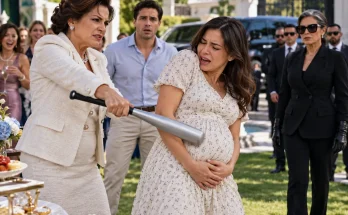
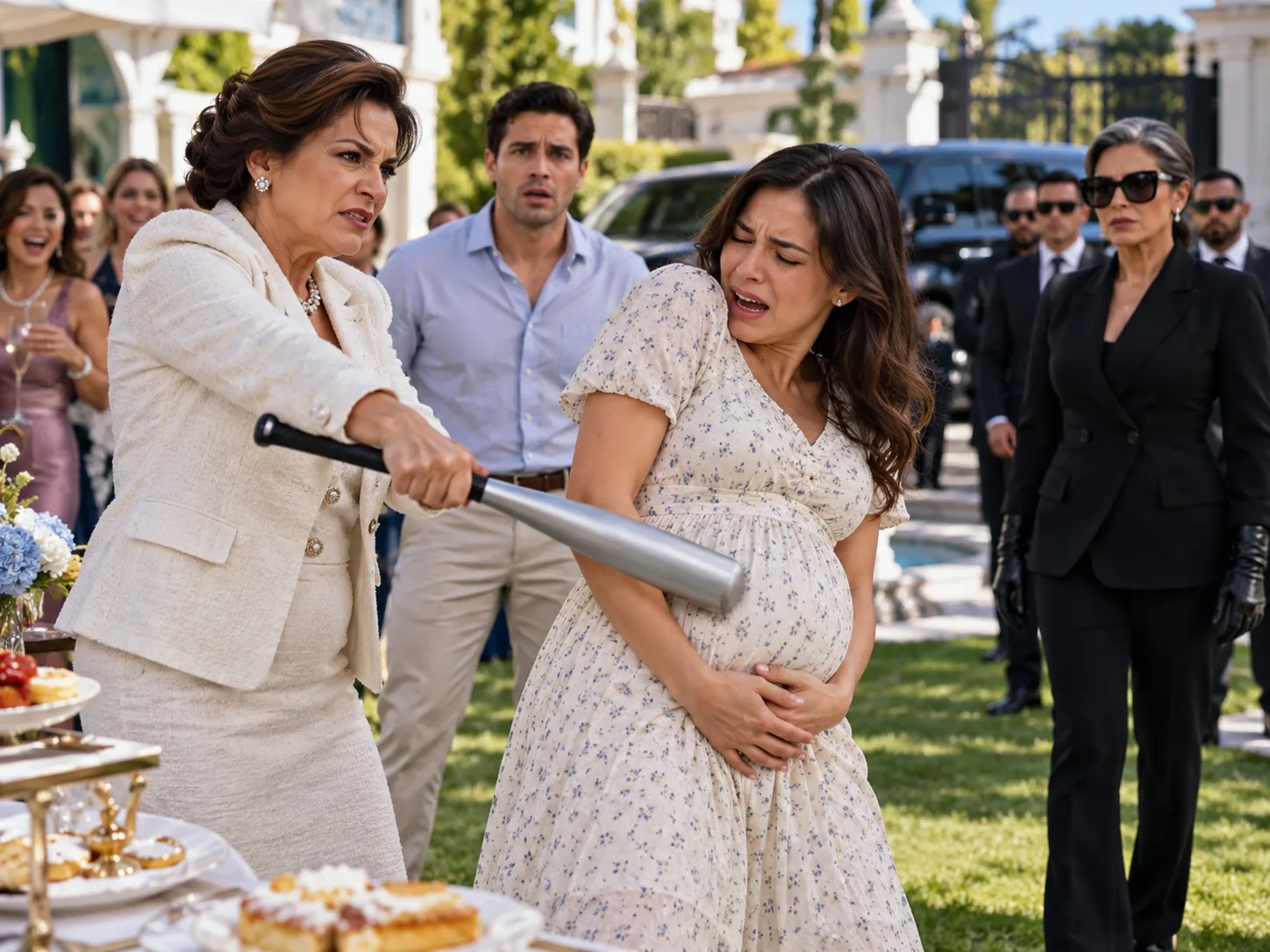
The family argument changed that perception. For the first time, he heard relatives discuss the assault without immediately turning the conversation toward Elena's decision to leave. Some acknowledged that Carmela had been wrong. Others admitted that they had witnessed the incident and then allowed the family to minimize it.
He realized that Elena had never created the division he claimed to be caught between. The division had existed because Carmela's behavior had been protected, and because people like him had repeatedly chosen comfort over confrontation.
The realization followed him into his counseling sessions. He began examining the ways he had learned to anticipate his mother's anger and avoid it at almost any cost. He remembered childhood arguments that ended only when someone gave in, family celebrations where an uncomfortable truth was quickly replaced by a joke, and moments when he had watched his father withdraw rather than challenge Carmela.
Those memories helped explain his behavior, but he was beginning to understand that explanation was not absolution. He had been an adult when he married Elena. He had seen how his mother treated her, heard the insults, and privately acknowledged that the treatment was wrong. He had continued asking Elena to be patient because her patience made his life easier.
The assault had made that pattern impossible to ignore.
One evening, Mateo returned to the mansion after a counseling session. He had not planned to discuss what he was learning, but Carmela asked why he had become so distant. She said he no longer visited as often, no longer defended her when relatives criticized her, and no longer encouraged Elena to reconsider her decision about the grandson.
“You are behaving as if I have become some kind of monster,” she said.
Mateo sat down opposite her. “I'm trying to understand why I spent so long pretending that your behavior was something everyone else had to manage.”
Carmela's expression hardened. “I have always been a strong woman. You used to admire that.”
“I admired your confidence. I also learned to be afraid of your anger. Those are not the same thing.”
She looked away, visibly offended by the distinction. She reminded him of the sacrifices she had made to provide for him, the opportunities he had received, and the years she had spent building the family's reputation. Mateo did not dispute those facts. He told her that gratitude for what she had given him did not require him to deny what she had done to Elena.
“Why are you doing this now?” Carmela demanded. “Why couldn't you have supported me when this first happened?”
Mateo felt the question land with an uncomfortable force. In earlier conversations, he would have rushed to reassure her that he still loved her, that he did not want the family to fall apart, and that he was simply trying to keep everyone calm.
This time, he answered honestly.
“Because I was afraid of losing your approval. And because I thought I could keep Elena with me without ever having to stand up to you. I wanted both things, and I let her pay the price.”
Carmela stared at him. For several seconds, he thought she might finally acknowledge the admission. Instead, she said that Elena had always been determined to separate him from his family and that he was now repeating the same accusations in different words.
Mateo felt the familiar urge to argue, to list every example and force his mother to recognize the pattern. But he understood that he could not make her accept an account she was unwilling to face.
“I know you believe that,” he said. “I don't agree with you, and I won't keep pretending I do.”
He stood to leave. Carmela accused him of abandoning her, but he did not turn back to negotiate. He told her that he would continue visiting Arturo and that he was willing to maintain contact with her when conversations could happen without pressure to rewrite the past.
It was not a dramatic declaration. He did not threaten to cut her off forever, nor did he promise that their relationship would return to normal. He simply stated the conditions under which he was willing to continue engaging with her.
When he arrived at Elena's home the next afternoon, he did not immediately tell her about the confrontation. He spent time with their son, helping him stack blocks and laughing when the boy knocked them over. Elena watched from the kitchen, grateful that their child could enjoy his father without being pulled into the conflict.
After the visit, Mateo asked whether they could talk for a few minutes.
“I've been thinking about how I used to say I was caught between you and my mother,” he began. “I think that was an excuse.”
Elena remained quiet, giving him room to continue.
“I made it sound as though both of you were asking me to choose, when really I was asking you to accept things I wasn't willing to confront. I wanted you to keep being my wife, but I didn't want to face the cost of challenging my mother.”
Elena felt a familiar ache, but she did not interrupt him. These were words she had needed to hear a long time ago. Hearing them now did not restore the trust that had been lost, but it confirmed that Mateo was finally looking at his behavior without making her responsible for explaining it.
“I can't change what I did,” he continued. “And I know that understanding it now doesn't mean you owe me another chance.”
“No,” Elena said. “It doesn't.”
He nodded. “I know.”
She told him that she appreciated his honesty and hoped he would continue examining those patterns, especially for their son. She did not want the boy to grow up believing that love required him to accept intimidation or that family loyalty meant silence when someone was being hurt.
Mateo agreed. He said that he wanted to be a father who could admit when he was wrong and intervene when something was wrong, even if doing so made another person angry.
Elena listened, then reminded him that those commitments had to survive real situations, not only conversations after the damage had been done. Mateo did not argue. He understood that she was not asking him to promise perfection, but to accept responsibility for his choices.
Their discussion ended without a decision about the marriage. Elena had stopped trying to predict whether she might someday feel differently. Mateo had stopped treating each honest conversation as an opportunity to move her toward reconciliation.
That evening, he drove home thinking about his son. He wanted to give the boy a childhood in which affection was not something to be earned through obedience, and in which adults could disagree without making the smallest person in the room feel responsible for restoring peace.
He knew that the work would be difficult. Carmela's influence had shaped him for years, and old habits did not disappear simply because he had identified them. There would be future conversations when he felt tempted to retreat, and future moments when his mother's disappointment threatened to make him doubt himself.
But he could no longer claim that he had no choice.
Elena, meanwhile, continued building a life that did not depend on Mateo's progress. She was glad he was changing, but she did not measure her future by the speed of his growth. Her responsibility was to her son, to her own recovery, and to the home she had worked to make safe.
The difference between them was no longer a contest over who would win. It was the recognition that each adult had work to do, and that no one could complete another person's work on their behalf.
For Mateo, that meant becoming someone who could face his mother's anger without surrendering his judgment. For Elena, it meant allowing him to do that without waiting beside him, hoping he would finally become the man she had once needed.
Click here to continue reading: PART 27: The Small Celebration Elena Planned Without Asking Whether the Villalobos Family Would Approve of Her Choices
One Blow in the Garden Exposed the Cruelty I Had Spent Two Years Pretending Was Ordinary Family Trouble
Part 26 of 28