
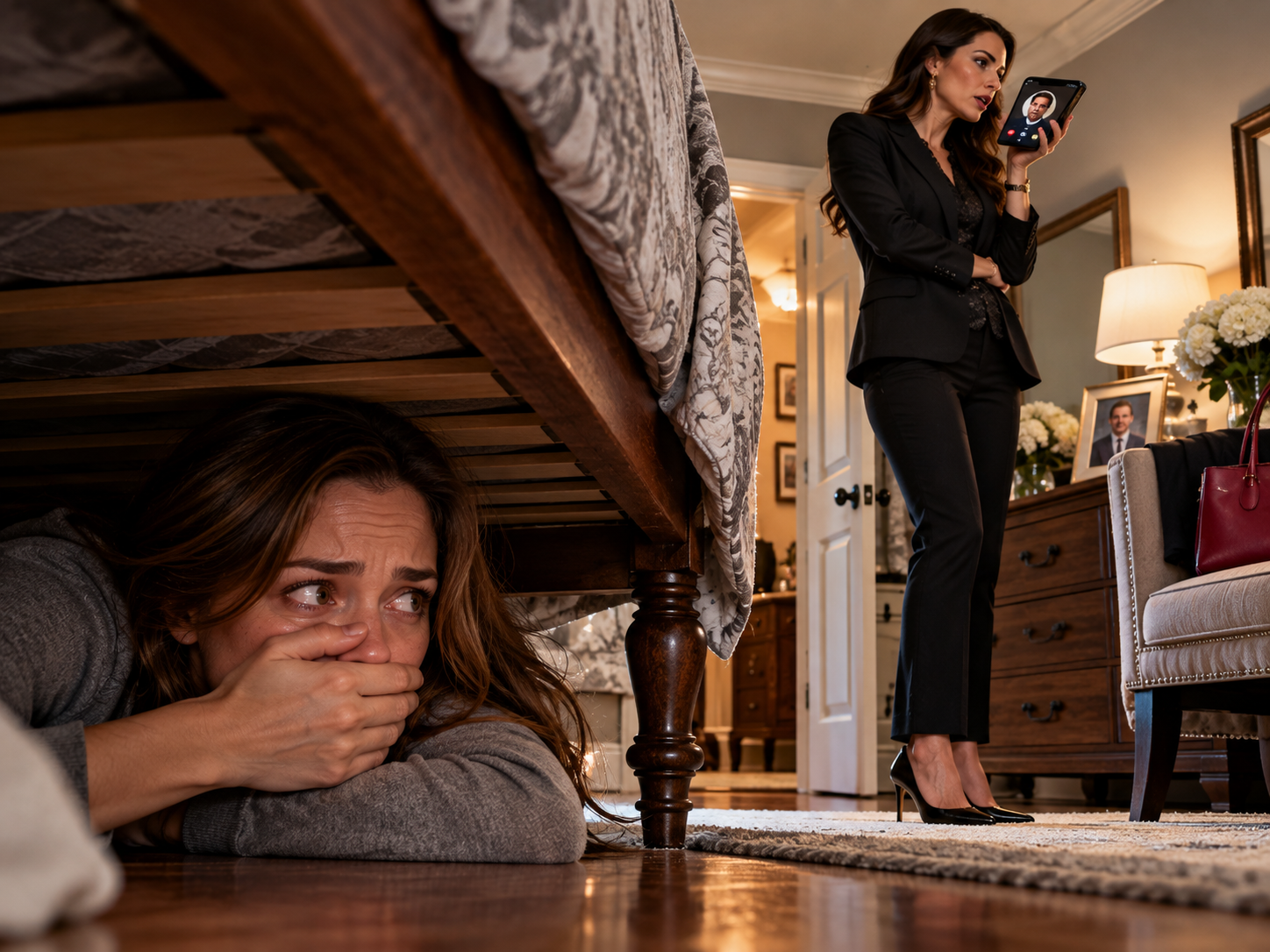
By the time winter arrived, the police had assembled a clearer picture of the financial scheme. Mark had used several companies to move money between accounts, relying on paperwork that appeared legitimate until examined closely. Vanessa had helped prepare some of the documents, while other people had handled transfers and maintained the records. Investigators were still determining who had understood the full arrangement and who had simply performed tasks without asking questions.
I received occasional updates through Detective Harris and my attorney. The authorities had recovered additional funds and secured statements from people who had worked with Mark. Some had known him under his real name; others had met him only after he began using the identity created for his disappearance. The investigation was not finished, but the evidence no longer depended on my recollection alone.
At work, I began to feel useful again. I had spent months associating financial documents with betrayal, yet the principles of my profession had not changed. Records mattered because they established what had happened, not because they made someone look innocent or guilty. I returned to reviewing claims, checking dates, and following inconsistencies until they could be explained. The work offered a structure I had missed.
One afternoon, my supervisor asked whether I wanted to take a few days off before the end of the year. She said I had been carrying a great deal and did not need to prove that I could manage everything without help. I thanked her and admitted that I was tired. For once, I did not feel embarrassed to say it.
I took Friday off and spent the morning clearing the spare room. The boxes that had once held Mark's documents were nearly empty. I kept a few photographs, the marriage certificate, and some personal items that mattered to me independently of what he had done. The rest went into labeled folders for my attorney or into recycling. I was not trying to erase my marriage. I was making room for a life that no longer revolved around it.
While sorting through a drawer, I found an old birthday card from Mark. It contained a message about how lucky he was to have someone who believed in him. The words were ordinary, handwritten in blue ink. I sat on the floor for several minutes, unable to decide whether to keep it.
Eventually, I placed it in the box with the photographs. I could not know whether he had meant those words when he wrote them. I could know that I had meant the promises I made during our marriage. His later choices did not turn my love into a mistake. They showed me that love, without honesty, could not protect a relationship from the person who was willing to exploit it.
Elaine visited that evening. She found me sitting on the floor among the remaining boxes and handed me a paper bag containing dinner.
“You look as if you've been fighting with the furniture,” she said.
“I've been losing.”
She sat beside me and helped fold the empty cartons. We talked about ordinary things for nearly an hour: a colleague who had resigned, a restaurant she wanted to try, and a television series she had started watching. I realized that I had not checked my phone once during the conversation.
Before she left, Elaine asked whether I had considered moving. The house had been the setting for so much fear that she wondered whether a different place might help me begin again.
I had thought about it, but I did not want to leave simply because Mark had invaded my life. I liked the neighborhood. I knew the route to work, the grocery store, and the park where I walked when I needed to think. Mrs. Gable had been kind to me since the investigation began, and the house itself held memories that were not all painful.
“Maybe someday,” I said. “But I don't want to let him decide where I live.”
Elaine nodded. “Then stay because you want to stay.”
The following week, Detective Harris called with news about the legal proceedings. Mark had agreed to provide additional financial records in exchange for consideration during the prosecution. The agreement did not erase the charges or guarantee a particular outcome, but it gave investigators access to information they had not been able to recover independently.
“He has also asked whether you would be willing to receive a written statement from him,” she said. “You are under no obligation to do so.”
I felt my shoulders tighten. “What does he want to say?”
“He hasn't provided the statement yet. He has asked that it be passed through your attorney if you agree.”
I told her I would think about it.
For several days, I did not make a decision. I imagined receiving another explanation, another apology, or another carefully worded attempt to make me understand why he had done what he had done. I wondered whether reading his words would give me closure or simply reopen questions I had already learned to live with.
My attorney advised me that I could decline the statement entirely. If I chose to read it, I could do so with her present and decide afterward whether to respond. I appreciated that the choice belonged to me. Mark had spent years making decisions that affected my life without telling me the truth. I was not going to let his desire to speak become another obligation.
Eventually, I agreed to receive the statement. It arrived in a sealed envelope at my attorney's office. She asked whether I wanted to read it alone, but I requested that she remain in the room. I opened the envelope and unfolded three pages of handwritten text.
Mark wrote that he understood I might never forgive him. He described the fear he had felt when the financial scheme began to unravel and admitted that he had convinced himself he could repair the damage if he disappeared temporarily. He claimed he had intended to return after settling the debts, but the more money he moved, the more difficult it became to come back without facing consequences.
He acknowledged that he had used my signature without giving me a full explanation of the authorization. He admitted that he had allowed the false death identification to stand because it gave him the time he needed to leave. He also admitted that he had continued to monitor my life from a distance and had used Vanessa to search my house when he believed I might have discovered the missing documents.
The letter contained several apologies. Some were specific, naming actions he knew had hurt me. Others were vague, referring to mistakes, circumstances, and choices he said he regretted. I noticed how often he described himself as frightened and how rarely he described the people who had suffered because of him.
Near the end, he wrote that he still loved me and hoped that one day I might remember the good years without feeling that they had all been false.
I read that paragraph twice. Then I folded the letter and placed it back in the envelope.
“What do you think?” my attorney asked.
“I think he wants me to tell him that he was still a good husband in some way.”
“Do you want to tell him that?”
“No.”
I did not say that the entire marriage had been false. I did not know whether that was true, and I had stopped trying to force every memory into a single explanation. But I no longer felt responsible for giving Mark relief from the consequences of his choices.
I asked my attorney to keep the letter with the case records. I would not reply.
That evening, I went home and made dinner. I ate at the table, washed the dishes, and stood at the window while the last light faded from the street. The house felt familiar. I could hear the refrigerator humming and the occasional car passing beyond the fence. The sounds no longer seemed to demand an explanation.
A few days later, Mrs. Gable invited me over for coffee. She had baked a small cake and set two cups on the kitchen table. We spoke about the weather, her grandchildren, and the new family moving into a house farther down the street. Eventually, she asked whether I had heard anything more about the investigation.
“Some things are still being handled,” I said. “But the police know what happened.”
She nodded. “I was worried when I heard those screams. I kept thinking that if someone was in trouble, I couldn't just ignore it.”
“You did the right thing.”
“I wasn't sure at the time.”
“Neither was I.”
We laughed softly, and for a moment the fear that had brought us together felt distant. Before I left, Mrs. Gable handed me a container of leftover cake. She had always been a practical woman, the sort who expressed concern by making food or checking whether a porch light worked. Her kindness reminded me that trust could be rebuilt through small, ordinary acts.
In the weeks that followed, I began making plans for the future that had nothing to do with Mark. I enrolled in a professional course I had postponed, arranged to meet friends more regularly, and started taking walks after work rather than going straight home. I did not force myself to be happy. I simply made choices that gave my days more shape.
There were still moments when grief arrived unexpectedly. I would see a man in a dark jacket at the grocery store and feel my heart jump. I would hear a familiar phrase and remember Mark saying it across the dining table. Sometimes I missed the person I had believed he was. Sometimes I felt angry that I had to mourn him again, this time without the comfort of believing that his death had been an unavoidable tragedy.
I learned to let those feelings exist without treating them as instructions. Missing someone did not mean I should trust him. Feeling angry did not mean I had to spend every day punishing myself for what I had failed to notice. I could acknowledge the loss and continue living.
Near the end of the year, Detective Harris called with the final major update I had been waiting for. The authorities had confirmed the identity of the man who died in the crash and completed the principal financial tracing work. Additional proceedings remained, but the evidence supported the conclusion that Mark had deliberately concealed his identity and manipulated the insurance claim. The police had also established that I had not knowingly participated in the transfers.
I thanked her for telling me. After the call, I sat quietly for a while, waiting for some dramatic sense of release. It did not come. Instead, I felt tired in a way that seemed honest. The investigation had taken months, and the truth had arrived in pieces. There was no single moment when every question disappeared.
That evening, I removed the framed photograph of Mark from my nightstand. I did not destroy it. I placed it in the memory box with the other photographs and closed the lid. Then I put a new lamp on the nightstand and arranged a book beside it.
The room looked different, but it still felt like mine.
Before going to sleep, I checked the front door once. I turned off the hallway light and walked upstairs without stopping to listen for footsteps. I had learned that safety did not mean being certain that nothing bad could happen again. It meant knowing what to do if something did, and trusting myself enough to act.
For the first time in years, I slept through the night.
Click here to continue reading: PART 8: When the Last Official Questions Were Answered, I Had to Decide Whether My Husband’s Betrayal Would Remain the Center of My Life
The Woman Who Entered My House Without Knocking Knew My Husband’s Habits Better Than Anyone Should
Part 7 of 20

