
The court notice arrived on a Tuesday morning, tucked between a utility bill and an advertisement for a local furniture store. I almost set it aside with the other mail, but the return address caught my attention. It came from the county courthouse, and my name appeared beside a reference number I recognized from the investigation into Mark's disappearance.
I stood in the hallway with the envelope in my hand, listening to the heating system click on. For several months, my life had become almost ordinary again. I had returned to work, repainted the bedroom, and learned to sleep without listening for footsteps. The insurance review had closed, and Detective Harris had told me that the principal financial investigation was moving toward its final proceedings. I had begun to believe that the remaining consequences would unfold without requiring me to revisit every painful detail.
The notice informed me that I might be called to provide testimony concerning the authorization and the circumstances surrounding the insurance claim. It did not accuse me of anything. It simply stated that my earlier statement could be relevant to the proceedings and that further instructions would follow. I read the page twice before folding it and placing it on the kitchen table.
My first reaction was anger. I had already answered questions, supplied documents, and explained how Mark had persuaded me to sign papers I did not understand. I had spent months cooperating with people who needed me to remember the worst period of my life in exact detail. I knew why the evidence mattered, but knowing did not make the prospect of returning to court any easier.
I called my attorney, who confirmed that the notice was consistent with the investigation's progress. She explained that the authorities might need me to establish the circumstances under which the authorization had been signed and to identify documents that had been recovered from Mark's storage unit. She also reminded me that my testimony would concern what I had personally seen and remembered, not what I believed Mark had intended.
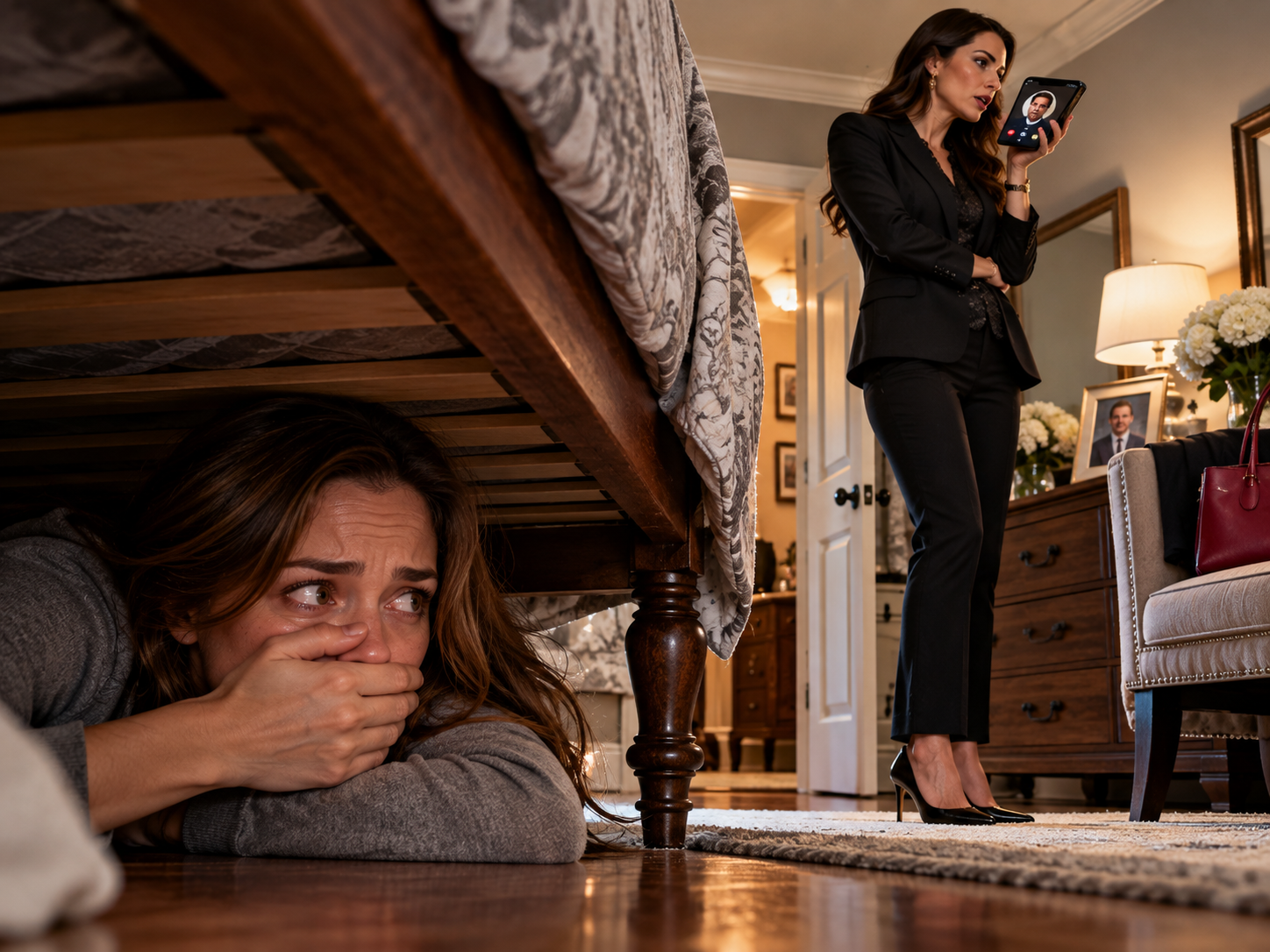
That distinction helped. I could describe the evening at the dining table, the way Mark had pointed to the signature line, and the explanation he had given me. I could describe the mug on the drying rack, Vanessa's shoes beneath the bed, and the voice that had come from her phone. I could provide the dates of my calls and the records I had preserved. I could not read Mark's mind, and I no longer felt compelled to try.
The following evening, Elaine came over for dinner. I told her about the notice while we were clearing the plates. She listened quietly, then asked whether I wanted her to accompany me when the date was confirmed.
“I don't know yet,” I admitted. “Part of me wants to get it over with. Another part wants to pretend I never received the letter.”
“Both feelings make sense,” she said. “You can be ready to tell the truth and still hate having to relive it.”
After she left, I sat at the dining table and opened the folder containing my statement. I had not read it in months. The pages described events that had once seemed impossible to organize: the neighbor's complaint, the hidden visit, the recorded call, the photograph, the financial documents, and the police investigation. Reading the account in sequence reminded me that I had not discovered everything at once. I had moved forward one fact at a time, often while frightened and uncertain.
I added nothing to the statement. Instead, I wrote a separate list of questions I wanted to ask my attorney before the hearing. Would I be permitted to review the documents beforehand? Would the questions focus on the authorization or cover the entire investigation? Could I request a break if I became overwhelmed? Writing the questions gave the uncertainty a practical shape.
A week later, the court confirmed the date. My attorney arranged a preparation meeting and provided an outline of the likely subjects. We reviewed the financial authorization, the life insurance claim, and the recording of Vanessa's call. She warned me that some questions might sound accusatory even when their purpose was to test the accuracy of the evidence. I should listen carefully, answer directly, and ask for clarification whenever I did not understand.
During the meeting, she asked me to explain how Mark had presented the authorization.
“He said he needed to manage the accounts while he was away,” I replied. “He told me the papers were routine.”
“Did you read every page?”
“No.”
“Why not?”
“Because I trusted him. He was my husband, and he told me the documents were necessary for our finances.”
She asked whether I understood that answer could be used to question my judgment. I said I understood, but I would not invent a different explanation to make myself look better. I had trusted Mark. That was the truth, and his decision to exploit that trust did not make it less true.
When I returned home, I found a message from an unfamiliar number. It contained only a few words: You should not have agreed to testify.
My body reacted before my mind could catch up. I stared at the screen, remembering the photograph left at my door and the warning written on its back. For several seconds, I could hear nothing but the blood rushing in my ears.
Then I followed the procedure Detective Harris had given me. I took a screenshot, preserved the message, and contacted my attorney. She advised me not to respond and forwarded the information to the authorities. Detective Harris called later that evening and asked whether I recognized the number. I did not.
“We're checking it,” she said. “Don't assume it came from Mark or anyone connected to him. But take it seriously and continue to preserve anything unusual.”
I changed nothing about my plans. I went to work the next morning, attended my preparation meeting, and kept my appointment with Elaine for dinner. Still, the message reminded me that the investigation had not become harmless simply because my personal life had grown quieter.
Two days later, Detective Harris informed me that the number was associated with a prepaid phone. Investigators could not immediately identify the user, and the message did not establish who had sent it. The authorities were examining whether it was connected to the case, but they cautioned me against drawing conclusions.
I felt relieved that the police had taken it seriously, though the uncertainty remained. I did not tell Mrs. Gable about the message because I did not want her to become frightened again. I continued locking the doors, checking the windows, and informing Elaine when I expected to arrive somewhere. These were sensible precautions, not a return to the constant vigilance that had once consumed me.
On the morning of the hearing, I woke before my alarm. The sky was still gray, and the bedroom was cool. I dressed carefully, made coffee, and ate a piece of toast even though I had little appetite. Before leaving, I stood beside the bed and looked at the place where I had hidden months earlier.
The memory was no longer only a scene of terror. It was also the moment I had stopped accepting the comfortable explanation that nothing was wrong. I had been afraid, but I had acted. I reminded myself of that as I locked the front door and walked to my car.
Elaine met me outside the courthouse. She did not offer advice or ask whether I was nervous. She simply stood beside me while I checked my documents. Her presence made the building seem less imposing, though the cold stone steps and heavy doors still carried a solemnity I could feel in my chest.
Inside, my attorney guided me through the necessary procedures. I waited in a room with several other people, each absorbed in papers or quiet conversation. When my name was called, I followed the court officer into the hearing room and took my place.
The questions began with ordinary details: my name, my occupation, my marriage to Mark, and the date on which he had been reported dead. I answered clearly. When asked about the authorization, I described the circumstances under which I had signed it and explained that I had not been shown the complete terms.
A lawyer asked whether I had ever knowingly agreed to transfer money through the holding company. I said no. He asked whether I had received any benefit from the disputed investment account. I explained that I had received the life insurance payment after Mark's reported death, but I had not known about the separate account or the transfers that followed.
The questioning moved to the day I found the blue mug. I described Mrs. Gable's warning, my decision to pretend to leave for work, and the woman who entered my house with a key. When I was asked how I recognized Mark's voice, I explained that I had lived with him for years and knew the sound of his speech.
“Could the voice have been a recording?” the lawyer asked.
“Yes,” I replied. “At that moment, I couldn't know. I only knew that it sounded like him.”
“And what did you do afterward?”
“I preserved the recording and contacted the police.”
I was grateful that the question allowed me to describe the actions I had taken rather than speculate about what the voice meant. I had learned that certainty was not the same as accuracy. I could recognize a voice without claiming to understand every part of the plan behind it.
The hearing continued for several hours. I was asked about the photograph, the original authorization, and the documents recovered from the storage unit. I identified the items I recognized and said when I did not know something. At one point, I was asked whether I believed Mark had intended to return to me after settling his debts.
“I can't know what he intended,” I said. “I can only tell you what he did.”
The answer seemed to settle something inside me. For years, I had tried to reconstruct Mark's intentions because I thought understanding them might make his actions less painful. Now I understood that the legal record did not require me to solve his character. It required me to tell the truth about the evidence.
When the hearing ended, my attorney accompanied me into the hallway. She told me I had answered carefully and that there was nothing more I needed to do that day. I thanked her, then stepped outside with Elaine.
The air was cold, and a light wind moved across the courthouse steps. I had expected to feel exhausted, perhaps even devastated. Instead, I felt an ordinary physical tiredness, like the end of a long day at work. The past had demanded my attention, but it had not taken everything from me.
As we walked toward the parking lot, my phone vibrated. It was a message from Detective Harris confirming that the authorities had identified a person who might be connected to the prepaid phone. She did not provide a name or suggest that an arrest was imminent. She simply asked me to preserve the message and wait for further instructions.
I showed Elaine the screen and put the phone away.
“Are you going to be all right?” she asked.
I looked toward the street, where cars moved steadily through the intersection.
“Yes,” I said. “Not because nothing else can happen. Because I know what to do if it does.”
That evening, I returned home, changed into comfortable clothes, and made soup. I ate at the kitchen table, then placed the court documents in the secure cabinet. Before going upstairs, I checked the front lock once and turned off the light.
The house was quiet. I was tired, but I was not waiting for a voice to break the silence. I had told the truth, and for that day, it was enough.
Click here to continue reading: PART 10: The Anonymous Warning Led Investigators Toward Another Hidden Connection, While I Learned That Not Every New Discovery Had to Become My Burden
The Woman Who Entered My House Without Knocking Knew My Husband’s Habits Better Than Anyone Should
Part 9 of 20

