The question came from a friend over lunch.
We hadn't seen each other in several months.
He knew about the divorce but didn't know much about what had happened afterward.
“So,” he said, setting down his glass, “do you trust people now?”
I smiled.
“That depends.”
“On what?”
“Whether you're asking whether I trust everyone.”
“I guess.”
“No.”
He laughed.
“That's honest.”
“I don't think anyone should trust everyone.”
“Then what changed?”
I thought about it.
“I stopped thinking trust meant certainty.”
He waited.
“I used to think trusting someone meant knowing they would never hurt me.”
“And now?”
“Now I think it means accepting that I can't control what someone else chooses.”
He nodded slowly.
“That sounds less romantic.”
“It is.”
“More realistic?”
“Probably.”
I took a sip of water.
“Before the affair, I thought trust was something I gave someone once. Afterward, I thought it was something they had to earn back. Now I think it's something two people build through repeated choices.”
“And if one person breaks it?”
“Then the other person has to decide whether rebuilding is possible.”
“Not whether they should?”
“Whether they can.”
He considered that.
“That's a big difference.”
“Yes.”
The conversation made me think about the years after my wife's affair.
I had treated trust as a test she had to pass.
Every honest answer was evidence.
Every unexplained detail was suspicious.
Every mistake became another reason to doubt.
I had not realized that I was also participating in the rebuilding.
Not by forgiving her faster.
By deciding what I needed in order to feel safe.
By speaking when something frightened me.
By admitting when I was struggling instead of pretending everything was fine.
By recognizing the difference between a present problem and an old wound.
We had learned some of those things too late.
That was one of the reasons our marriage eventually ended.
Not because either of us had stopped trying.
Because the relationship we were trying to save had already changed beyond recognition.
That afternoon, I went home and found the old notebook.
I opened to the first page.
Be honest.
Give each other space.
Stop punishing each other.
Don't pretend.
I had written those words during the final stage of the marriage.
They had once felt like desperate instructions.
Now they looked almost simple.
I thought about each one.
Honesty had not saved us.
Space had not saved us.
Stopping punishment had not saved us.
Pretending nothing was wrong had not been sustainable.
But the words had still mattered.
They had helped us end without destroying each other.
That was not nothing.
The next day, I met my former wife for coffee.
We had not planned to discuss the marriage.
We rarely did anymore.
But somehow the subject appeared.
She asked whether I still kept the notebook.
“Yes.”
“Why?”
“Because it reminds me of what I learned.”
She smiled.
“I thought it would remind you of me.”
“It does.”
Her expression changed.
“But that's not all it reminds me of.”
“What else?”
“It reminds me of who I was at the end.”
She nodded.
“Who were you?”
“Someone who finally admitted he couldn't keep pretending.”
She looked down at her cup.
“I was pretending too.”
“I know.”
“I thought if we just got through one more month, one more year, one more difficult conversation, we'd eventually become what we were before.”
I smiled sadly.
“I wanted that too.”
“Did you ever really believe it?”
“Yes.”
“When did you stop?”
I thought.
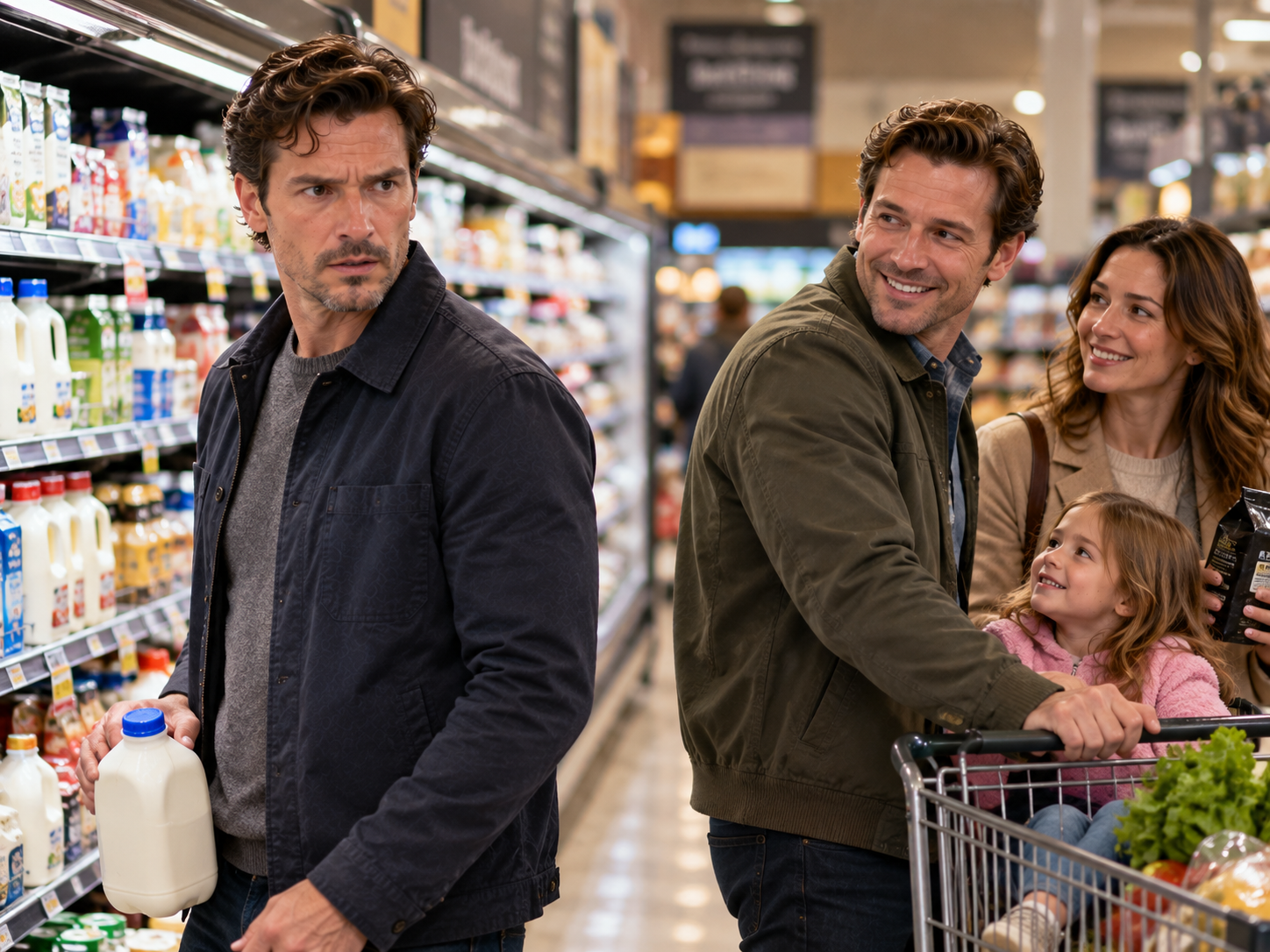
“Not when I saw him.”
She looked at me.
“The grocery store?”
“Yes.”
“What happened then?”
“I realized I hadn't healed. But that wasn't the same as realizing the marriage was wrong.”
She nodded.
“When did you know?”
“When I understood that I was staying partly because I was afraid leaving would make the affair the final word.”
She was quiet.
“That makes sense.”
“It took me a long time.”
“I think I was staying because I was afraid leaving would prove I had ruined everything.”
I looked at her.
“And?”
“And eventually I realized staying couldn't undo what I'd done.”
We sat quietly.
There was no argument.
No blame.
We had learned that some truths could exist without requiring someone to defend themselves.
Before leaving, she said, “I'm glad we can talk like this.”
“So am I.”
“Do you think we'll always be able to?”
“I don't know.”
She smiled.
“Of course.”
I laughed.
“I really need a new answer.”
“You probably do.”
We hugged briefly.
Then went in separate directions.
On the way home, I thought about how strange forgiveness had become.
I had once imagined it as a dramatic moment.
Instead, it had happened in pieces.
The first piece was no longer wanting revenge.
The second was no longer needing her to suffer.
The third was no longer needing her to explain every detail.
The fourth was accepting that she could live a good life without my permission.
And the final piece was accepting that I could do the same.
That evening, the woman I was seeing asked about the meeting.
“It was good.”
“Anything difficult?”
“No.”
“Anything sad?”
“Yes.”
She nodded.
“Those aren't opposites.”
I smiled.
“No. They're not.”
She was right.
I had spent years treating sadness as proof that something was wrong.
Now I understood that sadness could simply be the emotional shape of something important ending.
That night, I opened my laptop and began writing.
Not a message.
Not a letter.
Just a page for myself.
I wrote about the grocery store.
About the man who didn't recognize me.
About how badly that had hurt.
Then I wrote about everything that came after.
The marriage.
The attempt to rebuild.
The divorce.
The quiet.
The new relationship.
The old memories.
The changing meaning of forgiveness.
I didn't write to make myself look innocent.
I didn't write to make my former wife look guilty.
I wrote because I wanted the whole story.
Not only the day she betrayed me.
Not only the day I left.
Not only the day I saw him.
The whole thing.
When I finished, I read the last paragraph.
I had thought betrayal had taught me that people were dangerous.
It hadn't.
It had taught me that people were complicated.
Including me.
I closed the laptop.
For the first time, I wasn't trying to create a lesson from the story.
I was simply allowing the story to be true.
Click here to continue reading: PART 23: Looking Through Our Wedding Album Years Later Made Me Grieve Something I Had Finally Learned Not to Reclaim, and That Difference Changed Everything
I Thought Four Years Had Been Enough to Bury Her Affair, Until a Familiar Stranger Smiled at Me in a Grocery Store
Part 22 of 28