The anniversary of Gregory's death arrived in autumn.
Wren suggested they gather at the house.
Everyone agreed.
The garden had changed.
The tree was larger.
The porch had been repainted.
The old rocking chair remained.
Simone brought the family album.
Elias carried the wooden box.
Faye brought flowers.
Roland brought food.
They arrived throughout the afternoon.
Nobody called it a memorial.
Gregory would have hated that.
Instead, they called it dinner.
The table was set outside.
Fourteen chairs.
Then sixteen.
Someone added two more.
Simone smiled.
“Your grandfather would approve.”
Wren laughed.
“He'd complain about the number of chairs.”
“Then he'd count them twice.”
They ate as the sun went down.
Stories filled the garden.
Funny stories.
Embarrassing stories.
Quiet stories.
Everyone had one.
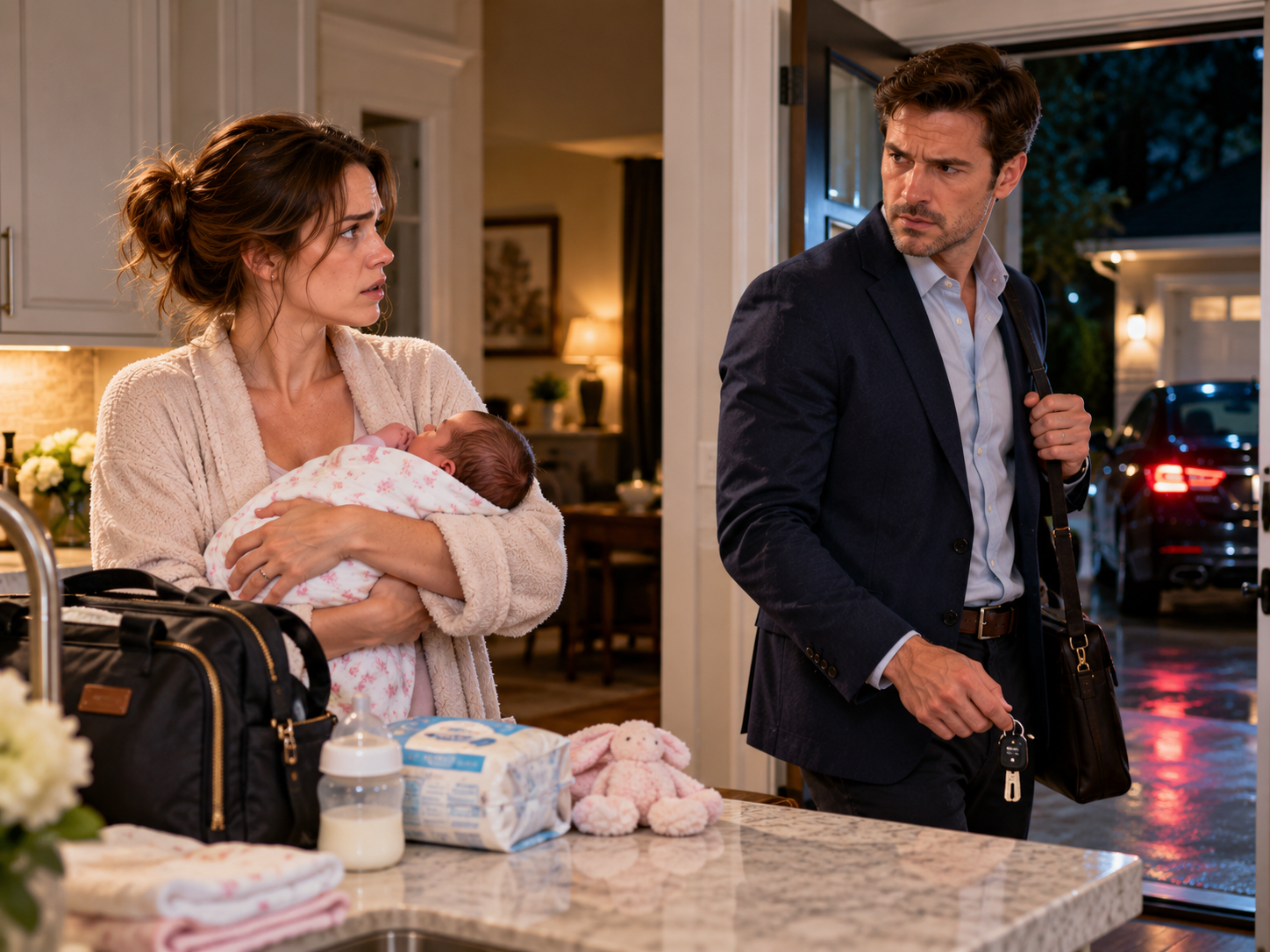
After dinner, Wren brought out the old photograph.
She placed it on the table.
Elias sat beside it.
“This is the first time I've really looked at it.”
Simone smiled.
“What do you see?”
He studied it.
“A woman leaving.”
“Anything else?”
“A father opening a door.”
Wren smiled.
“And?”
“A baby who doesn't know what's happening.”
Everyone laughed.
Elias continued.
“And a family that doesn't know what happens next.”
Simone looked at him.
“That is exactly what I see now.”
Faye touched the photograph.
“I used to hate this picture.”
Simone looked at her.
“Why?”
“Because I thought it showed what I had lost.”
She paused.
“Now I think it shows what I needed to learn.”
Nobody interrupted.
Faye looked at Simone.
“I thought keeping people close meant making sure they stayed.”
Simone nodded.
“You know better now.”
“Yes.”
Roland spoke quietly.
“I thought keeping peace meant avoiding difficult conversations.”
Simone smiled.
“And now?”
“Now I know silence can be its own kind of conflict.”
Wren added, “I thought protecting people meant making decisions for them.”
Simone looked at her daughter.
“And now?”
“I know protection can mean giving someone room to decide.”
Elias smiled.
“So everyone learned the same thing.”
“Different ways,” Simone said.
“But yes.”
The evening darkened.
They lit small lamps around the garden.
For a moment, Simone remembered the driveway years ago.
Headlights.
The Escalade.
The bag.
The yellow blanket.
The fear.
She looked at the table.
Everyone was there.
Not because anyone had been forced.
Because they had chosen to come.
That difference still moved her.
After dinner, Simone walked to the study.
The old desk remained.
She opened the drawer.
The wooden box was inside.
She took it out.
Wren followed.
“What are you doing?”
“Putting something away.”
“What?”
Simone opened the box.
She placed the black Escalade photograph inside.
Then the letter from her mother.
Then the old car key.
She closed the lid.
Wren looked surprised.
“Why put them together?”
“Because they are all part of the same lesson.”
She placed the box back in the drawer.
“But I thought you'd keep the photograph in the album.”
“I will.”
She smiled.
“But some things don't need to stay visible to remain remembered.”
Wren nodded.
They returned outside.
Elias was standing beneath the tree.
“Mom?”
“Yes?”
“I have a question.”
“What is it?”
“Would you do it again?”
Simone knew immediately what he meant.
“If I were six days postpartum and in that situation?”
“Yes.”
She thought carefully.
“I don't know.”
Elias looked surprised.
“Why not?”
“Because I am not that woman anymore.”
He nodded.
“But would you tell her to leave?”
“No.”
“Why?”
“Because that would be deciding for her.”
He smiled.
“You really won't give me an easy answer.”
Simone laughed.
“Not when the real answer is complicated.”
Wren joined them.
“She taught me the same thing.”
Elias smiled.
“I know.”
Simone looked at her children.
She understood then that the story had finally moved beyond her.
It no longer belonged only to her.
It belonged to the family.
Not as gossip.
Not as ammunition.
Not as proof of who had been right.
As history.
History could hold contradiction.
A person could hurt someone and later change.
A person could leave and later return.
A person could forgive without forgetting.
A parent could protect without controlling.
A child could grow without becoming a copy of the parent.
A family could survive without pretending it had never broken.
That was the truth.
And it was enough.
Wren opened the blue notebook.
She wrote one final entry.
Then she handed it to Simone.
Simone read:
We inherited more than a house.
We inherited the right to choose what kind of family we would become.
Simone closed the notebook.
“That is beautiful.”
Wren smiled.
“It's yours too.”
“No.”
She handed it back.
“It's ours.”
Faye watched them.
“I wish Gregory were here.”
Simone looked toward the house.
“So do I.”
“But he'd be proud.”
“Yes.”
They stood together.
The wind moved through the trees.
Someone laughed near the table.
Elias began telling a ridiculous story.
Roland interrupted.
Faye corrected him.
Wren rolled her eyes.
Simone laughed.
For a moment, the entire family was simply together.
No missing place.
No hidden message.
No one waiting for someone else to approve their presence.
Just people.
Choosing to stay.
Choosing to speak.
Choosing to listen.
Choosing to leave when necessary.
Choosing to return when they wanted.
Simone looked toward the driveway.
She imagined the black Escalade again.
But this time, she did not see it as rescue.
She saw it as a door.
A temporary vehicle carrying one woman toward a place where she could breathe.
The vehicle was gone.
The driver was retired.
Gregory was gone.
Her mother was gone.
The house had changed.
The people had changed.
But the choice remained.
That was what had survived.
The ability to say:
I need space.
I need help.
I need to leave.
I need to come home.
I disagree.
I forgive you.
I remember.
I love you.
And none of those sentences had to cancel the others.
Simone looked at Wren.
“Ready to go home?”
Wren smiled.
“Which home?”
Simone laughed.
“Exactly.”
They began gathering the dishes.
Nobody hurried.
The house waited.
The garden waited.
The road waited.
Tomorrow would bring new choices.
There would be new disagreements.
New fears.
New mistakes.
Perhaps new apologies.
That was life.
The family could not prevent those things.
They could only decide how they would meet them.
And they had learned.
Love was not ownership.
Peace was not silence.
Protection was not control.
Forgiveness was not forgetting.
Home was not a place that demanded someone stay.
Home was a place that remained open when they chose to return.
Simone closed the kitchen door behind the last guest.
She stood alone for a moment.
Then she smiled.
The story that had begun with one missing place at a dinner table had ended with a family that no longer measured belonging by who was allowed to sit there.
There were always more chairs.
There was always another door.
There was always a key.
And there was always a choice.
She turned off the light.
The house became quiet.
But it did not feel empty.
It felt ready.
Ready for whoever came next.
The End
Read more original stories on Feel Every Story.
Six days after our daughter was born, my husband left us behind for dinner, but the message from his mother revealed that my exclusion had been planned
Part 28 of 28