
Elias brought two friends home one summer.
They were sitting around the kitchen table when one of them noticed the old photograph.
“What's that?”
Elias looked at it.
“Oh. That's family history.”
His friend picked it up.
“Who is that?”
“My grandmother.”
“And the baby?”
“My mother.”
“Why are they leaving?”
Elias glanced at Simone.
She smiled.
“You can tell them.”
Elias nodded.
He explained the story.
Not every detail.
Just enough.
His friend listened.
“Wow.”
The other friend asked, “Did your grandfather hate your dad?”
Elias shook his head.
“No.”
“Then why did your mom leave?”
“Because she needed somewhere safe to think.”
His friend frowned.
“That's it?”
“That's a lot.”
They laughed.
But the question remained.
After the friends left, Elias asked Simone:
“Did I tell it right?”
“Yes.”
“Did I leave anything important out?”
“No.”
“Good.”
He looked at the photograph.
“I don't want people to think Grandma was a victim forever.”
Simone nodded.
“She wasn't.”
“She was hurt.”
“Yes.”
“But she changed her life.”
“Yes.”
Elias smiled.
“That seems more important.”
“It is.”
Wren arrived later.
Elias told her what happened.
She listened.
“You handled it well.”
“Thanks.”
“Did you tell them about Grandma Faye?”
“A little.”
“What did you say?”
“That she apologized.”
Wren nodded.
“Good.”
“Why?”
“Because the story isn't complete if we only talk about the harm.”
Elias understood.
“People can change.”
“Yes.”
“Even after doing something wrong.”
“Yes.”
“But they still have to take responsibility.”
“Exactly.”
That became one of the family's most important distinctions.
Forgiveness was not an eraser.
Change was not a demand for trust.
Apology was not the same as repair.
And repair did not require everyone to pretend the original wound had never happened.
Faye understood that better than anyone.
She had lived long enough to see the family move beyond the dinner.
But she never asked Simone to forget it.
One afternoon, Faye sat with Simone in the garden.
“Do you think I've changed?”
Simone looked at her.
“Yes.”
“Really?”
“Yes.”
“How do you know?”
“You ask before coming over.”
Faye laughed.
“That's your evidence?”
“It's a big deal.”
Faye smiled.
“I used to think family meant automatic access.”
Simone nodded.
“Now?”
“Family means being invited.”
Simone smiled.
“That is a good definition.”
Faye looked toward the house.
“I wish I had known that earlier.”
“So do I.”
They sat quietly.
Then Faye said, “I am grateful you didn't make Wren hate me.”
Simone looked at her.
“That wasn't my job.”
“What was your job?”
“To tell her the truth without giving her my resentment.”
Faye's eyes filled.
“That was kinder than I deserved.”
Simone shook her head.
“It wasn't about deserving.”
“What was it about?”
“Her freedom.”
Faye nodded.
She understood.
Later, Wren joined them.
She told Faye about Elias's conversation.
Faye laughed.
“He sounds like your grandfather.”
“He does.”
“Good.”
That evening, the family gathered for dinner.
Elias asked a question.
“Do you think families ever completely heal?”
Gregory was gone now, but his absence was felt whenever serious questions arose.
Simone answered carefully.
“I don't think healing means nothing hurts anymore.”
“What does it mean?”
“It means the pain doesn't control what you do next.”
Wren nodded.
Faye added, “And sometimes healing means learning what not to repeat.”
Roland smiled.
“I've learned that one.”
Everyone laughed.
Elias looked around.
“What if someone refuses to change?”
Simone answered.
“Then you may need boundaries.”
“And if they get angry?”
“They can be angry.”
“And if they leave?”
“You let them.”
Elias looked at her.
“You really believe that.”
“Yes.”
“Why?”
“Because people are allowed to make choices you don't like.”
He thought about it.
“That sounds difficult.”
“It is.”
“But necessary.”
“Yes.”
Dinner continued.
The conversation moved to other things.
Work.
Travel.
Food.
Weather.
Normal life.
That was perhaps the strongest evidence that the family had changed.
The difficult lesson did not need to dominate every conversation.
It had simply become part of how they lived.
Years later, Elias would remember that dinner.
Not because of the story.
Because of the principle.
Nobody had told him what conclusion to reach.
They had shown him how to think.
That was the legacy.
Not an answer.
A way of choosing.
Click here to continue reading: PART 28: On the anniversary of Gregory’s passing, the family returned to the house with the old photograph, and Simone finally placed the story where it belonged
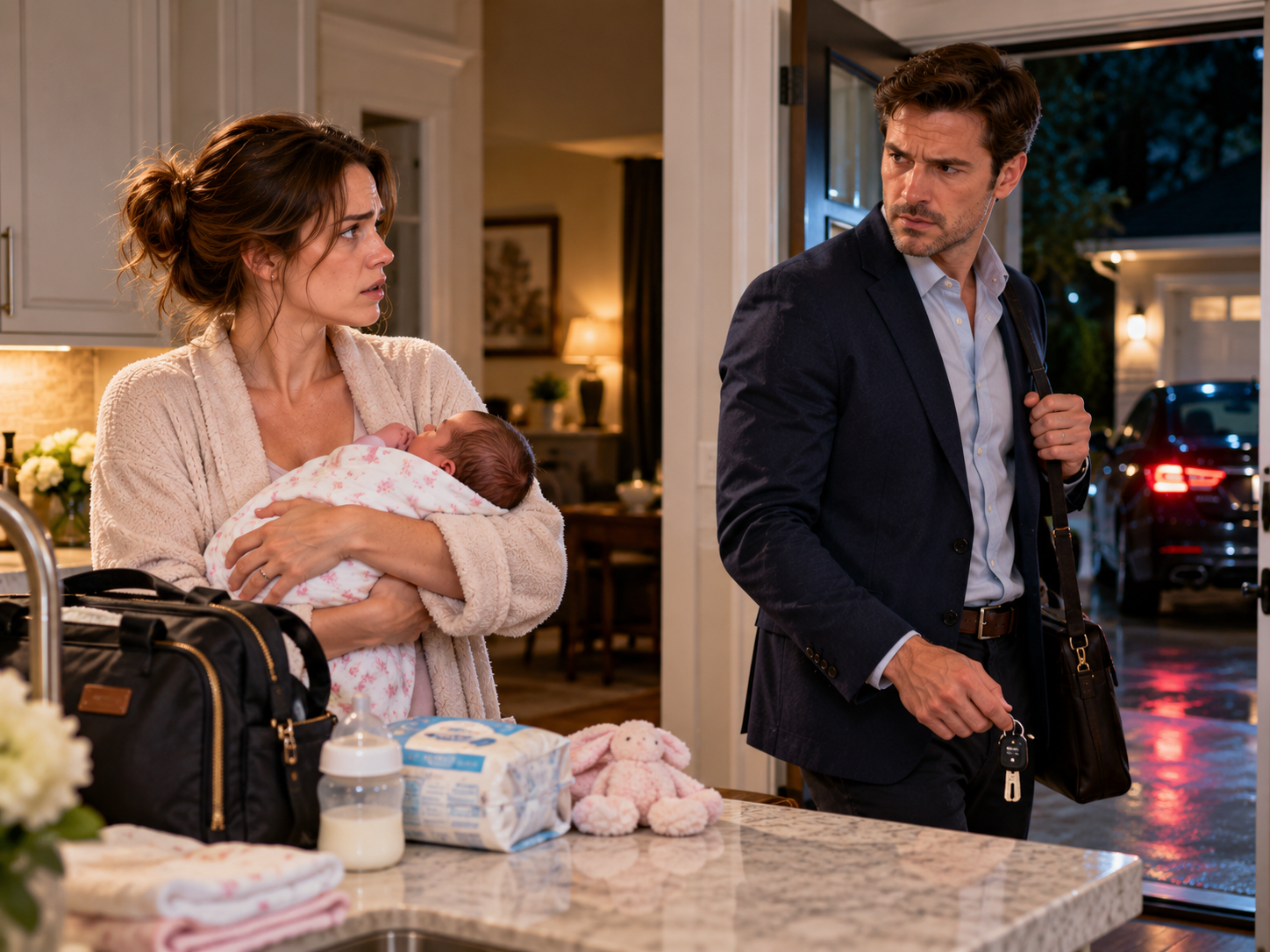
Six days after our daughter was born, my husband left us behind for dinner, but the message from his mother revealed that my exclusion had been planned
Part 27 of 28

