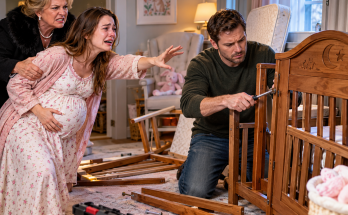
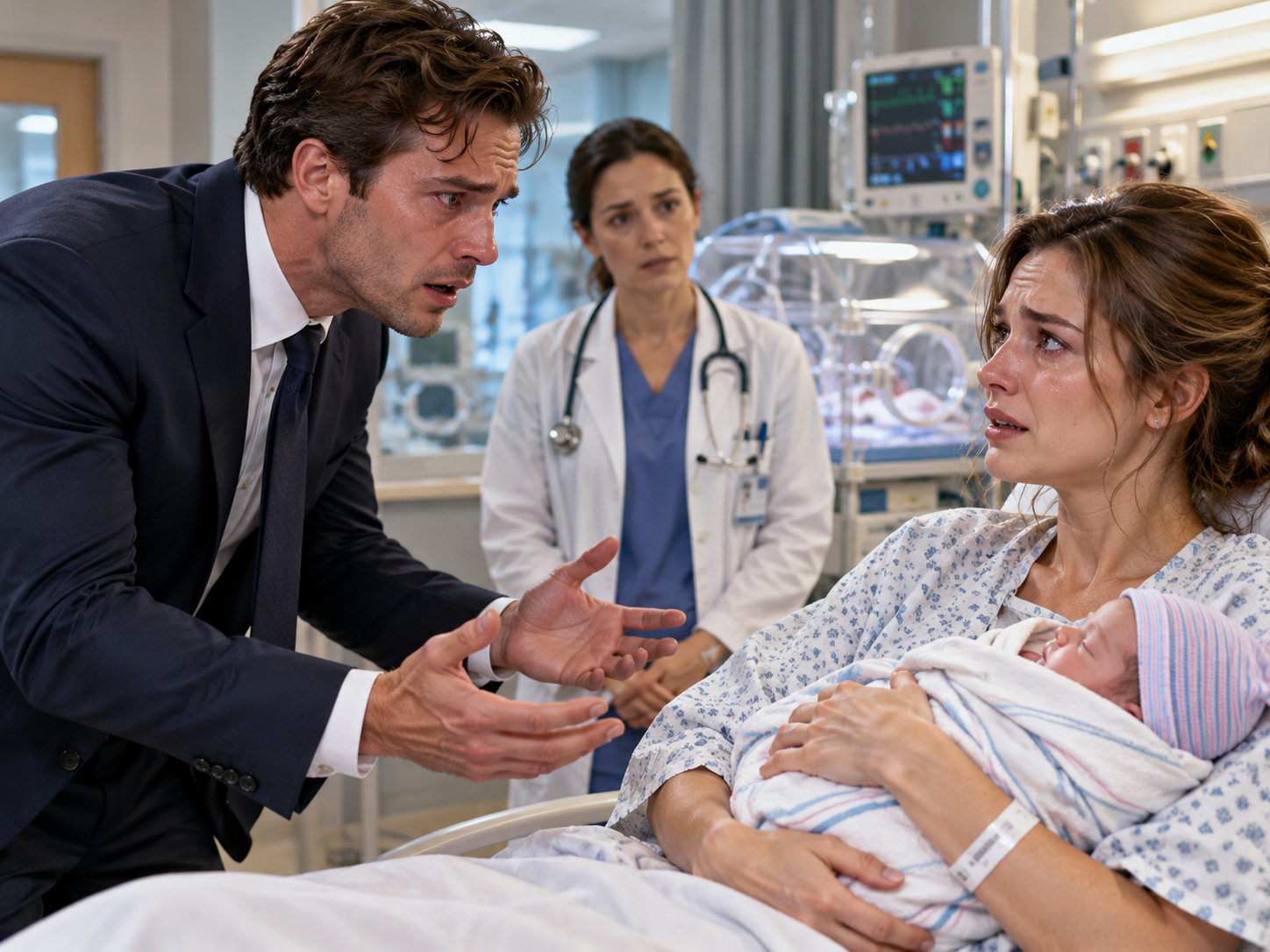
There was one part of the story Clara had rarely discussed.
The months after she left.
I knew she had stayed with Maya.
I knew she had been pregnant.
I knew she had tried to reach me.
But I had never fully understood what those months had felt like for her.
One evening, years after our son was born, she finally told me.
We were sitting on Maya's porch.
The weather was warm.
Our son had gone inside.
“I was terrified,” she said.
I looked at her.
“During the pregnancy?”
“Yes.”
I waited.
“I didn't know whether you'd believe me.”
“I would have.”
She gave me a look.
“Would you?”
The question stopped me.
I corrected myself.
“I hope I would have.”
“That is more honest.”
I nodded.
She looked toward the yard.
“When I first found out, I was angry with you.”
“I know.”
“But then I started thinking about the baby.”
She smiled faintly.
“I kept imagining you holding him.”
I looked down.
“I wish I had been there.”
“So do I.”
She continued.
“I called because I wanted you to know before anyone else.”
“And nobody let me hear it.”
“No.”
She paused.
“After the third voicemail, I stopped expecting you to answer.”
I felt my throat tighten.
“I understand.”
“I don't think you do.”
I looked at her.
“I spent nights wondering whether you had heard me and simply decided you didn't care.”
I closed my eyes.
“That wasn't true.”
“I know now.”
“But you believed it then.”
“Yes.”
She looked away.
“I needed someone to tell me I was wrong.”
I said nothing.
Because there was no answer that could repair those nights.
“I had Maya,” she continued.
“She helped.”
“She did.”
“But I still wanted you.”
That sentence stayed with me.
Not because it suggested reconciliation.
Because it reminded me how completely our lives had been connected before everything broke.
“I am sorry,” I said.
“I know.”
“I should have been there.”
“Yes.”
We sat quietly.
Then Clara smiled.
“But you came.”
“When the doctor called.”
“Yes.”
She looked at me.
“You came.”
That was her forgiveness.
Not an erasure.
Not an excuse.
An acknowledgment of what happened afterward.
I understood that forgiveness did not require pretending the damage had not happened.
It required deciding that the damage would not control the rest of the story.
Our son returned outside.
“What are you talking about?”
“Your dad's terrible driving,” Clara said.
I laughed.
“He is exaggerating.”
Our son looked at me.
“Mom says you're terrible.”
“Your mother has been saying that for years.”
Clara smiled.
The moment passed.
The conversation remained ours.
Some things did not need to be shared with our son.
Not because they were secrets.
Because they belonged to the two people who had lived them.
Later, I drove home.
I thought about the difference between privacy and secrecy.
Secrecy had almost destroyed us.
Privacy protected what was still intimate.
That distinction became another lesson.
Over the following years, Clara and I became increasingly comfortable with the boundaries of our relationship.
We attended events together when it mattered.
We spent holidays with our son.
Sometimes we traveled separately.
Sometimes together.
We never needed to explain ourselves to anyone.
People occasionally assumed there must be unresolved romantic feelings.
Sometimes there were old emotions.
That was natural.
But we had learned that emotions did not have to become decisions.
Love could change shape.
Memory could remain without becoming instruction.
That was one of the hardest things I had ever learned.
One winter, Clara called me late at night.
“I can't sleep.”
“What's wrong?”
“Nothing.”
“Then why are you awake?”
She laughed.
“Because I'm thinking.”
“That's dangerous.”
“Very.”
She told me she had been reviewing old financial records from her early career.
She had found one of her first handwritten models.
“It made me think about the kitchen table,” she said.
“So much happened there.”
“Yes.”
“We were happy.”
“We were.”
She became quiet.
“I don't regret those years.”
“Neither do I.”
“Even the bad parts?”
“I regret what we did wrong.”
“That isn't the same thing.”
“No.”
We spoke until nearly midnight.
When the call ended, I realized something.
We no longer called each other because there was an emergency.
We called because we wanted to talk.
That might have been the clearest evidence that our relationship had healed.
Not returned.
Healed.
The next spring, our son and his wife announced they were expecting a child.
Clara cried.
I laughed.
Then I cried too.
“You're going to be a grandfather,” Clara said.
“I know.”
“You look terrified.”
“I am.”
She laughed.
“You'll be fine.”
“I have no idea what I'm doing.”
“Neither did we.”
I looked at her.
“That doesn't make me feel better.”
“It should.”
When our grandchild was born, we stood together outside the hospital room.
History felt strangely circular.
I remembered Piedmont General.
The NICU.
The phone call.
The tiny baby.
This time, there was no emergency.
No fear.
Just anticipation.
Our son came out carrying the baby.
He looked exhausted.
He looked happy.
He handed the baby to Clara first.
She cried.
Then he gave the baby to me.
I held the tiny child carefully.
“So small,” I whispered.
Our son smiled.
“That's what you said about me.”
“I said you were too small.”
“You were right.”
Clara laughed.
We stood together.
Three generations.
The past suddenly felt very far away.
Our son looked at us.
“I think I'm starting to understand your story.”
I looked at him.
“What do you mean?”
“You two lost each other.”
Clara nodded.
“But you didn't lose your family.”
I smiled.
“No.”
He looked down at his child.
“I hope I remember that.”
“You will,” Clara said.
That evening, after everyone had gone home, I sat alone in the hospital cafeteria.
I thought about the call that had begun my relationship with fatherhood.
The same hospital corridors.
The same smell of antiseptic.
The same strange mixture of fear and hope.
But this time, I wasn't arriving to discover a son.
I was watching my son become a father.
Life had continued.
That was the real miracle.
Not that everything had been repaired.
That something new had been built.
Click here to continue reading: PART 19: Watching my son become a father showed me how far our family had traveled from the hospital room where I first learned the truth about his existence
The doctor told me I had a son, and by the time I reached the hospital I was already wondering what Clara had tried to tell me before our marriage disappeared
Part 18 of 20