
Our son's wedding changed the rhythm of our family again.
For years, Clara and I had been the two people standing beside him at birthdays, graduations, school ceremonies, and ordinary dinners. Now there was another person beside him, someone he had chosen to build a life with.
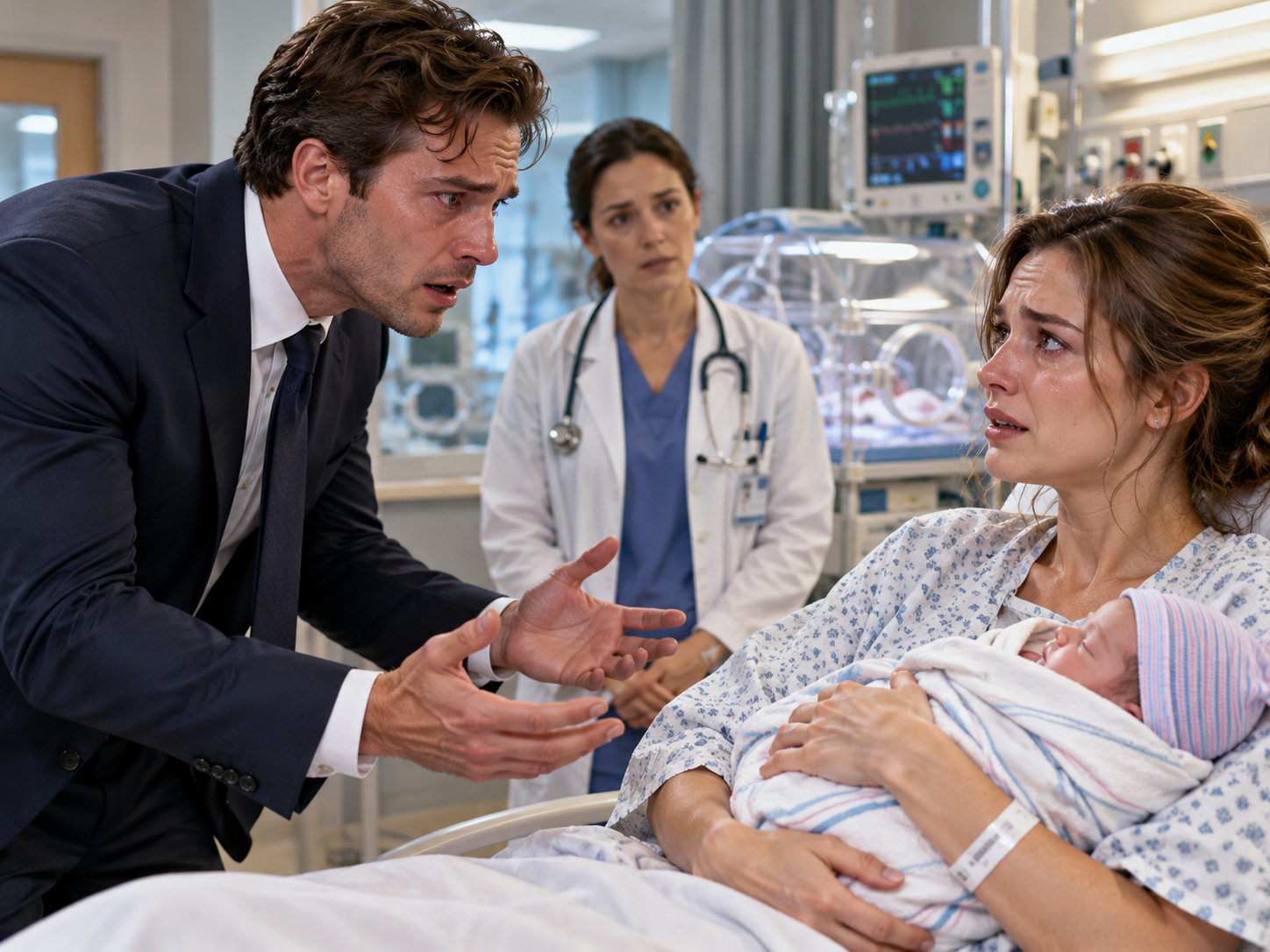
I watched him stand at the front of the room, older than the boy who had once slept inside a NICU incubator.
Clara sat beside me.
She reached over and squeezed my hand.
“You're going to cry,” she whispered.
“I already am.”
She smiled.
“So am I.”
When our son saw us, his expression softened.
He knew our story.
Not every private detail, but enough to understand that his parents had traveled a difficult road before he was old enough to remember it.
He also knew that neither of us considered him responsible for any part of it.
That had always mattered to me.
After the ceremony, he found us outside.
“Did you enjoy it?”
Clara laughed.
“We loved it.”
I hugged him.
“You looked happy.”
“I am.”
“That is all I wanted.”
He looked between us.
“You both keep saying things like that.”
“Because they're true,” Clara said.
He smiled.
Then his wife joined him.
We talked about dinner, photographs, and where everyone would meet afterward.
Nothing about the conversation was dramatic.
That was the beauty of it.
Our family had once been defined by a crisis.
Now it was defined by ordinary moments.
Later that night, Clara and I sat outside the hotel.
The city was quiet.
“You realize we're officially old now,” she said.
I laughed.
“I refuse to accept that.”
“You have a son who is married.”
“That doesn't prove anything.”
“It proves everything.”
I looked toward the lights.
“I keep thinking about how small he was.”
“So do I.”
“And how convinced I was that I had lost everything.”
Clara looked at me.
“You hadn't.”
“I thought I had.”
“You had lost something.”
I nodded.
“Our marriage.”
“Yes.”
She paused.
“But you hadn't lost your entire life.”
“I know that now.”
She smiled.
“That took you long enough.”
I laughed.
We sat quietly.
There were things we no longer needed to discuss.
The old pain had not disappeared.
It had simply become less sharp.
Time had done part of that.
Understanding had done the rest.
Our son called the next morning.
He wanted to thank us for helping with the wedding.
I told him it had been nothing.
He disagreed.
“You both did a lot.”
“We wanted to.”
There was a pause.
“Mom?”
“Yes?”
“Dad?”
“Yes?”
“I know what happened between you.”
Clara became quiet.
I waited.
“I know you both made mistakes.”
“Yes,” I said.
“I also know someone else made things worse.”
Clara and I exchanged a glance.
Our son continued.
“But I don't want to spend my life thinking about him.”
I smiled.
“Good.”
“I'd rather think about what you both did afterward.”
Clara's eyes filled with tears.
“What do you mean?”
“You stayed.”
The word was simple.
But it carried the weight of years.
After the call ended, Clara and I sat without speaking.
“You heard that?” she asked.
“Yes.”
“I think that's enough.”
I nodded.
Our son had understood the lesson.
That was more than I had ever expected.
The company continued without me at the center.
Mercer Holdings had become stronger because it no longer depended on one person's control.
I remained involved as an adviser and board member for a time, but eventually I retired from formal leadership.
The decision surprised people.
It did not surprise Clara.
“You've been preparing for this for years,” she said.
“I have.”
“What will you do?”
“I don't know.”
She smiled.
“You finally don't know.”
I laughed.
It was true.
For most of my adult life, uncertainty had frightened me.
Now it felt like freedom.
I traveled.
I read.
I spent time with our son and his wife.
I visited Maya.
I helped with projects that interested me.
I also spent more time doing nothing.
That was harder than it sounded.
I had built my identity around being busy.
Learning to be still became another lesson.
One afternoon, I found the old box containing the Southshore documents.
I almost threw it away.
Instead, I opened it.
There were invoices.
Contracts.
Notes.
Old correspondence.
And one page with Clara's handwriting.
I stared at it.
Her writing was precise.
Numbers aligned carefully.
She had always been meticulous.
I remembered her sitting at our kitchen table.
I remembered her expression when she told me something was wrong.
I remembered how quickly I had become defensive.
I put the paper down.
Then I called her.
“What are you doing?”
“Looking through old documents.”
“Why?”
“I found one of your notes.”
“Which one?”
“The Southshore analysis.”
She was quiet.
“You still have that?”
“Apparently.”
“Throw it away.”
I laughed.
“That's what I was thinking.”
“Then do it.”
I folded the page.
“Okay.”
I placed it in the recycling bin.
Then I looked at the empty box.
It felt strange.
For years, I had thought keeping evidence meant preserving truth.
Sometimes preserving truth meant letting old evidence go after you had learned the lesson.
The truth was already part of me.
I didn't need the paper.
That evening, Clara and I met for dinner.
She asked whether I had thrown it away.
“Yes.”
“Good.”
“I thought you might want it.”
“No.”
“Why?”
“Because I don't need proof that I was right anymore.”
I looked at her.
“That might be the most important thing you've ever said.”
She smiled.
“I don't want to be right about the past.”
“What do you want?”
“To be okay with it.”
I understood.
That was what I wanted too.
Not victory.
Not vindication.
Acceptance.
We talked about our son.
About his marriage.
About Maya.
About how quickly time had passed.
Eventually, Clara said, “Do you ever think we should have stayed married?”
I answered honestly.
“Sometimes.”
She nodded.
“Me too.”
“But?”
“But I don't think wondering changes anything.”
“No.”
“And I'm happy with where we are.”
“So am I.”
That was enough.
We did not need a different ending.
We had built one.
Click here to continue reading: PART 18: When Clara finally told me what she had felt during the months after leaving, I realized there were wounds neither of us had known how to name
The doctor told me I had a son, and by the time I reached the hospital I was already wondering what Clara had tried to tell me before our marriage disappeared
Part 17 of 20

