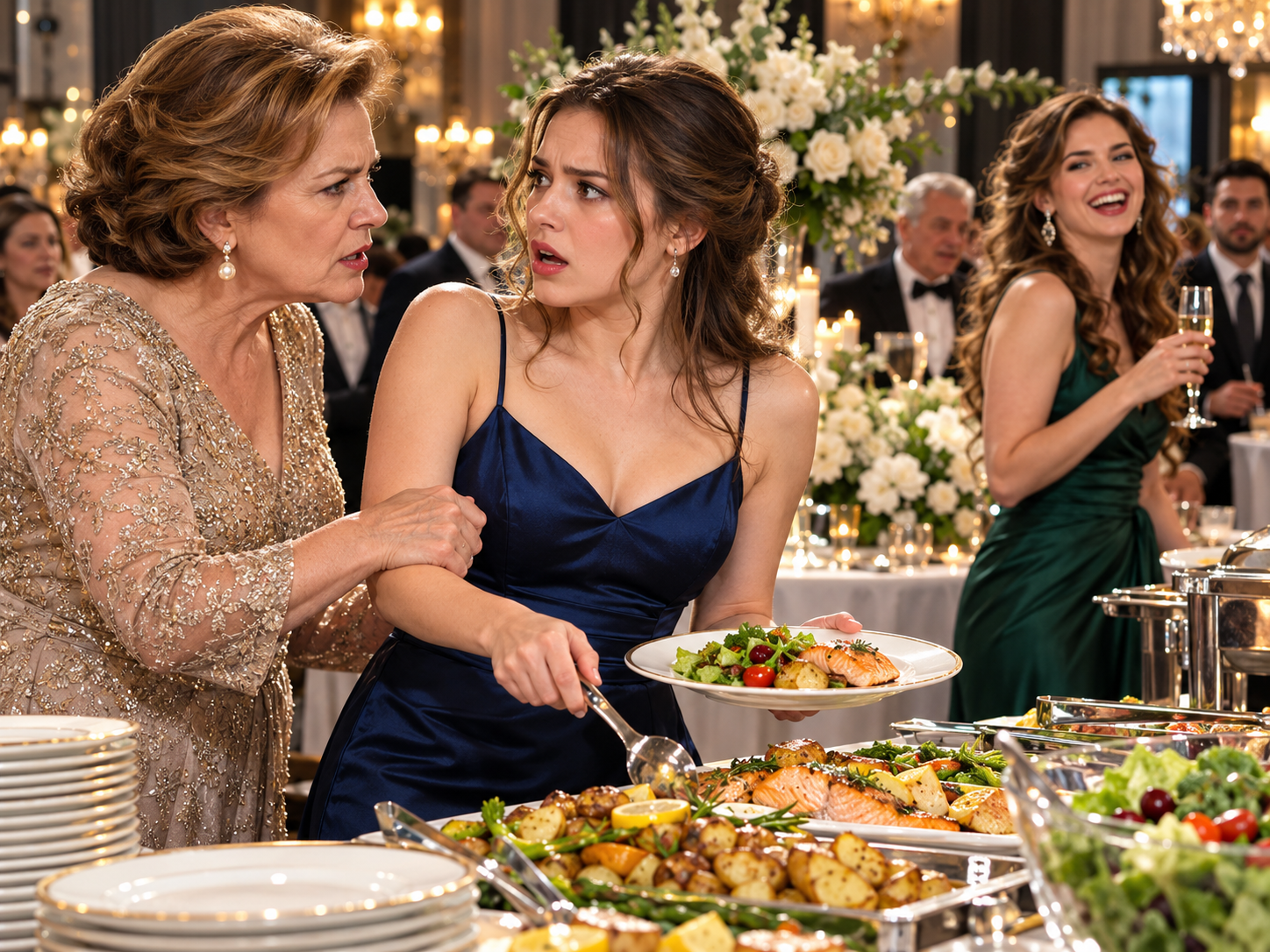
My mother’s first response was denial.
“There must be some mistake.”
Daniel did not argue. He simply opened the event file and placed the paperwork where both of my parents could see it.
“There is no mistake. The reservation was made under Olivia Doyle’s name four months ago. The deposit, menu arrangements, floral orders, and original payment authorization were all attached to her account.”
Camille’s hand stopped halfway toward her wineglass.
“That can’t be right.”
Daniel looked at her politely.
“It is.”
He explained that I had withdrawn authorization for the final charge before leaving. The deposit I had already paid remained applied, but the unpaid balance now had to be settled by the people continuing the event.
Dad leaned closer to the statement.
The total was $8,742.16.
For several seconds he said nothing.
Then he gave a short, disbelieving laugh.
“What do you mean? Olivia already paid.”
“She paid the deposit,” Daniel said. “The remaining amount was scheduled to be processed after dinner.”
He pointed to the relevant line.
“That authorization has been canceled.”
Silence spread outward from the head table.
Someone nearby set down a glass.
A relative asked softly, “Olivia paid for the party?”
The question moved through the room faster than gossip usually traveled because everyone already knew the answer was going to change the meaning of the evening.
The flowers looked different now.
So did the champagne.
So did the seafood station Camille had proudly described to guests as her special touch.
Every elegant detail had acquired an invisible price tag.
Outside, I remained in my car.
My phone began ringing.
Mom first.
Then Camille.
Then Dad.
Then Mom again.
Within twelve minutes I had twenty-three missed calls.
I watched each one appear and disappear.
For the first time in my adult life, I did not answer simply because my family wanted immediate access to me.
Instead I opened the bakery box.
The chocolate raspberry cake inside was barely larger than my palm.
I took the plastic fork tucked beneath the ribbon and ate the first bite alone while snow collected along the windshield.
It was absurdly good.
I cried anyway.
Not because I regretted leaving.
Because I suddenly understood how little space I had allowed myself inside my own life.
Back in the restaurant, Mom pushed the bill toward Camille.
“Fix this.”
Camille stared at her.
“With what?”
“You said you planned tonight.”
“I did.”
“Then pay for it.”
“I planned the decorations.”
Aunt Ruth’s voice came from the next table.
“No, dear. You accepted credit for them.”
Camille turned.
Ruth stood carefully, leaning on her cane.
The room quieted.
“I have watched this family for forty years,” she said. “And I have watched Olivia carry things without making noise about the weight.”
Mom’s mouth tightened.
“Ruth, please.”
“No. We have apparently spent the entire evening thanking the wrong person.”
She looked at Daniel.
“Who reserved this room?”
“Olivia.”
“Who paid the deposit?”
“Olivia.”
“The flowers?”
“Ordered through Olivia’s event account.”
“The menu?”
“Selected by Olivia.”
“The invitations?”
Daniel glanced at the records.
“Her email address is listed as the primary contact.”
Ruth turned toward Camille.
“So what exactly did you do?”
Camille opened her mouth.
Nothing came.
Then the relatives began remembering.
One cousin recalled that I had asked about dietary restrictions.
Another remembered sending me arrival times.
Uncle Frank said I had personally arranged his gluten-free meal.
Julia pulled out her phone and found the invitation.
The sender was Olivia Doyle.
She held the screen where everyone could see it.
The story Camille had allowed everyone to believe collapsed not because I was there to accuse her, but because evidence remained after I left.
Dad stood.
“Daniel, give us a few minutes.”
“I’m sorry, sir. We need another payment method before the event ends.”
Dad’s face darkened.
“This is our anniversary.”
“I understand.”
Daniel’s voice remained respectful.
“But the same payment policy applies to every party.”
Aunt Ruth sat back down.
Nobody missed the irony.
For once, the rules did not change simply because my parents were uncomfortable.
My phone vibrated again.
This time the caller was Hannah.
I answered.
“Hi, sweetheart.”
Her voice was small.
“Aunt Liv?”
“Yes.”
“I’m sorry.”
I closed my eyes.
“You have nothing to apologize for.”
“I knew Mom didn’t really plan everything.”
I stayed quiet.
“She practiced her speech at home,” Hannah continued. “I asked why she didn’t mention you.”
My hand tightened around the phone.
“What did she say?”
Hannah hesitated.
“She said people don’t remember who pays. They remember who stands in front of everyone.”
The sentence hurt because it was both cruel and accurate.
Camille had understood our family perfectly.
I had spent decades backstage making sure the lights worked.
She had learned to stand beneath them.
“Hannah, listen to me.”
“Okay.”
“Never mistake being noticed for being kind.”
She sniffed.
“I won’t.”
“And never let anyone convince you that quiet work has no value.”
“I know.”
I looked through the windshield at the restaurant windows.
“I’m glad you do.”
Inside, the financial problem had become unavoidable.
Dad checked his banking app.
His expression tightened.
Mom leaned closer.
“What?”
“We can’t cover all of it from checking.”
Camille immediately suggested his business card.
Nearly maxed.
Mom’s card?
She had used it for a cruise deposit the day before.
The upgrades Camille had demanded had pushed the evening far beyond the original budget I had built.
For several uncomfortable minutes, the people who had always assumed Olivia would handle the difference confronted the revolutionary concept of paying for themselves.
Uncle George finally stood.
He approached Daniel.
“I’ll pay for Ruth’s meal.”
Daniel nodded.
George added, “Only Ruth’s.”
That started it.
Couples offered to cover their own dinners.
Cousins paid for their tables.
An uncle covered his children.
Nobody argued about the food they had consumed.
But nobody volunteered to rescue the head table either.
Within fifteen minutes, the enormous balance fell dramatically.
What remained was more than $3,900, largely representing premium additions Camille had requested.
She began crying.
“I was trying to make it beautiful.”
Ruth looked toward the empty place where I should have been sitting.
“No, Camille.”
Her voice was gentler than before.
“You were trying to make sure everyone saw you making it beautiful.”
The distinction silenced the room.
My father eventually spread the remaining amount across three credit cards.
The final transaction cleared at 10:42.
By then nobody wanted cake.
The anniversary celebration ended in scattered goodbyes and lowered voices.
I drove home long before that.
My apartment was warm when I entered.
I took off the red dress I had chosen for the dinner and hung it carefully in the closet.
For years I had imagined that standing up to my family would involve shouting.
Instead it involved silence.
A signature.
A closed restaurant door.
A phone I chose not to answer.
I slept almost ten hours.
The next morning, my phone showed 117 unread messages.
Some relatives apologized.
Some defended my parents.
Others wanted details.
Several accused me of humiliating the family.
I ignored all of them.
Then I saw a message from Dad.
Only one sentence.
We need to talk about what has really been happening in this family.
I read it twice.
I did not answer immediately.
For once, a conversation with my parents would happen because they were prepared to listen, not because I was expected to solve something.
And it would not happen at a table where everyone ate from a meal I had purchased while pretending someone else had provided it.
Click Here to continue read next: PART4: My Father Came to My Door With the Cake Nobody Remembered I Loved, and an Old Family Letter Finally Explained What We Had Become
I Arrived at My Parents’ Anniversary Dinner and Discovered My Sister Had Somehow Become the Host of the Celebration I Paid For
Part 3 of 16