
The plaque beside the front door had faded.
Second Door.
The letters were still readable, but the wood had weathered.
Grace had talked about replacing it several times.
She never did.
One summer morning, she stood outside with Leo.
He was older now.
Old enough to understand the meaning behind the plaque.
“Why don't you replace it?”
Grace looked at him.
“Because I like it this way.”
“It looks old.”
“So do I.”
He laughed.
“You're not old.”
“Tell that to my knees.”
They smiled.
I watched from the porch.
The house had become everything Grace once doubted she could have.
A home.
Not a possession.
Not collateral.
Not an asset.
A home.
Inside, the library held her father's photographs.
The office held her work.
Leo's room was upstairs.
The kitchen still carried the smell of coffee every morning.
Nothing about the place was extraordinary.
That was the point.
The extraordinary part had been surviving long enough to enjoy ordinary life again.
Grace came inside.
“Mom, are you ready?”
“For what?”
“We're going to the hospital.”
I looked at her.
“The hospital?”
She nodded.
“They invited me to speak.”
I smiled.
“About room 212?”
“Not specifically.”
She laughed.
“I'll mention it.”
We drove together.
The hospital had changed.
New signs.
New equipment.
Different staff.
But the corridors remained familiar.
Grace stopped near Labor and Delivery.
She took a breath.
“You okay?”
“Yes.”
She looked at the door.
“I thought this would always hurt.”
“Does it?”
“Not anymore.”
She smiled.
“That surprises me.”
Nadia was waiting.
She hugged Grace.
“You came back.”
“I said I would.”
The presentation was small.
Nurses.
Doctors.
Social workers.
A few families.
Grace stood at the front.
She spoke about her experience without naming every person involved.
She talked about vulnerability.
Financial control.
The importance of patient autonomy.
The danger of dismissing fear simply because it isn't accompanied by visible injury.
Then she told them about room 212.
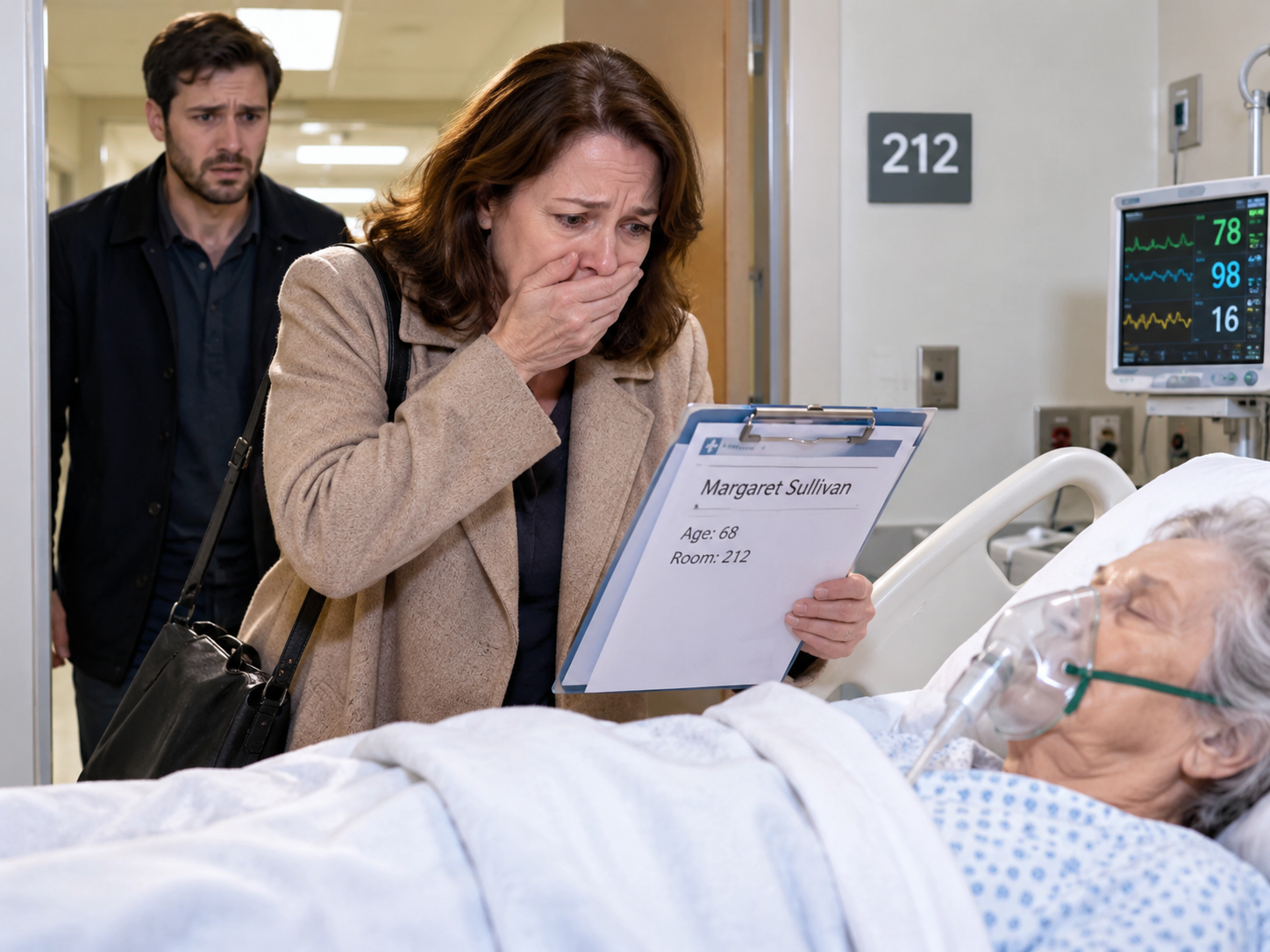
She explained that her mother had been given the wrong room.
She explained that the mistake had forced her mother to question what she had been told.
A nurse asked, “What would you tell someone in that situation?”
Grace thought.
“Ask questions.”
The room was quiet.
“Even if you're embarrassed.”
She continued.
“Even if someone you trust tells you you're overreacting.”
She looked around.
“Ask.”
That was all.
She didn't tell anyone to distrust everyone.
She didn't suggest that every uneasy feeling meant danger.
She simply said that people deserve the opportunity to understand what is happening to them.
Afterward, several nurses thanked her.
One young mother approached.
She had tears in her eyes.
“Something happened to me during my delivery,” she said.
Grace listened.
The woman explained.
Grace did not immediately tell her what to do.
She asked questions.
Then she encouraged her to speak with the appropriate medical and legal professionals.
That was how Grace had changed.
She no longer needed to be the person who rescued everyone.
She could simply help someone find the right door.
On the way home, she was quiet.
“What are you thinking?”
“That I never imagined I'd come back here.”
“You came back differently.”
“Yes.”
She smiled.
“That's the difference.”
That evening, Leo asked about the hospital.
Grace explained that she had once been there when he was born.
“Were you scared?”
“Yes.”
“Why?”
“Because I didn't know what would happen.”
“What happened?”
She looked at him.
“You were born.”
He smiled.
“That's good.”
“It was.”
He thought for a moment.
“Was Grandma there?”
“Yes.”
“Was she scared too?”
“Yes.”
“Did she save you?”
Grace looked at me.
I shook my head.
She smiled.
“We saved each other.”
Leo accepted that.
Then he went back to his homework.
After he left, Grace sat beside me.
“You heard him.”
“I did.”
“I like that answer.”
“So do I.”
Years passed.
Leo graduated.
Grace watched him walk across the stage.
I sat beside her.
She cried.
“You always cry at these things.”
“I have reasons.”
Leo found us afterward.
He hugged both of us.
“Thank you for coming.”
Grace smiled.
“Always.”
The family photographs from that day became some of our favorites.
Not because they proved anything.
Because they were ordinary evidence of time passing.
A child became an adult.
A frightened mother became a confident woman.
A grandmother became an older woman who still refused to stop asking questions.
Life moved.
That was the ending no one in the old plan had imagined.
They had planned around a moment.
A birth.
A signature.
A transfer.
A lie.
They had thought in transactions.
Grace had learned to think in years.
That difference defeated them.
One evening, decades after the original phone call, Grace found the old photograph from room 212.
She had kept a copy.
She brought it to me.
“Do you still remember this?”
I looked at it.
“Yes.”
“Do you ever wish you could forget?”
“No.”
She seemed surprised.
“Why not?”
“Because forgetting would mean losing the lesson.”
She nodded.
“What lesson?”
I thought about it.
“That people are more important than the story you're first told about them.”
Grace smiled.
“That sounds right.”
She placed the photograph beside the letter from her father.
Two pieces of paper.
One represented the warning.
The other represented the moment we learned to listen.
She didn't need the rest.
The contracts.
The account statements.
The legal filings.
The photographs from the investigation.
They were archived.
The important part had already become part of who she was.
One night, I asked her whether she regretted staying in the house.
She looked around.
“No.”
“Why?”
“Because I chose it.”
That was the answer.
Not because Ezekiel had failed to take it.
Not because the court protected it.
Not because it had sentimental value.
Because Grace had chosen it.
That was what made it hers.
The same was true of everything else.
Her work.
Her relationships.
Her boundaries.
Her future.
Her memories.
Her son.
Her life.
She chose.
And that was something nobody could sign away for her.
On the anniversary of the night Ezekiel called, Grace and I sat on the porch.
We didn't make a ceremony of it.
No candles.
No speeches.
Just tea.
The evening was warm.
The street was quiet.
“Do you remember what you said when you called me?” Grace asked.
“Yes.”
“What?”
“That you didn't survive the delivery.”
She nodded.
“And then you found me.”
“Yes.”
She smiled.
“Funny.”
“What?”
“You thought you were coming to say goodbye.”
I looked at her.
“And instead?”
“You came to find me.”
I smiled.
“That is what mothers do.”
She shook her head.
“Sometimes.”
We sat in silence.
Then she said:
“I used to think that night stole years from me.”
“Did it?”
“Yes.”
She paused.
“But it also gave me years I might not have lived honestly.”
I looked at her.
She continued.
“I learned to trust myself.”
She looked toward the house.
“I learned that my home should feel safe.”
Then toward the room where Leo's photographs hung.
“I learned that being a mother doesn't mean disappearing.”
Finally she looked at me.
“And I learned that asking for help isn't weakness.”
I nodded.
“Those are good things to know.”
She smiled.
“They cost a lot.”
“Yes.”
“But I have them now.”
The porch light came on automatically.
For a moment, the plaque beside the door caught the light.
Second Door.
The same old words.
The same weathered wood.
A reminder of the night when everything changed.
I thought about room 212.
The stranger in the bed.
The nurse who whispered in a basement.
The black SUV.
The apartment.
The documents.
The names.
The money.
The lies.
All of it had once seemed like one enormous darkness.
Now it was a chapter.
A terrible chapter.
An important chapter.
But only a chapter.
Grace had written the rest herself.
And the rest was beautiful in its ordinariness.
A son growing up.
A mother growing older.
A daughter finding her voice.
A house filled with laughter.
A family that had learned to ask questions.
There was no perfect justice in the world.
Not every person who causes harm receives exactly the consequence we imagine.
Not every lost dollar returns.
Not every apology is enough.
Not every wound disappears.
But sometimes justice looks like something quieter.
A person gets her life back.
A child grows up safe.
A house remains a home.
A mother and daughter speak honestly.
And the person who once thought she needed permission to trust herself no longer asks.
Grace looked at the plaque one last time.
“I think it's time.”
“For what?”
“To replace it.”
I laughed.
“After all these years?”
“Yes.”
“What will you put there?”
She thought.
Then smiled.
“Nothing.”
She removed the plaque.
I stared at the bare wood.
“Nothing?”
“I don't need the reminder anymore.”
She handed me the old plaque.
I held it carefully.
“Keep it.”
“Why?”
“Because some reminders are worth keeping.”
She smiled.
“Okay.”
The next morning, the front door had no plaque.
Just a simple wooden door.
No message.
No warning.
No explanation.
Grace opened it.
Sunlight came into the hallway.
Leo, now grown, stood outside with a suitcase.
He had come home for a visit.
“Mom!”
She hugged him.
“Good to see you.”
“Good to be home.”
Those words made her smile.
Good to be home.
Not because the house was perfect.
Because it was his home.
Their home.
Ours.
I watched from the kitchen.
Grace looked back at me.
For one brief second, I remembered the night I had first walked through a hospital corridor searching for her.
Then I looked at the man standing beside her.
Her son.
Alive.
Safe.
Loved.
And I understood that the story had finally reached its true ending.
Not when Ezekiel was exposed.
Not when the court ruled.
Not when the money was recovered.
Not when the documents were filed.
The ending came when Grace no longer measured her life by what had almost been taken from her.
She measured it by what she had built.
That was the life she chose.
And no one else could choose it for her.
I still remember the phone call.
I still remember the fear.
I still remember room 212.
But when I think of Grace now, I don't see the woman lying on that mattress.
I see the woman standing in her doorway.
Older.
Wiser.
Free.
I see her laughing with Leo.
I see her working at her desk.
I see her sitting beside her father's photographs.
I see her opening the front door without fear.
And I understand something I didn't know that night.
Sometimes the worst lie in your life is also the moment that teaches you never to surrender your judgment again.
Sometimes the wrong door leads you to the right place.
Sometimes the person you think you have lost is waiting for you to believe what your own eyes are telling you.
And sometimes surviving isn't the end of the story.
It is the beginning of the life you finally choose.
Grace chose hers.
Leo grew up inside it.
I was lucky enough to witness it.
And whenever I remember that terrible night, I no longer hear the words, “Your daughter didn't survive.”
I hear something else.
A newborn crying.
A frightened daughter whispering for her mother.
A door opening.
And Grace saying, “I'm here.”
This time, she was.
And this time, I believed her.
The End
Read more original stories on Feel Every Story.
The room number was wrong, but the fear in my son-in-law’s face told me the mistake had been deliberate
Part 16 of 16

