
The following spring, Grace received an invitation she almost ignored.
It came from the hospital.
They were holding a small gathering for families who had experienced difficult births and complicated recoveries.
Grace wasn't interested.
Then she saw Nadia's name.
She called immediately.
“Are you going?”
Nadia laughed.
“I was hoping you would.”
Grace agreed.
The event was held in a quiet room overlooking the hospital garden.
There were families.
Nurses.
Doctors.
Social workers.
Grace hadn't been inside that part of the hospital since the night everything happened.
The hallway looked smaller than she remembered.
The lights seemed less harsh.
The doors were ordinary.
She stood outside room 212 for a moment.
Nadia found her there.
“You remember.”
Grace smiled.
“How could I forget?”
They hugged.
Nadia looked at her.
“You look good.”
“I feel good.”
“That matters.”
Grace touched the door.
“This is where my mother found the truth.”
Nadia smiled.
“She was stubborn.”
“She still is.”
They laughed.
Then Nadia told her something Grace had never known.
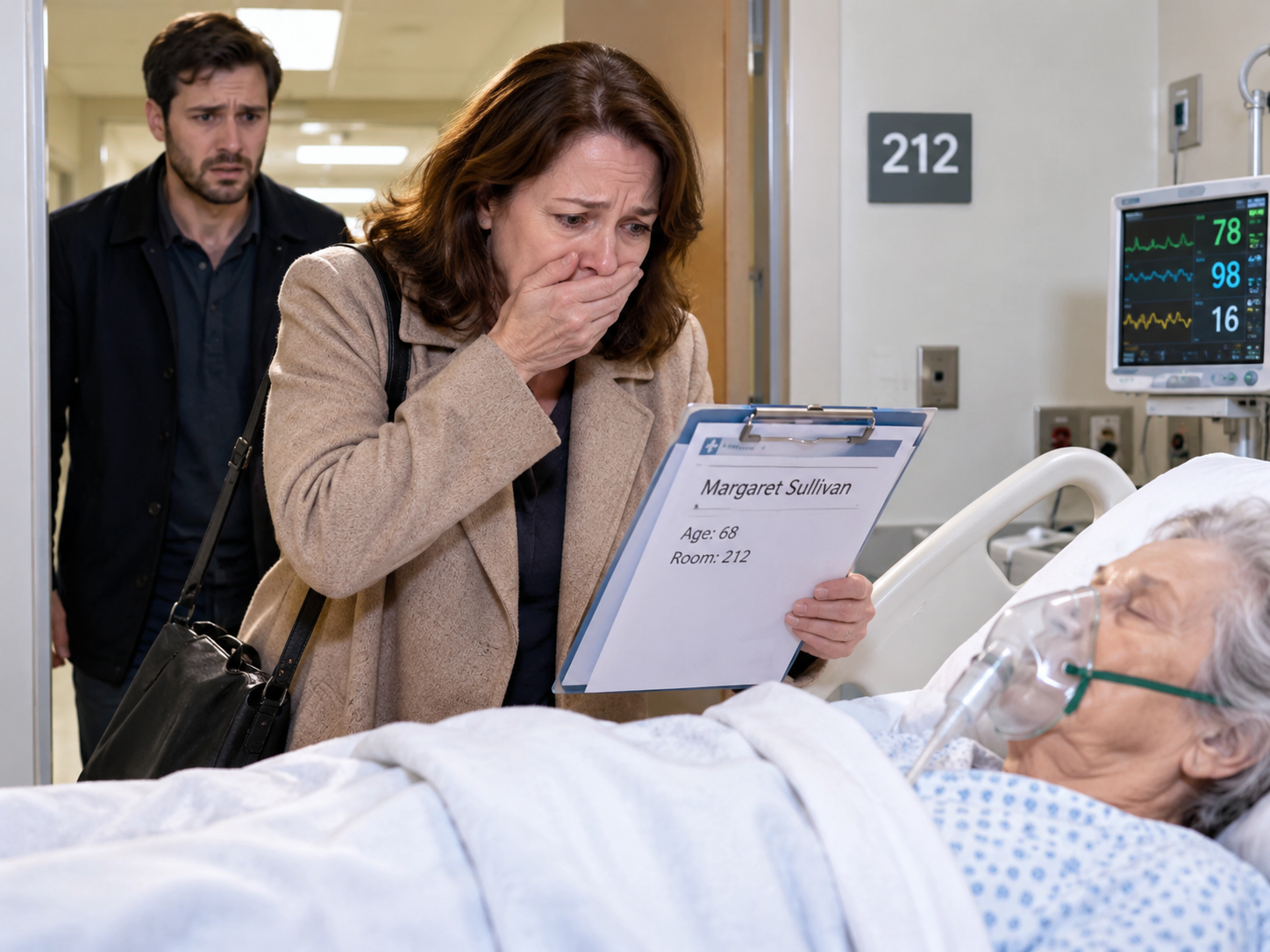
The elderly woman who had been in room 212, Margaret Sullivan, had recovered and gone home.
Grace smiled.
“I always wondered.”
“She asked why everyone had been so concerned about a room number.”
Grace laughed.
“Did you tell her?”
“No.”
“I hope she had a peaceful life.”
“She did.”
That was enough.
The event continued.
Grace spoke briefly about listening to patients.
She did not describe the entire case.
She didn't need to.
She talked about how vulnerable people can be misunderstood when they are exhausted or frightened.
She talked about the importance of giving them time to speak.
Afterward, a young nurse approached her.
“Thank you.”
Grace smiled.
“For what?”
“For saying that fear doesn't always look dramatic.”
Grace nodded.
“It often doesn't.”
The conversation stayed with her.
On the way home, she seemed thoughtful.
“What?”
I asked.
“I think I want to do something.”
“What?”
“Help new mothers understand their rights.”
I smiled.
“You've found another door.”
She laughed.
Over the next year, Grace began volunteering with a local family support program.
She didn't become a counselor.
She didn't pretend to be an expert.
She simply shared what she had learned.
Keep copies of important documents.
Know what you are signing.
Maintain access to your own accounts.
Tell someone you trust when something feels wrong.
Ask questions.
Don't allow embarrassment to silence you.
The work helped her.
Not because it erased the past.
Because it transformed part of it into something useful.
Then, unexpectedly, Ezekiel's name returned to our lives.
A letter arrived.
He wanted Grace to consider a mediated conversation.
Grace did not answer immediately.
She placed the letter on the table.
“I don't know why he wants this.”
“Maybe he wants closure.”
“Maybe.”
“Do you?”
She thought.
“No.”
That was the end of the conversation.
Or so we thought.
Weeks later, his attorney contacted Bennett again.
Ezekiel wanted to apologize.
Grace finally agreed to one condition.
She would not meet him alone.
The meeting took place in a legal office.
Grace sat beside Bennett.
I waited outside.
Ezekiel entered.
For a moment, Grace saw the man she had married.
Then she saw the man who had lied about her death.
The two images existed simultaneously.
He sat down.
“I don't expect you to forgive me.”
Grace said nothing.
“I was desperate.”
She looked at him.
“That explains you.”
He swallowed.
“It doesn't excuse me.”
“No.”
“I loved you.”
Grace's expression didn't change.
“You may have.”
“I did.”
“But love didn't stop you.”
He looked down.
“I made terrible choices.”
“You made repeated choices.”
He nodded.
“I know.”
Grace folded her hands.
“Why did you tell my mother I was dead?”
His face changed.
“I panicked.”
“That isn't what I asked.”
He was silent.
Then he admitted that Adrian had suggested the lie.
“And you agreed.”
“Yes.”
“Why?”
“Because I knew your mother would come.”
Grace stared at him.
“You knew she would look for me.”
“Yes.”
“So you used her grief against her.”
He looked ashamed.
“I didn't think it through.”
Grace's voice remained quiet.
“You thought it through enough to give her a false room number.”
He had no answer.
She continued.
“You thought it through enough to prepare documents.”
Silence.
“You thought it through enough to isolate me.”
He looked at her.
“I thought I could fix everything afterward.”
“That was your mistake.”
He nodded.
“Probably.”
Grace leaned back.
“I don't hate you.”
He looked surprised.
“I thought you did.”
“I hated what you did.”
“What's the difference?”
“I don't have to carry hatred to remember.”
He lowered his head.
“I am sorry.”
Grace believed he was sorry.
But she also knew that remorse did not restore trust.
She stood.
“This conversation is over.”
Ezekiel looked up.
“Grace?”
She paused.
“I hope you learn from what happened.”
Then she left.
Outside, I asked her how she felt.
“Nothing dramatic.”
“Are you okay?”
“Yes.”
“Do you forgive him?”
She thought.
“I don't know.”
She smiled.
“And I don't think I need to decide.”
That answer stayed with me.
Forgiveness had become another thing she refused to perform for someone else's comfort.
If it came, it would come.
If it didn't, her life could continue anyway.
That summer, Grace took Leo on his first long trip.
They went to the coast.
No lawyers.
No court papers.
No investigations.
Just a small suitcase, sunscreen, books, and too many snacks.
I joined them.
One evening, Leo ran along the beach.
Grace watched him.
“He's going to be okay.”
“Yes.”
“He doesn't know any of this.”
“Not yet.”
“Maybe that's good.”
“It is.”
She smiled.
Then she looked toward the ocean.
“I used to think survival meant getting away.”
“And now?”
“Now I think it means being able to stay somewhere without being afraid.”
She looked at Leo.
“He feels safe.”
“He is safe.”
That night, we sat outside our hotel room.
The sea was dark.
The air smelled of salt.
Grace said, “Do you remember what I asked you when we first came home?”
“What?”
“Whether I could have a peaceful life.”
I nodded.
“You said not immediately.”
She laughed.
“You were right.”
“Was I?”
“Yes.”
She looked toward the water.
“But eventually.”
I smiled.
“Eventually.”
The following year, Grace decided to make one final change to the house.
She turned the old guest room into a library.
On one wall, she placed photographs of her father.
On another, photographs of Leo.
She kept a small framed copy of the letter her father had written.
Not because she needed to remember Ezekiel.
Because she wanted to remember what her father had actually told her.
Your life belongs to you.
She never displayed the documents from the case.
They stayed locked away.
Evidence had done its job.
It didn't need to decorate her walls.
One afternoon, Leo asked why there was a plaque beside the front door.
“What is Second Door?”
Grace crouched.
“It means you don't always have to accept the first answer.”
“Why?”
“Because sometimes the first answer is wrong.”
He thought about that.
“Like when I say I didn't eat the cookie?”
Grace laughed.
“Exactly.”
He grinned.
“Then I need a second door.”
She hugged him.
“Yes.”
The years kept moving.
The legal case became something mentioned occasionally rather than something that controlled our days.
Grace continued her work.
Leo grew into a thoughtful child.
The house remained.
The plaque remained.
And the family became ordinary.
One evening, Grace called me.
“Mom?”
“Yes?”
“Do you remember room 212?”
“Always.”
“I drove past the hospital today.”
“What did you feel?”
She was silent.
“Nothing.”
Then she laughed.
“That's what surprised me.”
I smiled.
“Maybe that's healing.”
“Maybe.”
She paused.
“I think I finally understand something.”
“What?”
“The room didn't save me.”
I waited.
“You did.”
I shook my head even though she couldn't see me.
“No.”
“What?”
“You saved yourself too.”
She was quiet.
Then she said:
“Maybe we both did.”
Click Here to continue read next: PART15: One last piece of the old story returned to us, but this time Grace faced it without fear and chose what she wanted to carry forward
The room number was wrong, but the fear in my son-in-law’s face told me the mistake had been deliberate
Part 14 of 16

