
The last surprise came years after the case had ended.
By then, Grace rarely spoke about Ezekiel.
Leo knew his father's name.
He knew his parents had separated.
He knew there had been serious problems.
He knew his mother had protected him.
The details could wait.
One afternoon, Bennett called.
He sounded almost embarrassed.
“I have something for you.”
“What?”
“A file.”
“I thought we were finished with files.”
“So did I.”
Grace and I went to his office.
He handed her a thin folder.
“This was discovered during an archival review.”
She opened it.
Inside was a deposition from an old business associate of Ezekiel's.
The man had died before the case concluded.
His statement had never been used because it had been considered too incomplete.
But one paragraph caught Grace's attention.
It concerned the earliest years of Ezekiel's debt.
He had apparently told the associate that he intended to build a life with Grace partly because her financial situation was stable.
Grace closed the folder.
For a moment, she couldn't speak.
I waited.
Finally she said:
“I need a minute.”
We went outside.
She sat on a bench.
“I always wondered whether any of it had been real.”
I sat beside her.
“Now you know what he thought at the beginning.”
“Yes.”
“How do you feel?”
She looked at the folder.
“Sad.”
That was all.
Not rage.
Not revenge.
Sadness.
She had spent years believing that the person she married might have changed later.
Now there was evidence that financial motives had existed early.
But even that did not erase every good memory.
Grace knew better than to simplify her own life.
“He may have cared about me,” she said.
“He may have.”
“And he also used me.”
“Yes.”
She nodded.
“Both can be true.”
I thought about that.
People are complicated.
Actions still have consequences.
Love does not cancel betrayal.
Betrayal does not necessarily erase every genuine moment that came before it.
Grace folded the document.
“I don't want Leo to know this yet.”
“He doesn't need to.”
“When he is older, I'll tell him enough to understand.”
“That sounds right.”
She smiled.
“I used to think truth meant telling everything.”
“And now?”
“Truth means telling what is necessary without turning someone else's childhood into evidence.”
I admired that.
She had become thoughtful about the difference between honesty and burden.
The file remained with Bennett.
Grace didn't take it home.
That surprised me.
“Don't you want it?”
“No.”
“Why?”
“Because I don't need another piece of paper to prove what happened.”
She touched her chest.
“I remember.”
That was the end of it.
Later that year, Grace received a message from Nadia.
She had moved to another hospital.
She asked whether Grace would come to a small reunion of nurses who had worked in Labor and Delivery.
Grace went.
I went with her.
Nadia hugged her.
“You look happy.”
“I am.”
“That makes me happy.”
They talked about ordinary things.
Jobs.
Families.
Children.
Retirement.
For a while, the past stayed outside the room.
Then someone mentioned room numbers.
Grace laughed.
Nadia looked at her.
“You still remember?”
“Unfortunately.”
“Some rooms stay with you.”
Grace nodded.
After the gathering, they walked through the hospital garden.
Nadia said, “I always wondered what happened after that night.”
Grace told her.
Nadia listened.
Then she smiled.
“You made a life.”
Grace looked at her.
“Yes.”
“That is good.”
“It is.”
They hugged before leaving.
On the drive home, Grace was quiet.
“What are you thinking?”
“I used to believe everyone who helped me that night had to remain part of my story forever.”
“What changed?”
“I realized gratitude doesn't require permanent attachment.”
I smiled.
“You've become wise.”
“No.”
She laughed.
“I just got tired.”
We both laughed.
At home, Leo was waiting.
He was older now.
He had grown tall.
His questions had become more complicated.
That evening, he asked Grace about the framed letter from his great-grandfather.
“Why do you keep that?”
“Because he gave me good advice.”
“What did he say?”
Grace read the words.
Leo thought about them.
“That's obvious.”
“Is it?”
“Yes.”
He shrugged.
“You should always make your own decisions.”
Grace smiled.
“Yes.”
He went upstairs.
I watched her.
“You did a good job.”
She looked at me.
“I had a lot of help.”
That night, Grace and I sat on the porch.
The wooden plaque still hung beside the door.
Second Door.
The paint had faded slightly.
The house had changed.
We had changed.
But the meaning remained.
“Do you ever wonder what would have happened if you hadn't opened that door?”
“Yes.”
“What do you imagine?”
“Nothing useful.”
She smiled.
“That's what I think too.”
The past had become less like an open wound and more like a scar.
Still visible.
No longer bleeding.
That distinction mattered.
Grace had learned to live with what happened without living inside it.
She had also learned something else.
She did not need everyone who hurt her to admit the full truth.
Some people never would.
Some people would reshape events forever.
Some would claim they meant well.
Some would say they were desperate.
Some would insist they had misunderstood.
But Grace knew what she had experienced.
The evidence supported her.
Her life supported her.
And that was enough.
A few months later, Leo asked whether he could have friends sleep over.
Grace said yes.
The house filled with children.
Sleeping bags covered the floor.
There were snacks everywhere.
Someone spilled juice.
Someone else lost a shoe.
I stood in the kitchen laughing.
Grace looked exhausted.
“Still think you wanted a peaceful life?”
She laughed.
“I never said quiet.”
The children ran past.
Leo shouted from upstairs.
“Mom!”
“What?”
“Someone took my pillow!”
Grace closed her eyes.
“I'm coming!”
She ran upstairs.
I followed more slowly.
The scene was ridiculous.
Ordinary.
Beautiful.
And it struck me that this was what we had fought for without realizing it.
Not a perfect life.
A normal one.
A life where the biggest problem on a Saturday night was a missing pillow.
Years earlier, Grace had been lying on a mattress in a borrowed apartment, holding a newborn while strangers discussed her property.
Now she was arguing with children over pillows.
I would never have imagined that ordinary chaos could feel so precious.
The next morning, Grace found an envelope under the door.
For one terrible second, my old fear returned.
She saw my face.
“Mom.”
I looked at the envelope.
She picked it up.
It was not legal correspondence.
It was an invitation to a community event.
She laughed.
“You're still checking every envelope.”
“I have reasons.”
She hugged me.
“Then keep checking.”
The old fear didn't disappear instantly.
It simply became smaller.
That was another lesson.
Healing is not forgetting the alarm.
It is learning when you no longer need to obey it.
Grace understood that.
So did I.
One evening, she asked whether I wanted to see something.
She brought me into the library.
On a shelf was a small box.
Inside were the things she had kept from that period.
The handwritten note she had made before the delivery.
A copy of the hospital bracelet.
The photograph from the apartment.
Her father's letter.
The wooden plaque's original receipt.
And a photograph of Leo as a newborn.
I looked at them.
“You kept all this?”
“Yes.”
“Why?”
She smiled.
“Because these are pieces of the story.”
“Even the painful ones?”
“Especially those.”
She closed the box.
“But the box stays closed most days.”
I understood.
The past could be preserved without being constantly reopened.
That night, Grace sat beside me.
“Mom?”
“Yes?”
“If I had never called you that night…”
I looked at her.
“You did.”
“I know.”
“Then don't rewrite it.”
She smiled.
“I won't.”
We sat quietly.
The house was peaceful.
Leo was asleep.
The old plaque stood by the door.
Second Door.
A reminder that life rarely gives us the exact path we expect.
Sometimes the first path closes.
Sometimes someone tries to close it for us.
Sometimes the only thing left is to find another.
Grace had.
She had built a life that was hers.
She had protected her son.
She had kept her home.
She had learned to trust herself.
And she had stopped waiting for the people who hurt her to give her permission to move on.
That was enough.
Click Here to continue read next: PART16: Years after the phone call, Grace finally understood what that terrible night had given her, and the answer was waiting behind the same old door
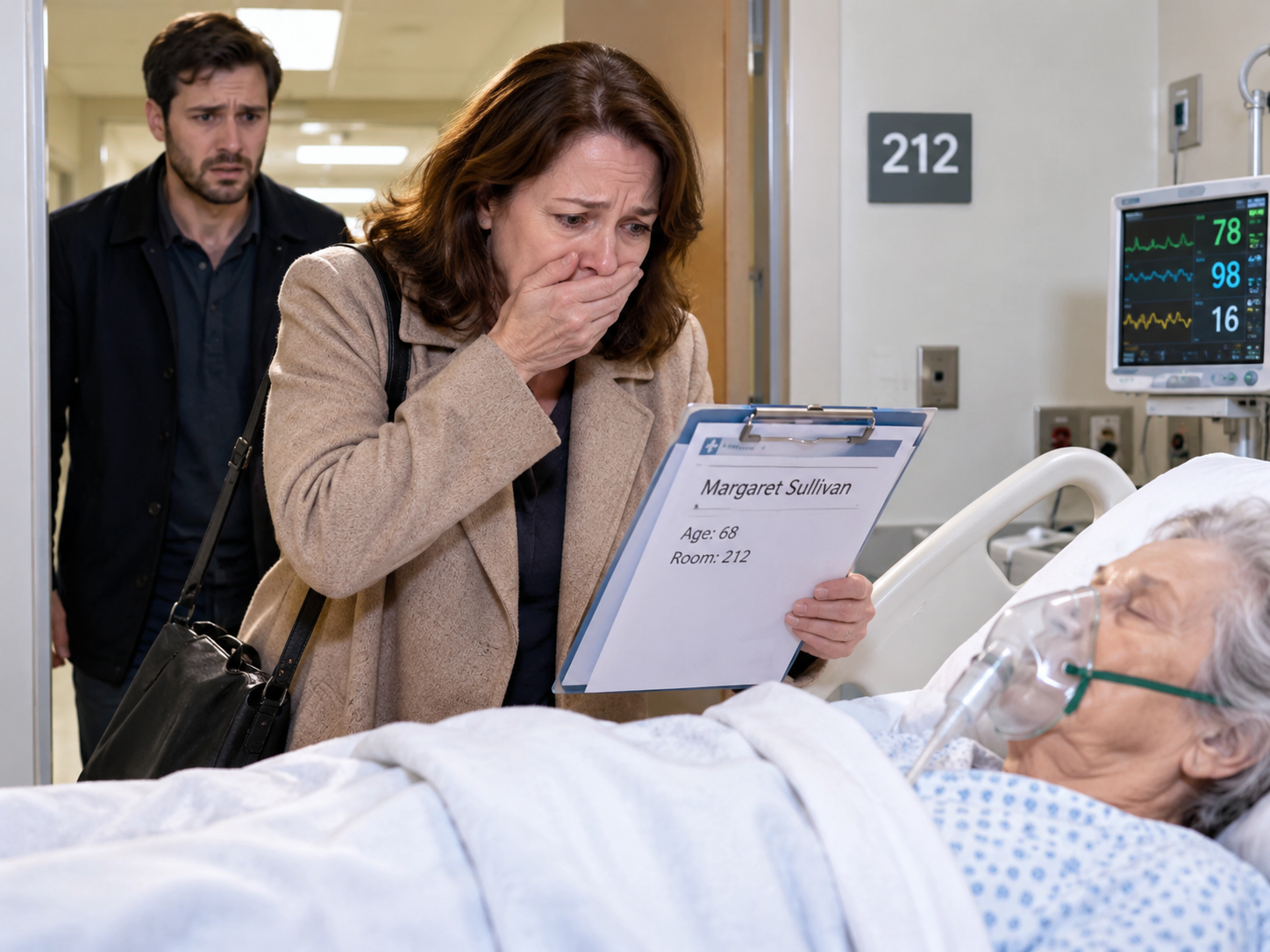
The room number was wrong, but the fear in my son-in-law’s face told me the mistake had been deliberate
Part 15 of 16

