Mateo had begun to notice how often his son watched him before trying something new. When the boy stood beside the sofa, he would glance toward Mateo as if checking whether the room was safe. When he dropped a toy and reached for it again, he sometimes looked up with a questioning expression before moving.
Mateo knew that a child this young could not understand the history between his parents. Still, watching him explore the world made Mateo think about what children learned long before adults explained anything to them. They learned from who came when they cried, who listened when they were frightened, and what happened when someone with power behaved badly.
One afternoon, while Elena was preparing lunch, Mateo sat on the living-room rug with his son. The boy was trying to fit a wooden block into a container that was slightly too narrow. Each attempt ended with a frustrated little sound, and Mateo was tempted to take the block and show him the correct angle.
Instead, he waited. After several tries, the child turned the block sideways and pushed it through the opening. His face brightened with delight, and Mateo clapped softly.
“You did it,” he said.
The boy laughed and immediately removed the block to begin again.
Mateo watched him, feeling a tenderness that was almost painful. He wanted his son to grow up believing that mistakes could be corrected, that fear could be acknowledged, and that love did not require pretending everything was fine. Those were lessons Mateo had not learned well enough when he was young.
He thought about his own childhood in the mansion. Carmela's moods had often determined the temperature of a room. If she was pleased, everyone relaxed. If she was angry, relatives adjusted their voices, changed the subject, or found reasons to leave. Mateo had learned to read the smallest signs of her displeasure and to avoid anything that might provoke her.
For years, he had mistaken that skill for maturity. He had believed that keeping the peace made him dependable, even when keeping the peace meant allowing another person to be mistreated.
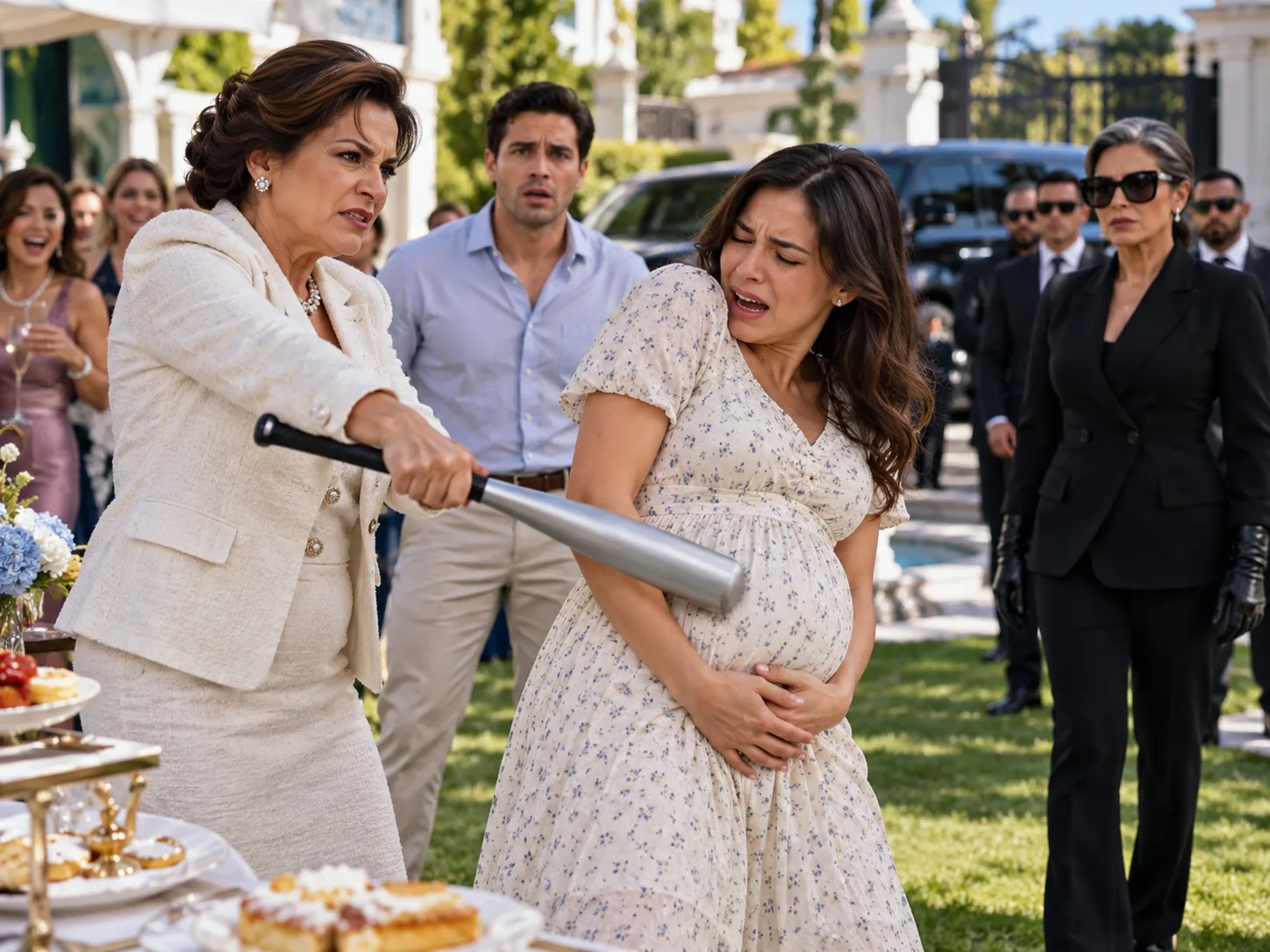
The assault had forced him to see the cost of that belief. He had been close enough to intervene, yet he had hesitated until the harm was already done. No amount of regret could change that moment, but he could choose what kind of man he would become afterward.
When Elena returned to the room, Mateo told her he wanted to speak about something. She sat in the armchair, leaving enough space between them that neither felt trapped by the conversation.
“I've been thinking about what I want our son to learn from me,” he said.
Elena waited.
“I want him to know that being afraid doesn't mean he has to let someone hurt another person. I want him to understand that respect isn't the same as obedience, and that he can love someone without agreeing with everything they do.”
“That sounds important,” Elena said.
“It is. But I also know that saying it here doesn't prove anything. I have to live it.”
She studied him. “Yes, you do.”
Mateo did not ask whether she believed he could change. He understood that asking for reassurance would place another burden on her. Instead, he explained that he had been working through the ways he had allowed his mother's anger to shape his choices. He had begun recognizing how quickly he searched for approval, even when he knew the decision he wanted to make.
“I'm not telling you this because I expect us to get back together,” he added. “I don't want you to feel that you have to reward me for doing what I should have done years ago.”
Elena looked toward their son, who was now stacking two blocks with great seriousness. “I'm glad you're thinking about it. But I need you to keep doing the work even when it doesn't change what happens between us.”
“I will.”
They spoke briefly about childcare arrangements, the upcoming medical appointment, and a few things their son needed for the next week. The conversation was not dramatic. Mateo left with a list of supplies to pick up, and Elena returned to the kitchen.
Yet something about the exchange stayed with her. He had finally separated his responsibility as a father from his desire to repair his marriage. That did not erase his earlier failures, but it made their cooperation feel more stable.
Later that month, Mateo visited the mansion to see Arturo. Carmela was present, and she raised the subject of her grandson before he had even removed his jacket. She said she could not understand why Elena continued to keep the child away and insisted that a grandmother's love should count for something.
“It does count,” Mateo answered. “But love doesn't remove the need for trust.”
Carmela told him she had already explained that she never intended to cause serious harm. Mateo replied that intention did not change what she had done or eliminate the fear Elena had experienced.
“You are making it impossible for me to move forward,” she said.
“No. You are asking Elena to move forward in the exact way that makes you most comfortable.”
Carmela's face tightened. She accused him of repeating Elena's words and allowing his wife to control him. Mateo felt the familiar pressure to defend himself, but he resisted the urge to turn the conversation into a debate about Elena's character.
“This is my responsibility too,” he said. “I stood there. I failed to protect her. I can't undo that, but I won't help you pretend it didn't happen.”
He told his mother that he would continue being present for his son and maintaining a relationship with his father, but he would not promise that Elena would return to the mansion. He would not pressure her into visits, and he would not use their child to force a reconciliation.
Carmela looked at him as though she were seeing someone unfamiliar. Perhaps she had expected anger, which she could dismiss as disrespect, or an emotional argument that she could win by raising her voice. His calm refusal left her with fewer ways to redirect the conversation.
Arturo, who had been listening from the doorway, did not interrupt. Mateo knew his father might never become the outspoken person he wished he had been, but he hoped Arturo would continue choosing honesty when it mattered.
After leaving the mansion, Mateo drove to Elena's house for his scheduled time with his son. He did not immediately tell her about the confrontation. He helped their child put on his shoes, gathered the small bag of supplies, and followed the agreed routine.
Only when he returned the boy later that afternoon did he mention that Carmela had again asked about visits.
“I told her that isn't something I can decide for you,” he said.
“Thank you.”
He nodded. He seemed relieved that she had acknowledged his response, but he did not ask for more.
That night, after returning home, Mateo sat alone at his kitchen table. He thought about the promise he had made to himself while watching his son struggle with the wooden block. He wanted the boy to grow up understanding courage, but courage could not be taught through speeches alone.
It would have to be shown in the difficult moments: when a relative demanded loyalty at the expense of truth, when a person he loved was angry with him, and when doing the right thing meant accepting that someone might never forgive him.
Mateo could not promise that he would never be afraid again. He could promise that fear would no longer be his excuse for abandoning someone who needed him.
The promise did not restore his marriage. It did not change Elena's boundaries or settle the legal process. It was simply a commitment he could carry into the next difficult choice, one that belonged to him and did not require Elena to witness or approve it.
For the first time, Mateo understood that becoming a better man was not a bargain he could make with the past. It was work he had to continue because his son deserved to see a different kind of future.
Click here to continue reading: PART 24: The Message Elena Wrote but Never Sent When She Finally Stopped Waiting for Carmela to Understand Her Pain
One Blow in the Garden Exposed the Cruelty I Had Spent Two Years Pretending Was Ordinary Family Trouble
Part 23 of 28

One Comment on “PART 23 – The Quiet Promise Mateo Made to His Son When He Finally Understood What Courage Should Have Looked Like”