A year had nearly passed since the afternoon at the mansion when Elena found herself thinking about Carmela again. It was not a special anniversary, and no new message had arrived. The memory surfaced while Elena was sorting old photographs for a small album she wanted to make for her son.
She had gathered pictures from his first months: the hospital blanket, his first bath at home, his tiny hand wrapped around her finger, and the afternoon he had fallen asleep against his grandmother's shoulder. There were photographs of Mateo holding him, too, some taken during visits when the three of them had managed to share a quiet moment without discussing the past.
Near the bottom of the box, Elena found a photograph from a family gathering at the mansion before the assault. She was standing beside Mateo, wearing a pale dress, while Carmela stood a few steps away with a smile that looked effortless. Elena remembered how hard she had worked that evening to appear comfortable, even though she had spent much of the gathering worrying about whether Carmela approved of her.
She held the photograph for a long time before setting it aside.
For a moment, she wanted to write to Carmela. She imagined explaining everything that had remained unsaid: how frightened she had been, how lonely it felt to watch Mateo hesitate, how the hospital lights had made every minute seem endless, and how much it hurt that the family had discussed the consequences of the incident more readily than the act itself.
Elena opened a blank message on her phone.
She began by writing that she had never wanted to destroy the Villalobos family. She had wanted to marry Mateo, build a home, and be welcomed as someone who belonged. She had not hidden her mother's success to deceive anyone; she had wanted to be judged by her own character rather than by money or status.
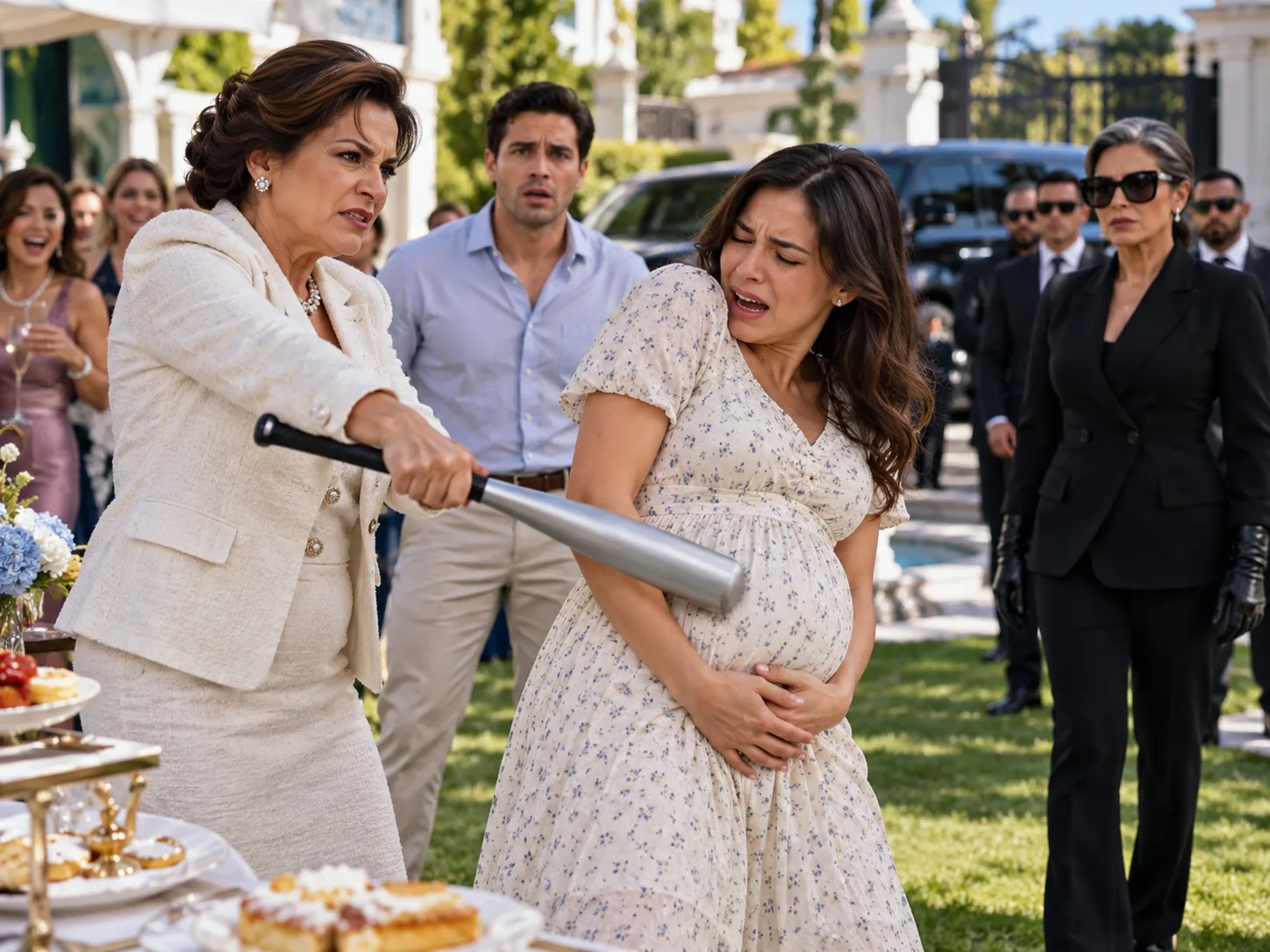
She wrote about the lunch, the bat, and the terror that her unborn son might be injured. She described how Carmela's words afterward had made her feel as though even her pain was an inconvenience. She wrote that the most damaging part had not been the family failing to stop the assault alone, but the expectation that Elena would eventually help everyone forget it.
The message grew longer. Elena corrected sentences, removed an angry phrase, and then added it back in different words. She tried to find language that would be direct without being cruel, honest without becoming a plea, and firm without leaving room for another argument about whether she had misunderstood.
After nearly an hour, she stopped typing.
The message was several paragraphs long, but she could already imagine Carmela's response. Perhaps she would deny some details, focus on a phrase she disliked, or reply that Elena had always been too sensitive. Perhaps she would send it to relatives and describe it as proof that Elena was determined to keep the conflict alive.
Elena realized that she had been writing as though the right combination of words might finally unlock a door that Carmela had chosen to keep closed.
She did not need to send the message to know what she believed.
She copied the text into a private document and saved it for herself. Then she closed the application without sending anything. The decision did not come from fear or a desire to protect Carmela. It came from recognizing that she no longer needed to place her most vulnerable thoughts in the hands of someone who might use them to avoid responsibility.
Her son woke from his nap and called out from the bedroom. Elena went to him, lifted him from his crib, and carried him to the living room. He had begun using a few simple words, and he pointed excitedly toward the window, where a bird had landed on the garden wall.
She followed his gaze and smiled. His world was expanding, filled with small discoveries that had nothing to do with the family conflict that had shaped so much of his first year.
That evening, her mother came over for dinner. Elena told her about the photograph and the message she had written but not sent.
“Do you feel better?” her mother asked.
“Not exactly,” Elena answered. “But I don't feel like I have to send it anymore.”
Her mother nodded. “Sometimes writing something is enough to help you understand what you need to say to yourself.”
Elena thought about that after her mother left. She had spent months wanting Carmela to understand the damage she had caused, and she still wished that acknowledgment might someday come. But she could not make her peace depend on a response she did not control.
The next morning, she received a message from Mateo asking whether they could speak briefly after his visit with their son. She agreed, and he came by that afternoon after returning the boy.
They sat at the kitchen table while their son played nearby. Mateo explained that Carmela had recently asked him whether Elena had ever spoken about the possibility of reconciliation. He told his mother that he could not answer for Elena and would not encourage her to believe that silence meant the answer was changing.
“I told her that if you ever want to speak with her, you'll decide that yourself,” he said. “I also told her that an apology would have to be about what she did, not about how long she's been kept away from him.”
Elena absorbed the words. “How did she react?”
“She said I was making everything harder. Then she said she had already apologized.”
“Did you ask her what she was apologizing for?”
“Yes.”
“And?”
Mateo looked down. “She said she was sorry the family had been hurt by everything that happened.”
Elena let out a slow breath. The answer was so familiar that it almost no longer surprised her. Carmela could acknowledge sadness, distance, embarrassment, and loss. She still struggled to acknowledge the act that had caused those consequences.
“I don't know if she'll ever understand,” Elena said.
“I don't know either.”
They sat quietly for a moment. Mateo did not ask Elena to send her message or offer another chance. He seemed to understand that this was not a problem he could solve on her behalf.
Before he left, he asked whether she needed anything for their son. They discussed the upcoming week and confirmed the next visit. The conversation ended peacefully, without either of them pretending that the marriage had been restored.
After the door closed, Elena returned to the photograph box. She selected pictures for the album, including the image of herself and Mateo at the mansion. She did not destroy the photograph or hide it away. It was part of her history, and she no longer felt compelled to erase every reminder of the life she had once hoped to build.
But she chose not to place it at the beginning of her son's album. Instead, she started with the photograph taken at the hospital after his birth, when her mother stood beside the bed and Mateo held the baby carefully in his arms. The image was not perfect; everyone looked tired, and Elena's hair was untidy. Yet it captured something real: a new life arriving amid uncertainty, surrounded by people who were trying, in different ways, to care for him.
She added pictures of his first birthday, his earliest steps, and the ordinary afternoons that had become the foundation of their home. The album did not tell a story in which everyone learned the right lesson and came together at last. It showed a child growing, a mother recovering, and a family learning to exist in a shape none of them had originally imagined.
That night, Elena opened the private document one last time. She read the message she had written to Carmela and recognized the anger, grief, and longing in every paragraph. She did not condemn herself for feeling any of it.
Then she closed the document.
She was not ready to invite Carmela into her son's life. She was not ready to return to the mansion, and she was not willing to pretend that an incomplete apology had repaired what happened. If those decisions changed someday, they would change because the circumstances and behavior gave her a genuine reason to reconsider, not because the family grew impatient.
Elena switched off the kitchen light and checked on her sleeping son. She stood beside his bed for a moment, listening to his calm breathing, then pulled the blanket gently over his legs.
She still hoped that the people who had hurt her might one day understand the truth. But she no longer needed that understanding to make her own memories valid, her boundaries reasonable, or her future worth protecting.
The message remained unsent, and that was enough. Some words were written to reach another person. Others were written so the person carrying them could finally hear herself.
Click here to continue reading: PART 25: The Afternoon Carmela Finally Faced the Consequences of Her Own Words Without Elena Standing There to Absorb Them
One Blow in the Garden Exposed the Cruelty I Had Spent Two Years Pretending Was Ordinary Family Trouble
Part 24 of 28