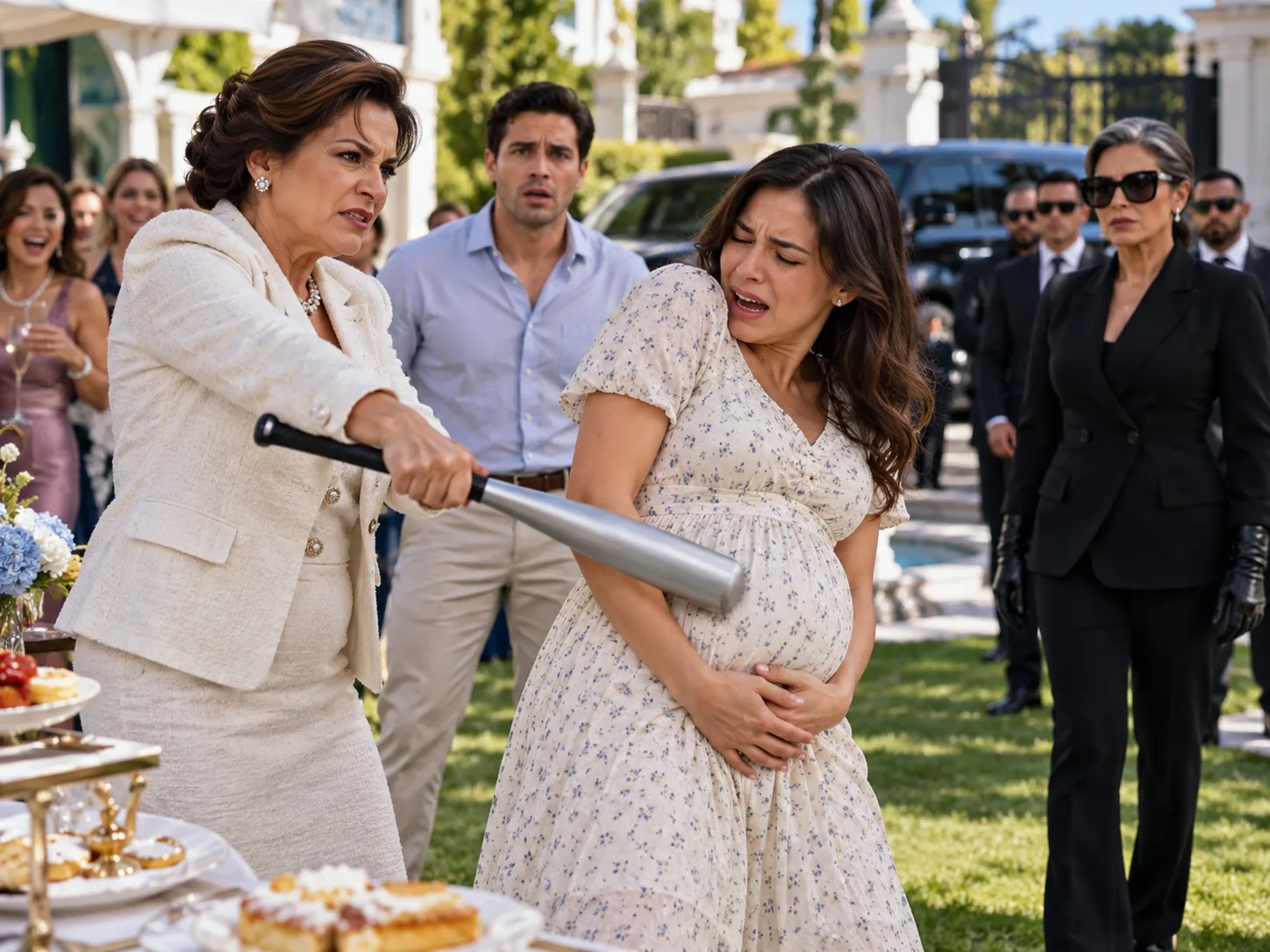
The first letter from Mateo's lawyer arrived on a Thursday morning, tucked inside an envelope that looked far too formal for a matter that had once been discussed in whispers across the Villalobos dining table. I was sitting with my mother, sorting through the documents I had collected since the assault, when the courier rang the bell. My name appeared on the envelope, followed by a request for a meeting to discuss the future of my marriage and arrangements for our unborn son.
I read the letter twice. It was polite, carefully worded, and almost entirely free of emotion. Mateo wanted to resolve our differences privately, the letter explained, and hoped to avoid unnecessary conflict between the families. There was no mention of the bat, no mention of the hospital, and no acknowledgment that I had been forced to leave the mansion because I no longer felt safe there.
My mother watched me set the letter on the table.
“What do you want to do?” she asked.
“I want him to stop describing this as a disagreement.”
“Then that is what your reply should say.”
I had once relied on Mateo to explain my position to his family. I would tell him what Carmela had said, how a remark had hurt me, or why I dreaded another gathering, and he would promise to speak to her. Somehow, those conversations always ended with him asking me to be patient. I had become the translator of my own pain, turning every insult into a reasonable request so that he could deliver it without offending his mother.
This time, I wrote the response myself. I said I was willing to discuss practical arrangements and the future of our child, but I would not agree to a private settlement that required me to minimize the assault or abandon any lawful option available to me. I also made clear that I would not meet Carmela alone or return to the mansion under pressure.
The lawyer reviewed the wording before it was sent. When I placed the signed copy in the outgoing envelope, my hands were steady. It was a small act, almost disappointingly ordinary, but it felt different from every compromise I had made before. I was not trying to make the truth easier for Mateo to hear. I was stating what I needed and allowing him to decide whether he could respect it.
His reply came the next evening. He asked if we could meet at a neutral location and speak without lawyers present. He promised he would not bring his mother or ask me to return to the house. After discussing it with my lawyer, I agreed to a short meeting in a public café, with my mother nearby and a clear plan for leaving whenever I wished.
Mateo arrived early. He stood when I entered, then seemed unsure whether to embrace me. I took the chair across from him, placed my handbag beside my feet, and waited for him to speak.
“You look tired,” he said.
“I am.”
He studied my face as if searching for the woman who used to reassure him whenever he felt guilty. When he found no easy opening, he folded his hands on the table.
“I've been thinking about what you said. About the garden. About how long you've been asking me to stand up for you.”
I said nothing.
“I used to tell myself I was keeping the peace. I thought if I didn't challenge Mom in front of everyone, I could deal with her afterward. I convinced myself that was the sensible way to handle things.”
“And what do you think now?”
“That I was protecting myself. Not you.”
It was the clearest admission he had ever made. For a moment, the familiar tenderness between us returned, bringing with it the memory of our early years together, when we had laughed over cheap dinners and talked about the home we wanted to build. I remembered the way he used to reach for my hand in crowded places. I remembered believing that if we loved each other enough, we could withstand any family problem.
I also remembered the bat hitting my side.
“Why did you wait until I was hurt?” I asked.
His eyes lowered. “Because I was afraid of her.”
“Of what she would say?”
“Of what she could do to my life. The family business, the money, the house. She's always made it clear that disagreement has a price.”
I watched him struggle to say the rest. He had grown up learning that Carmela's approval could be withdrawn without warning, that a disagreement at breakfast might become a family crisis by dinner. I understood, more than I wanted to, how a person could become accustomed to avoiding her anger. But understanding the origin of his fear did not make me responsible for the consequences of it.
“You knew she treated me badly,” I said. “You knew I was frightened of her. You let me keep returning to that house because it was easier for you than telling her no.”
“I know.”
“And when she raised the bat, you still waited.”
He pressed his fingertips against his eyes. “I don't know how to forgive myself for that.”
“I can't do that work for you, Mateo.”
He nodded, though his face tightened as if he had hoped for a different answer.
He told me he had moved into a separate room at the mansion and had refused to let his mother contact me directly. He said Arturo had been trying to persuade Carmela to acknowledge the seriousness of what she had done. According to Mateo, she remained convinced that the family was being punished for one afternoon of poor judgment.
“She thinks your mother has turned you against us,” he said.
“My mother didn't make me leave.”
“I know.”
“I left because I was afraid to stay.”
He looked at me for a long time. “I wish I had understood that sooner.”
“So do I.”
The waiter brought our drinks, interrupting the silence. Mateo thanked him automatically, then stared into his coffee without touching it. He said he wanted to repair our marriage and that he was willing to attend counseling. He would find another place for us to live, he said, somewhere Carmela could not enter without permission. He would set boundaries with his mother, even if she refused to accept them.
Those were the promises I had once wanted to hear. They were sensible promises, too. If he followed through, they might create a healthier life for our child. But I had learned how easy it was for Mateo to make promises when the immediate danger had passed and the cost of keeping them remained uncertain.
“I won't make a decision today,” I told him.
“I understand.”
“Do you? Because I don't want you to treat this meeting as proof that we're getting back together.”
“I won't.”
I wanted to believe him. I also knew that the next few weeks would reveal more than this conversation could.
Before we left, Mateo asked whether he could attend my next prenatal appointment. I told him I would discuss it with my doctor and decide closer to the date. He accepted the answer without arguing. It was a small change, but I noticed it.
Outside the café, my mother waited beside her car. She did not ask whether Mateo had cried or apologized. She asked whether I felt comfortable and whether I wanted to go straight home. I said I wanted to take a short walk first. We moved slowly along the pavement, and she matched my pace without reminding me to be careful.
“I still love him,” I admitted.
My mother nodded. “You don't have to deny that to protect yourself.”
“I thought leaving would make the feelings disappear.”
“Feelings don't always follow the decisions we need to make.”
I leaned against the low wall beside the street and watched people cross at the lights. It would have been easier if Mateo had become a stranger the moment his mother struck me. Instead, I carried affection, anger, grief, and fear together. Some days I wanted him to change. Other days I wished I had never married into his family. Most days I was simply trying to build a future that did not depend on predicting which version of him would appear when the next difficult moment came.
That evening, he sent me a message confirming that he would respect my decision about reconciliation. He also wrote that he had arranged for a professional counselor to provide information about individual and couples sessions, should I ever want to consider them.
I thanked him for the information and told him I would decide when I was ready.
Then I put the phone away and returned to the nursery my mother had helped me prepare. The walls were a soft, pale color, and the small cot stood near the window. A stack of folded baby clothes rested on a shelf. I had chosen each item carefully, imagining the boy who would soon wear them, but I had not yet written a name on the little card beside the cot.
For weeks, I had imagined his future through the shadow of the mansion. I pictured Carmela criticizing how I held him, Mateo asking me to ignore her, and relatives laughing nervously when she made another cutting remark. Now, for the first time, I let myself imagine a different scene: my son asleep in a quiet room, his needs taken seriously, his mother allowed to say no without being punished for it.
I did not know whether Mateo could become the father that scene required. I hoped he could. But I no longer planned my life around the hope that he might.
The next morning, my lawyer called to discuss the progress of the formal report. The authorities had received the initial information, and further steps would depend on their assessment and any additional evidence they gathered. I was asked to preserve the original messages and remain available if they needed clarification. I agreed, then placed the relevant documents in a folder separate from my prenatal records.
For the first time since leaving the mansion, I felt that the different parts of my life were no longer tangled together. My health belonged with my medical team. My legal options belonged in discussions with my lawyer. My marriage required decisions that I would make at my own pace. And my son's future would not be used as a reason to silence me.
When I closed the folder, my phone lit up again.
It was a message from Mateo.
Mom wants to speak to you. I told her she has to respect your answer if you say no.
I read the message once, then set the phone down without replying. Carmela had spent years believing she could decide when I listened, when I spoke, and when I forgave. She had not yet learned that an invitation was not an order.
I was beginning to learn that I did not have to answer every demand simply because it came from the family I had married into.
Click here to continue reading: PART 6: Carmela Arrived Expecting Forgiveness, but the First Question Elena Asked Her Was One She Could Not Answer Away
One Blow in the Garden Exposed the Cruelty I Had Spent Two Years Pretending Was Ordinary Family Trouble
Part 5 of 28