
The first cold morning of November arrived with a thin layer of frost on the lawn. I noticed it while making coffee, watching the grass turn silver beneath the early light. The plant beside the window had stopped growing as quickly, and I moved it farther from the glass to protect it from the cold. The small routine reminded me how much time had passed since I first heard that someone was screaming inside my house.
A year earlier, I had stood at the kitchen counter holding Mark's blue mug and wondering whether I was losing my mind. I had searched every room, checked every window, and tried to explain away the unease that had settled over the house. I had believed the locks and the familiar furniture were proof that nothing had changed.
Now I understood that the house had never been the source of the danger. It had been the place where I finally discovered it.
The distinction changed how I remembered that morning. I no longer thought of myself as a frightened woman hiding beneath a bed, waiting for someone to leave. I remembered the fear, but I also remembered the decision to stay, observe, and preserve the evidence. I had not known what I would discover. I had acted because something was wrong.
At work, the new review procedures had been adopted by several teams. We received feedback from colleagues who found that the checklist helped identify missing records earlier in the process. It did not eliminate mistakes, and it could not prevent deliberate fraud by itself, but it encouraged analysts to verify the circumstances surrounding important financial decisions rather than treating a signature as the end of the inquiry.
My supervisor asked whether I would be willing to help evaluate the procedure after six months. I agreed. The project had become a meaningful part of my work, and I enjoyed collaborating with colleagues who were committed to improving the process. I had discovered that professional confidence could return through ordinary achievements, without requiring me to forget the personal experience that had made the work feel important.
During one meeting, Rebecca, the trainee I had mentored, presented a case in which an authorization appeared complete but the supporting documents did not match the client's instructions. She had paused the review, contacted the appropriate parties, and obtained confirmation before approving the change. Her explanation was clear and measured.
After the meeting, she thanked me for teaching her to look beyond the signature. I told her she had done the important work herself. She had noticed the discrepancy, asked questions, and followed the evidence. I was proud of her, but I did not need to take credit for her judgment.
The exchange stayed with me because it reminded me that trust and scrutiny did not have to be opposites. A careful review did not mean assuming everyone was dishonest. It meant recognizing that people deserved to have important decisions handled accurately, whether they were clients, beneficiaries, or colleagues.
At home, I prepared for the holiday season. I bought a small wreath for the front door and arranged a few candles on the dining table. I did not decorate the house as Mark and I once had, because the old traditions no longer felt necessary. Instead, I chose simple things I liked and invited Elaine to help me prepare dinner for a small group of friends.
Mrs. Gable stopped by one afternoon with a container of homemade biscuits. She noticed the wreath and said the house looked welcoming. I thanked her and offered her a cup of coffee. We sat at the kitchen table, discussing the colder weather and the repairs she planned to make before winter.
Before she left, she glanced toward the hallway.
“I still think about that day sometimes,” she said. “When I told you about the screams.”
“So do I.”
“I wondered whether I should have called the police first instead of confronting you.”
“You were trying to make sure someone was safe. You couldn't have known what was happening.”
She nodded, then looked at me directly. “I'm glad you listened.”
I was glad too. Her warning had disrupted the quiet life I believed I understood, but it had also given me the first chance to discover the truth. I thanked her for speaking up, and she waved away the compliment as if it were nothing more than a neighborly favor.
After she left, I stood in the doorway for a moment and watched her walk back to her house. The street looked ordinary: parked cars, bare branches, and porch lights beginning to glow. I had once interpreted the ordinary appearance of my neighborhood as evidence that my own home was safe. Now I understood that ordinary appearances told only part of a story. Still, I no longer felt the need to inspect every detail for hidden meaning.
The days grew shorter, and the house filled with the small tasks of the season. I cleaned the cupboards, replaced a faulty bulb in the hallway, and sorted the mail before it accumulated on the counter. I made plans with Elaine and confirmed the dates for my next professional review meeting. Life continued through practical decisions, each one modest enough to seem insignificant until I looked back and realized how much had changed.
A letter from my attorney arrived in mid-November, confirming that there were no outstanding requests for documents or statements from me. The remaining legal proceedings were being handled without further action on my part. She advised me to keep the case records secure but said there was no reason to continue reviewing them unless a specific question arose.
I placed the letter in the cabinet and closed the door.
For a moment, I stood with my hand on the handle, thinking about the months I had spent opening folders and reading the same documents again and again. I had once believed that if I studied the evidence closely enough, I would find a sentence that explained everything. I had learned the facts, but the emotional work had required something different. I had needed time to accept that no document could tell me exactly what Mark had felt or what he might have done if he had made different choices.
The cabinet stayed closed.
That evening, I called Margaret to see how her family was managing the approach of the holidays. She told me they had decided to gather at her mother's house and share stories about Peter. They planned to display the postcards he had sent over the years, including the one about the diner and the mechanic who had helped him on the road.
“He always remembered people's names,” she said. “Even strangers who helped him for five minutes. My mother wants to read some of his postcards aloud.”
I smiled at the thought. Peter's family had begun building a way to remember him that was not defined entirely by the circumstances of his death. I told Margaret that I hoped the gathering would bring them comfort.
She asked whether I had made plans for the holiday. I explained that Elaine and a few friends would be coming to my house. I was cooking dinner, and everyone had agreed to bring something. It would be different from the gatherings I had once shared with Mark's family, but I was looking forward to it.
When the call ended, I began preparing a list of ingredients. I wrote down vegetables, bread, coffee, and a few things I needed for dessert. The list was ordinary, but it belonged to a future I was choosing rather than a plan someone else had made for me.
On the morning of the gathering, I woke early and began cooking. The kitchen filled with the smell of onions, herbs, and warm bread. I set the table with dishes I had collected over the years, including the blue ceramic bowl I had bought at the market. I placed a small vase of flowers in the center and stepped back to check that there was enough room for everyone.
For a moment, I remembered the white lilies from Mark's funeral. The memory came sharply, carrying the image of the coffin and the faces of people who had told me I needed to be strong. I paused, resting my hands on the edge of the table.
Then I looked at the flowers in front of me. They were fresh, ordinary flowers chosen for a dinner among friends. They did not have to represent death or grief. They could simply be beautiful.
The doorbell rang, and Elaine arrived carrying a tray of food. Other guests followed, bringing bottles of sparkling water, salads, and dessert. The house filled with conversation and the sound of people moving between the kitchen and dining room. Someone laughed in the hallway, and another guest asked where I had found the ceramic bowl.
We ate, talked, and lingered over coffee. The conversation wandered through work, family, and travel plans. At one point, Elaine raised her glass and thanked everyone for coming. She did not make a speech about my recovery or mention the investigation. She simply said that she was grateful to have good people around her.
I felt grateful too. The evening did not erase the past, but it gave the house a new memory. The rooms that had once held secrecy and fear were now filled with ordinary warmth. I could hear voices without wondering whether someone was hiding a message inside them.
After the guests left, Elaine stayed to help me wash the dishes. We worked side by side, drying plates and putting away leftovers. When we finished, she looked around the kitchen and smiled.
“You seem happy,” she said.
“I think I am.”
“Good.”
She hugged me before leaving. I stood at the door and watched her car pull away, then locked the door and returned to the kitchen. The house was quiet again, but the silence felt different. It followed a day I had chosen, shared with people I trusted, rather than a day spent waiting for a secret to reveal itself.
I turned off the kitchen light and went upstairs.
The bedroom was cool, and the soft gray-blue walls looked pale beneath the lamp. I placed my book on the nightstand and opened the curtains slightly to let the moonlight in. The chair beside the window stood where I had moved it, and the dresser held only the things I used.
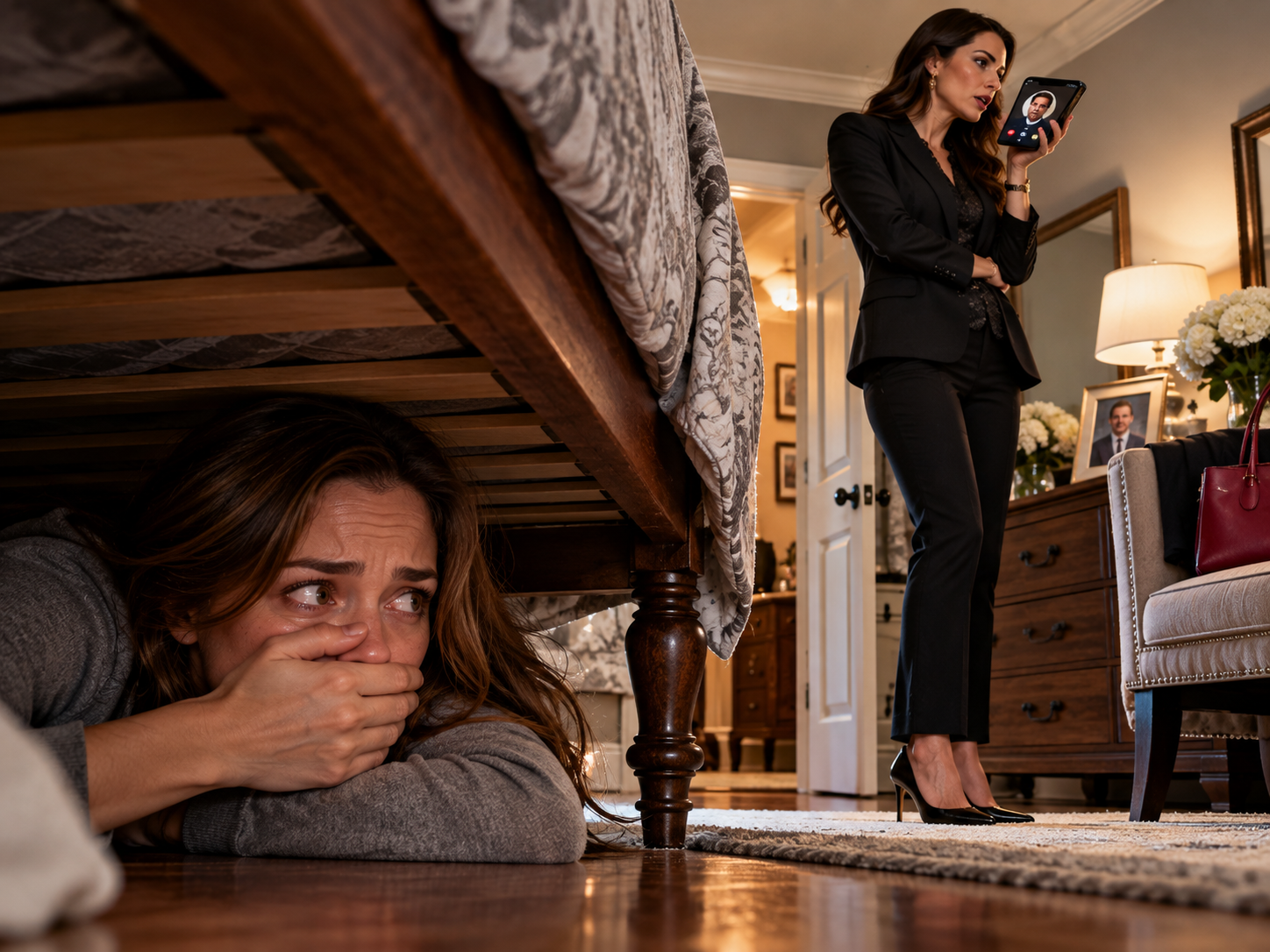
I remembered the moment beneath the bed when Vanessa's heels had stopped beside my face. I remembered the voice from the phone, the impossible sound of Mark speaking after two years of mourning. I could still feel the fear, but I no longer felt trapped inside that moment.
The woman who had hidden there had not known what would happen next. She had believed her life was secure because the locks were intact and the rooms were familiar. When the evidence contradicted that belief, she had been frightened enough to doubt herself but determined enough to seek the truth.
I was still that woman. I had not become someone who never felt afraid or never made mistakes. I had become someone who could act despite uncertainty, ask for help when necessary, and refuse to accept another person's explanation merely because it was more comfortable than the truth.
That knowledge mattered more than any final apology Mark could have offered.
I turned off the lamp and settled beneath the covers. The house creaked softly as the temperature dropped. I heard the refrigerator hum downstairs and a car pass on the street. The sounds were familiar, and I let them remain what they were.
I did not need to investigate the night.
I did not need to know whether Mark regretted every choice or whether he understood the damage he had caused. Those questions belonged to him. My life belonged to me.
In the morning, I would return to work, check on the plant by the window, and decide what to cook for dinner. I would continue helping my colleagues, meeting Elaine, and making plans that reached beyond the next legal update. I would remember Peter's family and hope that they found comfort in the stories they were gathering. I would keep the records that mattered and leave the rest in the past.
None of that would change what had happened. It would change what happened next.
I closed my eyes and listened to the quiet house, no longer waiting for the voice of a dead man to tell me what my life meant.
The truth had taken away the future I once imagined with Mark, but it had not taken away my ability to build another one.
And for the first time, I was no longer afraid to begin.
Click here to continue reading: PART 17: The Life That No Longer Needed an Explanation
The Woman Who Entered My House Without Knocking Knew My Husband’s Habits Better Than Anyone Should
Part 16 of 20

