
The first Monday in my new position began with a stack of disputed claims, a meeting scheduled before nine, and an email from a colleague who wanted me to approve a beneficiary change that had been submitted without the supporting documents. Under ordinary circumstances, I would have returned the file with a request for clarification. Instead, I found myself reading the attached authorization twice, checking the dates, and wondering whether the person whose name appeared beneath the signature had understood what they were agreeing to.
I had become more careful since Mark's deception came to light. That caution had helped me identify problems other analysts might have overlooked, but I was learning that vigilance could become its own trap. I did not want to approach every file as if someone were hiding a crime. My responsibility was to examine the evidence fairly, not to transfer my personal experience onto strangers.
I called the colleague who had submitted the claim and asked about the missing documents. He explained that the client had recently changed financial representatives and that the new authorization had been sent separately. He had assumed the attachment would arrive later. I requested the missing material, documented the gap, and moved on to the next file.
Nothing sinister emerged. The authorization was eventually verified, the client confirmed the change, and the claim proceeded normally. Yet the incident stayed with me because it reminded me how easily suspicion could become a habit. Mark had taught me that trust without scrutiny could be dangerous. He had not taught me that everyone deserved suspicion.
During my first month in the position, I helped train three newer analysts. I explained how to compare signatures, verify authority, and recognize unexplained changes in account instructions. I also told them that a discrepancy was a reason to ask questions, not proof that someone had done something wrong. The distinction mattered. An investigation could damage an innocent person's reputation just as surely as ignoring evidence could allow a dishonest person to benefit.
One afternoon, a trainee named Rebecca asked why I was so particular about the circumstances surrounding a signature. She had noticed that I always wanted to know when a document had been presented, who had explained it, and whether the supporting pages had been available.
I considered giving her a general answer about professional standards. Instead, I told her that I had once signed a financial authorization without understanding its full contents because someone I trusted had assured me that it was routine. That trust had been used against me, and the consequences had reached far beyond my own finances.
Rebecca listened carefully. I did not describe the entire investigation or tell her details she did not need to know. I explained only that paperwork could look complete while concealing a serious misunderstanding between the person signing it and the person benefiting from it.
“So the signature isn't enough?” she asked.
“It's evidence of a signature,” I replied. “It isn't always evidence that someone understood what they were signing.”
She wrote the sentence in her notebook. I hoped she would remember it without learning the lesson in the painful way I had.
At home, my life continued along a quieter path. The plant Mrs. Gable had given me grew new leaves near the kitchen window. I watered it before work and moved it away from the glass when the afternoon sun became too strong. The blue mug remained in the cupboard, and I used it on mornings when I wanted coffee in something familiar.
I had stopped checking the lock repeatedly, but I still checked it once before bed. That small precaution no longer felt like fear. It was simply part of looking after the house. I had learned that recovery did not require me to abandon common sense or pretend that the past had never happened.
In early summer, Elaine invited me to a small gathering at her home. Several friends from work were coming, along with a couple she knew from a volunteer group. I almost declined because I had grown accustomed to spending weekends quietly, but I decided to go. I bought a dessert on the way and arrived just as the others were settling around the patio table.
The conversation moved easily between work, travel, and the usual complaints about rising prices. Someone asked whether I had always lived in Cherry Hill, and I told them about the house and the years I had spent there with Mark. I did not feel obligated to explain how the marriage had ended. When another guest asked whether I planned to travel more, I said I was considering a trip to the coast later in the year.
The answer surprised me. A year earlier, I had struggled to imagine plans that extended beyond the next bill or appointment. Now I could think about taking time off without feeling that I was neglecting some unresolved problem.
On the drive home, I realized I had gone several hours without thinking about the investigation. The realization made me smile, then immediately made me wonder whether I was forgetting something important. I caught myself and let the thought pass. The authorities had the evidence, my attorney had the records, and I had completed the work required of me. I did not need to remain mentally inside the case to prove that I cared about what had happened.
Two weeks later, I received an unexpected call from Margaret Shaw. She apologized for interrupting my evening and said she had been thinking about our earlier conversation. Her family had begun clearing Peter's room, a process that had been difficult but necessary. She had found a collection of postcards he had sent during his travels and wanted to tell me about them.
I listened as she described a postcard from a small town in Pennsylvania, where Peter had stopped during a delivery. He had written about a diner that served excellent coffee and a mechanic who had helped him repair a loose part on his truck. The message was ordinary, but Margaret said her mother had kept it on the refrigerator for years because Peter had called home that same evening.
“He was always sending us little things,” she said. “We used to tease him about it. We thought he'd never stop collecting postcards.”
I pictured the photograph she had shown me, Peter smiling beside his truck. I was glad his family had begun recovering details of his life that had nothing to do with Mark's disappearance. The truth about the accident would remain part of Peter's story, but it would no longer be the only thing his family knew about his final journey.
Margaret asked whether I had ever found out why Mark had chosen Peter. I told her that the records suggested a planned meeting and that Mark had admitted using the confusion surrounding the crash to conceal his identity. Beyond that, I had no reliable information. I could not tell her whether Peter had understood the plan or whether Mark had deliberately placed him in danger.
“I wish there were a better answer,” I said.
“So do I,” she replied. “But I don't want to build another story out of guesses. We spent too long doing that.”
Her words stayed with me. I had once filled the gaps in Mark's disappearance with assumptions because the alternative was too painful to face. I had imagined the accident, the hospital, and the final moments of a man whose body I had never properly identified. Those imaginings had felt real because grief needed somewhere to go.
I understood why Margaret wanted certainty. I also understood why she had decided not to accept a comforting explanation without evidence. Some questions could remain unanswered without being replaced by speculation.
After we ended the call, I went into the spare room and opened the album containing photographs from my marriage. I did not look for hidden clues. I turned a few pages, paused at a photograph from a vacation, and then closed the album. The pictures belonged to a time when I had understood very little about the person beside me. They still belonged to my life, but they no longer demanded that I defend or condemn every moment.
The following week, I attended a professional meeting about improving the review of complex financial claims. My team presented the checklist we had developed, explaining how to verify beneficiary changes and identify missing supporting documents. The discussion was practical, and the feedback was encouraging. Several colleagues suggested that the checklist be adopted by other departments.
After the meeting, my supervisor told me that the work had made a useful contribution to the organization. She asked whether I would consider helping lead a broader review of the procedures.
I said I would think about it. The opportunity appealed to me, but I wanted to be certain I was accepting it because I wanted the responsibility, not because I felt compelled to turn a painful experience into something productive. I had spent enough time believing that every hardship needed to justify itself by teaching me a lesson.
That evening, I sat at the kitchen table and considered the offer. I could accept the additional work and learn something new, or I could remain in my current role and give myself more time to settle into the position I had recently earned. Neither choice would prove anything about my recovery. Both were reasonable.
I decided to accept, with an agreement that the additional responsibilities would be reviewed after several months. I wanted the opportunity, but I also wanted to protect the balance I had worked hard to establish.
When I told Elaine, she congratulated me and asked whether I was excited.
“Yes,” I said. “And a little nervous.”
“Good. It means you're doing something new.”
Her answer made me laugh. I had become so accustomed to interpreting nervousness as a warning that I had forgotten it could also accompany ordinary change.
By the end of summer, the house had begun to feel entirely familiar again. The repaired blue mug stood beside the other dishes, the plant had grown enough to require a larger pot, and the bedroom no longer carried the atmosphere of a place where I had been trapped. I sometimes remembered Vanessa's footsteps and Mark's voice, but the memories arrived without taking over the room.
I had not forgiven Mark for his deception. I did not need to. Forgiveness had become less important to me than understanding where my responsibility ended. I could acknowledge that he had once been my husband and that our marriage had contained genuine moments of affection. I could also acknowledge that he had chosen to manipulate me, conceal his identity, and use another man's death to protect himself.
Those truths could exist together without requiring me to return to him emotionally.
One evening, as I watered the plant beside the kitchen window, I noticed a new leaf unfolding at the tip of a stem. It was small and pale, barely separated from the bud around it. I touched the edge of the pot and smiled at the ordinary evidence of growth.
There was nothing mysterious about the plant. It had not appeared overnight or survived through some impossible act. It had grown because I had cared for it, adjusted its position, and given it what it needed.
I carried that thought upstairs and prepared for bed. I checked the front door once, turned off the hallway light, and closed the bedroom curtains. The house settled around me with its familiar creaks and distant mechanical sounds.
I no longer needed the silence to prove that nothing was wrong. I could live in the house without demanding that every sound explain itself.
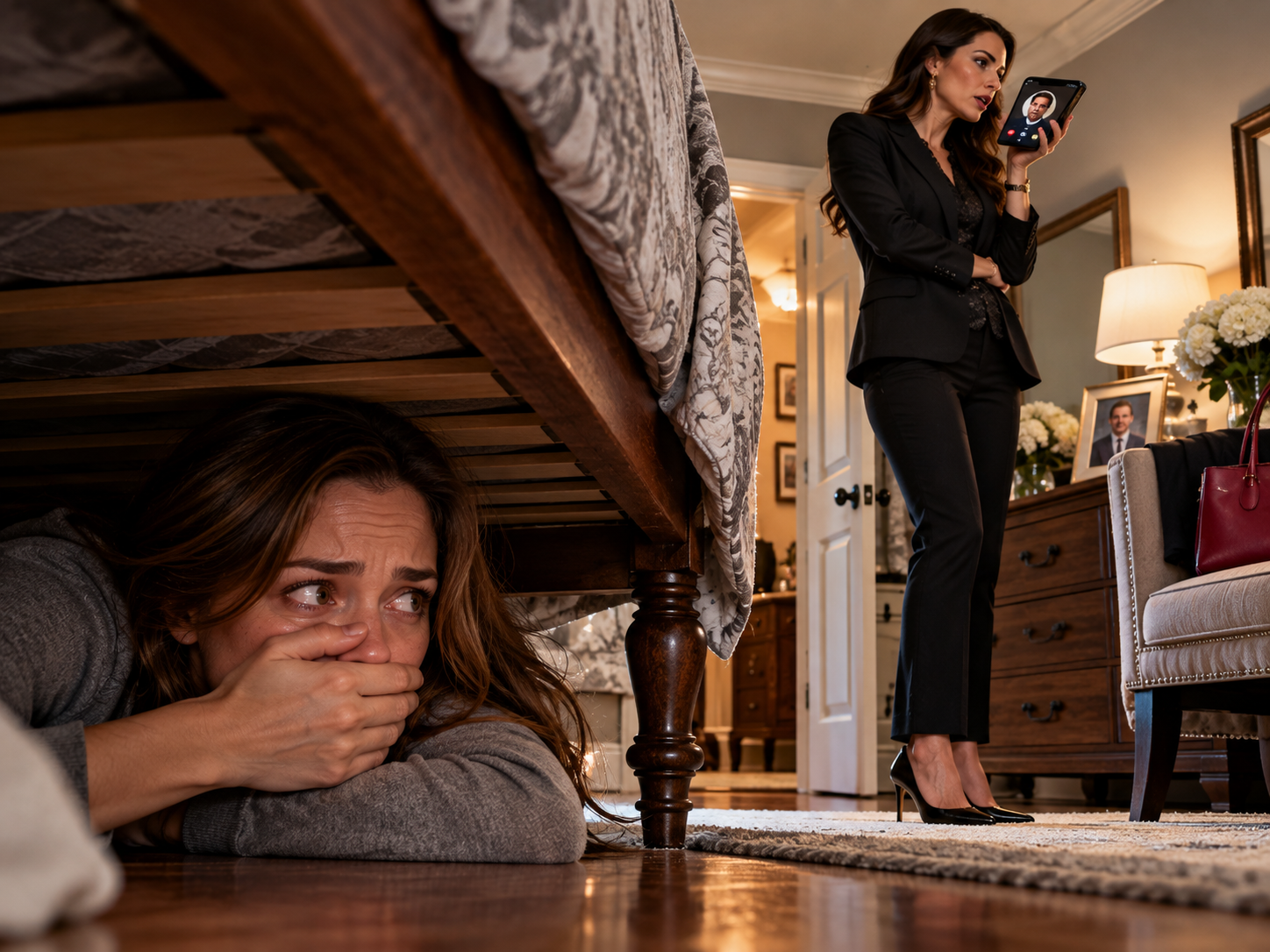
And when I lay down that night, I did not think about the woman who had entered my bedroom or the voice that had come through her phone.
I thought about the meeting I would lead the next morning, the trip I hoped to take in autumn, and the book waiting on my nightstand.
For once, the next day belonged entirely to me.
Click here to continue reading: PART 14: An Ordinary Invitation Opened a Door to a Future I Had Avoided, While a Familiar Voice Reminded Me That Healing Did Not Mean Forgetting
The Woman Who Entered My House Without Knocking Knew My Husband’s Habits Better Than Anyone Should
Part 13 of 20

