
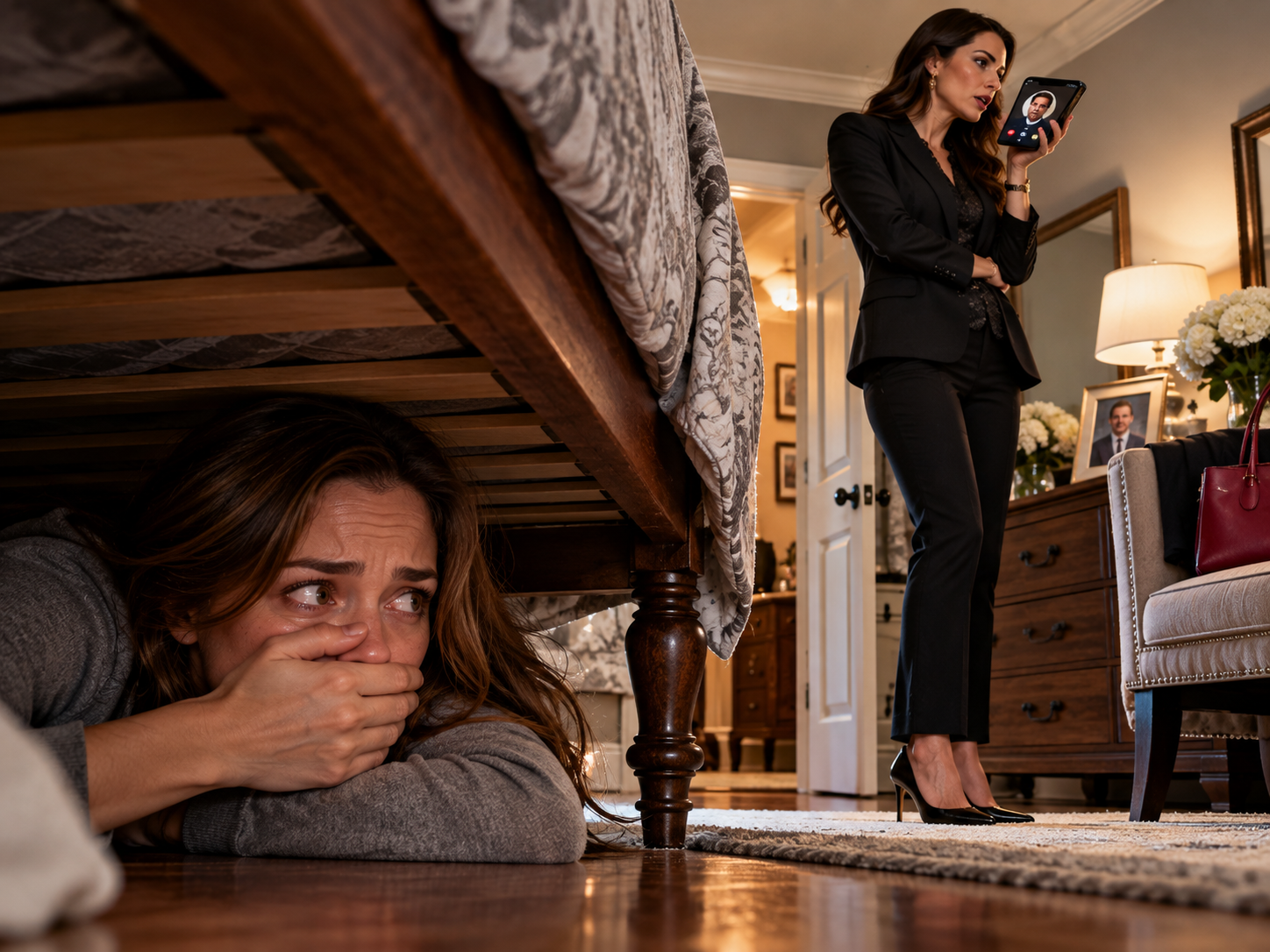
The last box of Mark's belongings remained in the spare room long after I had finished sorting everything else. It was smaller than the others, a plain cardboard container with a strip of yellow tape across the top. Inside were a few shirts, a leather wallet, an old watch, and several personal items that had no obvious connection to the investigation. I had kept them because I could not decide whether they belonged to the man I had loved or to the person whose deception had changed my life.
For months, I had told myself I would deal with the box when I felt ready. The truth was that I had been waiting for a feeling of certainty that never came. I did not want to destroy something meaningful in a moment of anger, but I also did not want to keep every object simply because it had once belonged to my husband.
One Saturday morning, I carried the box to the dining room and opened it. The smell of old fabric rose from the shirts, faintly scented with the detergent we had used before his death. I lifted the watch and turned it over in my hand. Its metal back was scratched, and the clasp had begun to loosen. Mark had worn it almost every day, even after the strap became uncomfortable.
I remembered giving it to him for his birthday. He had hugged me, thanked me, and immediately put it on. The memory was simple and warm. It did not answer whether he had already begun planning his disappearance, and I could not use it to prove that he had been a good husband. It was simply something that had happened between us.
I placed the watch on the table and examined the wallet. It contained expired cards, a receipt from a restaurant, and a small folded note with an old phone number. I did not recognize the number, and there was no reason to assume it was connected to the investigation. I photographed the contents and asked my attorney whether the wallet should be retained with the evidence.
She checked the case records and confirmed that it was not required. I could dispose of it or keep it as a personal item. I thanked her and returned to the table.
The decision seemed trivial, but I realized that I had been treating every object as if it might contain a final answer. I had spent months searching for clues because I believed that understanding Mark's actions would somehow settle my feelings about him. The investigation had taught me that documents could establish facts, but they could not tell me what every moment of a marriage had meant.
I chose a few items to keep: the watch, the photograph from the lake, and a small notebook in which Mark had written recipes he liked. I did not keep them because they proved anything about his character. I kept them because they were part of my life, and I was allowed to decide what they meant to me.
The remaining clothes went to a donation center, while the wallet and expired cards were disposed of securely. I returned the empty box to the recycling pile and carried the selected items upstairs. The spare room looked larger afterward, its shelves no longer crowded with containers I had been afraid to open.
That afternoon, Elaine came over to help me move a bookcase into the room. We worked together, arguing gently about where it should stand. When we finished, the space looked like a room I could use rather than a storage place for things I could not bear to examine.
“You've done a lot with this house,” Elaine said, stepping back to look at the shelves.
“I think I finally stopped treating it like a crime scene.”
She smiled, then grew serious. “You know you don't have to be finished grieving just because the investigation is nearly finished.”
“I know. I just don't want grief to be the only thing I make room for.”
We sat on the floor for a while, drinking tea and talking about the professional course I had completed. I told her I was considering applying for a more senior role at work. The position would involve reviewing complicated claims and helping train newer analysts. It would mean more responsibility, but I felt ready to try.
Elaine encouraged me to apply. She reminded me that I had been doing much of the work informally already and that I had earned the opportunity through experience, not through what had happened in my marriage. I appreciated the distinction. I did not want my professional future to be defined by the fraud that had interrupted my personal life.
I submitted the application the following week. The process involved interviews, a written assessment, and a review of my recent work. I prepared carefully, focusing on my professional skills and the improvements I had helped develop in the handling of disputed authorizations. The experience was demanding, but it reminded me that I could still work toward something without knowing the outcome in advance.
During the interview, one manager asked how I handled cases in which the paperwork appeared complete but the surrounding circumstances raised questions. I explained that I looked for inconsistencies, verified the authority behind each signature, and requested additional records rather than assuming that a signed document settled every issue. I did not mention Mark. The answer stood on its own.
A few days later, I was offered the position. I read the email twice, then called Elaine. She answered with a cheerful greeting and began laughing when she heard the news.
“I knew you could do it,” she said.
“I wasn't sure I would.”
“That's not the same thing.”
I accepted the offer and spent the evening planning how I would manage the new responsibilities. The decision felt like a small but important step toward a future I had chosen myself.
The legal proceedings concerning Mark continued in the background. My attorney kept me informed of developments that might affect me, but there were fewer requests for information. The financial records had been examined, the false identification had been established, and the insurance claim review had concluded. The remaining proceedings concerned Mark's conduct and the responsibility of the people who had participated in the scheme.
I did not follow every report or ask for every detail. I wanted the authorities to complete their work, but I no longer needed to witness every stage of it. The facts had been established well enough for me to stop searching for an additional revelation that would somehow make the experience easier to understand.
One afternoon, Detective Harris called to confirm that my cooperation was no longer required unless a new issue arose. She thanked me for preserving the recording, the photograph, and the original documents. Without those items, she said, the investigation would have been more difficult.
I thanked her in return. When we ended the call, I sat quietly for a few minutes. I remembered the first conversation with Mrs. Gable, when I had insisted that no one was home and that the screams must have come from another house. At the time, I had wanted the problem to disappear because accepting it meant questioning the life I thought I knew.
The truth had not been easy, but it had become manageable because I had stopped trying to make it less frightening than it was. I had asked for help, preserved evidence, and allowed other people to do their work. I had also learned when to step back.
That evening, I took a walk along the street and stopped at Mrs. Gable's house. She was trimming a plant near the porch and asked whether I had heard about the new family moving in nearby. We discussed the neighborhood for a few minutes, then she invited me to take a cutting from one of her plants.
I accepted it and carried it home. I planted it in a small pot beside the kitchen window, where it would receive morning light. The plant was ordinary, and I knew it might take time to grow. I liked that there was nothing mysterious about it. It needed water, light, and attention. It did not require me to investigate its past before caring for it.
In the weeks that followed, I settled into my new role at work. I trained colleagues, reviewed complex cases, and helped refine the procedures for verifying financial authorizations. The work demanded patience and precision. I found satisfaction in explaining why a missing attachment or unexplained beneficiary change deserved attention. I was not trying to turn my experience into a grand lesson for anyone else. I simply knew how much harm could occur when people assumed that paperwork told the whole story.
At home, the routines became more flexible. I sometimes left for work early to get coffee with a colleague. Other mornings, I took my time and watered the plant beside the window. I no longer felt compelled to follow the exact schedule Mark had once known. My life did not need to be unpredictable to be mine, but I liked knowing that I could change my plans without explaining them to anyone.
The blue mug remained in the cupboard. I used it occasionally, though I had other mugs I preferred. When I did, I held it by the repaired handle and remembered how the smallest clue had led me toward the truth. The mug itself had not been important because it belonged to Mark. It had been important because it showed that someone had entered my home and used an object that should have been untouched.
I could appreciate that memory without feeling compelled to revisit the entire investigation. It was one detail among many, a reminder that my instincts had not failed me even when I had doubted them.
One evening, I found the lake photograph while looking for a folder. I held it for a moment, then placed it in a small album with pictures from other parts of my life. I did not separate the images into categories of good memories and bad ones. I wanted the album to reflect the fact that a life could contain joy, betrayal, love, and loss without any one of them erasing everything else.
The following Sunday, Elaine and I drove to the coast again. We walked along the beach, stopped for coffee, and watched the waves move across the sand. The weather was warmer than it had been on our earlier visit, and the air smelled of salt and sun-warmed wood. We talked about work, travel, and the possibility of taking a longer trip later in the year.
For the first time, I found myself making plans without mentally calculating how they might be affected by the investigation. I could imagine a weekend away, a new project at work, or a dinner with friends without wondering whether Mark's past would suddenly demand my attention.
That did not mean I had forgotten what happened. It meant the experience had become part of my history rather than the structure around which every new decision had to be built.
On the drive home, Elaine asked whether I ever wished I could speak to Mark again.
I thought about the question. There were moments when I wished I could ask him why he had chosen to deceive me, why he had allowed another man's death to become part of his plan, or whether he had ever understood the full cost of what he had done. But I knew that another conversation might not provide the answers I wanted.
“Sometimes,” I admitted. “But I don't think I need another conversation to know what I need to do.”
Elaine nodded and returned her attention to the road.
When I arrived home, the house was warm and quiet. I watered the plant beside the window, placed my keys in the bowl near the door, and changed into comfortable clothes. I prepared dinner and ate at the table, then washed the dishes and set the blue mug on the drying rack.
The sight no longer carried a threat. It was simply part of the evening routine I had chosen.
Before going upstairs, I checked the lock once and turned off the kitchen light. I did not search the rooms or inspect the windows again. I trusted the precautions I had taken and allowed myself to rest.
The past had not disappeared. Mark's choices would remain part of my story, and Peter's family would continue living with the loss of someone they loved. Vanessa would have to live with the consequences of her decisions. The legal system would complete its work in its own time.
But I no longer believed that my life had to wait for every consequence to be resolved before it could move forward.
I had a home, a job I cared about, friends who had stood beside me, and a future that did not depend on Mark's explanation. I had learned that trust should not require blindness, that grief did not make me incapable of judgment, and that I could love someone without accepting responsibility for the harm they chose to cause.
The next morning, I woke to sunlight falling across the newly painted bedroom. I made coffee, opened the curtains, and looked out at the street. Mrs. Gable was collecting her newspaper, and a delivery truck moved slowly toward the corner. The world was ordinary and imperfect, full of people whose private lives I could not know.
I did not need to know them all.
I only needed to pay attention to my own life, ask questions when something felt wrong, and choose what I would carry with me.
I took my coffee to the kitchen table and opened my notebook to a clean page. There were tasks to complete, plans to make, and things I wanted to learn. I wrote down the first item, then the next.
For the first time in a long while, the future looked like a place I could enter without waiting for someone else to open the door.
Click here to continue reading: PART 13: A New Responsibility at Work Forced Me to Confront the Difference Between Protecting Someone’s Trust and Protecting Them From the Truth
The Woman Who Entered My House Without Knocking Knew My Husband’s Habits Better Than Anyone Should
Part 12 of 20

