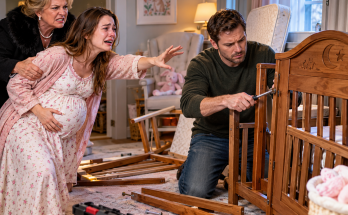
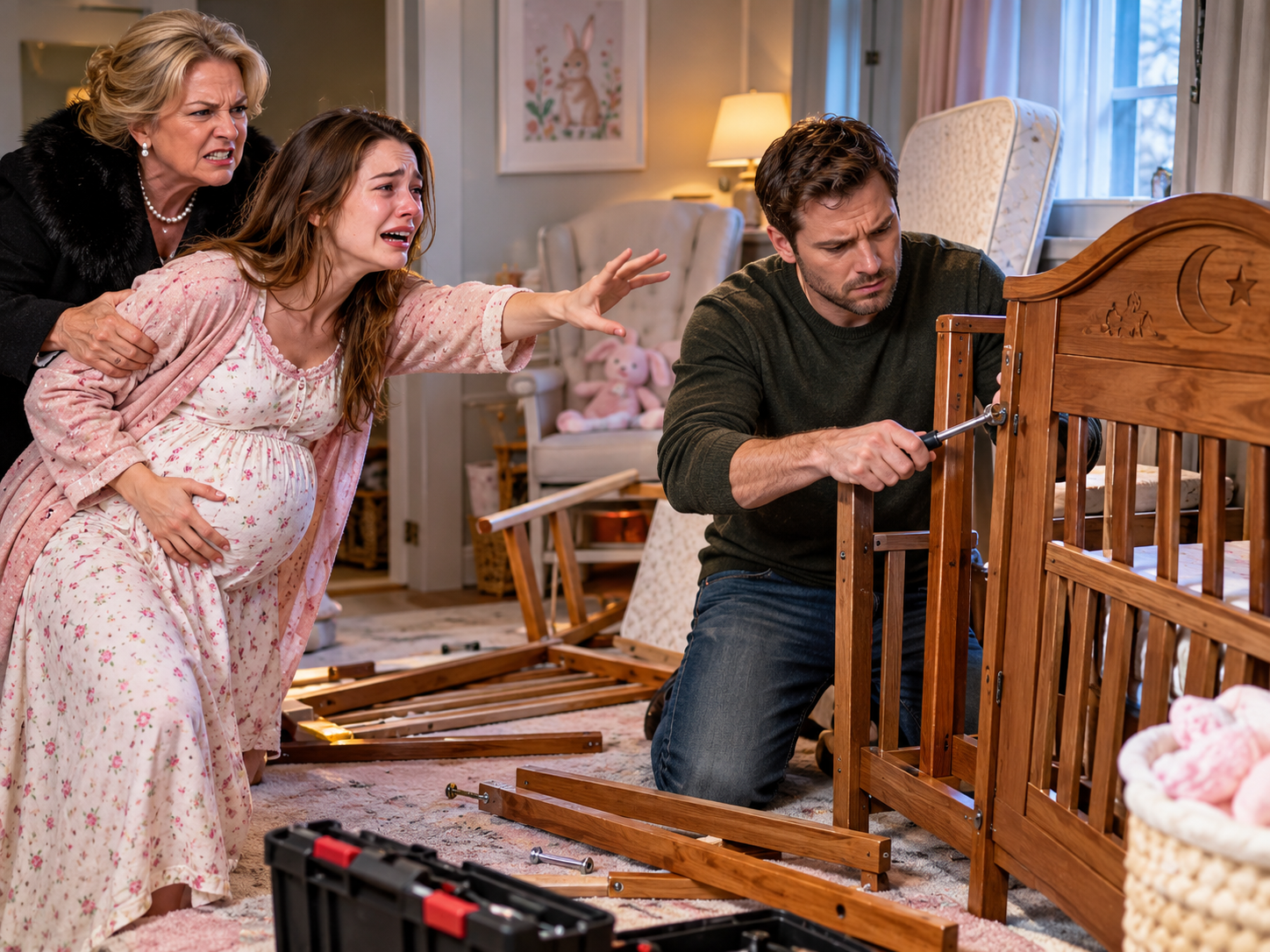
Rachel sent the first screenshot just after eight the next morning.
I was sitting beside my daughter's incubator when my phone vibrated. The message contained no explanation, only an image of a conversation between Rachel and Evan. I enlarged it and read the exchange slowly.
Rachel had asked whether he was certain I would not object to the crib. Evan had replied that I would complain at first, but that I would eventually accept it because I always did.
I read that sentence again.
I always did.
It was not a confession to a crime, and it did not establish every detail of the financial transfers. But it revealed how Evan had understood our marriage. He had learned that if he made a decision without me, then waited for my objection to exhaust itself, he could eventually get what he wanted.
Another screenshot arrived.
This one showed Rachel asking whether the crib had any special value beyond being handmade. Evan replied that my father had built it, but that I was sentimental about everything connected to him.
He added that once the crib was at Rachel's house, I would not make a scene by demanding it back.
My hands went cold.
The conversation had taken place two days before Evan began dismantling the furniture. He had discussed my likely reaction with Rachel, anticipated my objections, and decided that my attachment to my father's work would eventually become another reason for me to surrender.
I did not cry. I simply sat there with the phone in my hand, watching my daughter breathe beneath the soft light of the incubator.
The nurse approached to check the monitor.
"Are you all right, Mia?"
I nodded, though I was not sure that was true.
"Would you like a little time?"
"Yes, please."
She gave me a moment before returning to her duties.
I forwarded the screenshots to my secure email and saved them with the bank records. Then I asked Rachel whether there were more messages.
She replied that she had found several conversations from the weeks before the fall. She had not understood their significance when they were written, she said, and she was embarrassed that she had accepted Evan's explanations without asking me directly.
I told her I appreciated her willingness to share the records, but I was not ready to discuss forgiveness.
She answered that she understood.
A few minutes later, another screenshot arrived.
This one concerned the money.
Rachel had asked Evan whether he was sure we could afford to help her prepare for the twins. He replied that our finances were fine and that I worried too much about money. He said the savings were sitting unused while we waited for the baby, and that there was no reason not to put some of it toward a more urgent family need.
I stared at the phrase sitting unused.
The money had been set aside for hospital expenses, recovery, and the first months of our daughter's life. It had never been unused. It represented the security I had worked for and the promise Evan had made that we would be prepared.
He had known that.
He had simply decided his sister's needs mattered more.
I called Claire and asked her to come to the hospital room. When she arrived, I showed her the screenshots and explained what Rachel had told me.
Claire read them in silence.
Then she placed the phone on the bed.
"He knew exactly what he was doing."
I looked down at my hands.
"I kept telling myself he didn't understand why the crib mattered."
"Maybe he understood perfectly."
The words hurt because they fit the evidence.
For months, I had protected Evan from the implications of his choices. I had told myself he was careless with money, too dependent on his mother, or too uncomfortable with conflict to stand up for me. Each explanation had allowed me to believe that the man I loved was still there beneath the behavior that hurt me.
But the messages showed a pattern of deliberate decisions. He had anticipated my objections, discussed how to overcome them, and relied on my history of backing down.
I asked Claire to help me organize the messages by date.
We did not alter the screenshots or write interpretations into the records. We kept the original files and made a separate timeline showing when the crib plan had been discussed, when the transfers had occurred, and when I had discovered the missing money.
The timeline did not answer every question, but it helped establish the sequence of events.
When we finished, I sent the materials to the lawyer and asked for guidance on the next steps.
Later that day, the lawyer called.
She explained that the messages could be relevant to understanding Evan's representations about the money and the circumstances surrounding the crib, but their legal significance would depend on the full context. She advised me not to contact Evan with accusations while the records were being reviewed. If he sent additional documents or asked me to sign an agreement, I should forward them for review rather than respond immediately.
I agreed.
The lawyer also asked whether I had a safe place to stay after leaving the hospital.
Claire had already offered me the spare bedroom in her house. It was not large, but it was quiet, and she had agreed to make room for the things I would need when my daughter was ready to come home. I told the lawyer that I planned to stay there while I considered the longer-term arrangements.
She encouraged me to keep a record of any further contact from Evan or Patricia and to seek appropriate legal advice before making decisions about shared property, the house, or the account.
When the call ended, I felt something close to relief.
I did not have to solve the entire future in one afternoon. I could protect my daughter, preserve the evidence, and make decisions as the facts became clearer.
That evening, Rachel called again.
"I want to apologize," she said.
I sat quietly, waiting.
"I should have asked you about the crib. I knew your father made it, and I knew how close you were to giving birth. I let Mom tell me that you would eventually agree, and I didn't question it because I wanted the help."
Her voice trembled.
"I also should have asked about the money. I accepted what Evan said because it was easier than getting involved in a disagreement between you two."
I looked toward the window.
"Why are you telling me this now?"
"Because I read the messages again, and I realized how he talked about you. He made it sound as though your objections were just something he had to get past. I should never have accepted that."
I did not answer immediately.
Rachel had not pushed me. She had not driven away from the driveway. Her actions were not the same as Patricia's or Evan's. But she had benefited from decisions that hurt me, and she had helped reinforce the belief that I would eventually surrender if enough people pressured me.
"I appreciate you saying that," I told her. "But an apology doesn't mean I can trust you again right away."
"I know."
"And I need you to understand something. I hope your babies are safe. I don't want them to lose anything because of this. But I won't let my daughter pay for your preparations."
"I understand."
We ended the call without making promises about the future.
The following morning, the neonatal team gave me the best update I had received since the fall. My daughter was making steady progress. She still needed careful monitoring, but the doctors were beginning to discuss the next stages of her care rather than focusing only on immediate stabilization.
I asked whether I could hold her.
The doctor said the team would assess her that afternoon.
For hours, I waited.
When the nurse finally came to my room, she was smiling.
"We think we can try a short session, if her numbers remain stable."
I covered my mouth.
"Really?"
"Yes. We'll guide you through it."
The nurse helped me prepare and explained how they would move the baby safely from the incubator. I was nervous about every detail. My arms still hurt, and my incision made it difficult to sit comfortably. But the team positioned pillows around me and supported my daughter while I settled into the chair.
Then they placed her against my chest.
She weighed so little that I was afraid to breathe too deeply. Her head rested beneath my chin, and the warmth of her body spread through the hospital gown. The monitors continued their steady rhythm, reminding me that she was still fragile and that this moment did not mean the danger had passed.
But she was there.
I lowered my face toward her hair and closed my eyes.
"Hello, my little girl."
A tear slipped down my cheek and landed on the blanket.
"I've been waiting for you."
I stayed as still as I could while the nurse watched the monitors. After a while, she told me that my daughter was tolerating the contact well. The session could continue a little longer.
I had imagined holding her in the nursery, beside the walnut crib, with winter sunlight falling through the curtains. I had imagined Evan taking photographs and my father's picture resting above the dresser.
None of that had happened.
Instead, I was holding my daughter in a hospital room, surrounded by equipment, with a healing incision across my abdomen and a marriage I no longer knew how to save.
Yet the absence of the life I had imagined did not make this moment less precious.
It made me understand that love was not the same as a perfect beginning.
When the nurse returned my daughter to the incubator, I kissed her forehead and whispered that I would be back the next day. I watched until she was settled safely, then allowed the nurse to wheel me toward my room.
Claire was waiting.
She took one look at my face and smiled.
"You held her."
I nodded, unable to speak for a moment.
Then I told her about the warmth of the baby's hand against my chest, the tiny movements beneath the blanket, and the way I had been afraid to breathe too deeply in case I disturbed her.
Claire listened without interrupting.
For the first time in days, we talked about something that did not involve Evan, Patricia, money, or the fall.
We talked about the baby.
We discussed names we had considered, the clothes waiting at home, and whether she would inherit our father's dark eyes. We laughed when Claire reminded me that our father had once built a wooden toy box so large that we could barely fit it through the bedroom door.
The laughter faded eventually, but it left something gentle behind.
That night, Evan sent another message.
Rachel told me you've been talking to her about the money. I don't appreciate family business being shared with everyone. We need to sit down and settle this privately.
I read it, then saved it.
He had not asked how the holding session went. He had not asked whether our daughter had improved. He had not asked whether I was still in pain.
He was concerned that other people now knew what he had done.
I placed the phone on the bedside table and turned toward the photograph of my father.
I no longer needed to persuade Evan that my grief was real or that the crib mattered. His own messages had shown me that he knew enough to anticipate my objections. The problem had never been a lack of information.
It had been his belief that he could override me.
The next morning, I asked the hospital social worker to help arrange a safe discharge plan for when the medical team cleared me to leave. Claire would take me to her home, and I would bring only the belongings I needed immediately. The remaining questions about the house, the furniture, and our shared finances could be handled through the appropriate channels.
I did not yet know what would happen to the crib.
I knew only that I would not allow Evan or Patricia to decide its fate without my consent.
My father's work had survived years of use, the careless handling of people who did not understand its value, and the dismantling that had taken place in my nursery.
I had no guarantee that I would recover every piece.
But I had photographs, records, and the memory of his hands smoothing the wood. I had the inscription he had written beneath the headboard, a promise made before my daughter was born.
I could not give her the safe beginning he had hoped for.
I could give her the truth about where she came from, and I could make sure that the people who loved her understood that family was not permission to take what belonged to someone else.
As I settled into bed that night, I felt my daughter's small hand closing around my finger again in memory.
For the first time since the fall, I was not waiting for Evan to decide what happened next.
I was making those decisions myself.
Click here to continue reading: PART 9: The First Morning Outside the Hospital Forced Mia to Choose Between the Family She Had Known and the Safety Her Daughter Needed
Three Days Before My Daughter Was Born, I Discovered My Husband Had Decided Her Most Precious Possession Belonged to His Sister
Part 8 of 12