The first thing I did the morning after Evan's visit was ask the neonatal nurse whether my daughter had gained any weight.
It was a small question, almost embarrassingly ordinary after everything that had happened. But the nurse smiled as she checked the chart, and I held my breath while she explained that our little girl was tolerating her care and showing some encouraging signs. She was not out of danger. Her breathing still needed support, and the doctors were watching her closely. Yet she was responding to treatment, and for that morning, it was enough.
I asked the nurse to call me before making any significant changes to her care plan. Then I wheeled myself back to my room, where my sister, Claire, was waiting with a bag of clothes and the folder of documents I had requested.
She took one look at my face and put the bag down.
"What happened while I was getting your things?"
"Evan came."
Claire's expression tightened. "And?"
"He wanted to talk about the fall."
"Did he apologize?"
"He said he panicked."
She pulled the chair beside my bed closer and sat down. "Mia, a man who panics because his wife is injured calls an ambulance. He doesn't drive away."
I turned toward the window. Snow had begun melting from the hospital roof, leaving dark trails against the brickwork. I had been trying to find a way to explain Evan's behavior without admitting what it meant. Hearing Claire say it so plainly made that effort feel exhausting.
"I know," I whispered.
She reached for my hand but did not tell me everything would be all right. I was grateful for that. There were things neither of us could promise.
Instead, she asked what I wanted to do next.
I told her I wanted to see my daughter, recover enough to leave the hospital, and make sure Evan could not access the money I had earned or use our daughter's needs to pressure me into returning home. I did not yet know whether I wanted a divorce. I could not think that far ahead while my baby was still in intensive care.
Claire nodded. "Then we'll handle one thing at a time."
After breakfast, the hospital social worker returned with information about temporary accommodation, domestic safety planning, and the process for documenting an incident involving an alleged assault. She explained that I could make a report without deciding every question about my marriage immediately. She also encouraged me to preserve any messages and financial records that might help establish what had happened.
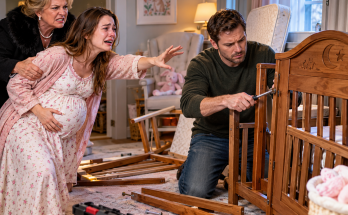
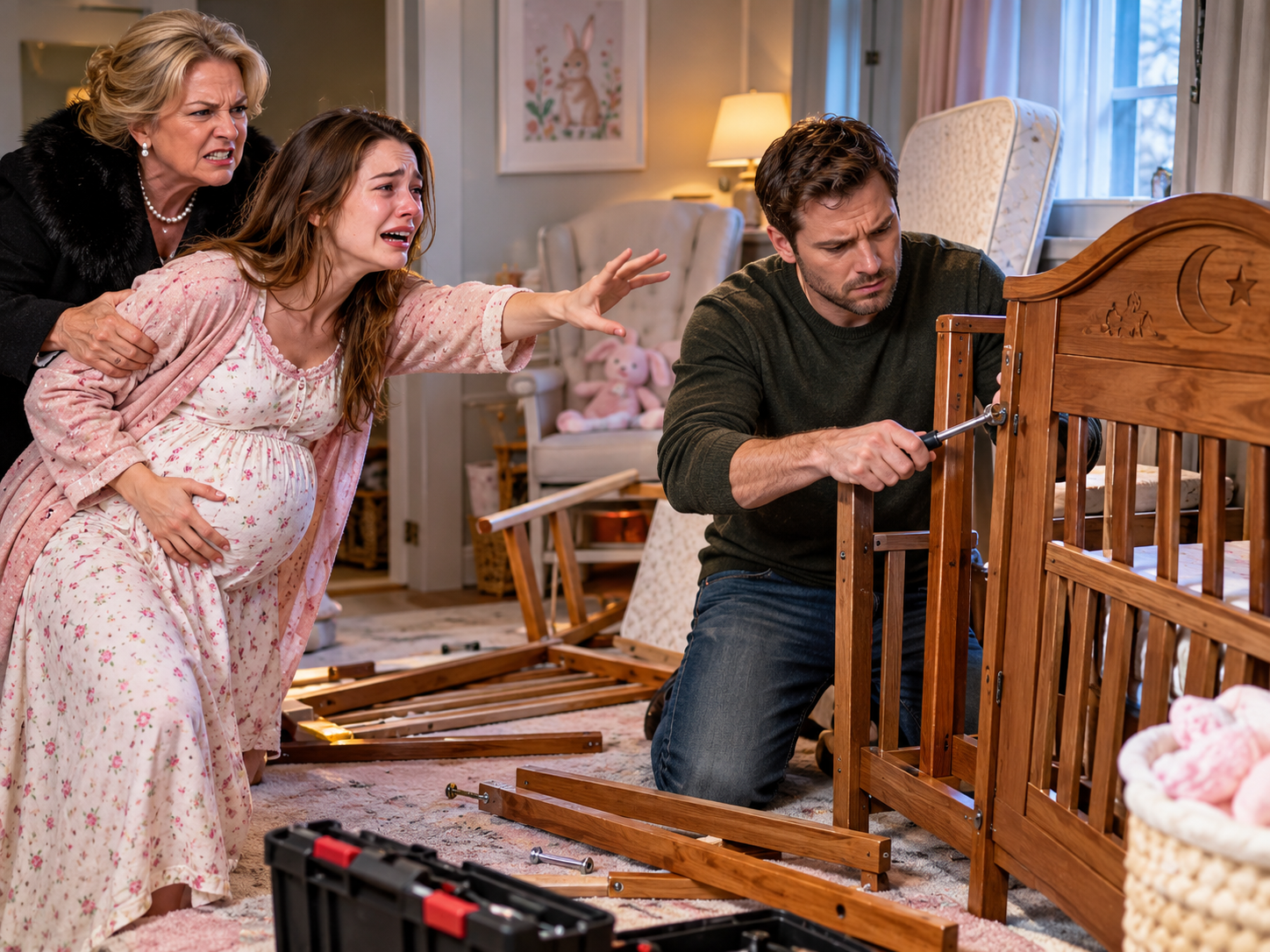
I showed her the photographs of the dismantled crib and the messages from Rachel.
She read them carefully, then asked whether I had saved the original conversations.
"Yes."
"Keep them exactly as they are. Don't edit or delete anything. The photographs and messages may help establish the sequence of events, although the appropriate authorities will need to assess what they prove."
I appreciated her caution. I had spent years in a marriage where the truth was frequently blurred by arguments about my tone, my memory, or my supposed sensitivity. I did not want to exaggerate what had happened. I wanted a record that could speak for itself.
Before leaving, she asked whether I felt safe if Evan contacted me again.
"No," I answered.
This time, I did not soften the word.
The social worker helped me arrange for calls from Evan to be directed through my sister while I recovered. She also explained that if I wished to report Patricia's actions formally, I could provide my account to the appropriate authorities and ask about the available protective measures. I agreed to speak with an officer.
Later that day, a hospital representative helped arrange the interview. I described the argument in the nursery, the removal of the crib, Patricia's remarks, and the push that sent me down the icy steps. I explained that Evan had been present when I fell and that he had driven away while I was calling for help.
The officer listened without interrupting.
When I finished, she asked whether anyone had witnessed the fall itself.
"No. But Linda found me immediately afterward. She saw the blood and heard what I told her. She also called the ambulance."
"Do you have her contact information?"
I gave it to her.
The officer explained that the account would need to be assessed alongside the available evidence and any statements from the people involved. She did not promise me an immediate outcome, and I did not expect one. I only wanted the event documented while the details were still clear.
After she left, I felt more tired than I had after surgery.
Claire helped me back into bed. She tucked the blanket around my feet and placed my phone on the bedside table.
"You did well," she said.
"I don't feel as though I did anything."
"You told the truth. That's something."
I closed my eyes.
For years, I had believed that being a good wife meant protecting Evan from the consequences of his own behavior. If he embarrassed me, I found an explanation. If he hurt me, I waited for an apology. If his mother crossed a boundary, I convinced myself that confronting her would only make things worse.
Now I was beginning to understand how much of my marriage had depended on my willingness to keep the peace at my own expense.
That evening, I received a message from Rachel.
Mom says you're telling people she pushed you. You know she didn't mean for you to fall. You need to stop turning this into something it isn't.
I read it once, then again.
She did not ask whether I was recovering. She did not ask about the baby. She had learned that my daughter had been delivered early and had required emergency treatment, yet her first concern was that I had described what happened honestly.
I began typing a response, but Claire noticed the movement of my fingers.
"You don't have to answer her."
"I want her to understand."
"She knows what you said. Understanding isn't something you can force."
I deleted the unfinished message.
Instead, I saved Rachel's text with the others and placed the phone face down.
The next morning, the neonatal doctor gave me a more detailed update. My daughter's condition remained serious, but some of the early indicators were encouraging. The team was cautiously adjusting her support while monitoring her response. There would be no quick declaration that she was safe, and the doctor reminded me that premature infants could have difficult days even after promising ones.
I asked whether I could hold her.
"Not yet," he said gently. "But we can help you touch her, and we'll reassess as she becomes more stable."
I nodded, swallowing my disappointment.
When I returned to the unit, I spoke to my daughter through the incubator wall. I told her about the snow, about the tiny moon her grandfather had carved into the crib, and about the way he used to tap his pencil against his thumb whenever he was thinking.
I told her that when she was stronger, I would show her photographs of him.
I did not tell her about Evan. She was too small for those burdens, and I had no intention of allowing his choices to define the story of her life.
Three days after the fall, the hospital allowed me to spend a longer period beside her incubator. The nurse helped me settle into a comfortable position and guided my hand through the opening so I could rest a finger against my daughter's palm.
Her hand closed around it.
I stayed there, barely breathing, afraid that even the smallest movement might disturb her. The nurse smiled and explained that the response was a reflex, but she did not suggest that it was meaningless. I knew that. I also knew that the touch would stay with me long after I had forgotten the nurse's exact words.
When I returned to my room, Claire was reading the financial statements I had downloaded.
She looked up as I entered.
"Mia, I think you need to see something."
She turned the laptop toward me.
On the screen was a transfer from our joint account, dated several weeks before the crib incident. The recipient was the same unfamiliar account I had noticed earlier. Beneath it were two more payments, both connected to expenses Rachel had mentioned in passing when she discussed preparing for the twins.
"Did Evan ever tell you he was paying for her nursery?" Claire asked.
"No."
"Did he tell you he was moving your savings?"
"He said he was putting the money somewhere with better interest."
Claire pointed to the transactions. "These don't look like savings transfers."
I leaned closer.
One payment had gone to a furniture company. Another was described as a deposit for a service connected with Rachel's house. A third had been sent to an account whose details I did not recognize.
The amounts were not small.
I had believed we were saving for the hospital, the baby's first months, and the expenses that would follow my maternity leave. Instead, money had been leaving the account while Evan assured me that everything was under control.
I asked Claire to help me download the complete statements, including the transaction details. We saved copies to a secure location and made a list of the questions that still needed answers.
I did not want to accuse him of something I could not prove. But I was no longer willing to accept vague explanations simply because demanding specifics made him angry.
That afternoon, Evan sent another message.
I need to see my daughter. Whatever happened between us shouldn't keep me away from her.
I read it slowly.
He had every reason to want to know how his child was doing. I could understand that without pretending his behavior had been acceptable. The medical team would decide when visitors were appropriate, and I would not use my daughter's treatment to punish him. But neither would I allow him to turn the hospital into a place where he could pressure me into silence.
I asked the nurse to explain the unit's visitor procedures and told her that I wanted any visit arranged in advance. I also asked that staff speak with me before allowing a confrontation in my room.
Then I replied to Evan with a short message.
Our daughter is receiving care. Any visit must be arranged through the neonatal team. I am not ready to discuss our marriage.
He called immediately.
I let it go to voicemail.
His message was less controlled.
He said he had been under pressure, that Patricia had insisted on helping Rachel, and that the argument had escalated unexpectedly. He said he had not understood how seriously I was injured and had been afraid of making the situation worse.
I listened to the recording twice.
He had still not said that he should have called an ambulance.
He had still not asked what I needed.
And he had not once acknowledged that he had been standing there when his mother pushed me.
I saved the message.
For the first time, I did not feel compelled to explain his own actions back to him.
Click here to continue reading: PART 6: The Bank Statements Revealed Where Our Baby’s Savings Had Gone, and Rachel’s Messages Exposed a Family Plan I Had Never Agreed To
Three Days Before My Daughter Was Born, I Discovered My Husband Had Decided Her Most Precious Possession Belonged to His Sister
Part 5 of 12