The morning after Gregory's memorial, Simone woke before everyone else.
She walked through the house alone.
The rooms felt different.
Not because the furniture had changed.
Because one voice was missing.
She entered the study.
His desk remained.
His glasses sat beside an unfinished book.
A small stack of papers waited beneath them.
She touched the chair.
For a moment, she expected him to speak.
Then she smiled at herself.
He had spent years teaching her that absence did not erase love.
She understood now.
She returned to the kitchen.
The brass key was on the counter.
Beside it lay the black Escalade photograph.
Simone picked up both.
She carried them into the living room.
Wren found her there.
“Mom?”
Simone turned.
“Morning.”
“You couldn't sleep?”
“No.”
“Me neither.”
They sat together.
Wren looked at the key.
“Grandpa's?”
“Yes.”
“He gave you this because he knew.”
Simone nodded.
“I think he knew before I did.”
Wren touched the photograph.
“This is the night everything changed.”
“Yes.”
“Do you still think about what would have happened if you hadn't left?”
“Sometimes.”
“Do you wish you could know?”
“No.”
“Why?”
“Because knowing would not change anything.”
Wren nodded.
“What matters is what we did afterward.”
Simone smiled.
“That is exactly right.”
They sat in silence.
Then Wren said, “I want to keep the photograph.”
Simone looked at her.
“You do?”
“Yes.”
“Why?”
“Because Elias should know it.”
Simone smiled.
“He will.”
“Not as a warning.”
“No.”
“As a story.”
“Yes.”
Wren placed the photograph beside the key.
“They belong together.”
Simone looked at them.
She understood.
The photograph represented a decision.
The key represented an option.
One was about leaving.
The other was about knowing you could return.
Together, they explained the whole family.
Elias came downstairs later.
He looked at the photograph.
“What's that?”
Wren told him.
He listened.
Then he asked, “Did Grandma know she would come back?”
Simone smiled.
“No.”
“Did Grandpa?”
“No.”
“Did Dad?”
“No.”
“So nobody knew.”
“No.”
Elias thought about it.
“That's kind of amazing.”
“It is.”
“Then why do people tell the story like they knew what they were doing?”
Everyone laughed.
“Because hindsight makes people look smarter,” Simone said.
Elias nodded.
“That makes sense.”
He sat beside them.
“Did Grandpa really believe people should make their own choices?”
“Yes.”
“Even when he disagreed?”
“Yes.”
“That's hard.”
“It is.”
“Did he always do it?”
Simone smiled.
“No.”
“Good.”
“Why good?”
“Because then he's human.”
Simone laughed.
“He was very human.”
They spent the morning looking through photographs.
Wren told Elias stories.
Some were funny.
Some were painful.
Some were simply ordinary.
They found photographs of Gregory when he was young.
Simone's mother.
Roland as a child.
Faye before her hair turned silver.
Simone and Wren at the hospital.
The family at Thanksgiving.
The wedding.
The house.
The garden.
The black Escalade.
Elias studied them.
“This is a lot.”
“It is.”
“Do you think I'll remember all of it?”
“No.”
“Then why keep it?”
Simone smiled.
“So you can forget some things without losing the whole story.”
He nodded.
That afternoon, Faye came over.
She carried flowers.
She placed them beside Gregory's photograph.
“I still expect him to complain about these.”
Simone smiled.
“He would.”
Faye sat down.
“I've been thinking.”
“About what?”
“That first dinner.”
Simone looked at her.
Faye continued.
“I used to think the worst part was that you left.”
Simone waited.
“Now I think the worst part was that I had made you feel you needed to.”
Simone took her hand.
“You changed.”
“I had to.”
“Yes.”
“I don't expect you to forget.”
“I won't.”
Faye nodded.
“I don't want you to.”
That was the final kind of apology.
Not one that demanded erasure.
One that allowed memory.
Wren watched them.
She understood why her mother had always said forgiveness and forgetting were different things.
That evening, Roland arrived.
He carried a small wooden box.
“What is that?”
“Something I found in the garage.”
He opened it.
Inside was the old spare key to Simone's Camry.
The same key he had returned years ago.
Simone stared at it.
“You kept this?”
“I forgot I had it.”
She laughed.
“Of course.”
He handed it to her.
She placed it beside the brass key.
Wren looked at the three objects.
The photograph.
The brass key.
The car key.
“They tell the whole story.”
Simone nodded.
“Do they?”
“The photograph is where you left.”
She pointed to the brass key.
“This is where you had somewhere to go.”
Then the car key.
“And this is where Dad learned that your things were yours.”
Roland smiled.
“That's a very efficient summary.”
“I've had practice.”
Everyone laughed.
Later, Wren took the photograph and scanned it.
She saved it digitally.
Then she placed the original in the album.
“Why scan it?”
“So it doesn't disappear.”
Simone smiled.
“That sounds like something your grandfather would say.”
Wren nodded.
“He taught us well.”
Years passed again.
Elias left for university.
Wren's marriage continued.
Faye became a grandmother who asked before visiting.
Roland became the man who listened before offering solutions.
Simone became the mother who no longer believed every problem required her intervention.
The family changed in ordinary ways.
That was the beauty of it.
No grand transformation.
Just thousands of small choices.
One day, Elias called Simone from university.
“Grandma?”
“Yes?”
“Can I ask you something?”
“Always.”
“I'm thinking about taking a semester abroad.”
Simone smiled.
“Do you want to?”
“Yes.”
“Then go.”
“I thought you'd ask a hundred questions.”
“I have them.”
“Then why aren't you asking?”
“Because you'll answer them when you're ready.”
He laughed.
“Mom said you'd say that.”
“Your mother knows me.”
“I'll tell you where I'm going.”
“Good.”
“And if I hate it?”
“Come home.”
“And if I love it?”
“Stay.”
He was quiet.
“Thanks.”
“You don't need my permission.”
“I know.”
“But you have my support.”
“I know that too.”
The call ended.
Simone sat quietly.
She remembered the first time she had heard the same principle spoken to her.
She realized the family had carried it forward without even trying.
The next Thanksgiving, fourteen people gathered around the table.
There was no missing place.
There was no perfect peace.
Someone disagreed about politics.
Someone burned a pie.
Someone arrived late.
Someone left early.
Someone needed quiet.
Someone needed company.
And nobody treated those differences as proof that the family was broken.
Wren brought Elias.
Faye brought dessert.
Roland carved the turkey.
Simone looked around.
Fourteen people.
Fourteen lives.
Fourteen sets of choices.
One table.
She remembered the old photograph.
Seven places.
One missing.
She smiled.
The past had not been erased.
It had been answered.
Not with revenge.
Not with pretending.
With a table large enough for everyone to have a place without demanding that anyone surrender themselves to keep it.
After dinner, Wren found Simone in the hallway.
“You're thinking about it again.”
“Yes.”
“The first dinner?”
“Yes.”
Wren leaned against the wall.
“What would you tell that version of yourself?”
Simone thought.
“I would tell her that she doesn't need to know how the story ends.”
Wren smiled.
“What else?”
“That fear is not a prophecy.”
“And?”
“That leaving a room doesn't mean leaving everyone in it.”
Wren nodded.
“And one more?”
Simone looked at her daughter.
“You will build a life you can't imagine yet.”
Wren smiled.
“You did.”
“Yes.”
They hugged.
That night, after everyone left, Simone opened the family album.
She placed the black Escalade photograph between two newer photographs.
One showed Gregory's ninety-first birthday.
The other showed the fourteen-person Thanksgiving table.
She closed the album.
Then she placed the brass key beside it.
The house was quiet.
But Simone did not feel alone.
She thought about her mother.
Gregory.
Roland.
Faye.
Wren.
Elias.
All the people who had taught her something.
All the people who had needed her to learn something.
She finally understood that the night she left had never been about choosing between family and herself.
It had been about discovering that family could not be healthy if it required her to disappear.
She had not needed permission to leave.
She had needed somewhere safe enough to decide.
She had not needed someone to rescue her.
She had needed someone to open a door.
And after that night, everyone had learned to open doors for one another without deciding who should walk through them.
That was the inheritance.
Not the house.
Not the trust.
Not the brass key.
Not even the photographs.
The inheritance was the freedom to choose.
The freedom to disagree.
The freedom to leave.
The freedom to return.
The freedom to forgive without pretending nothing happened.
The freedom to love without possession.
Simone looked at the old photograph one last time.
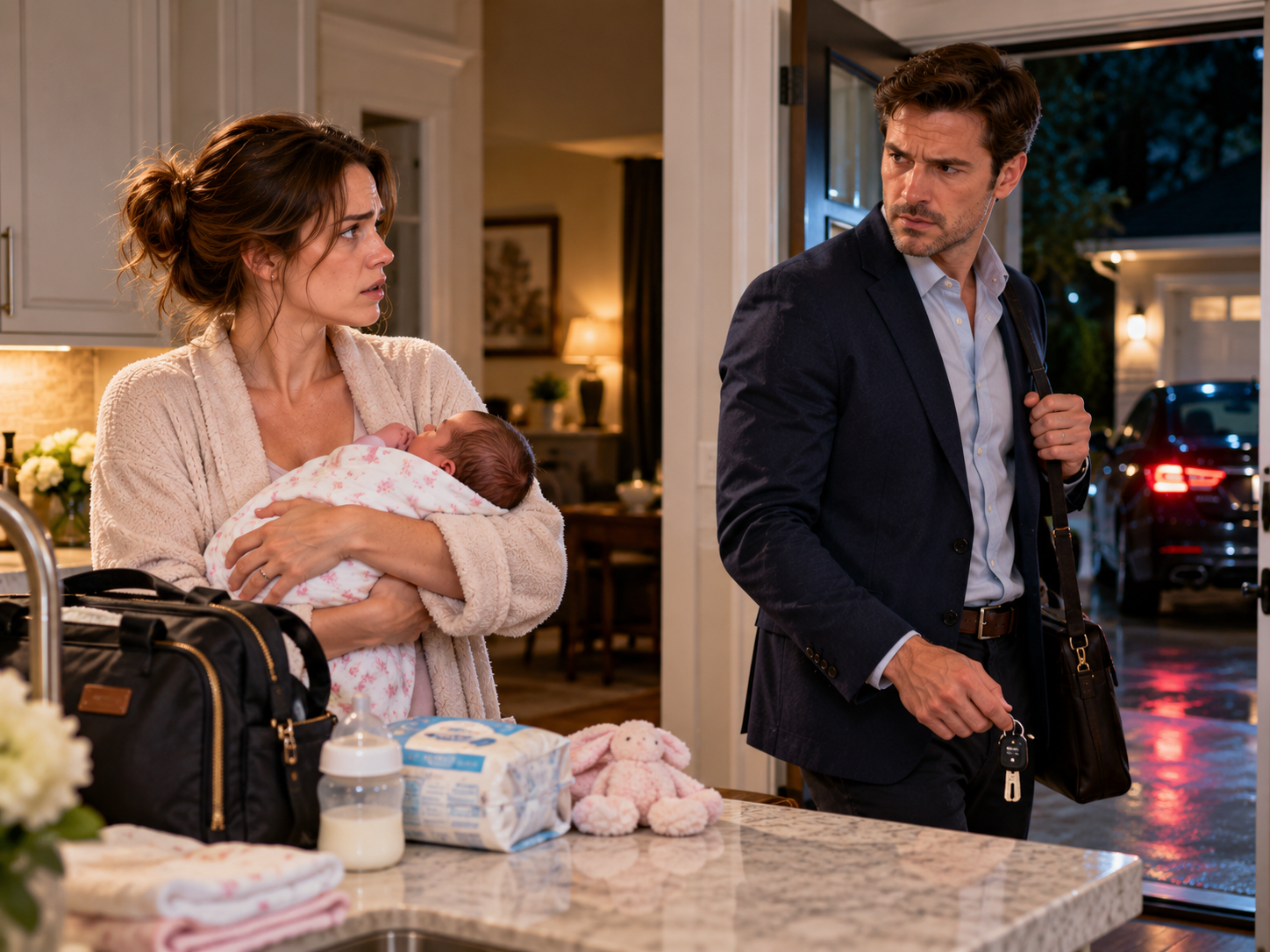
She saw herself carrying Wren.
She saw the fear in her own face.
She saw the determination.
She saw the road ahead.
Then she placed the photograph back in the album.
She closed it gently.
Years earlier, she had left with one bag and a newborn.
She had returned with a clearer understanding of herself.
Her family had not gone back to what it had been.
They had built something new.
Something imperfect.
Something honest.
Something large enough for every person to remain themselves.
And when the next generation needed somewhere to go, the doors would still be there.
Not as commands.
Not as cages.
As choices.
Because home was never supposed to be the place that kept someone from leaving.
Home was the place that let them leave without being afraid to return.
They chose honesty.
They chose boundaries.
They chose forgiveness without forgetting.
And, again and again, they chose each other freely.
Click here to continue reading: PART 25: When Wren discovered a box of letters among Gregory’s belongings, one sentence from Simone’s mother made the family reconsider what it truly meant to protect someone
Six days after our daughter was born, my husband left us behind for dinner, but the message from his mother revealed that my exclusion had been planned
Part 24 of 28