
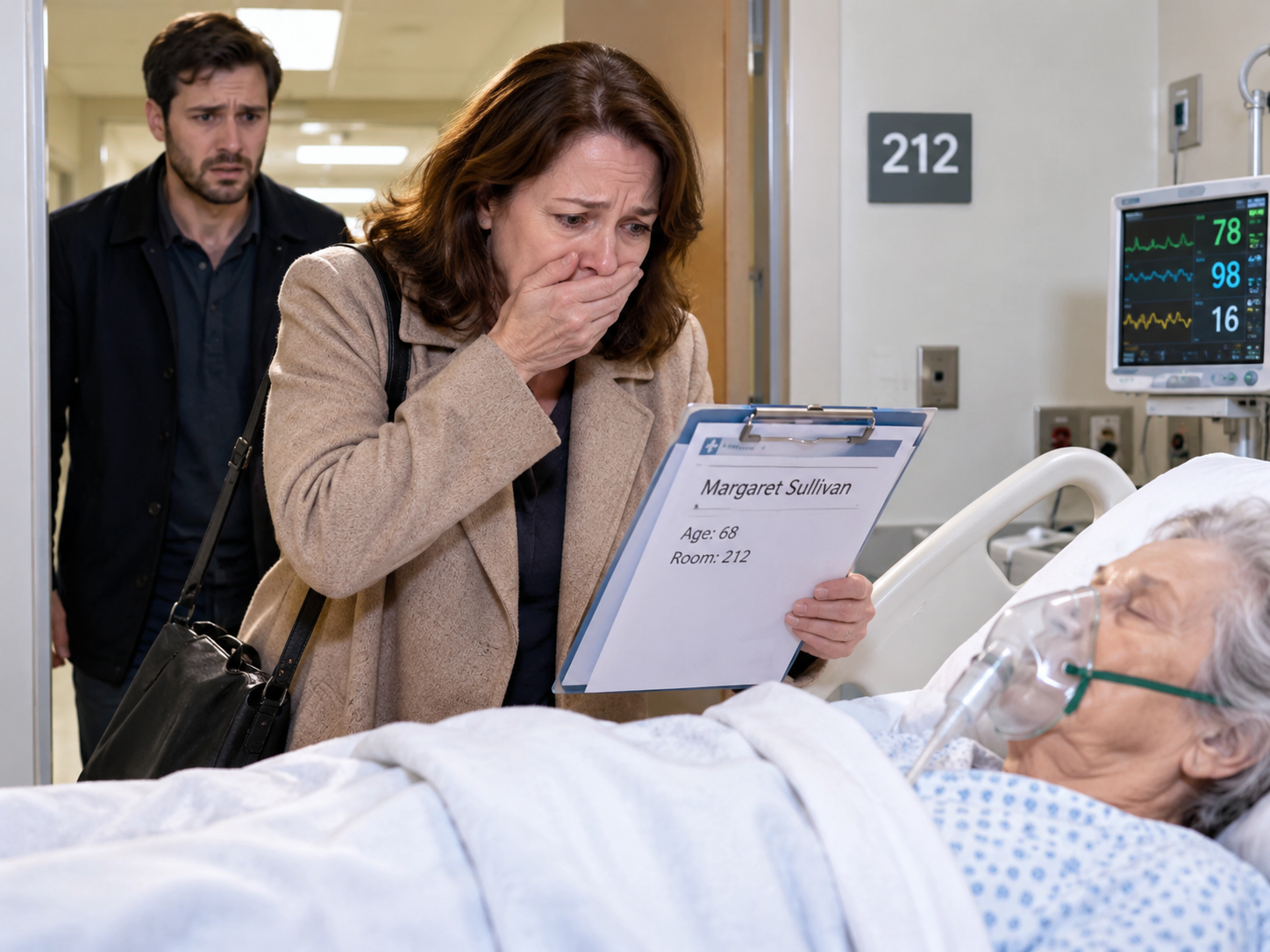
The next morning, Bennett brought Martin Vale's records.
He spread them across my dining table while Grace sat opposite him with Leo asleep against her chest.
Martin had worked as a financial intermediary.
Not a banker.
Not exactly a broker.
He handled private arrangements between investors and people who needed money quickly.
That distinction mattered.
Because people who need money quickly often accept conditions they would never accept under ordinary circumstances.
Ezekiel had met Martin several years earlier.
The first documented transaction was small.
Then another.
Then another.
Each time the amounts grew.
Eventually Ezekiel had borrowed against expected business income.
Then against future contracts.
Then against assets he did not fully own.
Grace listened silently.
“What about my house?”
Bennett tapped a document.
“That became relevant later.”
“How?”
“Martin knew the property existed.”
“From Ezekiel?”
“Yes.”
Grace's expression changed.
“He discussed my house with him?”
“More than once.”
I watched my daughter's face.
She looked less shocked than tired.
As if each revelation was simply another door opening onto a room she had feared existed.
“What about Leona?”
Bennett placed another page beside the first.
“She received payments from Martin's company.”
Grace looked up.
“For what?”
“Consulting.”
“Consulting about what?”
“That isn't clear yet.”
The records showed several payments.
The largest occurred three days before Grace gave birth.
Another came the day after Ezekiel took her from the hospital.
The timing was impossible to ignore.
But timing wasn't proof.
Bennett kept repeating that.
I was grateful.
We needed evidence, not assumptions.
That afternoon, investigators searched the Bronx apartment.
They found additional paperwork.
Some belonged to Ezekiel.
Some belonged to Leona.
Some contained Grace's personal information.
One folder held photocopies of her identification, insurance documents, property records, and medical paperwork.
The sight of that list made me sick.
Her pregnancy had not been private.
Someone had been collecting details.
The investigation widened.
Grace's house was examined.
The locks were changed.
Her financial accounts were protected.
A temporary court order prevented Ezekiel from transferring property or contacting Grace directly except through approved legal channels.
The practical protections were reassuring.
The emotional reality was harder.
Grace still woke from nightmares.
Sometimes she would sit upright, breathing quickly, unable to explain what had frightened her.
Sometimes she would wake because she thought she heard Ezekiel's voice.
One night I found her standing in the kitchen at three in the morning.
She was barefoot.
Leo was asleep in her arms.
“You should be in bed.”
“I know.”
“What happened?”
“I thought someone was outside.”
I checked the windows.
The street was empty.
When I returned, she was staring at the floor.
“I hate this.”
“I know.”
“I hate being afraid in my own house.”
I put my arm around her.
“You'll get it back.”
“What if I don't?”
“Then we'll find another place.”
She looked at me.
“You'd really leave your house?”
“For you.”
She shook her head.
“No.”
“For Leo.”
She smiled.
“That's different.”
“It's not.”
We stood there quietly.
Then she said something I hadn't expected.
“I don't want revenge.”
“I know.”
“I want him to understand what he did.”
I looked at her.
“That may not happen.”
She nodded.
“I know.”
There was sadness in her expression, but also something stronger.
Acceptance.
She couldn't control what Ezekiel understood.
She could control what she did next.
The court hearing was scheduled for the following week.
Before it, prosecutors interviewed Grace again.
They asked about the night at the apartment.
She described the documents.
The pressure.
The refusal to let her call me.
The threats that were never explicit but always present.
“He never said, ‘I'll hurt you,’” she explained.
“What did he say?”
“He said I would regret making him look foolish.”
That statement was recorded.
Then came another.
“He said if I didn't cooperate, Leo might end up with people who understood money better than I did.”
The prosecutor asked who he meant.
“His mother.”
Grace paused.
“Or Martin.”
That name changed the interview.
“Why Martin?”
“Ezekiel said Martin could make problems disappear.”
“What kind of problems?”
“I don't know.”
That was the truth.
We still didn't know everything.
And that uncertainty began to trouble me.
If Martin had been involved for years, why?
What did Ezekiel owe him?
What had Leona promised?
And why had they needed Grace's signature?
Bennett eventually found part of the answer.
The house wasn't valuable only because of its market price.
It had no significant mortgage.
It was one of the few clean assets connected to the family.
That made it attractive.
But there was another reason.
Grace had inherited a small investment account from her father.
Ezekiel had known about it since before the wedding.
The account had grown quietly over the years.
He had tried to access it through a power of attorney.
Grace had refused.
Now we understood why the documents covered more than one account.
The plan had apparently been to control multiple assets at once.
The house.
The insurance.
The investment account.
And possibly the baby-related benefits.
Grace sat quietly after hearing this.
“How long?”
Bennett looked at her.
“How long what?”
“How long have they been planning it?”
“We don't know.”
She looked at me.
“I think I know.”
I waited.
“Ezekiel changed after the business failed.”
“When?”
“About eighteen months ago.”
“What happened?”
“He stopped talking about the future.”
She frowned.
“He started talking about what people owned.”
That sentence stayed with me.
People owned.
Not what they built.
Not what they loved.
What they owned.
Grace remembered another detail.
A dinner at Leona's house.
Leona had asked whether Grace intended to keep working after having a baby.
When Grace said yes, Leona had laughed.
She told her that mothers eventually needed to prioritize family.
Grace had thought it was ordinary criticism.
Now she remembered what came next.
Leona asked how much Grace earned.
Then she asked whether the house was in Grace's name.
Then she asked whether Grace had life insurance.
Three questions.
Three assets.
Three pieces of information.
Grace had answered without suspicion.
I wondered how many conversations we have in ordinary life without realizing someone else is cataloguing every answer.
A week later, Martin's attorney contacted Bennett.
He wanted to negotiate.
Bennett refused to discuss anything without prosecutors present.
That same evening, Martin himself sent a message through an intermediary.
He claimed Ezekiel had misrepresented his financial position.
He claimed Leona had misled him.
He denied knowing Grace had been taken from the hospital against her wishes.
Those claims would have to be tested.
But then he offered something.
Records.
In exchange for cooperation.
Bennett brought the proposal to Grace.
She looked at him.
“What records?”
“Everything.”
“Why would he give them up?”
“Because he wants to reduce his own exposure.”
Grace thought for a long time.
“Then take them.”
The records arrived two days later.
There were emails.
Payment histories.
Loan agreements.
Messages.
And one document that made Bennett stop reading.
“What?”
He handed it to me.
It was dated six months before Grace's pregnancy.
The document described a proposed arrangement.
If Ezekiel failed to repay a private debt, he would provide security through “family-controlled real estate.”
Grace's house was named in an attachment.
I looked at her.
She had never known.
“Did he ever ask you to refinance?”
“Yes.”
“When?”
“About six months ago.”
“Why?”
“He said the interest would be lower.”
Bennett looked at the document.
“He was trying to prepare the paperwork then.”
Grace closed her eyes.
That meant the plan had started long before the delivery.
The birth hadn't created the scheme.
It had created an opportunity.
Her vulnerability had simply made the final step easier.
That evening, Grace asked me to sit with her on the porch.
The air was cool.
Leo slept inside.
“I keep thinking about all the times I could have left.”
I didn't answer.
“I thought marriage meant staying until you had a reason to leave.”
“You had reasons.”
“I know that now.”
She looked toward the dark street.
“I wish I had trusted the discomfort.”
I put my hand over hers.
“Don't spend the rest of your life prosecuting your past self.”
She looked at me.
“Why not?”
“Because she was trying to survive.”
Grace was silent.
Then she smiled.
“I think I finally believe you.”
A week later, Martin agreed to testify.
His records showed that Ezekiel had been warned repeatedly about the consequences of using Grace's property without her consent.
They also showed that Leona had discussed “temporary family authority” before Grace gave birth.
But there was still one missing piece.
Who had ordered the false hospital story?
Who had decided to tell me Grace was dead?
The answer arrived unexpectedly.
A hospital administrator contacted Bennett.
Security footage from the night of the delivery had been reviewed again.
There was a second person near the rear exit.
Not Martin.
Not Leona.
Someone we had not yet identified.
The person had spoken to Ezekiel immediately before Grace was moved into the SUV.
And the footage showed something that made my stomach turn.
The man handed Ezekiel an envelope.
Bennett froze the image.
Inside the envelope, investigators later found copies of legal documents.
But one page was different.
It was a handwritten list.
Three names.
Grace.
Leo.
Bernice.
My name was last.
Underneath it were two words.
“Keep away.”
Click Here to continue read next: PART7: My name had been written beside Grace’s and Leo’s long before the hospital lie, forcing us to ask who was truly directing the scheme
The room number was wrong, but the fear in my son-in-law’s face told me the mistake had been deliberate
Part 6 of 16

