
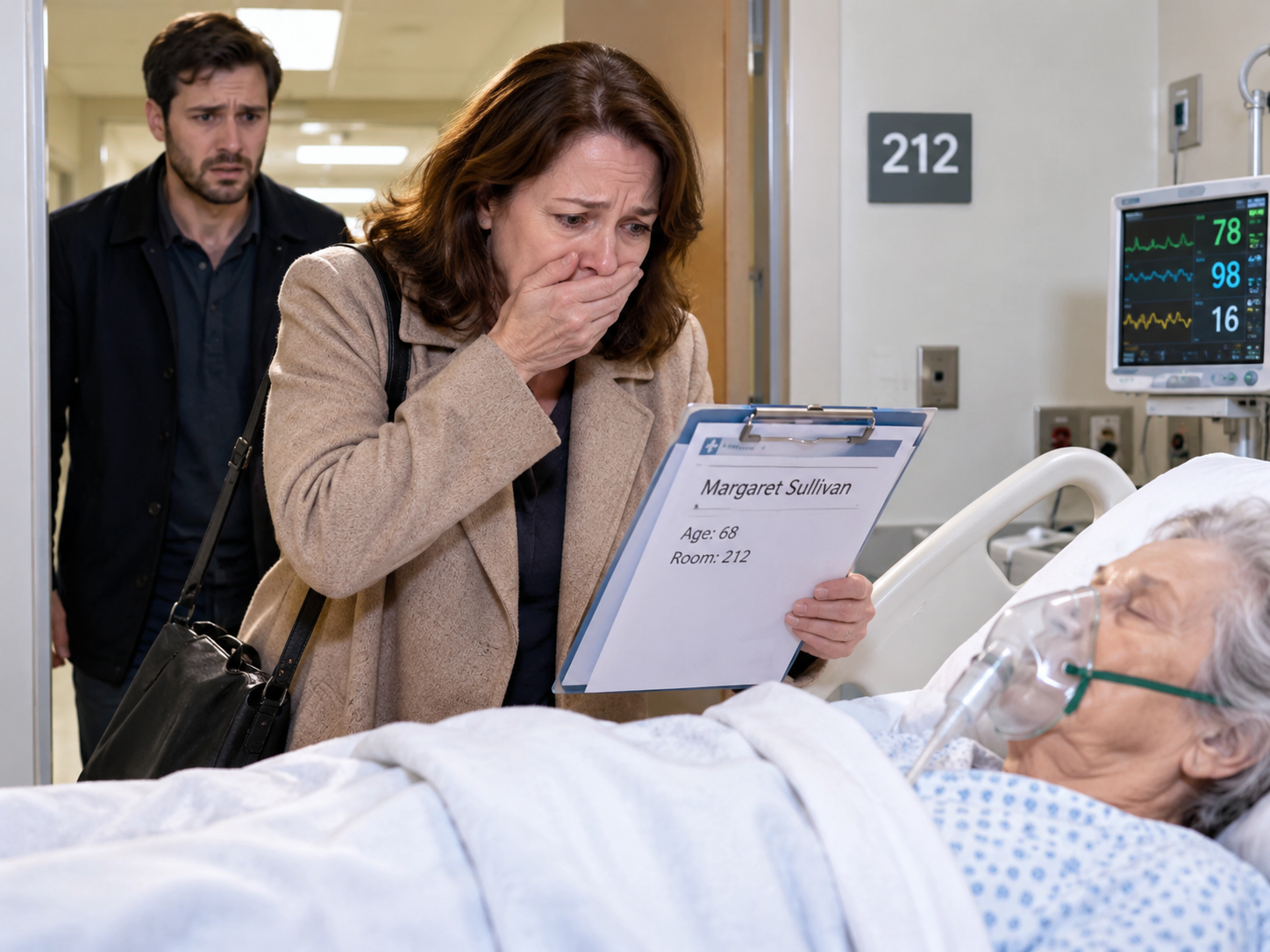
I stared at the photograph for a long time.
My name.
Bernice.
Written beneath Grace and Leo.
Keep away.
I had spent years believing the conflict belonged to my daughter and her husband.
Now I had to consider something more frightening.
I might have been part of the plan from the beginning.
Not as a participant.
As an obstacle.
Bennett told me not to speculate.
“Let's identify the handwriting first.”
The page was sent for examination.
The investigator compared it with documents connected to Ezekiel, Leona, and Martin.
The results took several days.
During that time, Grace tried to continue her life.
She fed Leo.
She slept when she could.
She handled phone calls from attorneys.
She learned which forms needed signatures and which ones required witnesses.
She began taking short walks again.
One morning, I found her standing in front of the mirror.
She was wearing one of her old dresses.
“It fits differently.”
“Your body has been through a lot.”
She touched her waist.
“I don't recognize myself.”
I stood behind her.
“You don't have to recognize yourself yet.”
She looked at me through the mirror.
“I used to think I needed to become who I was before.”
“Maybe you don't.”
“What if I become someone else?”
“Then we'll meet her.”
She laughed.
“That sounds like something you practiced.”
“I didn't.”
“Good.”
She turned around.
“I like it better that way.”
That afternoon, the handwriting report arrived.
The writing wasn't Ezekiel's.
It wasn't Leona's.
It wasn't Martin's.
The examiner could not make a definitive identification, but the stroke patterns were inconsistent with all three.
Bennett looked frustrated.
“So we still don't know.”
“Not yet.”
Then the investigator called.
The person in the security footage had been identified.
His name was Daniel Crowe.
He worked for a private security company.
More specifically, he had previously worked for Martin.
He had been hired as a driver and security contractor.
The envelope had been handed to Ezekiel by him.
The handwritten list appeared to have been prepared by someone else.
Daniel was located two days later.
He agreed to speak with investigators.
His story was simple.
He had been paid to drive.
He claimed he didn't know Grace was being taken against her wishes.
But when shown the hospital footage, he changed his statement.
He admitted he had been told to prevent Grace's mother from interfering.
“Who told you?”
He hesitated.
Then said, “Leona.”
Grace listened to the recorded statement.
Her face went pale.
“My mother-in-law?”
“Yes.”
“She knew.”
The investigator nodded.
Grace closed her eyes.
For several seconds, she didn't speak.
Then she said, “I want her to answer for it.”
That became the next step.
Leona was interviewed.
She denied everything.
She claimed Ezekiel had been desperate.
She claimed she had only tried to help her son.
She denied knowing Grace was being held.
She denied arranging transportation.
She denied authorizing Daniel to keep me away.
But her phone records told a different story.
There had been multiple calls between her and Daniel that night.
One occurred minutes before Grace left the hospital.
Another occurred shortly after Ezekiel arrived at the Bronx apartment.
A third came just before I reached the building.
Leona still denied involvement.
The evidence was accumulating.
Slowly.
Precisely.
No single document explained everything.
Together, they formed a picture.
Grace was recovering physically.
But emotionally, she was exhausted.
One evening she asked me whether she should read the messages recovered from Ezekiel's phone.
I told her she didn't have to.
“I need to know.”
“Why?”
“Because otherwise my mind fills in the blanks.”
That was true.
So we read them together.
Not all at once.
A few at a time.
There were messages about money.
Arguments.
The house.
Insurance.
The baby.
Then we found something from months earlier.
Ezekiel had written to Leona:
“Once she signs, everything changes.”
Grace stared at the screen.
“When was that?”
Bennett checked.
Seven months before the delivery.
Grace's face drained of color.
“That's when he first asked about the house.”
I looked at her.
“Did you sign anything then?”
“No.”
Another message appeared.
Leona had responded:
“She trusts you. Don't rush her.”
Grace covered her mouth.
I felt anger rise.
Not explosive anger.
Something colder.
A betrayal that had been occurring while everyone around us continued eating dinner, attending birthdays, and taking family photographs.
Grace whispered, “I thought she hated me.”
“She may have.”
“But she still worked with him.”
“People can hold contradictory feelings.”
Grace shook her head.
“I don't understand how someone can do this.”
“You may never.”
She continued scrolling.
Then she stopped.
“What?”
She turned the phone toward me.
A message from Ezekiel to Martin.
It said the property could not be transferred until Grace's medical situation created “a window.”
The date was two months before the delivery.
The word window made my stomach turn.
Grace read it twice.
“They were waiting.”
“Yes.”
“For childbirth.”
“Apparently.”
She put the phone down.
“I thought the worst thing he did was lie.”
I understood.
The lie had only been the final layer.
The plan had existed before the hospital.
The hospital had simply been where the pieces came together.
The false death announcement had been designed to keep me from looking for Grace.
The fake room number had been designed to reinforce the lie.
The private apartment had been prepared.
The documents had been prepared.
The guardianship request had been prepared.
The insurance changes had been prepared.
The property transfer had been prepared.
The only unpredictable thing had been Grace refusing to sign.
That was why they had needed to isolate her.
And that was why my arrival had become such a threat.
A week later, the prosecutor called.
They had enough evidence to pursue additional charges.
The exact charges would depend on the jurisdiction and final review, but the case was no longer being treated as a simple domestic dispute.
There were allegations involving fraudulent documents, financial deception, unlawful restraint, and attempted interference with property and custody rights.
Grace listened quietly.
When the call ended, she asked me something unexpected.
“Do you think I should sell the house?”
I looked at her.
“No.”
“Why?”
“Because if you sell it because he tried to take it, you're still letting him decide what happens to it.”
She considered that.
“What if I want to sell it because I don't want the memories?”
“Then sell it.”
She smiled.
“You always answer with another question.”
“It's a mother's privilege.”
She laughed.
That evening, we walked through the house.
Grace stopped in the dining room.
“This is where we had our first argument after I got married.”
“About what?”
“You told me he was working too much.”
“I remember.”
“I defended him.”
“You did.”
“I wish I could go back.”
I shook my head.
“You can't.”
“I know.”
“But you can decide what happens next.”
She touched the dining table.
“I want to keep the house.”
“Then keep it.”
“I want to repaint everything.”
“Do it.”
“I want Leo to grow up here.”
I smiled.
“Then he will.”
The next morning, a letter arrived.
It was from Leona.
She wanted to speak with Grace.
Grace initially refused.
Then she changed her mind.
“I want to hear what she says.”
Bennett arranged for the meeting to happen with attorneys present.
Leona arrived looking older than I remembered.
She didn't bring flowers.
She didn't bring excuses.
She sat across from Grace.
For several seconds, nobody spoke.
Then Leona said, “I never wanted you hurt.”
Grace looked at her.
“But you wanted my son to control my house.”
Leona's eyes filled.
“I wanted to save my son.”
“From what?”
“Debt.”
“You could have helped him without taking my life apart.”
Leona looked down.
“I thought you would eventually understand.”
Grace's voice remained quiet.
“Understand what?”
“That marriage means helping your husband.”
“No.”
Grace shook her head.
“Marriage doesn't mean surrendering everything you own because your husband made bad decisions.”
Leona began to cry.
“I made mistakes.”
“You made choices.”
The distinction was devastating.
Leona admitted that she had helped arrange meetings.
She admitted she knew about the property.
She admitted she had spoken to Daniel.
But she insisted she never intended Grace to be harmed.
Grace listened.
Then asked one question.
“Did you know he told my mother I was dead?”
Leona froze.
“No.”
Grace stared at her.
“Then why did you call Daniel that night?”
Leona had no answer.
The meeting ended soon afterward.
Grace walked outside.
She looked exhausted.
But she also looked lighter.
“What did you learn?”
“That she will never give me the apology I wanted.”
“I'm sorry.”
“I thought I'd feel worse.”
“How do you feel?”
Grace looked toward the sky.
“Finished.”
I understood.
Not finished healing.
Finished waiting for someone else to explain what they had done.
That night, we received another call.
Bennett.
His voice was unusually serious.
“We found the missing link.”
“What is it?”
“The person who ordered the false death message.”
I held my breath.
“Who?”
Bennett paused.
Then said the name.
“Ezekiel's business partner.”
The man had been absent from every document we had seen.
He had stayed in the background.
And according to the evidence, he had known exactly what Ezekiel intended to do.
But there was something else.
“He was the one who suggested the hospital story.”
I looked at Grace.
She went still.
“Why?”
Bennett's answer was quiet.
“Because he knew your mother would search for you if she thought you were merely missing.”
Click Here to continue read next: PART8: The final witness explained why my daughter’s death had been invented, and the truth exposed the last piece of the plan
The room number was wrong, but the fear in my son-in-law’s face told me the mistake had been deliberate
Part 7 of 16

